
Construction Debris Removal Bay Shore: Roll-Off Dumpsters Sized For Renovations, Roofing Tear-Offs, And Gut Jobs
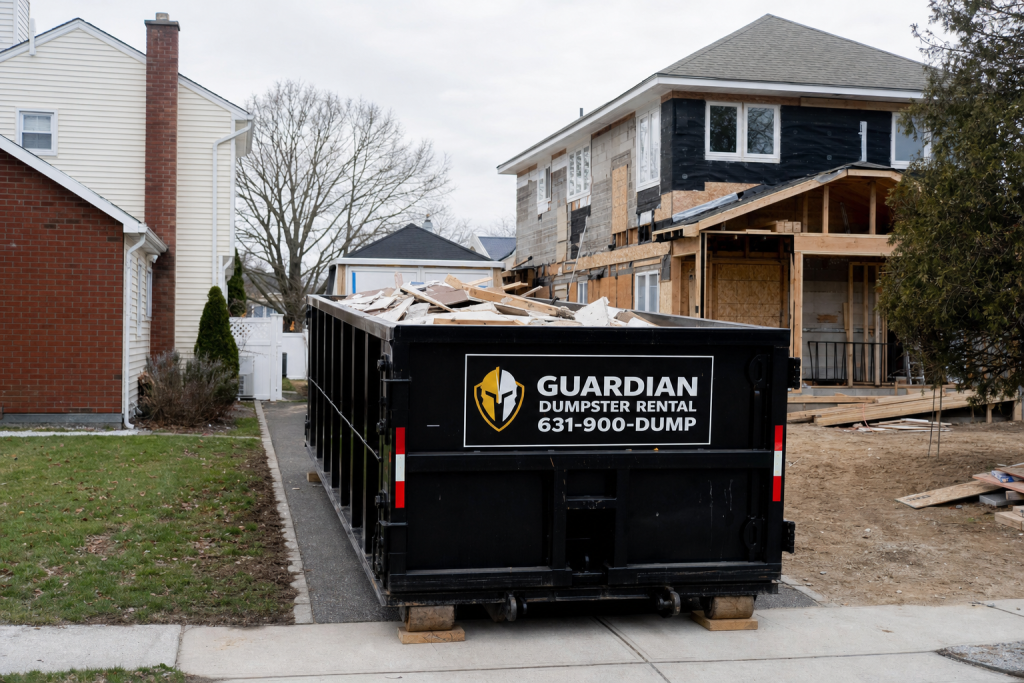
Guardian Dumpster Rental provides construction debris removal Bay Shore contractors and homeowners count on for renovations, roofing tear-offs, and full gut jobs. We deliver 10, 20, and 30 yard roll-off dumpsters directly to your driveway or job site, then haul everything away on your schedule. One phone call gets you a flat quote, a confirmed delivery window, and a container sized correctly for your project.
What This Service Is
Construction debris removal is the delivery, loading, and haul-away of a roll-off dumpster dedicated to building materials — drywall, lumber, flooring, cabinetry, shingles, siding, insulation, and demolition debris from interior tear-outs. Instead of stacking material in a garage or making repeated dump runs in a pickup, you load one container at your own pace and we handle the rest. Guardian offers three sizes: a 10 yard dumpster for small bathroom or single-room remodels, a 20 yard for kitchen renovations and most roofing tear-offs, and a 30 yard for whole-home gut jobs, additions, and commercial build-outs. One important note: we do not accept brick, concrete, dirt, or yard waste in our containers, so plan a separate disposal path for masonry or excavation material before demo day.
Common Problems
What Does Construction Debris Removal Bay Shore Actually Cost — And What's Included?
Most projects here land in a predictable range once you know the size you need, and your quote from Guardian covers delivery, pickup, the rental period, and a set weight allowance. The most common billing surprise in this business is overage fees from ordering too small — a 10 yard container overflowing with kitchen demo costs more than a 20 yard would have from the start.
The other cost trap is prohibited materials. Because brick, concrete, dirt, and yard waste aren't allowed in our roll-offs, mixing them in can trigger contamination charges at the transfer station. Tell us exactly what you're tearing out and we'll quote it straight — no vague 'starting at' pricing that doubles on the invoice.
The Dumpster Didn't Show Up On Demo Day — Now What?
A late container stalls the whole crew, and on Long Island that means paying laborers to stand around. The fix is booking with a company that confirms a delivery window in writing and actually runs trucks in Suffolk County daily, not a national broker subcontracting to whoever answers the phone.
Guardian schedules Bay Shore deliveries locally, so if a driveway is tight, a gate needs opening, or a delivery has to shift a day, you're talking to the people who control the truck. We also walk placement with you — many South Shore driveways are narrow, and dropping a 30 yard box in the wrong spot can block your own materials deliveries for the week.
Should I Haul Debris Myself, Hire A Junk Crew, Or Rent A Roll-Off?
For anything bigger than a closet tear-out, pickup-truck runs to a transfer station lose fast — dump fees, gas, and weekends add up, and shingles or wet drywall are brutal to hand-load twice. Junk removal crews charge by volume and by their labor, which makes sense for a one-time furniture cleanout but gets expensive over a multi-week renovation.
A roll-off rental fits the rhythm of actual construction: demo happens in bursts, and the container sits there ready when you are. A good provider earns the job with honest sizing advice, a real weight allowance, transparent overage terms, and swap-out service so a full 20 yard box is replaced without stopping your project.
Our Process
Tell Us The Project, Get The Right Size
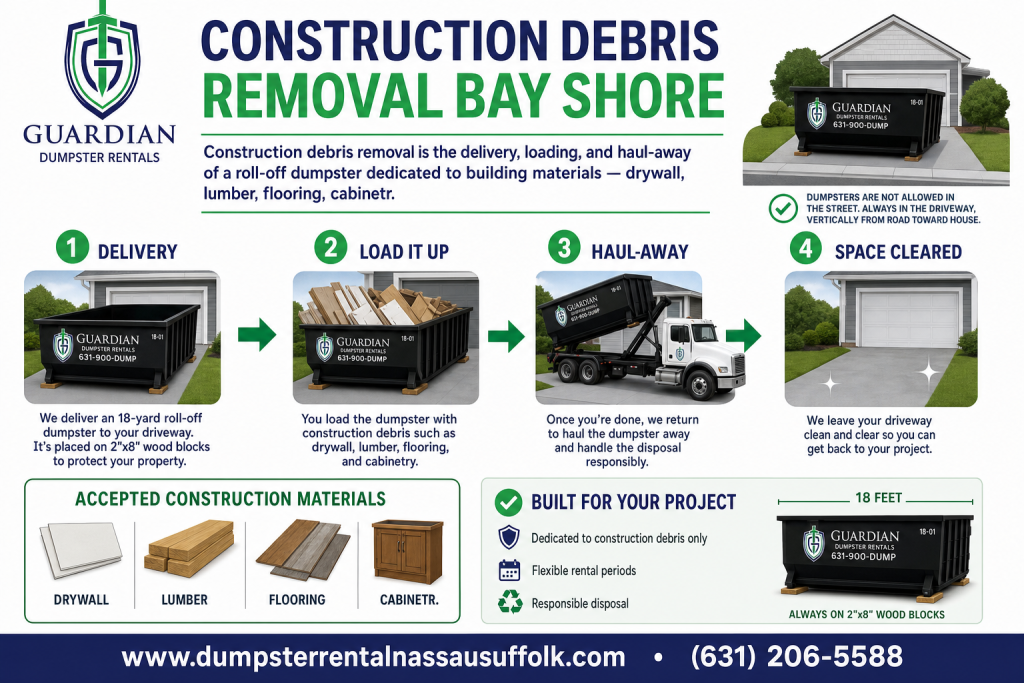
Call or request a quote and describe the job — bathroom remodel, roof tear-off, full interior gut. We'll recommend a 10, 20, or 30 yard dumpster based on the material type and volume, and flag anything we can't take, like concrete or dirt, so there are no surprises at pickup.
We Deliver And Place The Roll-Off
Your container arrives within the confirmed window and we place it where you direct — driveway, job site, or curbside where permitted. We use boards under the rails when requested to protect asphalt and paver driveways, which matters on older Bay Shore properties.
Load On Your Schedule, We Haul It Away
Fill the container over the course of your rental period, keeping debris level with the top rail. When you're done — or when it's full mid-project — call us. We pick up, dispose of everything at licensed Suffolk County facilities, and can drop a fresh container the same trip if the job's still going.
| Container Size | Best For | Typical Debris Capacity | Fits In |
|---|---|---|---|
| 10-Yard | Bathroom demo, small deck removal, concrete or masonry loads | About 3 pickup truck loads; heavy material like concrete and tile | Standard single driveway |
| 15-Yard | Kitchen tear-out, single-layer roof up to ~20 squares, garage cleanout | About 4-5 pickup loads of mixed demolition debris | Most Bay Shore driveways |
| 20-Yard | Whole-room gut renovation, siding tear-off, large deck plus railing | About 6 pickup loads; the most common contractor choice | Double driveway or curbside |
| 30-Yard | Full interior gut, addition demo, multi-room renovation | About 9 pickup loads of framing, drywall, and cabinetry | Curbside or open lot |
| Separate Heavy Box | Concrete, brick, block, or dirt only | Kept under road weight limits; often cheaper as clean fill | Driveway with reinforced blocking |
Commonly Overlooked In The Dumpster Rental Industry
- Tonnage limits versus container volume — People pick a size by how much space debris takes up, not realizing plaster, tile, and roofing can hit the weight cap when the box is only half full.
- Town of Islip rules on street placement — Homeowners assume the curb is fair game, but containers left in the roadway without proper positioning can draw complaints and code enforcement attention.
- Driveway and apron protection under the container — A loaded roll-off concentrates thousands of pounds on small contact points, and cut-rate haulers skip the wood blocking that prevents cracked asphalt.
- Separating clean concrete from mixed debris — Concrete dumped as one clean load costs far less than mixed waste, but crews in a hurry throw everything in one box and eat the higher rate.
- Asbestos in pre-1980 Bay Shore homes — Old floor tile, siding shingles, and pipe insulation look harmless during demo, and disturbing them without testing creates a legal and health problem no dumpster can fix.
- Overhead wires and tree limbs at the drop site — The truck's lift arm needs roughly 20 feet of clearance, and nobody looks up until the driver arrives and can't place the box where planned.
- Loading order and even weight distribution — Debris tossed in randomly wastes a third of the container's capacity and can make the box unsafe to lift, forcing a costly partial unload.
- The 'fill line' on the container walls — Material heaped above the rim can't legally travel on Suffolk County roads, so overfilled boxes get left behind or partially emptied at the customer's expense.
Case Studies
Case Study #1
Situation: A general contractor gut-renovating a 1950s cape on Brentwood Road in Bay Shore called us mid-project. Demo had produced far more material than the crew expected: plaster and lath, old cast-iron radiators, two layers of asphalt roofing, and a full kitchen's worth of cabinetry.
Problem: Their original hauler dropped a 20-yard container and disappeared. The box filled in two days, the driveway was blocked, and the Town of Islip had already flagged debris piled on the apron near the street.
Investigation: We walked the property the same afternoon, measured the remaining demo scope room by room, and checked the driveway grade and overhead wires to confirm what our roll-off truck could safely place there.
Findings: The plaster and roofing tear-off alone accounted for roughly 6 tons — far heavier than typical renovation debris. A single large container would have blown past weight limits and triggered overage fees. The cast iron also needed to go to a metal recycler, not the transfer station.
Solution: We swapped in a fresh 20-yard box for the heavy plaster and shingles with a firm tonnage plan, pulled the cast iron separately for scrap recycling, and scheduled a second 30-yard container for the lighter framing and cabinet debris in phase two.
Outcome: The contractor stayed on his three-week demo schedule, the town violation was resolved once the apron was cleared, and separating the metal shaved about $340 off what he would have paid dumping it all as mixed waste.
Lesson: Weight, not volume, is what breaks budgets on demolition jobs. Plaster, roofing, and masonry need their own disposal plan before the first sledgehammer swings.
Case Study #2
Situation: A Bay Shore homeowner near Gardiner Manor was replacing a rotted rear deck and detached garage roof herself with family help over two weekends. She'd never rented a dumpster and wasn't sure what size or where it could legally sit.
Problem: Her narrow shared driveway couldn't hold a container without blocking the neighbor, and Suffolk County transfer stations wouldn't accept her volume of pressure-treated lumber and shingles in a passenger vehicle anyway.
Investigation: We reviewed photos of the driveway and street, checked the curb setup, and calculated the debris load: roughly 400 square feet of decking, joists, and rail plus 8 squares of architectural shingle tear-off.
Findings: A 15-yard container fit the debris with room to spare, but street placement required protecting the curb and keeping sight lines clear at the corner. Pressure-treated lumber also can't be burned or chipped, so full haul-away was the only legal option.
Solution: We placed a 15-yard box curbside on wood blocking to protect the asphalt, positioned it back from the intersection, and gave her a simple loading order — shingles low and flat first, lumber layered on top — to maximize the space.
Outcome: Both weekends of demo fit in one container with no overage. Total cost came in under what two junk-removal crew visits had quoted, and the box was gone Monday morning before street sweeping.
Lesson: Placement and loading order matter as much as container size. Ten minutes of planning before delivery saves homeowners from second hauls and driveway disputes.
| Material | Standard Container? | What It Depends On / What to Do Instead |
|---|---|---|
| Drywall, framing lumber, cabinetry | Yes | Loads fine as mixed debris; break down cabinets flat to save space |
| Asphalt shingles | Yes, with weight planning | Roofing is dense — 20+ squares usually needs its own box or tonnage allowance |
| Concrete, brick, block | Yes, in a dedicated heavy-debris box | Cheaper as a clean load; mixing it with trash raises your disposal rate |
| Pressure-treated lumber | Yes | Legal in the container but never burnable or reusable as fill — haul it all |
| Cast iron pipe, ductwork, rebar | Yes, but ask first | Scrap metal often gets recycled separately, which can lower your total cost |
| Asbestos siding, pipe wrap, old floor tile | No | Suspect pre-1980 material needs a licensed abatement contractor before any demo |
| Paint cans, solvents, adhesives | No | Take liquids to a Suffolk County household hazardous waste collection event |
| Old appliances with refrigerant | No, not as-is | Fridges and AC units need refrigerant recovery first; we can advise on pickup |

Reviews
Had Guardian handle the debris from a full bathroom and kitchen demo on Ocean Ave. They knew exactly what size box I needed — I would have ordered too small. Tile and old mortar get heavy fast and they warned me about tonnage upfront instead of surprising me on the back end. Swap-out came same day when I called.
Mike Trentacoste
We tore off two layers of roofing plus fascia on our Bay Shore colonial and Guardian's driver placed the container perfectly under the drip line so the crew could throw straight off the roof. No plywood damage to my driveway either — they put boards down without me asking. Picked up on schedule before our new roof inspection.
Danielle Ferro
I'm a GC working mostly in Islip and Babylon. Used Guardian on a Bay Shore addition for the framing scraps, sheathing, and concrete from the old stoop. They advised separating the concrete into its own smaller box, which cut my disposal cost noticeably. Only knock is the office got busy one afternoon, but the driver texted directly and it worked out.
Rob Kalinowski
Frequently Asked Questions
How Much Does Construction Debris Removal Bay Shore Contractors And Homeowners Rely On Typically Cost?
Pricing depends on three things: the size of the dumpster, the type of debris, and how long you need it on site. For most Bay Shore projects, a 10-yard container handles small bathroom demos or roofing tear-offs, while 20- and 30-yard sizes suit kitchen gut-outs, additions, and full renovations.
At Guardian Dumpster Rental, our quotes include delivery, pickup, and a set tonnage allowance, so you know the full cost upfront. Heavy materials like concrete, brick, and plaster weigh more than they look, which is why we often recommend a smaller, heavy-debris container for masonry jobs rather than a large mixed bin that hits its weight limit halfway through.
Suffolk County disposal fees are built into our rates, and we only bill overage if you exceed the included tonnage, at a transparent per-ton rate we explain before delivery. Standard rental periods run seven to ten days, with flexible extensions for longer renovations.
The best way to get an accurate number is to tell us what you are tearing out. A roofer stripping 25 squares of asphalt shingles needs a very different setup than a homeowner clearing out sheetrock and framing lumber after a flood repair near the Great South Bay. One quick call gets you a firm quote with no surprises on the final invoice.
What Materials Can I Put In A Dumpster For A Renovation Or Demolition Project?
Most standard construction and demolition waste is accepted: lumber, drywall, plywood, flooring, cabinetry, roofing shingles, siding, windows, doors, insulation, and general tear-out debris. If you are gutting a kitchen or demoing a deck, nearly everything coming off the job can go straight into the container.
Heavy materials like concrete, asphalt, brick, block, and dirt are accepted too, but they need to go in a dedicated heavy-debris dumpster loaded to a limited fill line. Mixing a full load of concrete into a 30-yard bin will exceed legal road weight limits, so we set you up with the right container from the start.
A few items cannot go in any roll-off under Suffolk County and New York State rules: asbestos-containing materials, paint cans with liquid paint, solvents, chemicals, propane tanks, tires, batteries, and refrigerants like old AC units or refrigerators with freon still charged. Older Bay Shore homes, especially pre-1980 houses common in the area, sometimes contain asbestos siding or pipe insulation, and that requires a licensed abatement contractor rather than a dumpster.
If you are unsure about a specific material, ask before you load it. Our drivers know exactly what local transfer stations accept, and a two-minute phone call is a lot cheaper than a contaminated-load fee. We would rather help you plan the load correctly than surprise you with a charge at pickup.
Do I Need A Permit To Place A Dumpster At My Bay Shore Property?
If the dumpster sits entirely on your own property, such as a driveway or a gravel side yard, you generally do not need a permit. Most residential jobs in Bay Shore fall into this category, and we can place a container the same day or next day without any paperwork on your end.
If the container must sit on the street or another public right-of-way, the Town of Islip typically requires a street-occupancy permit. This comes up on tighter lots near Main Street or in neighborhoods with short driveways, where there simply is not room on the property. The permit process is straightforward, and we can walk you through what the town needs before delivery so there are no delays.
A few practical placement tips from years of local deliveries: we need roughly 60 feet of straight clearance for the truck to roll the container off, and about 22 feet of overhead clearance free of wires and branches. We always place boards under the container rails to protect asphalt and paver driveways, which matters during hot Long Island summers when blacktop softens.
If you are working with a contractor, coordinate placement before demo day so the bin lands close to the work area. Every extra step your crew walks with a wheelbarrow full of debris costs time. Tell us about your site when you book and we will recommend the best legal spot for the container.
How Fast Can Guardian Dumpster Rental Deliver For Construction Debris Removal Bay Shore Projects On A Tight Schedule?
In most cases, we deliver same-day or next-day throughout Bay Shore, Brightwaters, West Islip, and the surrounding Suffolk County area. Contractors working against inspection dates or closing deadlines call us specifically because we keep trucks routed locally rather than dispatching from hours away.
Morning orders placed before 10 AM can usually be on site that afternoon. During peak renovation season, roughly April through October, we recommend booking a day ahead to lock in your preferred delivery window, especially for 30-yard containers, which are in highest demand for full gut jobs and roof replacements.
Swap-outs are just as fast. If your demo crew fills a container faster than expected, one call gets an empty bin dropped and the full one hauled, often within hours. That keeps framing, roofing, and demolition crews working instead of standing around a maxed-out dumpster. For multi-phase renovations, we can schedule recurring swaps so debris never piles up on site.
Pickup at the end of your rental works the same way. Call when you are done, and we typically haul the container within one business day, so it is not sitting in your driveway or blocking a job site longer than necessary. Everything gets taken to licensed local transfer stations, where recyclable materials like clean wood, metal, and concrete are separated and diverted from landfill whenever possible. Fast, predictable service is the whole point, because construction schedules in this area do not wait.
What Dumpster Size Do I Need For Construction Debris Removal Bay Shore Projects?
The right size depends on the scope of your project. For a single-room remodel like a bathroom gut or small kitchen tear-out, a 10-yard container usually handles the load. It fits comfortably in most Bay Shore driveways, which matters on tighter lots near Main Street or in the older neighborhoods south of Montauk Highway.
For full kitchen renovations, roofing jobs up to about 30 squares, or flooring removal across an entire house, a 15 or 20-yard dumpster is the sweet spot. Most of our contractor clients working on Bay Shore homes order 20-yarders because they leave room for the surprises that show up mid-demo, like hidden layers of old flooring or plaster behind drywall.
Whole-home renovations, additions, and commercial build-outs typically call for a 30-yard container. Just keep in mind that heavy materials like concrete, brick, and dirt should go in smaller containers regardless of volume, because weight limits come into play before the box ever looks full.
If you're not sure, tell us what you're tearing out and the approximate square footage. We size loads for Suffolk County jobs every day, and it's cheaper to order the right container once than to pay for a second haul because a 10-yarder filled up on day two. When in doubt between two sizes, going one size up almost always costs less than a swap-out.
Can I Throw Concrete, Brick, And Roofing Shingles In The Same Container?
Yes, but heavy materials need to be handled correctly or you'll run into weight overages. Concrete, brick, block, asphalt, dirt, and plaster are dense, and a 20-yard dumpster loaded to the top with concrete can exceed what trucks are legally allowed to haul on Suffolk County roads.
For concrete and masonry demolition in Bay Shore, we typically recommend a dedicated 10-yard heavy-debris container filled no more than three-quarters full, or loaded to a fill line we mark for you. Keeping clean concrete separate also works in your favor, because it can be recycled as aggregate, which often means lower disposal fees than mixed construction waste.
Roofing shingles are a similar story. A typical Bay Shore cape or colonial re-roof of 20 to 30 squares generates two to four tons of shingles, so we size those jobs based on tonnage, not just volume. Tell us the square footage and number of layers coming off, and we'll match you with the right box and weight allowance.
Mixing a small amount of heavy material into a general construction load is fine. The problem starts when the bottom third of a large container is solid concrete or wet plaster. If your demo involves a mix, mention it when you book and we'll walk you through how to load it so you stay under the limit and avoid surprise charges on the final invoice.
How Long Can I Keep The Dumpster, And What Happens If My Renovation Runs Over Schedule?
Our standard rental period runs 7 to 14 days depending on the container and the job, which covers most residential demolition and cleanup timelines in the Bay Shore area. Roofing tear-offs and single-room gut jobs rarely need more than a week, while whole-house renovations often keep a container on site for the full two weeks.
If your project runs long, that's not a problem. Extensions are available at a flat daily rate, and you just need to call before your scheduled pickup date. We work with contractors all over Suffolk County, so we know inspection delays, backordered materials, and weather can push a schedule. There's no penalty for extending as long as we hear from you first.
For larger projects that generate debris in phases, many builders prefer a swap-out arrangement instead of one long rental. We haul away the full container and drop an empty one in the same visit, so your crew never loses a day waiting for disposal capacity. That's common on additions and multi-phase remodels where demo happens in stages.
On the flip side, if you finish early, call us and we'll pick up ahead of schedule at no extra cost. Getting the container off your property sooner keeps your driveway clear and, in some cases, keeps you compliant with village placement time limits. Flexibility on both ends of the rental is something our repeat Bay Shore customers count on.
Will The Dumpster Damage My Driveway During Construction Debris Removal Bay Shore Homeowners Often Ask About?
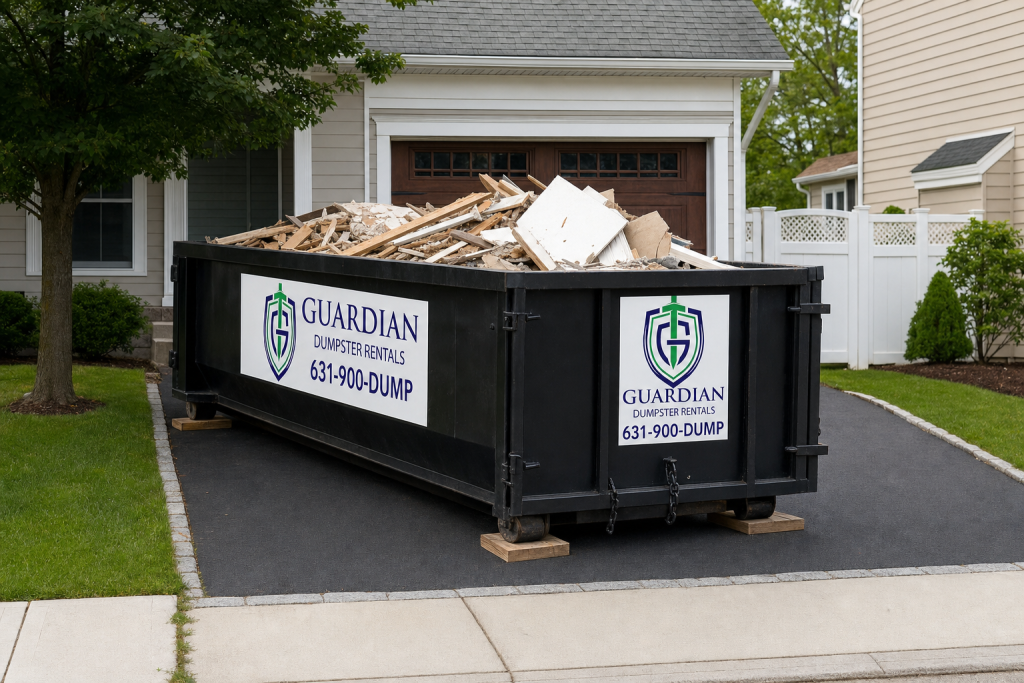
It's a fair concern, and one we take seriously. Loaded construction containers are heavy, and asphalt driveways common throughout Bay Shore can be soft in summer heat. Our standard practice is to place wooden boards under the container's contact points, which spreads the weight and prevents dents, scrapes, and cracking.
Our drivers use roll-off trucks with controlled hydraulic placement, so the container is set down gently rather than dropped. When we pick up, the same care applies. We've placed thousands of containers on residential driveways across Suffolk County without incident, and driveway protection boards come standard on every residential delivery at no extra charge.
A few things help on your end. Let us know if your driveway is newly sealed, paver-set, or belgian block, because those surfaces sometimes call for extra plywood or a slightly different placement spot. Also avoid loading concrete or dirt above the fill line, since an overweight container concentrates more pressure on the driveway surface.
If driveway placement isn't practical, curbside or street placement is sometimes an option, though that may involve a permit from the Town of Islip depending on your exact location in Bay Shore. During booking we'll ask about your property layout and recommend the safest spot. Most homeowners find the driveway works fine once the boards are down, and their surface looks exactly the same after the debris hauling wraps up as it did before we arrived.
Are There Weight Limits On Dumpsters Used For Construction Debris Removal Bay Shore Projects?
Yes, every container comes with an included tonnage allowance, and it matters more than most people expect. A typical 20-yard dumpster from Guardian Dumpster Rental includes around 3 tons, while 30-yard containers usually include 4. Anything over that is billed per additional ton at the transfer station rate.
Weight is where renovation projects most often run into surprise charges. Demo debris like plaster, tile, and wet lumber is far heavier than it looks. A gutted bathroom in one of the older Cape-style homes off Brentwood Road can easily produce a ton of plaster and cast iron alone.
Our advice: tell us exactly what you're tearing out when you book. If you're removing a concrete patio, a tile floor over mud-set mortar, or multiple layers of roofing, we'll steer you toward the right container or a dedicated heavy-material load so you're not paying overage fees. Dense materials sometimes cost less in a smaller, heavy-rated container than in a big box you can only fill a third of the way.
Every load is weighed at the scale, and you get the ticket, so there's no guesswork or padded numbers. If your job in Bay Shore comes in under the allowance, you simply pay the quoted rate. Most homeowners doing a single-room renovation never touch the limit; it's the whole-house cleanouts and demolition jobs where planning ahead really pays off.
Where Does The Debris Actually Go After Pickup In Bay Shore?
Nothing gets dumped in a landfill by default. Loads we haul from Bay Shore and the surrounding Suffolk County area go to licensed transfer stations and recycling facilities on Long Island, where material is sorted before final disposal.
Clean, separated loads get the best treatment. Concrete, brick, and block are crushed into aggregate for road base. Clean wood is chipped or processed. Scrap metal, including old ductwork, cast iron tubs, and copper pipe, is pulled and recycled. Asphalt shingles from local roofing jobs are increasingly ground down for paving material.
Mixed construction loads are run across a sorting line where recoverable material is separated out, and only the true residual heads to disposal. Suffolk County has real capacity constraints, and disposal costs here reflect that, so recycling isn't just good practice, it's what keeps pricing reasonable for everyone.
If recycling percentages matter to your project, say so when you book. Some commercial jobs and LEED-oriented builds require diversion documentation, and we can arrange separated containers, one for clean concrete, one for metal, one for mixed debris, along with the facility receipts to back it up.
For homeowners, the takeaway is simple: your renovation waste is handled legally and responsibly at permitted facilities, not left to become someone else's problem. That protects you too, since the property owner can be held liable if debris ends up dumped illegally.
What's The Best Way To Load The Container So I Don't Waste Space?
Load it like you're packing a moving truck, and you can fit dramatically more into the same box. Most people throw debris in randomly and end up with air pockets that waste a third of the container.
Start with flat, heavy items on the bottom: sheets of plywood, doors, countertops, drywall laid flat. Break down anything that can be broken down. A kitchen cabinet tossed in whole takes up four times the space of one knocked flat with a hammer. Cut long lumber if you can, or lay it along the length of the container rather than diagonally.
Use the walk-in door. Our roll-offs have a swing gate on one end, so carry heavy debris in and place it instead of heaving everything over the side. It's easier on your back and gives you a much denser, more organized load.
Fill gaps as you go with small debris, insulation, trim scraps, and bagged material. Keep everything level with or below the top rail. Legally, we can't transport an overfilled container on Suffolk County roads, so anything sticking above the rim has to come off before we haul.
One more local tip: if rain is in the forecast, keep drywall and other absorbent debris covered with a tarp. Waterlogged material weighs significantly more, and since loads are billed by weight, a soaked container can push you past your included tonnage for no good reason.
What Items Are Prohibited From Construction Debris Removal Bay Shore Containers?
A handful of materials can never go in the box, no matter the size of your project. These restrictions come from New York State and Suffolk County disposal regulations, not from us, and facilities will reject an entire load over them.
The main prohibited items are: liquid paint, stains, solvents, and adhesives; tires; car batteries and propane tanks; refrigerators, freezers, and AC units containing refrigerant; asbestos-containing material; and anything with fuel or oil in it, like an old lawn mower.
Asbestos deserves special attention around here. Many Bay Shore homes were built in the 1940s through the 1960s, and older floor tile, pipe insulation, and certain siding can contain it. If you suspect asbestos, stop and have it tested before demolition. It requires licensed abatement and cannot go in a standard roll-off under any circumstances.
A few items are conditionally allowed. Dried-out latex paint cans with the lids off are generally fine. Empty, punctured propane tanks may be accepted, but call us first. Mattresses and electronics are handled differently depending on the facility, so mention them when you book so we can plan the load correctly.
If a prohibited item turns up in your container at the scale, the facility charges a contamination fee that gets passed through, so it's genuinely cheaper to ask. Guardian Dumpster Rental can point you to Suffolk County's household hazardous waste drop-off events for the items we can't take, and most of them are free for residents.
Do I Need To Be On Site When Guardian Dumpster Rental Delivers Or Picks Up The Container?
No, you don't need to be there for either delivery or pickup, and most of our Bay Shore customers aren't. What matters is clear placement instructions when you book. Tell us exactly where you want the container — left side of the driveway, tight against the garage, angled for a rear-yard demo — and our driver will follow those notes precisely.
If you can, mark the spot with cones, chalk, or a piece of plywood. On narrower Bay Shore lots, especially older properties south of Montauk Highway with shared driveways, a marked spot prevents guesswork and keeps the container out of your neighbor's way.
Before delivery day, make sure the area is clear of vehicles, basketball hoops, and low-hanging branches. Our trucks need roughly 60 feet of straight clearance to roll the container off and about 20 feet of overhead space. If a car is blocking the spot when we arrive, we may have to reschedule, which can trigger a dry-run fee.
For pickup, the rules are similar: the container needs to be accessible and not overloaded past the fill line. Snap a photo of the loaded box and text it to us if you're unsure — we'd rather flag an issue before the truck rolls than surprise you with an overage charge. Many contractors working renovations in Bay Shore coordinate everything by phone and never meet the driver once, and the process runs smoothly every time.
Can I Get A Swap-Out Service For Construction Debris Removal Bay Shore Projects That Generate More Waste Than One Container Holds?
Yes, and swap-outs are one of the most common requests we handle for construction debris removal Bay Shore contractors rely on during larger jobs. A swap-out means we pick up your full container, haul it to the transfer station, and drop a fresh empty one in the same spot — usually within the same day if you call before 10 a.m.
This matters on projects like full gut renovations, roof tear-offs combined with siding replacement, or multi-room remodels where a single 20-yard box simply won't hold everything. Rather than renting two containers at once and cluttering the property, you cycle through one footprint.
Here's how to make it work efficiently: schedule your swap around demolition phases. Fill the first container with heavy tear-out material — plaster, framing, old flooring — then time the swap so the fresh box arrives when you start the next phase. Crews working Suffolk County jobs on tight timelines often book two or three swaps up front so nothing stalls.
Pricing for a swap is typically less than a brand-new rental because you're already an active customer, though each container carries its own tonnage allowance. Keep heavy materials like concrete and dirt in separate loads when possible, since mixed heavy debris hits weight limits fast.
If your project scope changes mid-job — and in renovation work it usually does — just call. We adjust swap schedules daily and can often accommodate next-morning exchanges anywhere in the Bay Shore area.
Does Guardian Dumpster Rental Serve Neighborhoods Beyond Bay Shore, Like Brightwaters Or West Islip?
We do. While Bay Shore is our home base, our delivery routes cover the surrounding Suffolk County communities every day, including Brightwaters, West Islip, Islip, East Islip, North Bay Shore, and Baldwin Harbor-adjacent areas along the Great South Bay.
If your project sits in Brightwaters, be aware that the village has its own rules about containers on village streets, which differ from Town of Islip regulations. We've placed hundreds of containers in the village and can walk you through what's required before delivery so you're not caught off guard.
For West Islip and East Islip jobs, delivery timing is essentially identical to a Bay Shore address — same-day or next-morning in most cases. Because our trucks are already running Sunrise Highway and Montauk Highway routes constantly, adding a nearby stop rarely delays anything.
Contractors who handle debris hauling in Bay Shore one week and an Islip Terrace kitchen remodel the next appreciate working with a single company across job sites. Your account, pricing structure, and tonnage terms stay consistent no matter which hamlet the container lands in.
One practical note: if your property line straddles a boundary or you're unsure which town's rules apply, give us the exact address when you call. We'll confirm placement requirements for that specific parcel. Guessing wrong about jurisdiction is one of the few things that can genuinely slow a delivery down, and a two-minute address check eliminates the problem entirely.
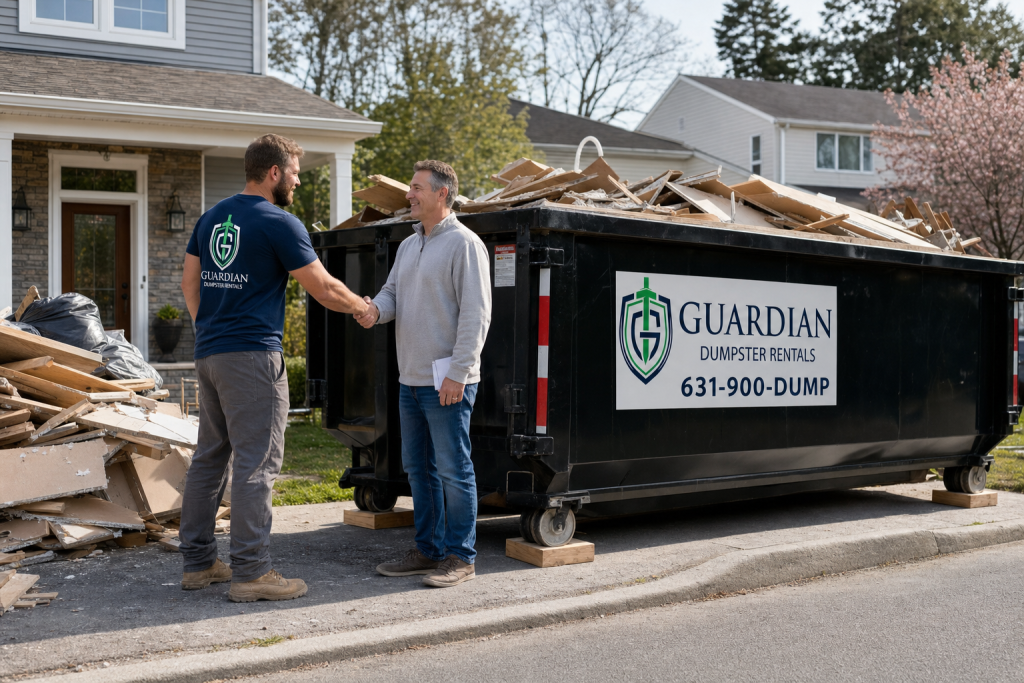
How Does Renting A Container Compare To Hiring A Junk Removal Crew For A Renovation Cleanout?
It comes down to timeline and who's doing the labor. A junk removal crew shows up once, loads everything themselves, and leaves — you pay for their labor plus disposal, usually priced by how much of their truck you fill. That works well for a single pile of debris that's already sitting there, like an estate cleanout or a one-day garage purge.
A roll-off container works differently. You keep it for days or weeks and load at your own pace as demolition happens. For construction debris removal in Bay Shore, that flexibility almost always wins on renovation work, because tear-out doesn't happen in one afternoon. A bathroom gut produces debris over three or four days; a roof tear-off generates waste in waves as sections come off.
Cost-wise, containers usually come out significantly cheaper per cubic yard. Junk removal crews charge premium rates because you're paying for two or three workers' time. With a container, your own crew or your contractor's laborers do the loading as part of work they're already doing.
The hybrid mistake we see: homeowners pile debris on the lawn planning to call a hauling crew "later," then face damaged grass, rain-soaked drywall that weighs triple, and neighbor complaints. Getting a container on site before demolition starts means material goes straight from the house into the box.
If you genuinely have no one to load — say, a heavy cast-iron tub in a basement — mention it when you book. We can point you toward the right solution for that specific situation.
Local Relevance
Bay Shore's housing stock skews older, with many homes dating from the early and mid-twentieth century, and that drives constant renovation work — kitchens and baths being modernized, plaster coming out, and layers of old roofing being stripped. Sitting on the Great South Bay, the area also takes real weather: coastal storms, nor'easters, and salt air accelerate wear on roofs and siding, so tear-off and re-side projects are a way of life here.
That mix creates specific debris profiles. A roof tear-off on an older South Shore home often means two or three layers of shingles, which is why we steer most roofing jobs toward a 20 yard container rather than risking overage on a 10. Whole-home gut renovations — common when buyers update mid-century houses near downtown Bay Shore — typically fill a 30 yard box, sometimes two. Wherever you are in the Town of Islip or greater Suffolk County, we size the container to the reality of the work, not a generic estimate.
Because Bay Shore sits low along the Great South Bay, storm and flood exposure means many renovation projects here involve tearing out water-damaged drywall and flooring — material that gets heavy fast when wet, so it often makes sense to size up one container class rather than gamble on weight overages.
Get A Roll-Off Delivered To Your Bay Shore Job Site
Tell Guardian Dumpster Rental what you're tearing out and we'll quote the right container — 10, 20, or 30 yard — with a confirmed delivery window and no hidden fees. Local trucks, straight answers, and pickups that happen when we say they will.
Call us: (631) 206-5588
Helpful Resources
- EPA guidance on construction and demolition materials — Federal overview of C&D debris handling and recycling
- OSHA construction safety resources — Safety standards for demolition and job-site work
Serving Bay Shore · Suffolk County NY
Last updated: August 17, 2026