
Dumpster permit: Do You Need a Dumpster Permit for Your NY Remodel?
Do You Need a Dumpster Permit in NY? The Quick Answer
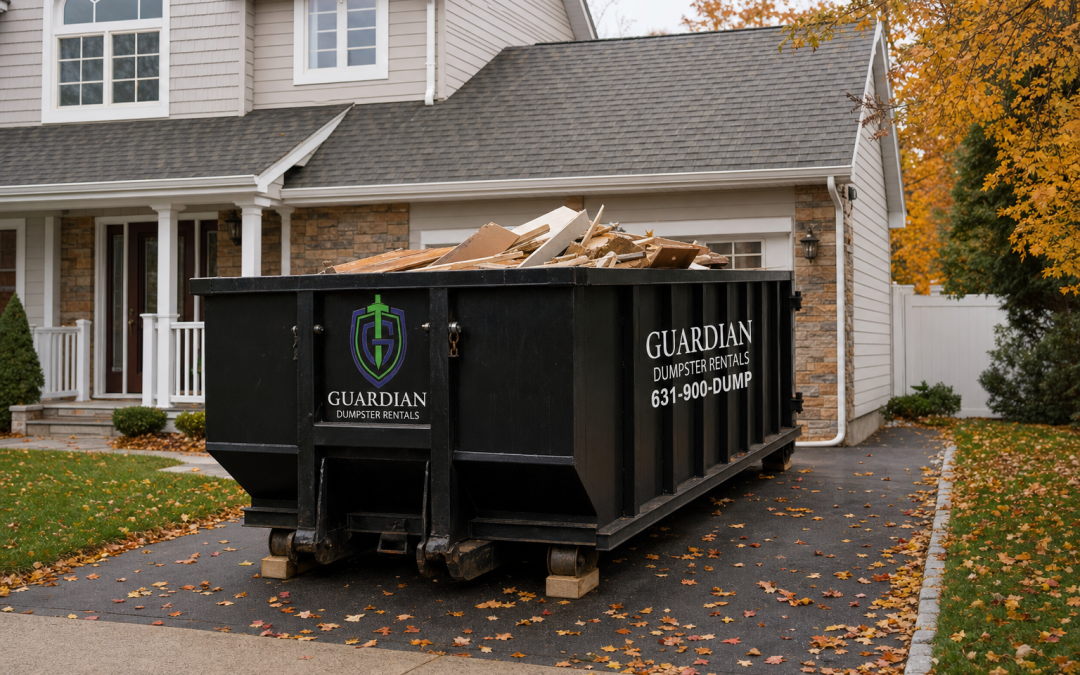
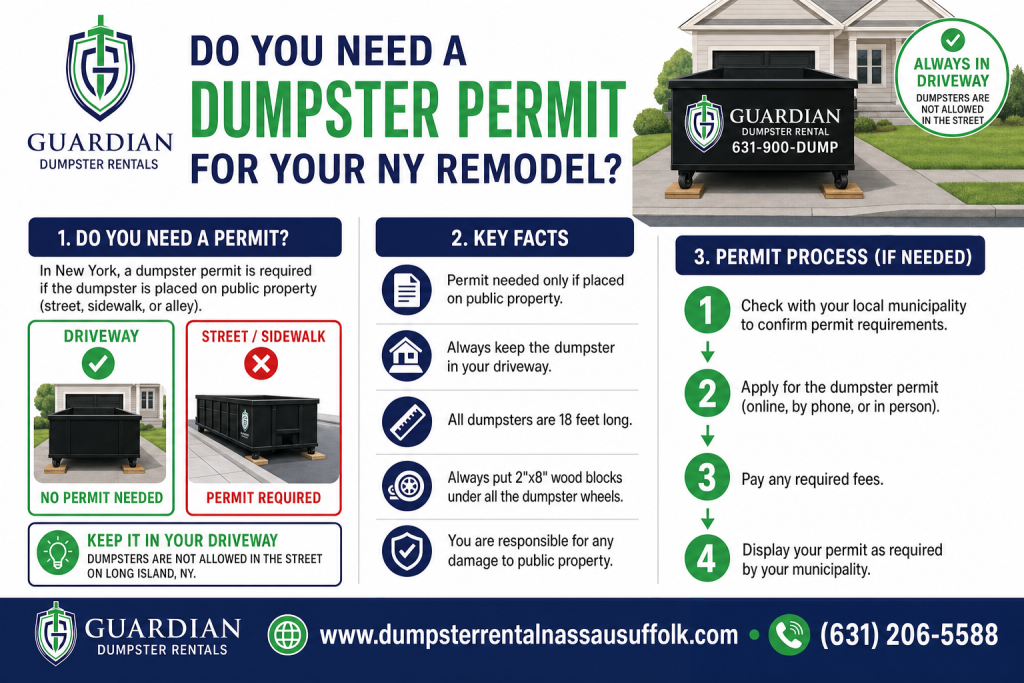
You generally do not need a dumpster permit in NY if the container sits entirely on your own private driveway, but you almost always need one if any part of the dumpster occupies a public street, sidewalk, or right-of-way. The deciding factor is simple: private property means no permit, public property means permit required.
Key takeaways
- In most New York municipalities, a dumpster placed entirely on your own driveway does not require a permit, while any placement on a public street or right-of-way typically does.
- Street-placement dumpster permits are issued locally — by your city, town, or village — so always call your municipal clerk or DOT office before scheduling delivery.
- Permit requirements often include safety measures like reflective markings, cones, or lights when a 10, 20, or 30 yard dumpster sits on a public roadway.
- Choosing the right size — 10, 20, or 30 yard — before applying helps, since some permits ask for container dimensions and exact placement location.
- Remember that prohibited materials such as brick, concrete, dirt, and yard waste cannot go in the dumpster regardless of where it's placed.
That one distinction settles the question for most homeowners before they ever call their town hall. If your driveway is long enough and wide enough to hold a 10, 20, or 30 yard container with the delivery truck able to back in safely, you can usually skip the paperwork entirely. The moment the dumpster crosses onto the curb, the shoulder, or the pavement in front of your house, your local municipality gets a say — and in New York, towns and villages take street placement seriously.
The Rule of Thumb at a Glance
- Fully on your driveway: No permit needed in nearly all NY towns and villages.
- On the street, curb, or sidewalk: A permit is almost always required, and placement rules (reflectors, setbacks from hydrants, time limits) usually apply.
- Partially overhanging public property: Treated the same as street placement — permit required.
- Not sure where your property line ends? Check your survey or call your town’s building or highway department before delivery day.
Keep in mind that the permit question is separate from what goes in the container. Most providers prohibit heavy materials like brick, concrete, dirt, and yard waste regardless of where the dumpster sits, so plan your project debris accordingly. If you’re weighing options for a home project, a residential dumpster rental in Lindenhurst NY is a good example of a situation where a standard suburban driveway comfortably fits a 10 or 20 yard container with no permit involved.
Why Fall Trips Up So Many Homeowners
Autumn is peak season for remodels on Long Island — homeowners race to finish kitchens, bathrooms, and basement projects before the holidays, which means delivery schedules fill up and town permit offices get busier too. If your driveway can’t accommodate the container and you need street placement, permit processing can take days, not hours, so waiting until the week of your project is risky. Homeowners arranging a dumpster rental in Amityville New York for a fall remodel should confirm placement early so the permit question is answered well before the truck arrives.
The sections below break down why driveways get a pass, exactly how street permits work, what they cost, and which size — 10, 20, or 30 yard — actually fits your space.
Why Doesn’t a Driveway Dumpster Usually Need a Permit?
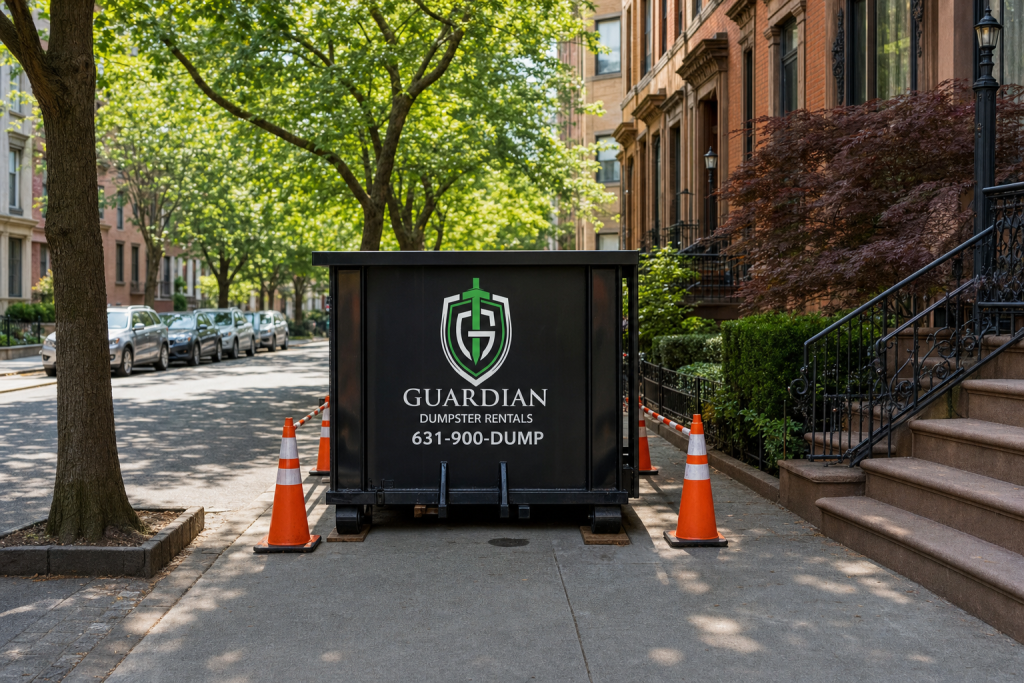
A dumpster parked in your driveway sits entirely on private property, so most New York municipalities have no jurisdiction to require a dumpster permit for it. Permits exist to regulate the public right-of-way — streets, sidewalks, and curbs — not your own paved parking area. Place the container fully on your property and you typically skip the paperwork altogether.
That said, “usually” is doing some work in that sentence. The private-property rule is the general standard across Long Island and most of New York, but a few local wrinkles can still apply, so it pays to understand where the exceptions hide.
When HOA Rules or Village Codes Still Apply
Even on private property, you may answer to more than one rulebook:
- Homeowners associations: Many HOAs restrict how long a container can sit in a driveway, require advance notice to the board, or ask that it be screened from view. Check your covenants before delivery day.
- Incorporated villages: Some villages have their own property-maintenance codes that limit dumpster duration or placement, separate from town rules. A quick call to the village clerk settles it.
- Overhang issues: If any part of the container extends past your property line onto the sidewalk or street apron, you may trip the public right-of-way rules even though most of it sits in your driveway.
Homeowners arranging a residential dumpster rental in Bay Shore NY or any similar hamlet should confirm whether they’re in an incorporated village, since the answer changes which code applies.
Protect Your Driveway Before the Container Arrives
No permit doesn’t mean no preparation. A loaded 20 or 30 yard container concentrates a lot of weight on small contact points, so smart homeowners:
- Lay plywood sheets or 2×10 boards under the wheels and rails to spread the load
- Avoid placing the container over a septic system, cesspool, or irrigation lines
- Keep the container on the flattest part of the driveway to prevent shifting
- Ask the driver to set the container where the roll-off rails won’t scrape during pickup
Why Fall Weather Raises the Stakes
Cooling autumn temperatures make asphalt stiffer and more brittle, and overnight freeze-thaw cycles can weaken the surface further. A driveway that handled a loaded 20 yard container fine in July may crack under a full 30 yard box in late October. Boards under the wheels matter even more as temperatures drop, because they distribute weight across a surface that has lost its summer flexibility.
If you’re unsure how your driveway will hold up, companies offering dumpster rental in Amityville New York can often recommend the right placement and protection based on your project and container size.
What Are the Rules for Putting a Dumpster on a NY Street?
Placing a dumpster on a public street in New York almost always requires a right-of-way permit from your town, village, or city. Most municipalities also require reflective markers or cones, safe clearance from hydrants and intersections, and a defined time limit — and curbside containers that block leaf collection or street sweeping can be ticketed or towed.
Unlike a driveway placement, the curb and the pavement in front of your home are public property. That means the local highway department, building department, or village clerk — depending on where you live — gets a say in whether a container can sit there, for how long, and under what conditions. Rules vary from one Long Island town to the next, so it pays to call before your delivery date rather than after a ticket shows up.
Common Requirements for Street Placement
While every municipality writes its own code, most NY street-placement permits include some combination of the following conditions:
- Reflective markers or cones: The container typically must be flagged with reflective tape, reflectors, or traffic cones so it’s visible to drivers at night.
- Clearance from hydrants: Dumpsters generally cannot block or sit too close to a fire hydrant.
- Distance from intersections and crosswalks: Containers usually must be set back far enough that they don’t obstruct sightlines for turning vehicles or pedestrians.
- No blocking driveways, mailboxes, or drainage: Access for neighbors, mail carriers, and storm drains must stay clear.
- Time limits: Many permits cap street placement at a set number of days, with renewals required for longer projects.
- Proof of insurance: Some municipalities require the hauler to carry liability coverage naming the town or village.
A reputable hauler will know the local quirks. For example, if you’re arranging dumpster rental in Islip New York, your provider can tell you whether your specific placement spot is likely to need town approval before the truck arrives.
Fall-Specific Conflicts to Watch For
Autumn adds a few wrinkles that catch homeowners off guard. Many NY municipalities run curbside leaf-collection routes in the fall, and a dumpster parked where crews need to work can be cited or ordered moved — sometimes on short notice. Street-sweeping schedules create the same problem: if your block is swept on certain days, a container sitting in the sweeper’s path may be ticketed or towed just like an illegally parked car.
Before committing to a street spot, check your municipality’s leaf-pickup and sweeping calendar, and ask whether the permit restricts placement on those days. If timing looks tight, a driveway placement with a residential dumpster rental in Bay Shore NY or a comparable local service is often the simpler, permit-free route. One more reminder: those collection routes exist because leaves and yard waste belong at the curb for municipal pickup — they are not allowed in your 10, 20, or 30 yard dumpster.
How Do You Get a Dumpster Permit and How Much Does It Cost?
To get a dumpster permit in New York, contact your town or village building department (or highway department), submit a short application with your delivery dates, dumpster dimensions, and placement details, then pay a modest fee. Most towns issue permits within a few business days, so apply about a week before delivery.
Every municipality handles it a little differently, but the overall process is similar across New York. Here’s how to move through it without delays.
Step 1: Find the Right Office
Start with your town or village website and search for “street obstruction permit” or “dumpster permit.” In most Long Island towns, the building department or highway department handles these applications. In New York City, street placements go through the Department of Transportation. A quick phone call can confirm which office you need and whether they accept applications online, by email, or in person.
Step 2: Gather What the Application Asks For
Having this information ready usually means one trip instead of two:
- Dates: delivery day, pickup day, and the total number of days the container will sit on the street.
- Dimensions: the length, width, and height of the container — a 10 yard, 20 yard, or 30 yard roll-off each has a different footprint, so confirm the size with your rental company first.
- Placement sketch: a simple drawing showing where the dumpster will sit relative to your driveway, hydrants, and the curb line. Hand-drawn is almost always fine.
- Contact details: your name, the property address, and often the hauler’s name and phone number.
If you’re not sure which container dimensions to list, a local provider of dumpster rental in Babylon New York can give you the exact length and width of the size you’re ordering so your application matches what actually arrives.
Step 3: Pay the Fee and Wait for Approval
Fees vary widely by municipality, and some charge per day while others charge a flat rate for a set period. Call your local office for the current amount rather than relying on numbers you find online, since towns update their fee schedules regularly. Some towns also require proof of insurance from the hauler, which any reputable company can provide quickly.
Why a Week of Lead Time Matters in the Fall
Autumn is peak season for remodels, cleanouts, and pre-winter projects, which means building departments see a surge of permit applications at the same time. Applying at least a week ahead builds in a buffer for processing backlogs, requests for a revised sketch, or office closures around fall holidays. It also lets you lock in your delivery date instead of scrambling to reschedule. Homeowners arranging a residential dumpster rental in Commack NY during busy weeks will find that coordinating the permit and the delivery date early keeps the whole project on schedule.
Which Dumpster Size Fits in a Driveway: 10, 20, or 30 Yard?
All three common roll-off sizes — 10, 20, and 30 yard — can fit in most standard New York driveways, since every size uses the same roughly 8-foot width. The real differences are length and height: a 10 yard runs about 12 feet long, a 20 yard about 22 feet, and a 30 yard also about 22 feet but taller. If the container fits fully on your driveway, you can usually skip the street dumpster permit entirely.
Container Sizes Table: 10, 20, and 30 Yard Dumpsters
| Size | Approximate Footprint | Typical Weight Capacity | Best-Fit Remodeling Projects |
|---|---|---|---|
| 10 Yard | ~12 ft long x 8 ft wide x 3.5 ft tall | 1–2 tons | Small bathroom remodels, single-room cleanouts, cabinet and flooring tear-outs |
| 20 Yard | ~22 ft long x 8 ft wide x 4.5 ft tall | 2–3 tons | Kitchen remodels, multi-room renovations, large basement or garage cleanouts |
| 30 Yard | ~22 ft long x 8 ft wide x 6 ft tall | 3–4 tons | Whole-home remodels, major additions, estate cleanouts |
For tight driveways or lighter remodels, the compact footprint of a 10 yard dumpster rental in West Babylon is often the easiest way to keep everything on your own property and avoid the permit process altogether.
How to Measure Your Driveway Before Ordering
A few minutes with a tape measure can save you a failed delivery. Check these three things:
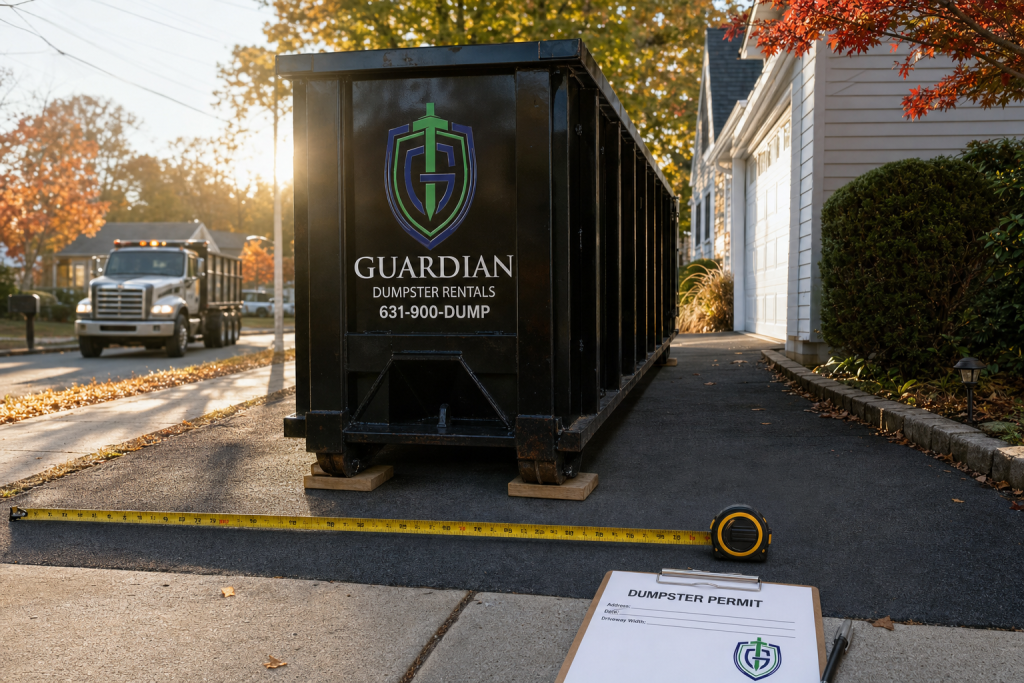
- Length: Measure from the garage door to the sidewalk or property line. You need the container’s length plus a few extra feet of clearance so the driver can set it down and the door can swing open.
- Width: Confirm at least 10 feet of clear width — 8 feet for the container plus room for the truck’s mirrors and your own access around it.
- Straight approach: The delivery truck backs in and tilts the container off, so a straight, unobstructed path works far better than a sharply curved driveway.
Don’t Forget Overhead Clearance
Roll-off trucks raise their bed to slide the container off, so look up before you book. You generally want around 20 feet of vertical clearance free of tree limbs, power lines, basketball hoops, and eaves or gutters along the drop zone. Trimming a low branch ahead of time is much easier than rescheduling a delivery.
If you’re not sure which size clears your space, a local provider that handles residential dumpster rental in Commack NY can talk through your driveway dimensions and project scope before you commit — getting the fit right the first time means no street placement, and no dumpster permit paperwork at all.
What Should NY Homeowners Check Before a Fall Delivery?
Before a fall dumpster delivery in New York, clear wet leaves from the drop zone so the truck has traction, plan the swap-out around shorter daylight and early cold snaps, and secure lightweight debris against autumn wind. Remember that leaves, yard waste, brick, concrete, and dirt are never allowed in the dumpster.
Autumn is one of the busiest seasons for remodels on Long Island, but it also brings slick surfaces, gusty nor’easter winds, and fading light. A few minutes of prep protects your driveway, keeps the delivery on schedule, and helps you avoid contamination fees on pickup day.
Clear the Drop Zone of Wet Leaves
A roll-off truck needs solid traction to position the container and winch it back onto the bed. A layer of wet, matted leaves on asphalt can be surprisingly slippery for a heavy vehicle. Rake or blow the delivery path and the full footprint of the container before the truck arrives. This is doubly important for a residential dumpster rental in Lindenhurst NY or anywhere with mature trees shading the driveway.
Plan Around Cold Snaps and Shorter Days
- Watch the forecast: An early freeze can make a sloped driveway icy; check the National Weather Service forecast a day or two before delivery and keep ice melt on hand.
- Load in daylight: With sunset arriving earlier each week, schedule heavy loading sessions for mornings or weekends so you’re not tossing debris in the dark.
- Book the pickup early: If your project runs into late November, confirm the haul-away date before holiday schedules tighten availability.
Secure Lightweight Debris Against Wind
Fall winds can lift drywall scraps, insulation, cardboard, and plastic sheeting right out of an open container. Load heavy items like lumber on top of light ones, break down boxes flat, and consider a tarp if a storm is coming. Blowing debris annoys neighbors and can create a code-enforcement complaint — the last thing you want if you also needed a street dumpster permit. Homeowners arranging dumpster rental in Babylon New York near the shoreline should be especially mindful of gusts off the bay.
Keep Prohibited Materials Out
It’s tempting to toss bagged leaves into the container while you’re raking, but leaves, yard waste, brick, concrete, and dirt are never allowed in the dumpster — whether it’s a 10 yard, 20 yard, or 30 yard container. These materials must be handled separately. Most New York towns offer seasonal curbside leaf collection, or you can compost them at home; the EPA’s composting guide explains how. Keeping prohibited items out protects you from extra charges and keeps your pickup on schedule.
Run through this checklist the day before delivery, and your fall remodel debris will be handled without a hitch — permit or no permit.
Often issued in 1–4 week increments, renewable
Typical street permit duration
Commonly 1–5 business days — apply before delivery
Permit processing time
Roughly 12–22 ft of length for a 10, 20, or 30 yard container plus truck clearance
Driveway space needed
Your local city, town, or village — not the dumpster company
Who issues permits
Dumpster Permit Needs by Placement: Driveway vs. Street in NY
| Placement Location | Permit Typically Required? | Common Requirements | Best-Fit Dumpster Sizes |
|---|---|---|---|
| Private driveway | Usually no | Property owner permission; protect driveway surface with boards | 10, 20, or 30 yard |
| Public street / curbside | Usually yes | Municipal permit, reflective markers or cones, placement time limits | 10 or 20 yard (smaller footprint often preferred) |
| Sidewalk or right-of-way | Almost always yes | Permit plus pedestrian clearance and safety signage | 10 yard where space is tight |
| HOA or shared private road | Varies | HOA approval and possibly municipal sign-off | 10, 20, or 30 yard depending on space |
Hypothetical Example: A Kitchen Remodel in a Hudson Valley Village
Illustrative example
Consider a hypothetical homeowner planning a full kitchen remodel who initially assumed a 20 yard dumpster could simply sit at the curb. A quick call to the village clerk revealed a street-placement permit was required, with reflective cones and a two-week time limit. After measuring the driveway, the homeowner found there was enough room to place the 20 yard container on their own property instead, avoiding the permit entirely. They confirmed with the rental company that no brick, concrete, dirt, or yard waste would go in the container, and the project stayed on schedule. This composite scenario shows why checking placement rules before delivery saves time and hassle.
Frequently asked questions
Do I need a dumpster permit if the dumpster is in my own driveway?
In most New York municipalities, no permit is required when a dumpster sits entirely on your private property, such as a driveway. Permits typically come into play only when the container occupies public space like a street, sidewalk, or right-of-way. That said, some towns and HOAs have their own placement or duration rules, so a quick call to your local building or code enforcement office before delivery is always a smart move.
How much does a street dumpster permit cost in New York?
Costs vary widely by municipality, so there's no single statewide fee. Some towns charge a flat rate while others charge per day or per week the dumpster occupies the street. Contact your city or town clerk, building department, or department of transportation for exact pricing. Factor this into your project budget early, since permit fees come on top of the rental cost itself.
How long does it take to get a dumpster permit approved?
Approval times depend on your municipality. Some issue permits same-day or within a business day or two, while larger cities may take longer, especially if your placement requires review for traffic or parking impacts. To stay safe, apply at least a week before your scheduled dumpster delivery. Delivering a dumpster to the street before the permit is issued can result in fines or forced removal.
What happens if I put a dumpster on the street without a permit?
You risk fines, which can accumulate daily in some municipalities, and the city may order the dumpster removed at your expense. Code enforcement officers and even neighbors can report an unpermitted container. If you've already placed one without a permit, contact your local permitting office right away — many will let you apply retroactively or move the dumpster to your driveway to resolve the violation.
Who applies for the dumpster permit, me or the rental company?
It varies. Some dumpster rental companies handle street permits on your behalf, while others require the homeowner to apply directly with the municipality. Ask this question before booking, and get the answer in writing. If it falls to you, confirm exactly what information the application needs — often the dumpster size, placement location, and rental dates — so delivery isn't delayed.
How do I decide between driveway and street placement for my dumpster?
Choose your driveway if it fits — you'll usually skip the permit, the fees, and the paperwork. Street placement makes sense when your driveway is too short, too steep, or needs to stay clear for vehicles. Consider dumpster size too: a 10 yard container fits most driveways easily, while a 20 or 30 yard dumpster needs more length and may force you toward the street.
Will a dumpster damage my driveway, and how do I prevent it?
A loaded dumpster can scratch, crack, or dent asphalt and some pavers, especially in hot weather when asphalt softens. The common fix is placing plywood boards under the container's contact points to spread the weight. Ask your rental company to set the dumpster on boards at delivery. This is a cheap precaution compared to driveway repairs, particularly with heavier 20 and 30 yard containers.
What size dumpster do I need for a home remodel in NY?
A 10 yard dumpster suits small projects like a single bathroom remodel or a garage cleanout. A 20 yard handles mid-size jobs such as a kitchen renovation or flooring removal across multiple rooms. A 30 yard works for large remodels or whole-home projects. Remember that materials like brick, concrete, dirt, and yard waste aren't allowed in these dumpsters, so plan separate disposal for those.
Can I put construction debris like concrete or dirt in my rental dumpster?
No — brick, concrete, dirt, and yard waste are not allowed in these dumpsters. Rental containers in the 10, 20, and 30 yard range are intended for general remodeling debris like drywall, cabinetry, flooring, and fixtures. Loading prohibited heavy materials can result in rejected pickups or extra charges. If your remodel involves masonry or excavation, ask your hauler about proper disposal options for those materials.
What are the biggest mistakes homeowners make with dumpster permits and placement?
Common missteps include ordering the dumpster before checking permit requirements, assuming the rental company handles the permit, blocking sidewalks or fire hydrants with street placement, and underestimating how much driveway length a 20 or 30 yard container needs. Another frequent error is overfilling past the rim or tossing in prohibited materials like concrete or dirt. A five-minute call to your local building department prevents most of these problems.
Residential Dumpster Rental help near you
- Residential Dumpster Rental Islip NY
- Residential Dumpster Rental West Islip NY
- Residential Dumpster Rental Lindenhurst NY
Related local pages
- Dumpster Rental Greenlawn New York
- Dumpster Rental Dix Hills New York
- Dumpster Rental West Babylon New York
Ready to start your remodel? Call us today for honest advice on placement, permits, and the right 10, 20, or 30 yard dumpster for your NY project. Get in touch.
Last updated: October 24, 2026
Recent Comments