
Load a 30 yard dumpster: How to Load a 30 Yard Dumpster for a Phased NY Remodel
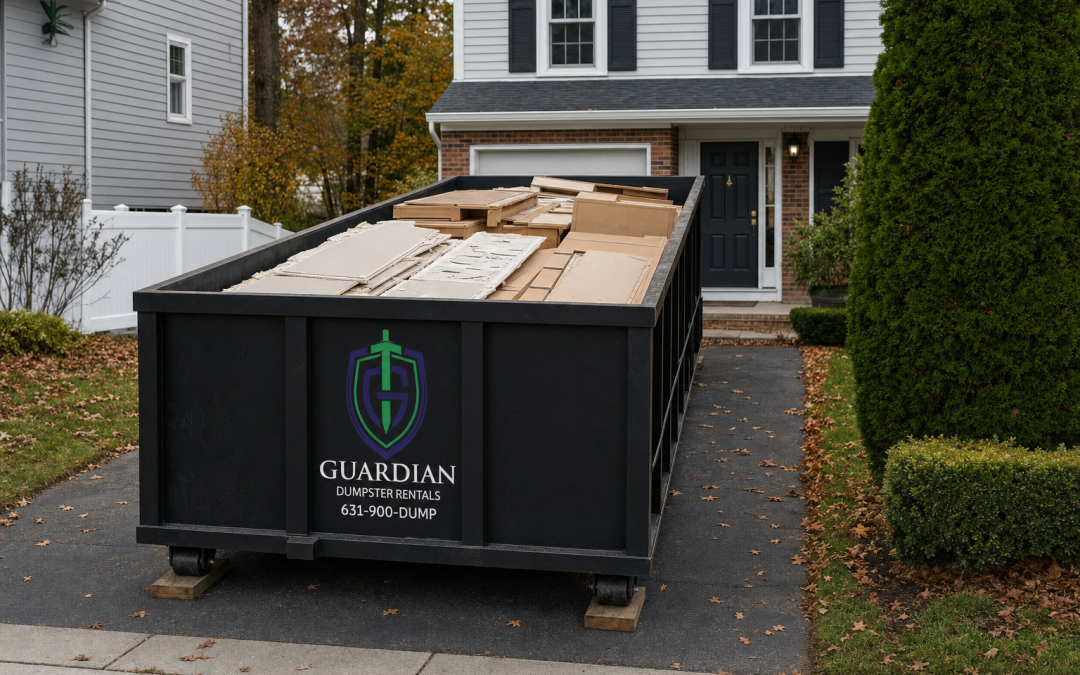
Why Does Loading Order Matter When You Load a 30 Yard Dumpster?
To load a 30 yard dumpster efficiently during a phased remodel, loading order matters because bulky, awkward debris eats space fast when it goes in randomly. Sequencing large demo items first, then filling gaps with smaller material, lets you fit each phase’s debris without ordering an extra container or stalling the next stage of work.
Key takeaways
- Load a 30 yard dumpster with the bulkiest demo debris first — cabinets, countertops, and fixtures — so later phases of the remodel still have room.
- Break down large items like cabinets and doors before loading to reclaim 20-30% of usable container space.
- Fill floor-to-wall in even layers rather than tossing debris in randomly, which prevents air pockets that waste capacity mid-job.
- Keep prohibited materials like brick, concrete, dirt, and yard waste out of the dumpster entirely — they violate rental terms and can trigger extra fees.
- If your phased remodel stretches past the rental window, a swap-out on a 30 yard dumpster is usually cheaper than cramming and risking an overage charge.
A 30 yard dumpster sounds enormous — and it is, at roughly 22 feet long with tall walls. But a phased remodel produces debris in waves: kitchen demo one week, bathroom gut the next, flooring tear-out after that. When homeowners toss everything in as it comes out the door, cabinets land on top of drywall, doors wedge diagonally across the floor, and air pockets form everywhere. The container “fills” visually while a third of its actual volume sits empty. That wasted space is what forces a second haul, and a second haul means waiting on a swap-out while your contractor stands around.
The Real Cost of Random Loading
In a phased New York remodel, the dumpster is part of the schedule, not just the cleanup. If the container is full before the second phase of demo even starts, you have two bad options: pile debris on the driveway (and risk a mess, a hazard, or an unhappy neighbor) or pause work until the container is emptied. Either way, a poorly loaded dumpster quietly adds days and dollars to the project. Teams that handle construction debris removal in Islip NY see this constantly — the difference between one container and two often comes down to how the first few loads were placed.
What Smart Sequencing Looks Like
The core principle is simple: treat the dumpster like a moving truck, not a trash can.
- Bulky items go in first and flat. Cabinets, countertops, doors, and large fixtures should be broken down where possible and laid level across the floor of the container.
- Heavy material stays low and spread out. Keeping weight at the bottom and distributed evenly keeps the container safe to haul and within weight limits.
- Small and flexible debris fills the gaps. Drywall pieces, trim, insulation, and bagged debris slide into the voids around larger items instead of creating new ones.
When each demo phase follows this pattern, a single 30 yard container can often carry a multi-room remodel from first swing of the hammer to final cleanup. If you’re planning a project on Long Island, lining up your dumpster rental in Islip New York before demo day gives you time to map out which phase’s debris goes in first.
The sections below break down exactly how to execute that plan — what goes in first during each phase, how to decide between a 10 yard, 20 yard, or 30 yard container, and how fall weather changes the game.
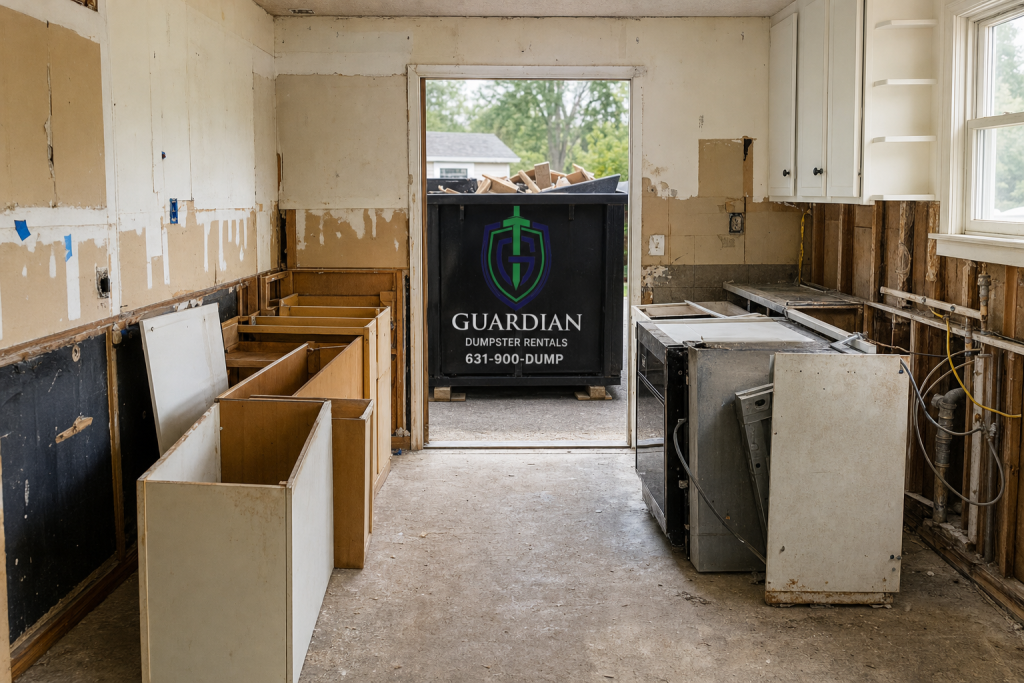
How Do You Load a 30 Yard Dumpster So You Never Run Out of Room?
To load a 30 yard dumpster efficiently, place flat and heavy items on the floor first to build a stable base, break down bulky pieces like cabinets and doors before tossing them, fill gaps with smaller debris as you go, and keep every load below the fill line so the driver can pick it up safely.
That one-paragraph method sounds simple, but most homeowners do the opposite: they throw debris in as it comes off the walls, and by week two of the remodel the container looks full while actually holding air. A 30 yard dumpster gives you a lot of volume to work with, but only if you treat loading like packing a moving truck rather than tossing bags into a bin.
Start With a Flat, Heavy Base
Lay sheet goods and dense, flat materials across the floor of the container first. Think plywood, old subfloor sections, solid-core doors laid flat, and stacked drywall. This does two things: it keeps the weight low so the container stays stable during haul-off, and it creates a level platform that everything else stacks on neatly. Crews handling construction debris removal in Islip NY use this same flat-base approach on job sites every day because it reliably adds usable capacity.
Break Everything Down Before It Goes In
An intact cabinet is mostly empty space. Before anything bulky goes over the wall, take a few minutes to:
- Knock cabinet boxes apart and stack the panels flat
- Remove doors from frames and lay them like sheet goods
- Score and snap drywall into stackable pieces instead of jagged chunks
- Cut or snap long trim and lumber so it lies flat rather than spanning the container diagonally
One piece of lumber angled corner-to-corner can block an entire layer of loading space above it. Keep everything horizontal and the layers build cleanly.
Fill the Voids as You Go
Don’t save small debris for the end. Bagged dust, broken tile, insulation, and odd offcuts should go into the gaps between larger items in real time. Treat every void as wasted rental money. If you can see daylight between items, there’s room for more debris.
Respect the Fill Line
Every container has a marked maximum fill line, and drivers cannot legally transport an overloaded or overflowing dumpster. Nothing should stick up past the top rail, and nothing should hang over the sides. If you’re planning around a tight driveway or a multi-week project schedule, talking through placement and swap-out timing with a provider of dumpster rental in Bay Shore New York before delivery can save you a failed pickup later. A level load at the rail is the goal — not a mound in the middle.
What Should Go in the Dumpster First During Each Demo Phase?
In every demo phase, load the largest, most awkward items first: cabinet runs and countertops during the kitchen tear-out, the tub or shower surround during the bathroom gut, and rolled carpet or bundled plank flooring during floor removal. Hold back trim, drywall scraps, and small debris to fill gaps between the bulky pieces.
A phased remodel means the dumpster fills in waves, not all at once. That makes sequencing within each phase even more important, because a poorly packed first phase steals space from everything that comes after it. Here is how to think about each stage of a typical New York remodel.
Phase 1: Kitchen Tear-Out
- Load first: Base and wall cabinets, countertops, and any built-in shelving. Break cabinets down flat where you can — intact boxes trap empty air.
- Load next: Old appliances you’re permitted to toss (check with your hauler first, since some require refrigerant removal before disposal).
- Hold back: Backsplash pieces, trim, and drywall cutoffs. These slide into the voids around cabinet frames.
Phase 2: Bathroom Gut
- Load first: The tub, shower surround, and vanity. These are the bulkiest, most rigid items in the whole project, so get them flat against the existing load or the floor of the open area.
- Load next: The toilet and sink, nested into corners where they won’t rock loose.
- Hold back: Broken tile and wall material, which pour neatly into gaps around the fixtures.
Phase 3: Flooring Removal
- Load first: Rolled carpet and padding, cut into manageable rolls and laid end to end like logs.
- Load next: Bundled hardwood or laminate planks, stacked flat to build dense, even layers.
- Hold back: Underlayment scraps and tack strips (points down, for safety) to top off the load.
The pattern across all three phases is the same: rigid and bulky goes down first, flexible and small goes in last. Homeowners handling construction debris removal in West Islip NY often find that staging each phase’s heavy items beside the container before loading — rather than tossing as you demo — keeps the layers tight and predictable.
One more tip for multi-phase projects: leave yourself a mental map of the container. Reserve one end for the next phase’s bulky items so you’re not stacking a bathtub on top of loose kitchen debris weeks later. If you’re planning the timeline for a dumpster rental in Bay Shore New York, coordinating your demo phases with your rental window helps ensure the sequence above actually fits in a single 30 yard container instead of spilling into a second haul.
Is a 30 Yard Dumpster the Right Size to Load for a Phased Remodel, or Should You Go Smaller?
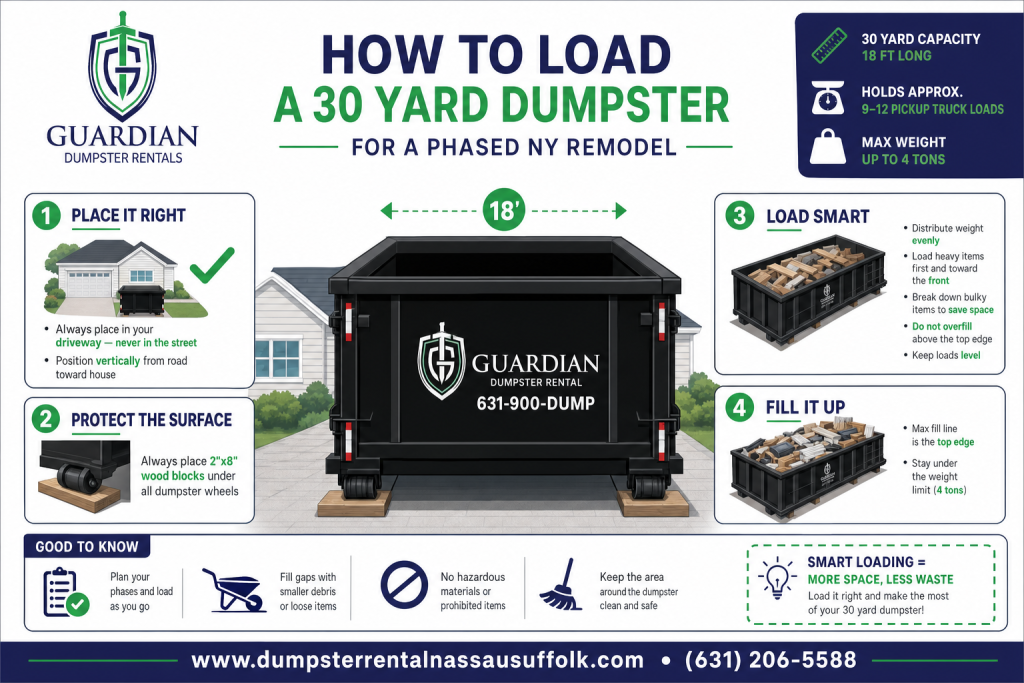
For most phased remodels in New York, a 30 yard dumpster is the right call because it absorbs debris from multiple demo stages without constant swap-outs. A 10 or 20 yard container works for single-room or single-phase projects, but if you’re gutting several spaces over weeks, the 30 yard saves time and scheduling headaches.
The easiest way to decide is to compare what each container actually holds against the scope of your remodel. Here’s how the three common sizes stack up for typical Long Island projects:
Container Size Comparison for NY Remodels
| Size | Approximate Capacity | Typical NY Project Examples |
|---|---|---|
| 10 Yard | About 3–4 pickup truck loads | Small bathroom gut, single-room flooring tear-out, cleaning out a garage before demo starts |
| 20 Yard | About 6–8 pickup truck loads | Full kitchen remodel, roofing shingle tear-off on a modest home, two-room renovation done in one phase |
| 30 Yard | About 9–12 pickup truck loads | Whole-floor gut, phased kitchen-plus-bath remodel, large home addition demo spread over several weeks |
When a Phased Remodel Truly Needs the 30 Yard
Phased work changes the math. A 20 yard container might technically hold one phase of debris, but if phase two starts before the container is hauled away, you’re stuck waiting on a swap. Homeowners planning a Dumpster Rental in Commack New York for multi-stage projects often find the 30 yard eliminates that gap entirely.
Go with the 30 yard if any of these apply:
- You’re demoing two or more rooms across separate phases
- Bulky items like cabinetry, drywall, and old framing are coming out at different times
- Your contractor’s schedule is fluid and you can’t predict exactly when each phase ends
- Driveway space allows only one container placement, so swaps would disrupt the whole site
When Smaller Makes Sense
If your phases are months apart — say, a bathroom this fall and a kitchen next spring — two separate smaller rentals may fit better than one large container sitting half-empty. A 10 yard suits a compact single-phase job, and a 20 yard covers a standard kitchen or roofing project comfortably. Teams handling construction debris removal in Dix Hills regularly help homeowners match container size to their actual phase schedule rather than guessing.
One last practical note: it’s far easier to load a 30 yard dumpster efficiently than to cram a 20 yard past its fill line. Overfilled containers can’t be legally hauled, so if you’re on the fence between sizes for a phased remodel, sizing up is almost always the safer and ultimately cheaper choice.
What Can’t You Put in a 30 Yard Dumpster in NY?
In New York, you cannot put brick, concrete, dirt, or yard waste—including fall leaves—into your 30 yard dumpster. Hazardous materials such as paint, chemicals, batteries, and propane tanks are also prohibited. Keeping these items out protects your usable space, prevents overweight charges, and avoids rejected loads at the transfer station.
It’s easy to assume that “demolition debris” means anything you rip out of the house or dig up around it, but New York disposal rules draw a hard line. Heavy masonry and organic material are handled through entirely different waste streams, so they simply cannot ride along with your remodel debris.
Materials That Are Never Allowed
- Brick — whether from a chimney teardown, patio, or interior accent wall, brick stays out of the container.
- Concrete — footings, slab chunks, and broken sidewalk sections are prohibited.
- Dirt — excavated soil, fill, and sod cannot go in, even in small amounts mixed with other debris.
- Yard waste — branches, brush, grass clippings, and autumn leaves are all off the list.
- Hazardous items — paints, solvents, oils, chemicals, batteries, propane tanks, and similar materials require special disposal.
- Tires and certain appliances — these are typically restricted; ask your hauler before tossing them in.
If your phased remodel includes masonry or excavation work, plan a separate disposal path for that material from the start. Providers who handle construction debris removal in Commack NY can tell you exactly which materials belong in the container and which need alternate arrangements, which saves you from unloading prohibited items by hand later.
Why Fall Leaves Are a Bigger Problem Than They Look
During an autumn remodel, leaves find their way into an open container whether you invite them or not. The problem is twofold. First, yard waste is prohibited, so a leaf-filled load can trigger contamination fees or a refused pickup. Second, wet leaves are deceptively heavy and compact into the gaps you were counting on when you load a 30 yard dumpster across multiple demo phases—space you paid for gets eaten by material you weren’t allowed to toss anyway.
A simple fix: keep a tarp over the container between work sessions, and rake the area around the dumpster before each loading day. If a cold snap is coming, cover it before the storm, not after—frozen, leaf-matted debris is miserable to separate.
When in Doubt, Ask Before You Toss
Rules can vary slightly by hauler and municipality across Long Island. Before each demo phase, confirm your list of restricted items with your provider. A quick call to a local service like dumpster rental in Babylon New York takes a few minutes and is far cheaper than a contamination charge or a trip-fee for a load the driver couldn’t accept. A clean, compliant container keeps every cubic yard working for your remodel.
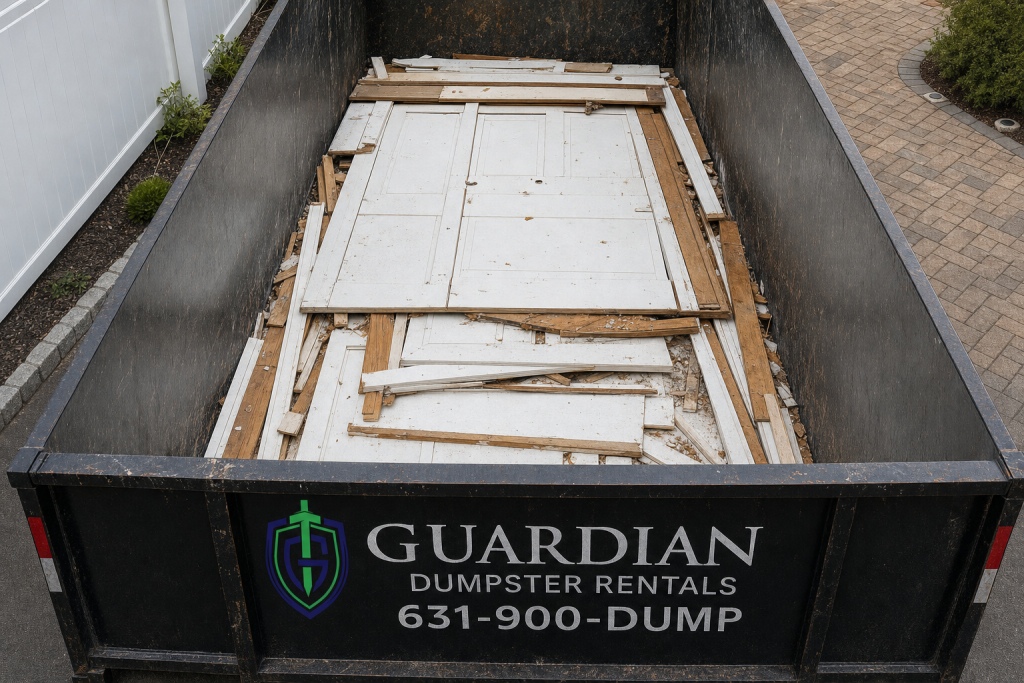
How Do Fall Weather and Cold Snaps Affect Your Loading Plan When You Load a 30 Yard Dumpster?
Fall weather in New York means rain, wind, early darkness, and slick leaves — all of which change how you load a 30 yard dumpster. Tarp the container between work sessions, front-load your demo hours into daylight, keep the driveway approach clean and dry for the truck, and schedule your final pickup before early-winter weather arrives.
Tarp the Load Against Rain, Wind, and Leaves
An uncovered 30 yard container collects everything autumn throws at it. Rain soaks drywall, carpet, and insulation, making the load heavier at pickup, while gusty winds can lift lightweight debris right out of an open-top container. Falling leaves also blow in and pile up in the corners — and since yard waste doesn’t belong in the dumpster, you don’t want them mixing with your demo debris. A simple solution:
- Keep a heavy-duty tarp and bungee cords on site and cover the container at the end of every work day.
- Weight the tarp edges so wind can’t peel it back overnight.
- Sweep or blow leaves off the tarp before you uncover it, so they don’t fall into the load.
Plan Around Shorter Daylight Hours
By mid-fall, usable daylight shrinks fast, and carrying debris to a container in the dark is how people trip over extension cords and drop sheet goods. Schedule your heaviest hauling for mornings and early afternoons, and save indoor sorting and bagging for after dusk. Checking the local forecast on the National Weather Service before each demo weekend helps you pick the dry, workable days and hold off when a storm is rolling through.
Keep the Driveway Approach Clear for Safe Swaps
Roll-off trucks need solid, predictable footing to drop and retrieve a container. Wet leaves on a sloped driveway are surprisingly slippery for both tires and boots, and a frosted or icy approach can delay a swap entirely. Blow or rake the approach clear before each scheduled pickup, and keep vehicles out of the path. Crews that regularly handle roll off dumpster rental in Greenlawn deal with tight, tree-lined driveways all season — a clear, leaf-free approach makes every exchange faster and safer.
Schedule Pickups Ahead of Early-Winter Weather
Once hard freezes and snow arrive, loads can freeze to the container floor and road conditions can push pickups back. If your phased remodel runs into late fall, build a buffer: aim to have each phase’s container swapped or hauled away before the first serious cold snap rather than after. Reviewing basic cold-weather precautions from OSHA’s winter weather guidance is worthwhile if you’ll be working outdoors into December. And if your project sits farther west in Suffolk County, providers offering dumpster rental in Deer Park New York can help you time swaps between phases so a container isn’t sitting full under the season’s first snowfall.
Roughly 9-12 pickup truck loads of debris
Typical 30 yard capacity
About 22 ft long x 8 ft wide — plan driveway space accordingly
Common 30 yard footprint
Often 20-30% more usable room
Space saved by breaking down cabinets
Brick, concrete, dirt, and yard waste
Not allowed in the dumpster
How to Load a 30 Yard Dumpster by Remodel Phase vs. Smaller Container Options
| Container Size | Best Phase to Use It | Loading Strategy |
|---|---|---|
| 10 yard dumpster | Single-room punch-list or finish phase | Flat-stack drywall scraps and trim; keep load level with the rim |
| 20 yard dumpster | Kitchen or bath gut on one floor | Load cabinets and vanities first, fill gaps with broken-down drywall |
| 30 yard dumpster | Full phased remodel with staged demo | Sequence bulky demo debris first, break down everything, layer evenly front to back |
Illustrative Example: A Phased Two-Story Remodel in Westchester
Illustrative example
In this hypothetical composite scenario, a homeowner tackled a kitchen gut in phase one and two bathrooms in phase two, all on a single 30 yard dumpster rental. Instead of tossing debris as it came out, the crew sequenced the bulkiest items first — cabinets, countertops, and tub surrounds — broken down flat and layered at the front of the container. Lighter drywall and trim from the second phase filled the remaining gaps toward the rear. By loading strategically and keeping brick, concrete, dirt, and yard waste out of the container, the project finished both phases without needing a mid-job swap, avoiding days of demo downtime.
Frequently asked questions
What's the best way to load a 30 yard dumpster so I don't run out of space mid-remodel?
Load the heaviest, bulkiest demo debris first — cabinets, countertops, drywall sheets, and flooring — laying them flat along the bottom rather than tossing them in at angles. Break down anything that can be broken down before it goes in. Fill gaps with smaller debris as you go, and keep everything level and below the fill line. Loading flat and tight instead of random can recover a surprising amount of usable space.
How long can I keep a 30 yard dumpster for a phased remodeling project?
Most rental companies include a standard rental period, often around a week to two weeks, with the option to extend for a daily fee. For a phased remodel, ask about long-term or multi-swap pricing upfront. Some contractors schedule a swap-out between phases instead of one long rental, which keeps the container from sitting full while you wait on the next stage of work.
Should I get one 30 yard dumpster or two smaller dumpsters for a multi-phase remodel?
A single 30 yard dumpster usually costs less per cubic yard than renting a 10 yard and a 20 yard separately, and it avoids a second delivery fee. However, if your phases are weeks apart, two smaller rentals timed to each demo phase can work better — you're not paying extension fees on a half-empty container. Compare total rental time against the cost of a swap-out before deciding.
What happens if I overfill a 30 yard dumpster?
Haulers legally cannot transport an overloaded container, since debris above the fill line can fall off during transit. If your dumpster is overfilled, the driver may refuse pickup, charge a trip fee, or require you to remove the excess before hauling. Some companies also charge overage fees if the load exceeds the included weight. Stop loading at the fill line and schedule a swap if you have more debris.
What can't I put in a 30 yard dumpster during a NY remodel?
Standard prohibited items include hazardous materials like paint, solvents, chemicals, asbestos, propane tanks, batteries, and tires. In addition, brick, concrete, dirt, and yard waste are not allowed in these dumpsters, so plan separate disposal if your remodel involves masonry tear-out or excavation. Appliances with refrigerants, like fridges and AC units, often need special handling too. Always confirm the full prohibited list with your hauler before demo day.
How do I know if a 30 yard dumpster is big enough for my whole remodel?
A 30 yard container handles most whole-home or multi-room remodels in one shot, while a 20 yard suits a large single-room gut and a 10 yard fits a small bathroom or flooring job. For a phased project, estimate debris per phase: if your biggest single phase alone would fill a 20 yard, a 30 yard with a planned swap-out is usually the safer call than hoping everything fits.
What's the biggest mistake people make when loading a dumpster during demo?
Throwing bulky items in whole, early, and at random angles. A few intact cabinets or an unbroken vanity can waste several cubic yards of air space. The second most common mistake is loading light, fluffy debris first, which leaves no stable base for heavy material later. Break everything down, load heavy and flat first, then fill voids with smaller debris as each phase progresses.
Can I get the dumpster swapped out between phases of my remodel?
Yes — most haulers offer swap-out service, where they haul away the full container and drop an empty one in the same spot. For a phased remodel, this is often smarter than squeezing everything into one load. Schedule the swap a few days before your next demo phase starts so you're never standing around with debris and nowhere to put it. Ask about swap pricing when you book.
Do I need a permit to put a 30 yard dumpster in front of my house in NY?
If the dumpster sits on your own driveway or private property, you typically don't need a permit. If it must go on a public street, most NY municipalities require a street occupancy permit from the local department of transportation or building department, and rules vary by town and city. Check with your municipality before delivery day — some rental companies will help with or handle the permit process.
How should I distribute weight when I load a 30 yard dumpster?
Spread heavy debris evenly across the floor of the container rather than piling it all at one end. An unbalanced load can make the dumpster unsafe to lift onto the truck, and the driver may ask you to redistribute it before pickup. Keep the heaviest material low and centered, stack lighter debris on top, and never let weight concentrate against one wall or the rear door.
Construction Debris Removal help near you
- Construction Debris Removal Islip NY
- Construction Debris Removal West Islip NY
- Room Addition Debris Removal
Related local pages
- Dumpster Rental Greenlawn New York
- Dumpster Rental West Babylon New York
- Dumpster Rental Dix Hills New York
Remodeling in NY this fall? Reserve your 30 yard dumpster today and get expert loading advice before demo day—call now for fast, flexible delivery. Get in touch.
Last updated: October 22, 2026
Recent Comments