
Dumpster Rental for Remodeling: Skip Piecemeal Junk Hauls

Why One Roll Off Beats a Dozen Junk Hauls for a NY Remodel: The Case for Dumpster Rental for Remodeling
Dumpster rental for remodeling keeps a full-scale renovation moving because debris goes straight into one on-site roll off container the moment it comes off the wall. Piecemeal junk-haul appointments, by contrast, force you to stockpile debris, wait on pickup windows, and pay a new fee every trip — delays that hurt most as fall weather shrinks your building window.
Key takeaways
- A single roll off dumpster rental for remodeling keeps debris moving from demo day through final cleanup without waiting on multiple junk haul appointments.
- Piecemeal junk hauls charge per trip, so multi-week remodels typically cost more and create more scheduling headaches than one on-site container.
- Choosing the right size matters: 10 yard dumpsters suit single-room projects, 20 yard dumpsters fit kitchen or bath gut jobs, and 30 yard dumpsters handle whole-home remodels.
- Keep prohibited materials like brick, concrete, dirt, and yard waste out of the dumpster to avoid extra fees and rejected loads.
- An on-site dumpster keeps the job site safer and cleaner, since crews can toss debris immediately instead of staging piles for a hauler.
If you’ve ever tried to coordinate a junk removal crew around a demo crew, you already know the problem. Junk haulers charge by the load and work on their schedule, not yours. A remodel generates debris continuously — old drywall, cabinets, flooring, trim, fixtures — and every day that waste sits in your garage or driveway, your project loses momentum. A roll off dumpster flips that equation: the container sits on your property for the length of the job, and your crew tosses material as they go.
The Hidden Costs of Piecemeal Junk Hauls
Booking repeated junk pickups during a remodel tends to create problems that compound over the course of the project:
- Stacked fees: Every truck visit is a separate charge, and multiple partial loads almost always cost more than one container.
- Scheduling gaps: If the hauler can’t come for a few days, demo stops or debris piles up in your work area.
- Safety and site hazards: Loose piles of drywall scraps, broken tile, and old lumber invite trips, nail punctures, and complaints from neighbors.
- Weather exposure: Debris left in the open gets soaked by fall rain, becoming heavier, messier, and harder to move.
How One Container Keeps the Job Moving
With a single roll off in the driveway, debris disposal stops being a separate task. Your contractor demos a kitchen in the morning and the waste is contained by lunch. When the container fills, one call schedules a swap or final pickup. Homeowners planning a roll off dumpster rental in Greenlawn can typically match the container size — 10, 20, or 30 yard — to the scope of the remodel so there’s room for the entire job without overpaying for unused capacity.
Timing matters even more on Long Island in autumn. Shorter days, early nor’easters, and the holiday slowdown all compress the working season, and the first hard freeze can complicate exterior work. A container that’s already on site removes one of the biggest variables from your schedule. If you’re lining up a fall project, arranging dumpster rental in Lindenhurst, New York before demo day means your crew never waits on a truck to show up.
The rest of this guide breaks down why a roll off is usually the cheaper route, how to choose between a 10, 20, or 30 yard container, what can’t go in the dumpster, and how the rental process works from delivery to final pickup.

Why Is Dumpster Rental for Remodeling Cheaper Than Piecemeal Junk Removal?
Dumpster rental for remodeling is cheaper because you pay one flat rate that includes delivery, pickup, and a set amount of tonnage, instead of paying per trip for junk haulers. Junk removal pricing builds in labor markups and travel fees every single visit, and those repeated charges add up fast over a multi-week project.
Flat-Rate Pricing vs. Per-Trip Fees
A roll off rental works like a single subscription for your whole project. You know the cost up front, and that price covers the container sitting in your driveway for the full rental period. Junk removal companies, by contrast, quote based on how much of their truck you fill each visit. A remodel generates debris in waves — demo week, rough-in, finish work — which means multiple truckloads and multiple invoices. Each invoice includes the same fixed costs all over again:
- Drive time and fuel for every trip to your property
- Labor charges for a two-person crew to load by hand
- Disposal fees marked up on top of what the facility actually charges
- Minimum-load fees even when you only have a small pile
With a flat-rate container, those costs are bundled once. Whether your crew tosses debris in on day one or day ten, the price doesn’t change until you exceed the included tonnage. Homeowners comparing quotes for dumpster rental in West Islip New York often find the single rental costs less than just two or three junk hauler visits.
The Hidden Cost: Idle Crews and Scheduling Gaps
The bigger savings are often the ones that never show up on an invoice. Junk haulers work on their schedule, not yours. If your contractor finishes demo on a Tuesday but the hauler can’t come until Friday, that debris pile blocks the work area for three days. Your options are bad either way: pay your crew to stand around, pay them to shuffle debris out of the way twice, or lose days on the schedule.
A dumpster on site eliminates that bottleneck entirely. Debris goes from the house straight into the container the moment it’s pulled out, the workspace stays clear, and nobody waits on a third party’s truck. For a kitchen or bathroom remodel where trades are stacked back to back, that continuity is worth real money. If you’re pricing out a project on the South Shore, getting a quote for a roll off dumpster rental in Islip before demo day lets you lock in one predictable number instead of guessing how many hauler visits you’ll need.
One Price, One Pickup, Zero Guesswork
Piecemeal junk removal only makes financial sense for a single small cleanout. For a remodel that produces debris over days or weeks, a flat-rate roll off with included tonnage beats per-trip pricing on cost, and it beats it even more decisively on keeping your project moving.
What Size Dumpster Do I Need for a Remodeling Dumpster Rental: 10, 20, or 30 Yard?
For most remodels, the answer is simple: a 10 yard dumpster handles a bathroom or single-room refresh, a 20 yard covers a kitchen remodel or multi-room gut, and a 30 yard suits a whole-home renovation. When in doubt, size up one level — a second haul costs more than a slightly larger container.
Choosing the right size for your dumpster rental for remodeling comes down to three things: how much debris your demo will produce, how much room you have in the driveway, and how heavy the material is. Here is a quick comparison for New York properties.
Container Sizes Table
- 10 Yard Dumpster — Best for a bathroom remodel or single-room refresh. Holds roughly 3 pickup truck loads of debris. Its compact footprint fits easily in a standard NY driveway, leaving room to park alongside it.
- 20 Yard Dumpster — The go-to size for a kitchen remodel or multi-room gut. Holds roughly 6 pickup truck loads, swallowing cabinets, countertops, drywall, and old flooring without constant compacting. Still fits most suburban driveways, though it will take up the better part of one.
- 30 Yard Dumpster — Built for whole-home renovations where every room is getting touched. Holds roughly 9 pickup truck loads. Plan for a longer, wider footprint and confirm your driveway length and overhead clearance (tree limbs, wires) before delivery.
Driveway Footprint and Placement in NY
Long Island driveways vary widely, so measure before you book. A 10 yard container works almost anywhere, while a 30 yard needs a longer straight run plus clearance for the roll-off truck to raise its bed during drop-off. If your driveway is tight, splitting the job across two smaller containers delivered back to back can be smarter than forcing a big box into a bad spot. Homeowners tackling full gut jobs often start by pricing a 30 yard dumpster rental in Bay Shore and comparing the footprint against their available space.
Weight Matters as Much as Volume
Every container comes with a weight allowance, and remodeling debris adds up faster than most homeowners expect. Tile, plaster, and layered flooring are dense, so a kitchen or bath demo can hit the weight limit before the box looks full. If your project involves a lot of dense tear-out, a mid-size option like a 20 yard dumpster rental in West Babylon often balances capacity and weight allowance better than overfilling a smaller box.
A good rule of thumb: estimate your debris volume, then ask yourself whether the material is light and bulky (cabinets, drywall) or dense and heavy (tile, plaster). Light and bulky means size for volume; dense and heavy means watch the weight limit and discuss tonnage with your rental company before demo day.
What Can’t Go in a Roll Off Dumpster During a Remodel?
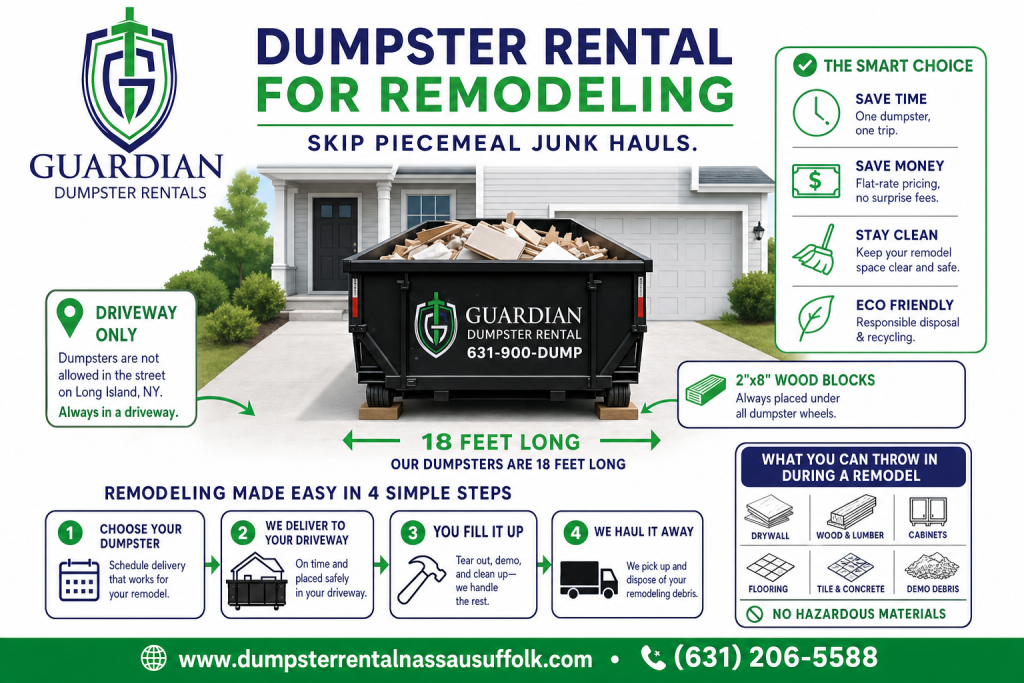
Four materials stay out of the dumpster during a remodel: brick, concrete, dirt, and yard waste — including fall leaves. Everything else common to interior remodeling, such as drywall, cabinetry, flooring, fixtures, and lumber, is accepted. Keeping prohibited materials separate protects you from extra fees and keeps your project moving.
The Four Materials That Stay Out
These restrictions aren’t arbitrary. Brick, concrete, and dirt are extremely dense — even a partial load can push a container past legal road weight limits, which means the truck can’t haul it. Yard waste is regulated differently and typically must go to a separate composting or green-waste facility, not a construction debris transfer station.
- No brick — including fireplace demo material, pavers, and chimney debris
- No concrete — slab pieces, footings, mortar, and cinder block are all off the list
- No dirt — excavation soil, fill, and sod stay out of the container
- No yard waste — branches, shrubs, grass clippings, and bagged fall leaves cannot be mixed with remodeling debris
If your remodel involves tearing out a patio or breaking up a slab, plan a separate disposal route for that material before demo day. Many homeowners arrange for a mason or excavation contractor to haul heavy masonry directly, or bring it to a facility that accepts clean fill. Whatever you do, don’t let a subcontractor toss a few blocks in the bottom of the container “just this once” — it adds weight fast and can result in overage charges or a refused pickup. When you book a roll off dumpster rental in Dix Hills or anywhere else on Long Island, confirming these rules upfront saves headaches later.
What Remodeling Debris Is Accepted
The good news: nearly everything generated by a kitchen, bathroom, or whole-home interior remodel is fair game for a 10, 20, or 30 yard container.
- Drywall and plaster from wall demo
- Cabinetry, countertops, and built-ins
- Flooring — tile, hardwood, laminate, carpet, and padding
- Fixtures such as sinks, tubs, toilets, and light fixtures
- Lumber, trim, framing offcuts, and old doors
- Insulation and general construction packaging
Handling the Exceptions the Right Way
If you discover prohibited material mid-project — say, a brick hearth hiding behind old paneling — pause and set it aside rather than mixing it in. Stage masonry on a tarp in the driveway and arrange separate disposal. For autumn projects, keep leaf cleanup completely separate from your remodel debris; bag leaves for your town’s curbside collection instead. Companies offering dumpster rental in Islip New York and surrounding Suffolk County towns can walk you through what’s allowed before delivery, so there are no surprises when the driver arrives. A quick phone call about a questionable item is always cheaper than a contaminated load.
How Does the Rental Process Work From Demo Day to Final Pickup?
You schedule delivery a few days before demo, the driver places the roll off on protective boards in your driveway, you load debris in phases as work progresses, request a swap-out if the container fills mid-project, and call for final pickup when you’re done. Most homeowners handle the entire process with two or three phone calls.
Step 1: Schedule Delivery Before Demo Day
Book your container at least two to three business days ahead of demolition so it’s sitting in the driveway the morning the first wall comes down. When you call, describe the project so the dispatcher can confirm the right size and flag anything unusual about your street or driveway. If you’re on Long Island, a local provider handling roll off dumpster rental in Commack and surrounding towns will know the typical driveway layouts and any township quirks before the truck ever arrives.
Step 2: Placement and Driveway Protection
Decide on the drop spot before the truck shows up. Good placement means:
- A flat, paved surface close to the demo zone but clear of garage doors, gates, and low branches
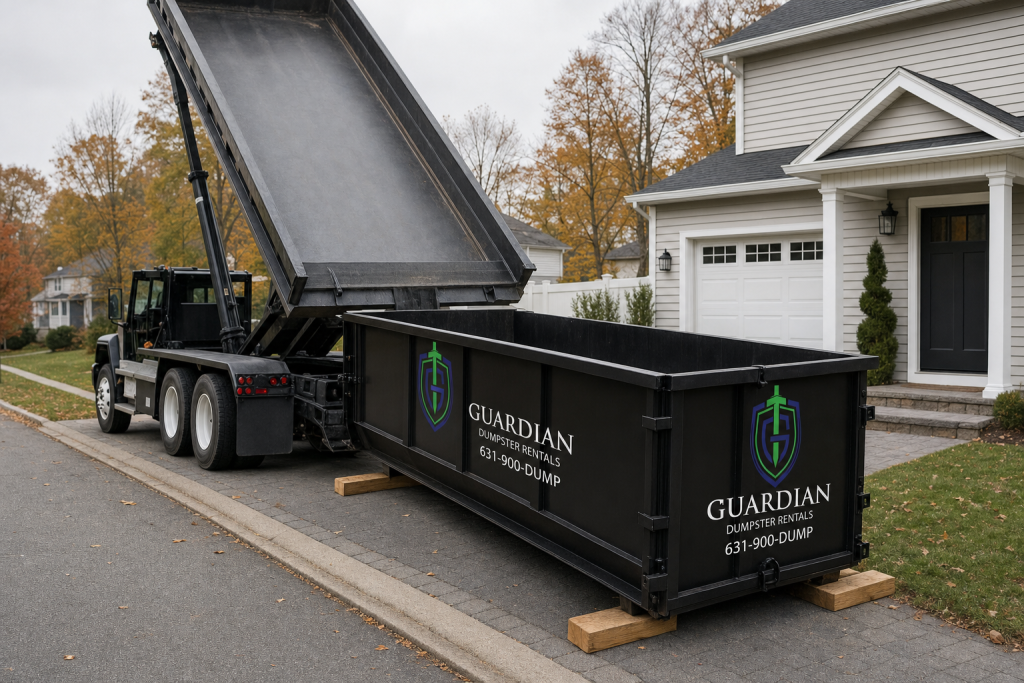
- Plywood sheets or boards under the container rails to protect asphalt and pavers
- Enough overhead clearance for the truck to tilt the bed and roll the container off
- A drop zone swept clear of wet fall leaves, which can hide cracks in the pavement and make the surface slick for the driver
Step 3: Load in Phases as Demo Progresses
Don’t wait until debris piles up in the house. Load the dumpster as each phase wraps — cabinets and fixtures first, then drywall and flooring, then framing scraps. Place flat, heavy items on the bottom and fill gaps with smaller debris so you use the full volume. Keep everything level with the top rail; overfilled containers can’t legally be hauled.
Step 4: Swap-Outs for Bigger Remodels
Gut renovations and whole-home projects often generate more debris than one container holds. Instead of renting two dumpsters at once, request a swap-out: the driver hauls the full container away and drops an empty one in the same spot, usually the same day or next. This keeps your driveway usable and your job site moving. A provider offering dumpster rental in Bay Shore New York can typically coordinate swap-outs around your contractor’s demo schedule.
Step 5: Final Pickup
When the last load is in, call for pickup rather than letting the container sit past your rental window. Before the truck arrives, double-check that nothing extends above the rim and that the area around the container is clear.
Fall-Specific Tips
- Tarp the load each evening — autumn wind scatters lightweight debris, and rain-soaked drywall adds serious weight
- Rake and sweep the drop zone before delivery and again before pickup so leaves don’t hide debris or hazards
- Schedule final pickup for a dry day when possible, since saturated loads are heavier and harder to haul
How Do I Keep My Fall Remodel on Schedule Before Winter Hits?
Book your dumpster rental for remodeling two to three weeks before demo day, lock in a delivery date that matches your contractor’s first day of tear-out, and schedule a swap or pickup before the container fills. Early reservations beat the pre-winter rush, and a staged debris plan keeps crews working instead of waiting.
Reserve Before the Pre-Winter Contractor Rush
Every fall, Long Island homeowners race to finish kitchens, bathrooms, and basements before the holidays, and contractors book up fast. Dumpster inventory tightens right along with them. If you wait until your contractor confirms a start date to call for a container, you may find the size you need is spoken for. Reserving a roll off dumpster rental in Commack or any nearby town a couple of weeks ahead guarantees your 10, 20, or 30 yard container shows up when the sledgehammers do.
Work Around Shorter Days and Early Cold Snaps
Once the clocks change, usable daylight shrinks quickly, and crews lose productive hours at the end of each day. A few habits keep debris from eating into that limited window:
- Load as you demo. Have the crew carry material straight to the dumpster rather than staging piles indoors that need a second handling.
- Watch the forecast. An early freeze or wet snow can soak drywall and lumber in an open container, adding weight. Check the National Weather Service before big demo days and tarp the load if precipitation is coming.
- Protect the driveway placement. Keep the area around the container clear of ice so loading stays safe in the early morning and at dusk.
- Front-load exterior work. Tackle siding, window, or deck tear-off early in the fall while conditions are mild, and save interior demo for colder weeks.
Coordinate Delivery So Debris Never Bottlenecks the Build
The fastest way to stall a remodel is a full dumpster with nowhere for the next phase of debris to go. Match your container schedule to the project phases: delivery the morning demo begins, a swap when the first container nears capacity, and final pickup after punch-list cleanup. If you’re planning a project with a dumpster rental in Dix Hills New York, talk through your contractor’s timeline with the rental company so swaps are pre-scheduled rather than called in last minute during the busy season.
Cold-weather work also brings safety considerations for anyone loading a container in freezing temperatures. OSHA’s winter weather guidance covers slip hazards, cold stress, and safe lifting practices worth reviewing before your crew works through a cold snap.
With the container booked early, the forecast on your radar, and swaps planned around your build phases, debris removal becomes the one part of a fall remodel you never have to think about twice.
10, 20, and 30 yard roll off containers
Size Options
7–14 days, often extendable for ongoing remodels
Typical Rental Window
One 30 yard dumpster can replace several separate junk hauler pickups
Junk Haul Trips Replaced
Brick, concrete, dirt, and yard waste are prohibited in all containers
Not Accepted
Dumpster Rental for Remodeling: Which Size Fits Your Project?
| Container Size | Best For | Typical Debris | Capacity Equivalent |
|---|---|---|---|
| 10 Yard Dumpster | Single-room refresh or small bathroom remodel | Drywall, cabinetry, flooring, fixtures | Roughly 3 pickup truck loads |
| 20 Yard Dumpster | Kitchen gut, full bathroom demo, or basement finish | Cabinets, countertops, drywall, tile backer, old appliances (where accepted) | Roughly 6 pickup truck loads |
| 30 Yard Dumpster | Whole-home remodel or multi-room demo | Framing lumber, drywall, flooring, cabinetry, bulky fixtures | Roughly 9 pickup truck loads |
Illustrative Example: A Whole-Home Remodel Done Right
Illustrative example
Consider a hypothetical New York homeowner tackling a full first-floor remodel — kitchen, two bathrooms, and new flooring throughout. Instead of booking a junk hauler every time debris piled up, they kept a 30 yard roll off dumpster on-site from demo day through punch list. The crew tossed drywall, old cabinets, and flooring as they worked, keeping walkways clear and the project on schedule. When the heavy demo phase ended, a quick swap to a 10 yard dumpster handled the lighter finish-stage debris. This composite scenario reflects a common pattern: one well-sized container typically means fewer interruptions and a cleaner, safer job site than repeated piecemeal hauls.
Frequently asked questions
How much does a dumpster rental for remodeling cost compared to hiring junk haulers?
Pricing varies by region and container size, but a single flat-rate dumpster rental typically costs less than multiple junk hauling trips over a weeks-long remodel. Junk haulers charge per load, so repeat visits add up quickly during demolition. A roll off dumpster gives you one predictable price covering delivery, a set rental period, pickup, and disposal, which makes budgeting a full-scale remodel much simpler.
What size dumpster do I need for a home remodel?
It depends on the project scope. A 10 yard dumpster suits a small bathroom remodel or single-room cleanout. A 20 yard dumpster handles a kitchen remodel or multi-room project with cabinets, drywall, and flooring. A 30 yard dumpster is the right choice for whole-home remodels or major gut renovations. When in doubt, size up—one larger container is cheaper than renting a second one mid-project.
How long can I keep a roll off dumpster during a renovation?
Most companies include a standard rental period of several days to two weeks, with the option to extend for a daily fee. For remodeling, schedule delivery just before demo day so the heaviest debris goes straight into the container. If your project runs long, call your provider before the pickup date—extensions are usually easy to arrange and far cheaper than a second delivery.
What can't I put in a remodeling dumpster?
Prohibited items typically include brick, concrete, dirt, and yard waste, along with hazardous materials like paint, solvents, batteries, tires, and appliances containing refrigerants. Acceptable remodeling debris includes drywall, lumber, cabinetry, flooring, trim, and fixtures. Always confirm your provider's accepted materials list before loading, because prohibited items can trigger extra fees or a refused pickup.
Do I need a permit to put a dumpster in my driveway in New York?
Generally no—dumpsters placed entirely on private property like a driveway don't require a permit. If the container must sit on a public street or sidewalk, most New York municipalities require a street occupancy permit from the local department of transportation or buildings department. Check with your town or city before delivery, since permit rules and processing times vary by municipality.
What happens if my dumpster fills up before the remodel is done?
Call your rental company and request a swap-out: they haul away the full container and drop an empty one in its place, usually for an additional haul fee. This is common on larger remodels. To avoid it, don't underestimate your debris—a 20 or 30 yard dumpster often costs only modestly more than a 10 yard but holds significantly more, making one right-sized container the smarter play.
Is it cheaper to rent a dumpster or make dump runs myself?
For a full remodel, a dumpster almost always wins. DIY dump runs require a truck or trailer, fuel, per-load disposal fees at the transfer station, and hours of loading, driving, and unloading—often across many trips. A roll off dumpster sits on site so debris goes in once, and the flat rate covers disposal. Self-hauling only makes sense for very small, single-load cleanups.
How does the dumpster rental process work from delivery to pickup?
You choose a size—10, 20, or 30 yard—schedule a delivery date, and clear a flat spot at least the length of the container plus room for the truck. The driver rolls it off, you fill it over your rental period keeping debris level with the top rails, then you call or it's picked up on the scheduled date. The company hauls everything to a licensed disposal facility.
What are the biggest mistakes people make when renting a dumpster for a remodel?
Common mistakes: renting too small a container to save money, then paying for a second haul; overfilling above the rim, which drivers can't legally transport; loading prohibited items like brick, concrete, dirt, or yard waste; scheduling delivery too late and letting debris pile up on site; and placing the dumpster where it blocks contractor access. Plan size, placement, and timing before demo day starts.
Will a roll off dumpster damage my driveway?
It can if you don't prepare, since loaded containers are heavy and rest on steel rails or wheels. The standard fix is simple: lay plywood sheets or wood boards where the dumpster will sit so the weight spreads across a larger surface. Many companies place boards on request. Avoid positioning the container on soft asphalt during hot weather, and keep it off septic systems and soft ground.
Roll Off Dumpster Rental help near you
Related local pages
- Dumpster Rental Greenlawn New York
- Dumpster Rental West Babylon New York
- Dumpster Rental Islip New York
Planning a fall remodel in NY? Reserve your 10, 20, or 30 yard roll off dumpster today and keep your project moving from demo day to final pickup. Get in touch.
Last updated: October 16, 2026
Recent Comments