
Room Addition Debris Removal: Budget Before You Build
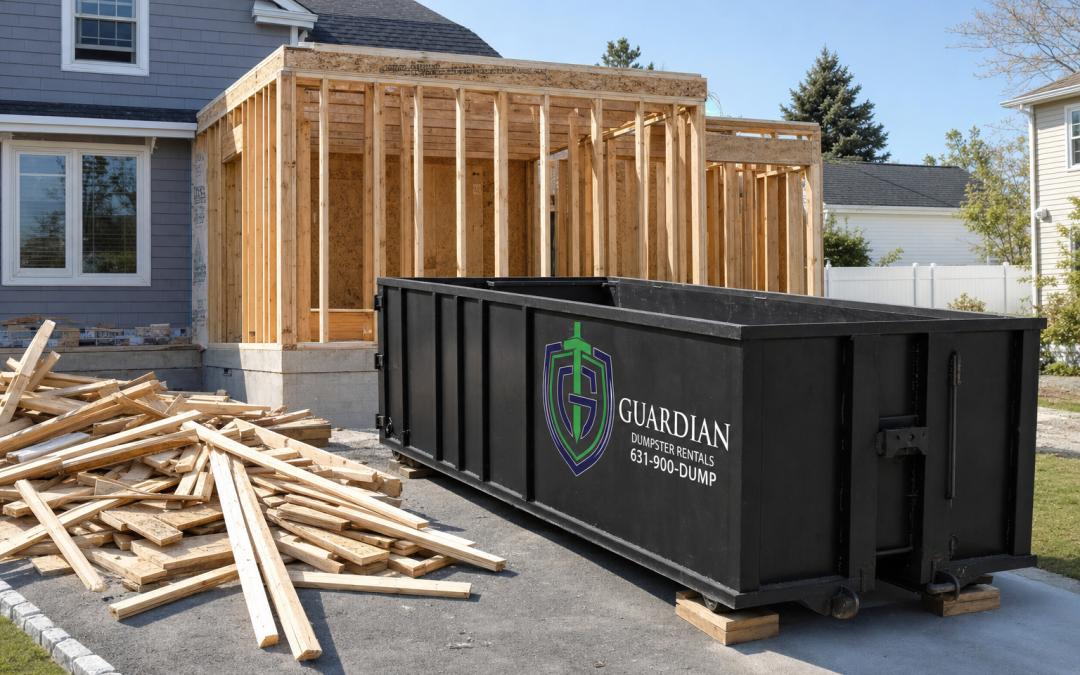
Why Room Addition Debris Removal Belongs in Your Budget From Day One
Room addition debris removal belongs in your budget from day one because every addition generates significant waste — framing offcuts, drywall scraps, old siding, and packaging — that must be hauled away legally. Most NY homeowners plan for lumber and labor but forget disposal, which typically means renting a 10, 20, or 30 yard dumpster for the project.
Key takeaways
- Budget your room addition debris removal before framing starts, since framing offcuts, drywall scraps, and old siding pile up faster than most homeowners expect.
- A 20 yard dumpster is the most common choice for a single-room addition, balancing capacity for mixed construction debris with a driveway-friendly footprint.
- Keep prohibited materials like brick, concrete, dirt, and yard waste out of your dumpster to avoid extra fees and rejected loads.
- Scheduling your dumpster delivery to align with demolition and framing phases helps you avoid paying for idle rental days.
- Choosing the right size upfront — 10, 20, or 30 yard — is cheaper than ordering a second dumpster mid-project.
It happens on almost every build: the estimate covers materials, the contractor, maybe permits — and then week two arrives and the driveway is buried in cut-off studs, torn-out sheathing, and bundles of cardboard. Suddenly you’re scrambling to figure out where it all goes, and rush decisions almost always cost more than planned ones. Treating debris removal as a line item from the start keeps the job site safe, keeps your crew moving, and keeps surprise expenses off the final bill.
What Kind of Waste Does a Room Addition Produce?
Even a modest addition creates a surprising mix of debris. The most common waste streams include:
- Framing offcuts — ends of dimensional lumber, plywood, and OSB trimmed during rough framing
- Drywall scraps — cut pieces and damaged sheets, which add up fast by weight and volume
- Old siding and sheathing — removed from the existing exterior wall where the addition ties in
- Roofing material — shingles and underlayment stripped where the new roofline connects
- Packaging — cardboard, shrink wrap, pallets, and banding from windows, doors, and fixtures
- Demolition debris — sections of the old wall, trim, insulation, and flooring removed to open up the connection
Suffolk County homeowners handling a tie-in demo often underestimate this last category. If your project involves opening an existing wall, planning ahead for construction debris removal in Lindenhurst NY or your own town means that material leaves the site as it’s generated instead of piling up.
What Does Removal Typically Cost?
For most additions, the practical solution is a roll-off dumpster in the 10, 20, or 30 yard range, kept on site for the duration of demo and framing. Pricing varies by container size, rental period, debris weight, and your location, so rather than guessing, get a quote based on your actual project scope. A local dumpster rental in Amityville New York provider can tell you exactly what a given size costs delivered to your driveway. The sections below break down how much debris an addition really creates, which dumpster size fits your build, what removal costs in NY, and what can’t go in the container.
The short version: budget for debris before you pour the first footing, and the rest of the project runs cleaner — literally and financially.
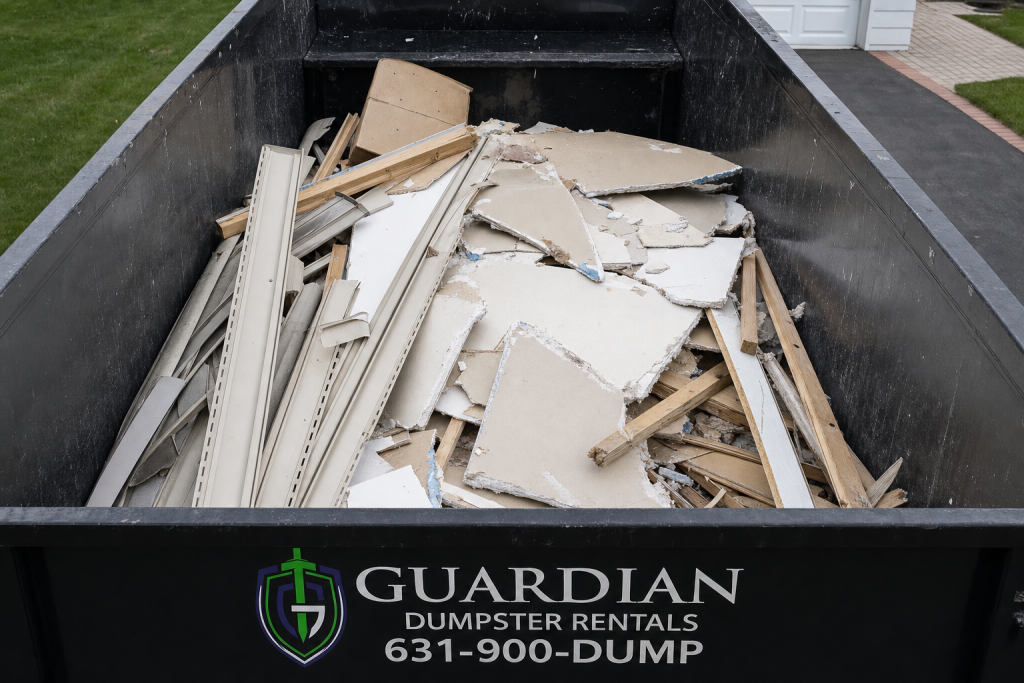
How Much Debris Does a Room Addition Actually Create?
A typical single-room addition generates roughly 10 to 30 cubic yards of debris from start to finish. Tear-off of existing siding and sheathing produces the largest early load, followed by framing offcuts, drywall scraps, and roofing and trim waste as the build progresses — usually enough to fill a 20 yard dumpster, sometimes more.
The tricky part for homeowners is that the debris doesn’t arrive all at once. Each phase of the project produces its own type and volume of waste, and understanding that rhythm helps you translate your project scope into cubic yards before the first wall comes down.
Tear-Off: Siding, Sheathing, and Opening the Wall
Before new framing goes up, your contractor has to remove the existing exterior wall where the addition connects to the house. Stripping siding, sheathing, insulation, and interior drywall from one wall of an average home can generate 3 to 6 cubic yards on its own. If old windows or a door come out of that wall, add a bit more. This is the messiest, bulkiest phase relative to how little actual construction has happened — which is why crews handling construction debris removal in Bay Shore often see dumpsters half full before framing even begins.
Framing: Lumber Offcuts and Packaging
Framing waste is lighter but surprisingly voluminous. Expect 2 to 4 cubic yards of lumber offcuts, damaged studs, engineered wood scraps, and banding or packaging material. Cut ends of joists and rafters don’t stack neatly, so they eat container space faster than their weight suggests.
Drywall, Roofing, and Trim
Finishing phases add up quickly:
- Drywall scraps: Roughly 10 to 15 percent of the drywall you hang becomes waste. For a 300 to 400 square foot addition, that’s typically 2 to 3 cubic yards of cutoffs and broken sheets.
- Roofing waste: Shingle cutoffs, underlayment scraps, and any tear-off where the new roof ties into the old one can add 2 to 4 cubic yards — shingles are heavy, so weight matters here as much as volume.
- Trim and finish debris: Molding offcuts, flooring scraps, and packaging from cabinets or fixtures usually contribute another 1 to 2 cubic yards.
Adding It All Up
A modest addition might total 10 to 15 cubic yards, while a larger two-story or master-suite project can push past 25 to 30. That’s why most room addition debris removal plans center on a 20 yard dumpster, with a 10 yard container suiting smaller bump-outs and a 30 yard handling bigger builds. Local providers who manage construction debris removal in Commack NY can help you match your contractor’s scope to the right volume so you’re not paying for a swap-out you didn’t plan for. One caveat as you estimate: these figures cover building materials only — brick, concrete, dirt, and yard waste can’t go in the dumpster, so any excavation or masonry removal needs a separate plan.
What Size Dumpster Do I Need for a Room Addition?
Most single-room additions call for a 20 yard dumpster, which handles framing offcuts, drywall scraps, and sheathing from a full build cycle. A small bump-out or siding tear-off fits a 10 yard container, while large multi-room or second-story additions typically need a 30 yard dumpster to avoid mid-project swap-outs.
Matching container size to project scale is the single biggest factor in keeping room addition debris removal affordable. Go too small and you pay for an extra haul; go too big and you pay for air. The right call comes down to the footprint of the addition and how many phases of construction will generate waste.
Container Sizes Table
| Container Size | Typical Dimensions | Best For | NY Driveway Fit |
|---|---|---|---|
| 10 Yard | Approx. 12 ft L x 8 ft W x 3.5 ft H | Small bump-out additions or a siding tear-off on one exterior wall | Fits easily on a standard single-car driveway with room to spare |
| 20 Yard | Approx. 22 ft L x 8 ft W x 4.5 ft H | Single-room additions with full framing and drywall phases | Fits most two-car driveways; the low sidewall makes hand-loading easy |
| 30 Yard | Approx. 22 ft L x 8 ft W x 6 ft H | Large multi-room additions or second-story builds | Same footprint as a 20 yard but taller; confirm driveway length of at least 25 feet plus truck clearance |
How to Pick Between Two Sizes
- Count your phases. If the project includes demolition of an existing exterior wall plus framing, sheathing, roofing scraps, and drywall, size up to a 20 or 30 yard.
- Think about bulky-but-light debris. Insulation, packaging, and lumber offcuts fill volume fast without adding much weight, which favors a larger box.
- Measure your driveway first. On tighter Long Island properties, a roll off dumpster rental in Greenlawn provider can confirm whether the delivery truck has the overhead and length clearance to place a 30 yard safely.
- When in doubt, round up one size. The price gap between sizes is usually smaller than the cost of a second haul.
Keep in mind that every container has load limits and material restrictions, and fill lines matter: debris must stay level with the top rail for safe, legal transport. If you’re unsure whether your mix of framing, drywall, and roofing material suits a given size, a local team handling construction debris removal in Commack NY can walk through your build plans and recommend the right fit before delivery day.
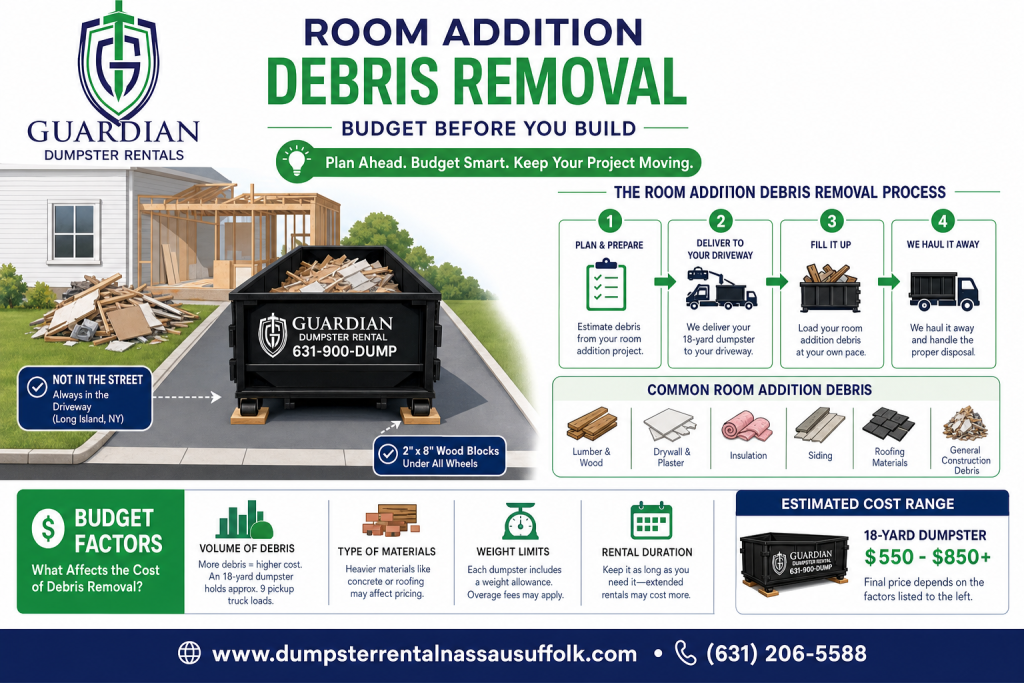
How Much Does Construction Debris Removal Cost in NY?
Construction debris removal cost in NY is built from a few components: a base rental rate tied to dumpster size (10, 20, or 30 yard), a set rental period, an included weight allowance, and potential fees for overages or extra days. Your total depends on how much your addition debris weighs and how long you keep the container.
The Pricing Components That Make Up Your Quote
When you request a quote for room addition debris removal, make sure you understand each line item so you can compare providers fairly:
- Base rental rate: The flat price for the container itself, which scales with size. A 10 yard dumpster costs less than a 20 yard, and a 30 yard sits at the top of the range.
- Rental period: Most companies include a standard window — often around a week or two — in the base price. Confirm exactly how many days you get before extra charges begin.
- Weight allowance: Each size comes with an included tonnage. Addition debris like framing lumber, drywall, and old siding adds up faster than homeowners expect.
- Overage fees: If your load exceeds the included tonnage, you’ll pay a per-ton charge on top of the base rate.
- Extra-day charges: Keeping the dumpster beyond the rental period usually triggers a daily fee, so match your rental window to your contractor’s realistic timeline.
Pricing also varies by location within Long Island, so it pays to get a local quote. If you’re building in western Suffolk, for example, a provider handling construction debris removal in Babylon NY can give you accurate numbers for your zip code rather than a vague regional estimate.
How to Keep Your Debris Removal Costs Down
A few simple habits can shave real money off your final bill:
- Consolidate phases into one haul. Rather than ordering a container for demolition and another for the build-out, coordinate with your contractor so both phases feed one well-timed rental when possible.
- Break down bulky material. Snap drywall scraps into flat pieces and cut siding into manageable lengths so they stack tightly instead of creating air pockets that waste paid space.
- Load heavy items first and distribute weight evenly. An efficiently packed container means fewer swaps and a lower chance of a second rental.
- Right-size from the start. One 20 yard dumpster is almost always cheaper than two 10 yard rentals back to back.
For smaller additions — a modest bump-out or sunroom — a compact container may be all you need, and something like a 10 yard dumpster rental in West Islip keeps the base rate at the low end of the scale. Ask your provider to walk through the weight allowance and rental window before you book, and get every fee in writing so there are no surprises when the invoice arrives.
What Can’t Go in the Dumpster During a Room Addition Debris Removal Project?
Four materials are never accepted in the dumpster: brick, concrete, dirt, and yard waste. Hazardous items like paint, solvents, batteries, and anything containing asbestos are also prohibited. Plan separate disposal for these materials before demolition day so your load isn’t rejected and you don’t get hit with surprise contamination fees.
Most of what a room addition generates — framing lumber, drywall, roofing shingles, old siding, insulation, flooring, and general construction packaging — is exactly what a roll off container is built for. The problems start when heavy masonry or landscaping material gets mixed into the load. Knowing the restrictions up front keeps your room addition debris removal on schedule and on budget.
The Four Materials That Are Never Accepted
- Brick — whether from an old chimney, a removed exterior wall, or a demolished patio edge, brick cannot go in the container.
- Concrete — broken slab, footings, and old steps all need a separate disposal plan.
- Dirt — excavation spoils from your foundation dig must be hauled or repurposed another way.
- Yard waste — tree limbs, shrubs, stumps, sod, and leaves cleared to make room for the addition are not accepted.
These materials are extremely dense and are processed through different disposal streams than construction debris. Even a partial layer of concrete or dirt at the bottom of a 20 yard container can make the load non-compliant. If your project is near the water or on a tight suburban lot, talk through your material list before booking a roll off dumpster rental in Islip so the hauler can confirm what belongs in the box.
Planning Alternate Disposal for Restricted Materials
- Ask your excavation contractor to haul dirt and concrete as part of their bid — most foundation crews already have trucking arrangements for clean fill and masonry.
- Contact a landscaping or tree service for stumps, brush, and sod removed during site prep; many chip or compost the material.
- Check municipal drop-off options in your town for small quantities of yard waste on designated collection days.
- Separate masonry on site into its own pile so it never accidentally lands in the dumpster during a busy demo day.
Hazardous and Prohibited Items
Beyond the big four, keep these out of any 10, 20, or 30 yard container: paint, stains, solvents, adhesives, propane tanks, batteries, tires, appliances containing refrigerant, fluorescent bulbs, and suspected asbestos materials such as old pipe insulation or certain vintage floor tiles. Asbestos in particular requires licensed abatement — never bag it yourself. Paint and household chemicals can usually go to county hazardous waste collection events.
When in doubt about a specific material, ask before you toss it. A quick call to a roll off dumpster rental near Greenlawn provider can confirm whether an item is acceptable, saving you from a rejected pickup or an extra fee after the container leaves your driveway.
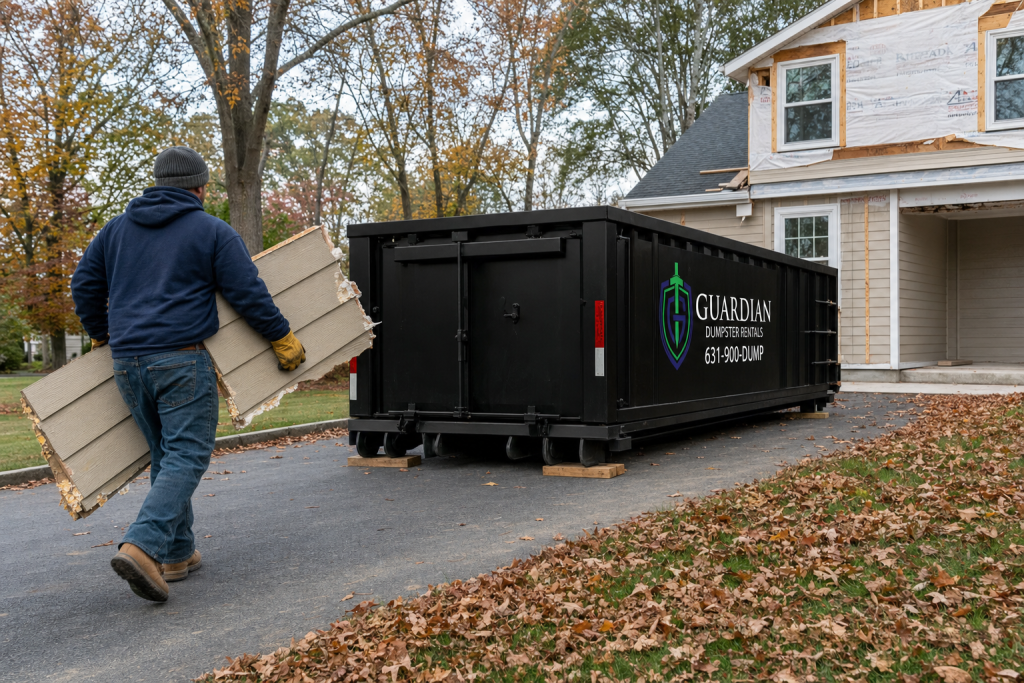
How Should I Schedule a Dumpster for a Fall Build in NY?
Book your dumpster delivery to arrive just before demolition or framing begins, swap or empty it between the framing and drywall phases, and reserve early — ideally several weeks ahead — because early cold snaps compress contractor calendars across New York. Keep the container covered and load heavy items on the bottom so fall wind and rain don’t create problems.
Fall is one of the busiest stretches for room additions on Long Island. Contractors race to get structures framed and weathertight before winter, which means dumpsters, drivers, and delivery slots all get claimed quickly. A little seasonal planning keeps your room addition debris removal running on the same schedule as your build.
Time Delivery Around Your Construction Phases
Debris doesn’t flow evenly through an addition project — it comes in waves. Match your dumpster schedule to those waves:
- Demo and framing: This is your first big surge of cut lumber, sheathing scraps, and packaging. Have the container on site the day before this phase starts, not the day after.
- Between framing and drywall: If the container is near capacity after framing, schedule a swap before drywall hanging begins. Drywall offcuts fill a box faster than most homeowners expect.
- Finish work: Trim, flooring offcuts, and packaging trickle in slowly, so a smaller 10 yard container often makes sense for the final stretch instead of paying for a half-empty 30 yard box.
Protect the Load From Wind and Rain
Fall weather on Long Island is the real scheduling wildcard. Lightweight siding scraps, insulation facing, and drywall pieces can scatter across your yard — or your neighbor’s — during a gusty front. Load heavier framing lumber on top of lightweight debris to pin it down, and keep a tarp over the container between work sessions. Rain is the other budget threat: drywall and lumber soak up water and get dramatically heavier, and since most haulers charge by weight over a set allowance, a waterlogged load can cost noticeably more than a dry one. Checking the National Weather Service forecast before big loading days is a simple habit that pays off.
Book Early — The Fall Calendar Fills Fast
Once the first hard frost threatens, every contractor in the region pushes to close up exterior work, and dumpster availability tightens along with it. Reserving your container when you sign your building contract — not when the framing crew shows up — is the easiest way to avoid delays. Local providers handling construction debris removal in Lindenhurst NY can often coordinate swap-out timing with your contractor’s phase schedule if you give them enough lead time.
If your project sits farther west, the same early-booking logic applies to construction debris removal in Amityville, where fall demand follows the same pattern. Wherever you build, sorting recyclable materials like clean wood and metal as you load supports the EPA’s guidance on sustainable construction and demolition materials and can keep your load lighter and cheaper.
20 yard dumpster
Most popular size for room additions
7–14 days, with extensions available
Typical rental period
No brick, concrete, dirt, or yard waste
Materials not accepted
Reserve your dumpster 1–2 weeks before demo day
Smart budgeting tip
Room Addition Debris Removal: Which Dumpster Size Fits Your Project?
| Dumpster Size | Best For | Typical Debris Handled |
|---|---|---|
| 10 Yard | Small bump-out additions or single-phase cleanups | Drywall scraps, light framing offcuts, packaging |
| 20 Yard | Standard single-room additions | Framing offcuts, drywall scraps, old siding, flooring |
| 30 Yard | Large additions or combined demo and build phases | Full siding tear-off, bulk framing waste, drywall, old fixtures |
Illustrative Example: Budgeting Debris Removal for a Family Room Addition
Illustrative example
Consider a hypothetical Long Island homeowner planning a 300-square-foot family room addition. Before the build, they mapped out their debris stream — old siding from the tear-off, framing offcuts, and drywall scraps — and reserved a 20 yard dumpster timed to arrive the day demolition began. Because they confirmed in advance that brick, concrete, dirt, and yard waste couldn't go in the container, they avoided contamination fees and planned separate handling for those materials. The single 20 yard dumpster handled the entire project's accepted debris, and scheduling it around the demo and framing phases meant no wasted rental days. This kind of upfront planning is a composite example, but it reflects how aligning dumpster size and timing with your build phases keeps debris removal on budget.
Frequently asked questions
How much does room addition debris removal cost in NY?
Costs vary by dumpster size, rental length, and your location in New York, so get quotes from local haulers before you build. Most room additions fit a 10, 20, or 30 yard dumpster, with larger sizes costing more upfront but often less per cubic yard. Factor in potential overweight fees and extra rental days, and budget a cushion of roughly 10 to 20 percent since framing offcuts and drywall scraps add up faster than most homeowners expect.
What size dumpster do I need for a room addition?
For a small addition with mostly framing offcuts and drywall scraps, a 10 yard dumpster is often enough. A typical single-room addition that includes old siding removal usually calls for a 20 yard dumpster. If you are building a large addition or tearing off siding from multiple walls, a 30 yard dumpster gives you room to avoid a second haul. When in doubt, size up one level, since a second rental usually costs more than a bigger container.
Can I put old siding in a dumpster?
Most wood, vinyl, and fiber cement siding is accepted in 10, 20, and 30 yard dumpsters, but always confirm with your hauler first. If your home was built before the 1980s, have the siding checked for asbestos before removal, because asbestos-containing material cannot go in a standard dumpster and requires licensed abatement. Also note that brick, concrete, dirt, and yard waste are not allowed in dumpsters, so plan separately for any masonry on the exterior.
When should I schedule the dumpster for my room addition project?
Have the dumpster delivered a day or two before demolition or site prep begins, so old siding and tear-out debris go straight into the container instead of piling up. Coordinate delivery with your contractor's schedule, and ask about rental periods up front. If framing and drywall phases are weeks apart, it may be cheaper to schedule two shorter rentals timed to each messy phase rather than paying for a container that sits half empty.
What can't go in a construction dumpster?
Brick, concrete, dirt, and yard waste are not allowed in dumpsters, so arrange separate disposal if your addition involves any of those. Hazardous materials are also prohibited, including paint, solvents, adhesives, propane tanks, batteries, and anything containing asbestos. Appliances with refrigerant and tires are typically banned as well. Ask your hauler for a written prohibited-items list before loading, because contaminated loads can trigger extra fees or a refused pickup.
Is it cheaper to haul construction debris myself or rent a dumpster?
Self-hauling only pencils out for very small amounts of debris if you already own a truck and live near a transfer station. For a room addition generating framing offcuts, drywall scraps, and old siding, multiple trips, dump fees, fuel, and your time usually cost more than a single 10 or 20 yard dumpster rental. A dumpster also keeps the jobsite safer and lets the crew work without stopping to load a truck.
How long can I keep a dumpster during construction?
Standard rental periods commonly run about a week, though many companies offer longer terms or daily extension fees. A room addition often takes several weeks, so talk with your hauler about project pricing or a swap-out service, where they haul a full 20 or 30 yard dumpster away and drop an empty one. Confirm the daily extension rate in writing before delivery so a schedule delay does not blow your debris budget.
What mistakes do people make budgeting debris removal for an addition?
The biggest mistakes are underestimating volume, forgetting weight limits, and ignoring prohibited items. Drywall scraps and old siding are heavier than they look, so overweight fees catch many homeowners off guard. People also forget that brick, concrete, dirt, and yard waste cannot go in the dumpster and fail to budget separate disposal. Finally, renting a 10 yard container to save money and then needing a second haul often costs more than starting with a 20 yard dumpster.
Do I need a permit to put a dumpster in my driveway in New York?
If the dumpster sits entirely on your private driveway, most New York municipalities do not require a permit, though rules vary by town and city. If it must sit on the street or sidewalk, you will almost certainly need a street-occupancy permit from your local municipality, which adds cost and lead time. Check with your town clerk or building department early, because permit processing can take days and delay your delivery date.
Can my contractor's crew and I share one dumpster for the whole project?
Yes, and sharing one container is usually the most economical approach, but clarify in your contract who pays for the rental, overage fees, and any contaminated-load charges. Agree on what goes in it, since the crew must keep brick, concrete, dirt, and yard waste out. Some contractors include debris removal in their bid; if so, ask whether the allowance covers a 20 or 30 yard dumpster and what happens if the project generates more debris than planned.
Construction Debris Removal help near you
- Construction Debris Removal Lindenhurst NY
- Construction Debris Removal Commack NY
- Construction Debris Removal Babylon NY
Related local pages
- Dumpster Rental Greenlawn New York
- Dumpster Rental Islip New York
- Dumpster Rental West Babylon New York
Ready to lock in a dumpster before the first wall goes up? Call us today for a fast quote on a 10, 20, or 30 yard dumpster anywhere in NY. Get in touch.
Last updated: October 11, 2026
Recent Comments