
Medical Office Renovation Dumpster Plan: Stay Open in NY
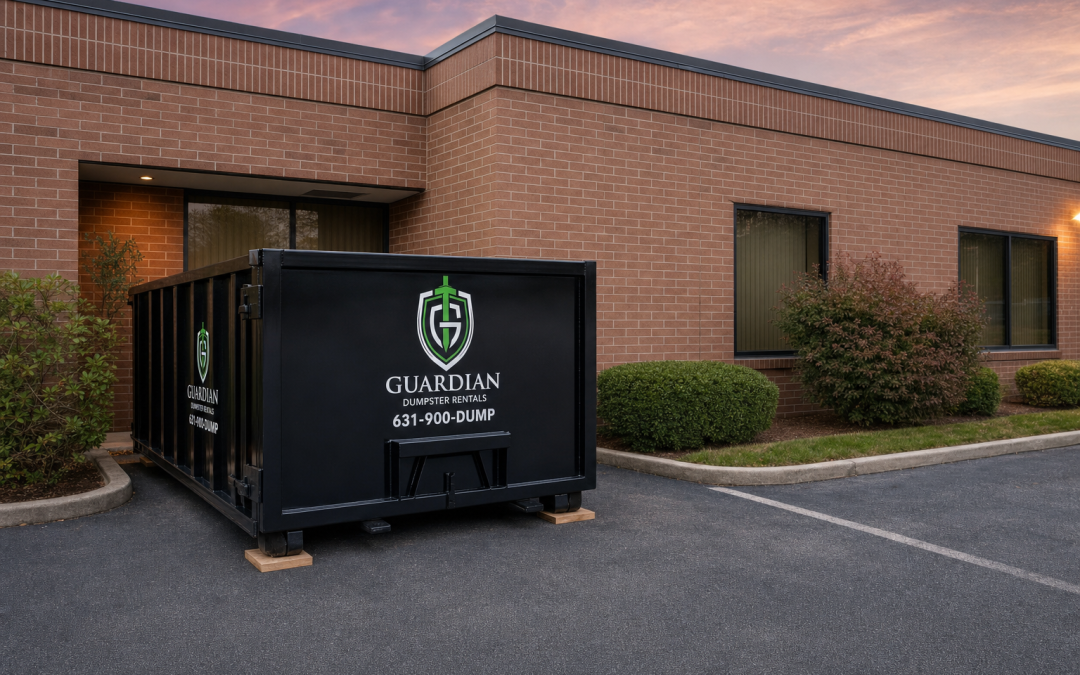
Remodeling While Staying Open: The Quick Answer for NY Practices Using a Medical Office Renovation Dumpster
A medical office renovation dumpster — typically a 20 yard commercial container delivered, swapped, and picked up outside business hours — lets NY medical and dental practices remodel in phases without losing patient days. Crews demo one zone after close, debris goes out before morning, and the office opens on schedule the next day.
Key takeaways
- Schedule 20 yard dumpster deliveries before opening hours and swap-outs after the last patient so the parking lot stays clear during appointments.
- A 20 yard container typically handles phased medical office demo debris like drywall, old cabinetry, flooring, and ceiling tiles without dominating patient parking.
- Coordinate swap-out timing with your contractor's demo phases so a full dumpster never sits idle overnight blocking ADA-accessible spaces.
- Remember that brick, concrete, dirt, and yard waste are not allowed in the dumpster, so plan separate handling for any masonry work.
- Confirm placement with your landlord or property manager in writing, since many NY medical plazas require dumpsters on pavement away from patient entrances.
The whole strategy comes down to timing. Patients never want to walk past a pile of demolition debris, and you never want to cancel a day of appointments. By coordinating the dumpster delivery for the evening before demo begins, loading it overnight or over a weekend, and scheduling the haul-away before your first patient arrives, the renovation effectively becomes invisible to the people sitting in your waiting room.
How the Phased Approach Works
Most practices renovate one section at a time — an exam room or two, then the reception area, then the back office — so the rest of the suite stays fully functional. A 20 yard dumpster fits this rhythm well: it holds a full phase of drywall, old cabinetry, flooring, and fixtures without taking up excessive parking lot space. Practices in Suffolk County often coordinate this kind of after-hours schedule through a local provider of commercial dumpster rental in Amityville so delivery and pickup windows line up with their closing times.
- Evening delivery: The container arrives after your last appointment, positioned away from patient parking and entrances.
- Overnight or weekend demo: Contractors tear out and load during off-hours so noise and dust never overlap with patient care.
- Morning or scheduled pickup: The full dumpster is swapped or hauled away before you open, keeping the lot clear and professional-looking.
- Repeat per phase: Each renovation zone gets its own load-out cycle, so debris never lingers between phases.
Why Fall Is the Sweet Spot for NY Practices
Fall is a popular remodel window for medical and dental offices in New York for a simple reason: the end-of-year insurance-benefit rush. Many patients scramble to use remaining benefits before deductibles reset in January, which means November and December are often the busiest months of the year. Finishing your renovation in September or October means a refreshed office is ready just as patient volume peaks — and you avoid tearing up exam rooms during your highest-revenue weeks. Scheduling a container early matters too, since contractors and haulers alike book up heading into the holidays; practices along the South Shore frequently arrange commercial dumpster rental in Lindenhurst NY weeks ahead of their demo date for exactly this reason.
The sections below break down each piece of the plan — scheduling around business hours, choosing between a 10, 20, or 30 yard container, what can’t go in the dumpster, and how swap-outs keep a multi-phase remodel moving.
Can You Remodel a Medical or Dental Office Without Closing to Patients?
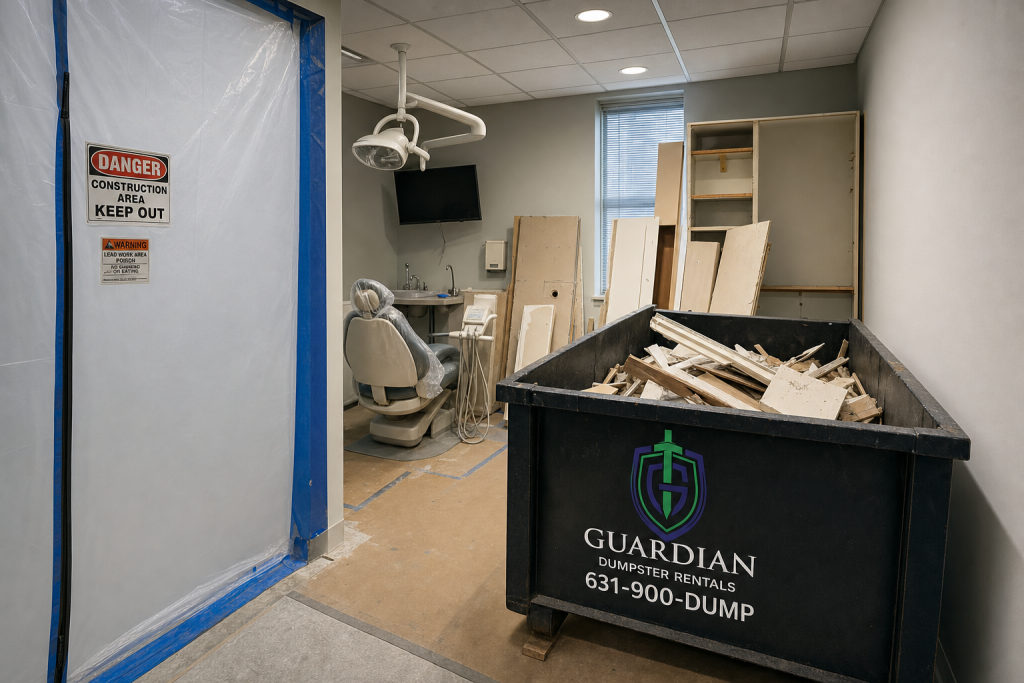
Yes. Most medical and dental offices remodel in phases, sealing off one wing or operatory at a time while the rest of the practice sees patients. The approach works when three things line up: tight containment and dust control, after-hours demolition, and coordinated debris removal that clears torn-out material before the next day’s appointments.
Phase the Work, One Zone at a Time
A phased renovation divides the office into zones. Your contractor finishes one area completely — demolition, framing, mechanical, finishes — before moving to the next. For a dental practice, that might mean renovating two operatories while the remaining chairs stay in service. For a medical office, it often means closing one exam-room wing while the front desk, waiting area, and other exam rooms operate normally. Patients are rescheduled into active rooms, and the construction zone is never visible from the patient path if the layout allows it.
Containment and Dust Control Are Non-Negotiable
Healthcare settings hold a higher bar for air quality than a typical office remodel. Expect your contractor to use:
- Floor-to-ceiling plastic or rigid temporary walls with zippered or gasketed access doors
- Negative air pressure in the work zone so dust is pulled away from patient areas
- HEPA filtration on air scrubbers and sealed or filtered HVAC returns in the construction zone
- Walk-off mats and clean pathways so workers do not track debris through patient corridors
Practices in busy Suffolk County corridors also coordinate where the container sits so patient parking stays open — something providers of Commercial Dumpster Rental in Bay Shore NY deal with regularly on medical plazas and mixed-use lots.
Demolition Happens After Hours — Debris Removal Keeps It on Schedule
The loudest, dustiest work — tearing out cabinetry, partition walls, drywall, flooring, and old fixtures — is typically scheduled for evenings or weekends. That keeps drills and saws away from exam conversations and procedures. But after-hours demo only works if the debris leaves the building just as fast. A pile of torn-out material sitting in a hallway at 8 a.m. shuts down the phased plan immediately.
This is where the medical office renovation dumpster becomes the linchpin. The container needs to be on site before demolition night, positioned where crews can load it without crossing patient entrances, and emptied or swapped before it overflows. When the dumpster timeline is coordinated with the demo schedule, each phase closes out cleanly and the next one starts on time. Suppliers experienced with Commercial Dumpster Rental in Islip NY can time deliveries and pickups around your office hours so the container is never blocking the lot when patients arrive.
The short version: staying open is less about the construction itself and more about logistics. Contain the dust, demolish after hours, and make sure debris removal is planned as carefully as the build.
How Do NY Practices Schedule a Medical Office Renovation Dumpster Around Business Hours?
Schedule your medical office renovation dumpster for early-morning delivery before the first appointment, place it away from patient parking and ADA-accessible routes, load it during evenings and weekends, and arrange next-morning pickups once it’s full. Confirm the delivery window with both your contractor and the rental company so the truck never arrives mid-schedule.
The whole playbook comes down to one idea: the dumpster should do its work when your patients aren’t there. A practice that sees its first patient at 8:00 a.m. should have the container dropped by 7:00 or earlier, so the delivery truck is gone before anyone pulls into the lot. Most providers offering commercial dumpster rental in Islip NY and surrounding Suffolk County towns can commit to an early drop window if you ask for it when you book, rather than on delivery day.
Placement: Protect Parking and ADA Access
Where the container sits matters as much as when it arrives. Walk the lot with your contractor before delivery day and mark a spot that keeps the dumpster:
- Away from patient and staff parking spaces, especially handicap-accessible stalls
- Clear of ADA-compliant ramps, curb cuts, and accessible entrance routes
- Out of the sight line of the main entrance where possible, so the lot still looks open for business
- Close to the construction entrance your crew is using, so debris never crosses patient walkways
A 10, 20, or 30 yard container typically needs the length of a few parking spaces plus room for the truck to maneuver, so count on blocking off that zone with cones the night before delivery.
Load After Hours, Haul Before Opening
The quietest rhythm for an occupied office is evening and weekend loading paired with next-morning pickups. Your crew demos and loads after the last appointment, the full container gets hauled before you open, and an empty one can be dropped in the same early window if the project continues. That keeps noise, dust carts, and debris out of patient hours entirely. Practices working with a team that handles commercial dumpster rental in Commack NY often standardize this routine for the full length of the remodel.
Communicate the Window to Everyone
Scheduling only works if three parties share the same calendar:
- The rental company needs your requested drop and pickup windows in writing when you book
- Your contractor needs to know exactly when containers arrive and leave so demo days line up
- Your front desk should know which lot areas are blocked so they can direct patients on arrival
Reconfirm the window the business day before each delivery or pickup. A five-minute phone call is the difference between a seamless morning and a roll-off truck backing in while your waiting room fills up.
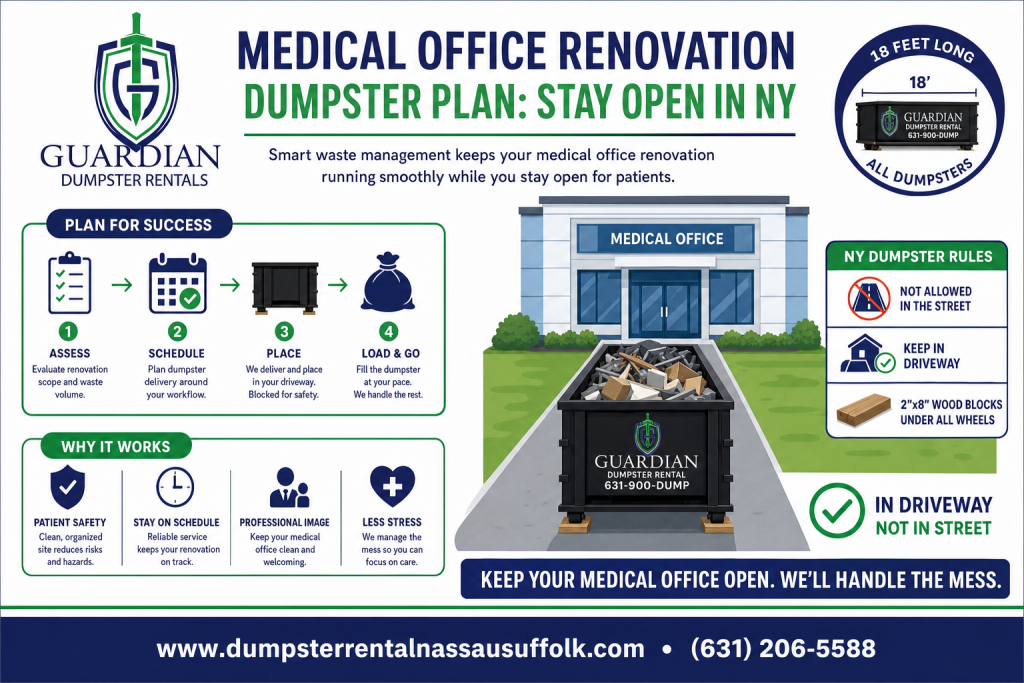
What Size Medical Office Renovation Dumpster Do You Need for a Remodel?
Most medical and dental office remodels fit one of three containers: a 10 yard dumpster for a single exam room or reception refresh, a 20 yard for a multi-room remodel with cabinetry, drywall, and flooring, or a 30 yard for a full-suite gut renovation. For the majority of practices, the 20 yard is the sweet spot.
Choosing the right size matters more for a working practice than for a typical construction site, because the container usually sits in your parking lot — the same lot your patients and staff use every day. Oversizing wastes a parking row; undersizing forces extra hauls mid-project. Here’s how the three sizes compare.
Container Sizes Table
- 10 Yard Dumpster — Best for a single exam room update, a reception-area refresh, or replacing flooring in one or two rooms. Roughly the footprint of a standard parking space (about 12–14 feet long), so it typically occupies just one stall plus a little clearance. Good choice when patient parking is tight.
- 20 Yard Dumpster — The workhorse for most practices. Handles a multi-room remodel that generates old cabinetry, demolished drywall, ripped-out flooring, ceiling tiles, and trim. At roughly 22 feet long, plan on two end-to-end parking spaces, plus room for the roll-off truck to approach in a straight line. If your project touches three or more rooms, start here.
- 30 Yard Dumpster — Built for a full-suite gut renovation: every wall opened, all casework and operatory cabinetry removed, complete flooring tear-out across the suite. Same length as the 20 yard but with taller walls, so the ground footprint is similar — about two parking spaces — but the extra height means fewer interruptions for a heavy demo phase.
Parking-Lot Planning Before Delivery
Measure before you order. The truck needs overhead clearance (watch for low canopy edges near the entrance and parking-lot light poles) and a straight run-up of roughly 40–60 feet to roll the container off safely. Place the dumpster at the far end of the lot from your patient entrance so the demo crew’s path never crosses the path patients walk. Local providers of Commercial Dumpster Rental in Commack NY can usually advise on placement during a quick phone walkthrough of your lot layout.
When in Doubt, Size Up One Level
Demolition debris takes up more space than most people expect — drywall and cabinetry don’t stack neatly, and a “two-room” project often expands once walls are open. If your estimate lands between a 10 and a 20, take the 20; between a 20 and a 30, take the 30. The price difference between adjacent sizes is modest compared to the cost and disruption of an unplanned extra haul. Teams that handle Commercial Dumpster Rental in West Babylon NY see this constantly on office remodels, and sizing up front keeps your renovation timeline intact.
What Can’t Go in a Commercial Dumpster During an Office Remodel?
During a medical or dental office remodel, your commercial dumpster cannot accept brick, concrete, dirt, or yard waste, and it can never hold regulated medical waste, sharps, or chemicals — those require licensed medical disposal streams. Standard remodel debris like drywall, old cabinetry, flooring, and non-contaminated fixtures is perfectly fine to load.
Knowing the difference before the container arrives keeps your project moving and protects your practice from compliance headaches. Here’s a clear breakdown of what stays out and what goes in.
Prohibited Materials: No Brick, No Concrete, No Dirt, No Yard Waste
These four materials are off-limits in the dumpster, full stop. Even a small amount of concrete from a demolished entry step or soil from a landscaping change around the building needs a separate disposal plan. If your remodel scope touches masonry or exterior grading, talk to your hauler about alternative options before demo day. Providers of commercial dumpster rental in Commack NY can walk you through what your specific debris mix requires.
Regulated Medical Waste Never Goes in the Dumpster
A medical office renovation dumpster handles construction debris only — not clinical waste. The following must go through licensed medical waste disposal companies, no matter how convenient the container looks:
- Sharps: needles, scalpels, lancets, and anything in a sharps container — even sealed containers found during demo
- Red-bag waste: anything contaminated with blood or bodily fluids, including old exam table paper, gauze, or gloves cleared from storage
- Pharmaceuticals: expired medications, samples, and controlled substances discovered in cabinets being removed
- Chemicals: lab reagents, disinfectant concentrates, dental amalgam, and developer or fixer solutions from old X-ray equipment
If your demo crew uncovers any of these, pause and route them to your regulated waste vendor. Mixing medical waste into construction debris can contaminate the entire load and expose your practice to regulatory penalties.
What You Can Load With Confidence
The good news: the bulk of a typical office remodel is dumpster-friendly. Feel free to load:
- Drywall, framing lumber, and ceiling tiles
- Reception desks, built-in cabinetry, and millwork
- Carpet, vinyl, laminate, and tile flooring (the tile itself, not concrete subfloor)
- Non-contaminated fixtures — light fixtures, old sinks, countertops, and door hardware
- Packaging and cardboard from new equipment and finishes
When in doubt about a borderline item — an old dental chair, for example, or a cabinet that held chemicals — ask before you toss it. Teams handling commercial dumpster rental in West Babylon NY field these questions from medical and dental practices regularly and can confirm whether an item is acceptable or needs special handling. A two-minute phone call beats a rejected load or a contamination fee every time.
How Do Swap-Outs Work, and How Often Will a Remodel Need One?
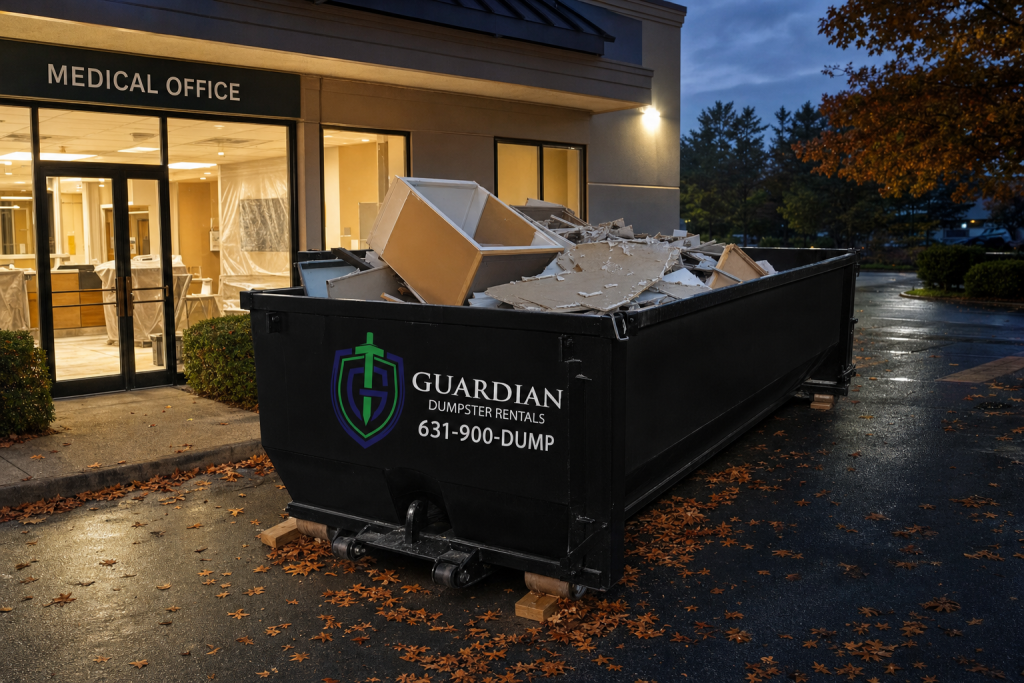
A swap-out means the hauler picks up your full 20 yard container and drops an empty one in the same visit, usually before your doors open. Most phased medical office remodels need a swap every one to two weeks, with demolition weeks requiring them most often and finish-work weeks sometimes needing none at all.
Same-Day Swap Logistics
The goal is simple: patients should never see a change. Your contractor calls in the swap a day or two ahead, the driver arrives early, hauls the full 20 yard box away, and sets a clean empty one on the same pad. Done right, the whole exchange takes under thirty minutes and the parking lot looks exactly as it did the night before. Practices that coordinate commercial dumpster rental in Babylon this way often finish multi-month projects without a single patient complaint about debris.
Estimating Swaps by Renovation Phase
Every project differs, but swap frequency tends to follow the phase of work:
- Demolition: Old drywall, ceiling tiles, cabinetry, and flooring fill a 20 yard container fast — plan on a swap every few working days.
- Rough-in (plumbing, electrical, framing): Debris slows to offcuts and packaging — one swap every one to two weeks is typical.
- Finish work: Cardboard, pallets, and trim scraps accumulate slowly — you may stretch a single container across the entire phase, or step down to a 10 yard box.
If your build-out includes a full gut of exam rooms, ask whether a 30 yard container makes sense for the demo phase only, then downsize for the rest of the job. A good medical office renovation dumpster plan treats container size and swap cadence as levers you adjust phase by phase. The EPA’s guidance on construction and demolition materials is also worth a read if you want to divert reusable fixtures or metal before they hit the box.
Fall-Specific Swap Tips for NY Practices
Autumn renovations in New York bring a few wrinkles worth planning around:
- Tarp every load. Wind-blown debris and falling leaves landing in an open container add weight and mess. A secured tarp keeps leaves out and keeps lightweight materials from scattering across your parking lot overnight.
- Account for early darkness. Crews lose usable daylight for exterior loading by late afternoon, so front-load heavy debris removal into morning hours and schedule swaps earlier in the day.
- Book ahead of cold snaps. Check the National Weather Service forecast weekly; a frozen or snow-blocked pad can delay a swap, so request pickups a day or two before hard freezes arrive.
Suffolk County haulers see fall demand spike as projects race the weather, so practices arranging dumpster rental in Amityville New York should lock in standing swap days early rather than calling week to week. A predictable rhythm keeps your remodel moving and your waiting room full.
Roughly 6 pickup truck loads of debris
Typical 20 yard capacity
Before 8 a.m. or after 6 p.m. around patient hours
Common swap-out window
No brick, concrete, dirt, or yard waste in the dumpster
Prohibited materials
7 to 14 days per phase, with swap-outs as needed
Typical rental period
Medical Office Renovation Dumpster Container Sizes: 10, 20, and 30 Yard Options Compared
| Container Size | Best For | Footprint Consideration | Scheduling Fit |
|---|---|---|---|
| 10 Yard | Single exam room or small reception refresh | Fits in one to two parking spaces | Easy same-day delivery and pickup around office hours |
| 20 Yard | Multi-room phased renovation while staying open | Roughly the length of two parked cars | Ideal for weekly swap-outs timed before opening or after closing |
| 30 Yard | Full-suite gut renovation or large dental practice overhaul | Needs a longer clear stretch of pavement | Best when demo phases generate high debris volume between swap-outs |
Illustrative Example: A Phased Dental Suite Remodel That Never Closed
Illustrative example
In this hypothetical composite scenario, a suburban NY dental practice planned a three-phase remodel of its operatories and waiting area while keeping its full appointment schedule. The practice arranged a 20 yard dumpster delivery before opening on a Monday, positioned away from the patient entrance and ADA parking. Swap-outs were scheduled after the last appointment at the end of each demo phase, so a fresh container was always ready when crews arrived in the evening. By keeping brick, concrete, dirt, and yard waste out of the container and loading only approved renovation debris, the contractor avoided any rejected loads. The practice completed the remodel over several weeks without canceling a single patient day.
Frequently asked questions
What size dumpster do I need for a medical office renovation?
A 20 yard dumpster is the most common choice for medical and dental office renovations because it holds a full suite's worth of drywall, cabinetry, flooring, and fixtures while still fitting in a few parking spaces. Smaller phased projects, like renovating one or two exam rooms at a time, may only need a 10 yard container. Full build-outs or multi-suite gut jobs often justify a 30 yard dumpster instead of multiple swap-outs.
Can a medical office renovation dumpster be delivered outside of business hours?
Yes. Most New York dumpster companies can schedule early morning or evening deliveries and pickups so trucks never block patient parking or entrances during office hours. Confirm exact delivery windows when you book, mark the placement spot clearly, and make sure a staff member or contractor can grant access. Off-hours service may carry a small premium, but it keeps your waiting room and parking lot usable all day.
How much does it cost to rent a 20 yard dumpster for an office remodel in NY?
Pricing varies by county, rental length, and debris weight, so get a written quote rather than relying on averages. Most quotes bundle delivery, pickup, a set rental period, and a weight allowance, with overage fees if you exceed the tonnage. Ask specifically about swap-out pricing if your renovation runs in phases, since multiple hauls are often cheaper to book upfront than to add one at a time.
How long does a phased medical office renovation usually take?
Renovating in phases so the practice stays open typically takes longer than a full shutdown, often several weeks to a few months depending on how many rooms are done at a time. Each phase usually needs its own demo, build, and inspection window. Coordinate dumpster swap-outs with phase transitions so a full container never sits idle, and schedule heavy demo for weekends or days the office closes early.
What can't I throw in a dumpster during a medical office renovation?
Standard construction dumpsters cannot take medical waste, sharps, pharmaceuticals, chemicals, or anything biohazardous; those require licensed medical waste disposal. This provider also prohibits brick, concrete, dirt, and yard waste in all containers. Old X-ray equipment, fluorescent bulbs, and items containing refrigerants or batteries usually need special handling too. Stick to clean construction debris like drywall, wood, flooring, cabinetry, and non-contaminated fixtures, and ask your hauler before tossing anything questionable.
How does a dumpster swap-out work when the office stays open?
A swap-out means the hauler picks up your full dumpster and drops an empty one in the same visit, usually within a single scheduled window. For an open practice, book swap-outs before opening time or after the last appointment so the truck never maneuvers around patient vehicles. Call a day or two ahead, make sure nothing blocks the container, and confirm the replacement size matches the next renovation phase.
Where should the dumpster go so patients can still park and enter safely?
Place the container as far from the main entrance, accessible parking spaces, and drop-off zones as practical, ideally near the construction access point at the rear or side of the building. Keep fire lanes, ambulance access, and ADA routes completely clear. Use cones or signage so patients don't walk near loading activity. If your lot is tight, ask about a 10 yard dumpster, which takes up roughly one parking space.
Do I need a permit for a dumpster at a commercial building in New York?
If the dumpster sits entirely on your private property or parking lot, you typically don't need a permit, though your landlord or property manager may require approval. If it must go on a public street, most New York municipalities require a street occupancy permit from the local department of transportation or building department. Check with your city or town before delivery, since requirements and processing times vary by location.
What are the biggest mistakes practices make when renovating without closing?
Common mistakes include scheduling deliveries during peak appointment hours, underestimating debris and overfilling a 10 yard container when a 20 yard was needed, forgetting to reserve swap-outs between phases, and placing the dumpster where it blocks accessible parking or patient drop-off. Another frequent error is letting contractors toss prohibited items, like brick, concrete, or hazardous materials, which triggers fees or refused pickups. A written dumpster schedule tied to your renovation phases prevents most of these.
Is it better to get one 30 yard dumpster or schedule multiple 20 yard swap-outs?
It depends on space and pacing. One 30 yard dumpster suits fast, heavy-demo phases where you want debris gone in a single haul and have room for a larger footprint. Multiple 20 yard swap-outs work better for phased renovations spread over weeks, tight parking lots, and keeping only one modest container on site at a time. Compare total haul costs in writing, since multiple swap-outs can add up quickly.
Commercial Dumpster Rental help near you
- Commercial Dumpster Rental West Babylon NY
- Commercial Dumpster Rental Islip NY
- Commercial Dumpster Rental West Islip NY
Related local pages
- Dumpster Rental Greenlawn New York
- Dumpster Rental Dix Hills New York
- Dumpster Rental Amityville New York
Remodeling your NY practice? Call us to schedule 20 yard dumpster deliveries, swap-outs, and pickups around your patient hours — before and after you open. Get in touch.
Last updated: October 27, 2026
Recent Comments