
Dumpster Delivery Prep: Get Your NY Home Ready
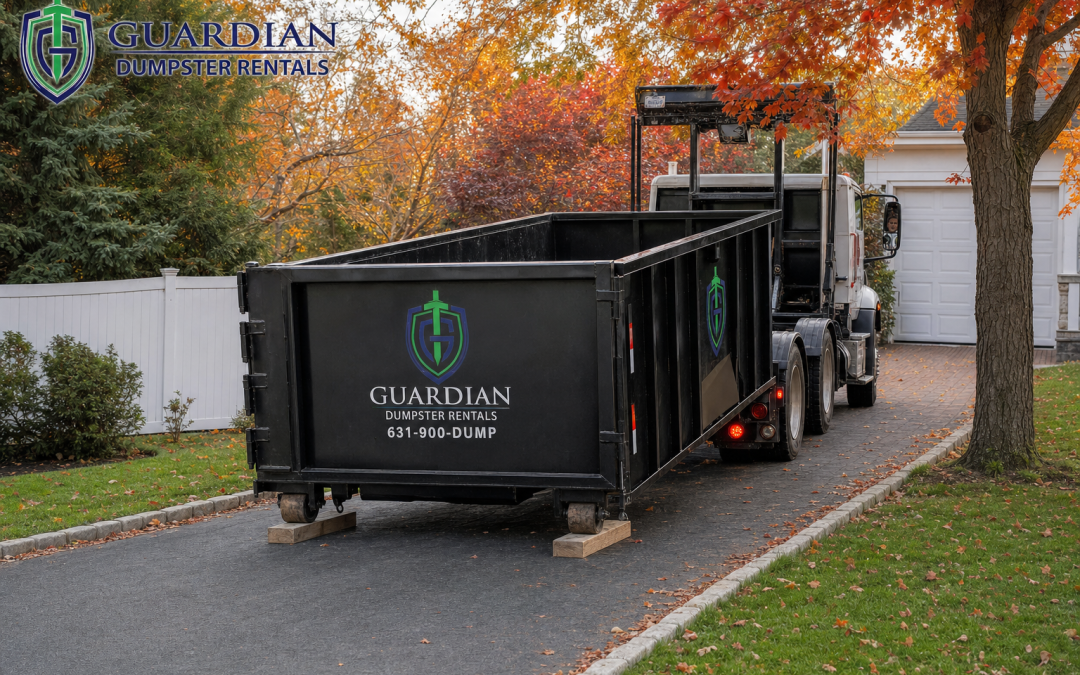
What Does Dumpster Delivery Prep Actually Involve?
Dumpster delivery prep comes down to three core tasks: clearing the approach so the roll off truck can reach your property, marking the exact drop spot so the driver places the container where you want it, and confirming access details with your rental company before the truck leaves the yard. Fifteen minutes of prep is usually all it takes.
Key takeaways
- Clear a straight, obstacle-free path at least 10-12 feet wide so the roll off truck can back in and lower the dumpster safely.
- Mark your drop spot with cones, chalk, or plywood before the driver arrives so the 10, 20, or 30 yard container lands exactly where you want it.
- Move vehicles, trash cans, and low-hanging obstructions the night before delivery to avoid delays or a failed drop attempt.
- Lay plywood or boards under the dumpster's contact points to protect your NY driveway from scratches and pressure marks.
- Confirm your debris list in advance — brick, concrete, dirt, and yard waste are not allowed in the dumpster, so plan separate disposal for those materials.
That short checklist matters more than most homeowners realize. Roll off drivers work tight routes, and if they arrive to find cars blocking the driveway, low-hanging branches over the approach, or no clear indication of where the dumpster should land, they often can’t complete the delivery. The result is a failed delivery — sometimes called a dry run — which can mean an extra trip fee and, worse, a rescheduled drop-off that pushes your whole project back. During a busy fall remodeling window in New York, losing even a day or two to a rescheduled delivery can stall contractors, delay demo, and compress your timeline right before the weather turns.
The Three Core Prep Tasks
- Clear the approach. Move vehicles, trash cans, basketball hoops, and anything else out of the path the truck will use to back in. Check overhead for branches and wires, too — the truck needs vertical clearance to tilt its bed and roll the container off.
- Mark the drop spot. Use cones, chalk, tape, or even a sheet of plywood to show exactly where you want the dumpster placed. Drivers appreciate the clarity, and you avoid ending up with a container blocking your garage for a week.
- Confirm access. Call or message your rental company the day before to verify the delivery window, confirm the placement spot works for the size you ordered, and flag anything unusual like a steep driveway, a shared lane, or a gate code.
Why Prep Matters for Every Dumpster Size
Whether you’ve booked a compact 10 yard container for a bathroom gutting or a 30 yard box for a whole-home cleanout, the delivery truck itself needs roughly the same room to maneuver. A 20 yard dumpster — the most common choice for fall renovation projects — still arrives on a full-size roll off truck, so don’t assume a smaller container means you can skip the prep. If you’re planning a project and comparing sizes, a provider offering residential dumpster rental in Northport NY can walk you through which container fits your driveway and your debris volume.
One more prep step that saves headaches: know what can’t go in the container. Brick, concrete, dirt, and yard waste aren’t allowed in these dumpsters, so plan a separate disposal route for those materials before demo day. If you’re nearby and still shopping for a container, companies handling roll off dumpster rental in Greenlawn can confirm accepted materials when you book.
The sections below break each prep task down step by step, so delivery day goes exactly as planned.
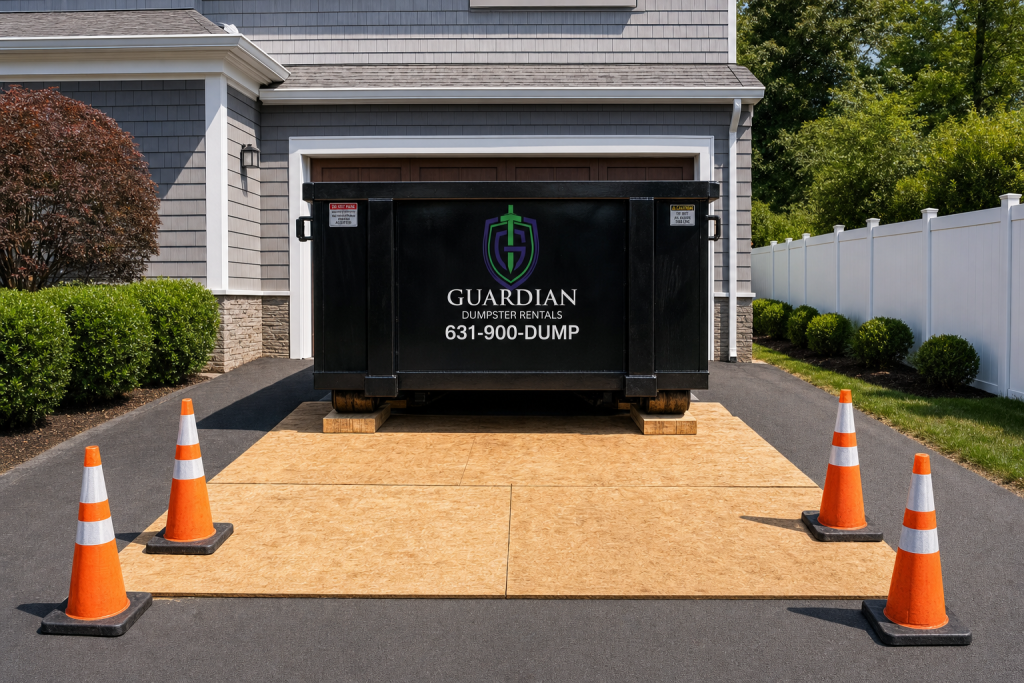
How Much Space Does a Roll Off Dumpster Truck Need?
A roll off truck typically needs about 60 feet of straight-line space to deliver a dumpster: roughly 10.5 feet of width, 14 feet of overhead clearance while driving, and up to 25 feet of vertical clearance where the bed tilts up to slide the container off. Tight curves, low wires, and overhanging branches are the most common delivery blockers.
That 60-foot figure surprises a lot of homeowners. The truck itself is long, and the container rolls off the back in a straight line, so the driver can’t make the drop around a curve or at a sharp angle. When you’re sizing up your driveway, measure from where the truck will enter to where you want the dumpster to sit, and keep that path straight and level wherever possible.
Overhead Clearance: The Hidden Problem
Width and length are easy to eyeball. Overhead clearance is where deliveries get cancelled. When the hydraulic bed raises to roll the container off, the top of the bed can reach 20 to 25 feet in the air. Walk the drop path and look up for:
- Power, cable, and phone lines crossing the driveway
- Tree branches hanging below roughly 25 feet
- Carport roofs, gutters, eaves, and basketball hoops
- Garage door overhangs if the dumpster is going near the house
Trim branches you own ahead of time, but never touch utility lines — if wires cross your preferred spot, pick a different spot. Local crews that handle roll off dumpster rental in Lindenhurst see wire clearance issues constantly on older Suffolk County streets where lines run low across driveways.
Container Sizes Table: Footprint and Clearance Needs
| Dumpster Size | Typical Footprint (L x W x H) | Straight-Line Space Needed | Overhead Clearance |
|---|---|---|---|
| 10 Yard | 12 ft x 8 ft x 3.5 ft | About 50 ft | 18–20 ft |
| 20 Yard | 22 ft x 8 ft x 4.5 ft | About 60 ft | 20–23 ft |
| 30 Yard | 22 ft x 8 ft x 6 ft | About 60 ft | 23–25 ft |
Note that dimensions vary slightly by manufacturer, so confirm exact specs with your hauler when you book. A 10 yard container is the forgiving choice for short or narrow driveways, while 20 and 30 yard containers share the same footprint — the 30 just has taller walls, which means it needs a bit more overhead room during the drop. Providers offering rolloff dumpsters for rent in Amityville can usually tell you from your address whether a 30 yard will fit or whether you should step down a size.
One last tip: the driver also needs room to pull forward after the drop, so don’t plan the dumpster right up against a closed garage door or fence. Leave a few feet of buffer at the front of the container so pickup goes as smoothly as delivery.
How Do I Clear the Approach Before the Truck Arrives?
Clearing the approach means moving every parked car off the driveway and curb line, trimming or flagging low branches above the path, propping open any gates, and sweeping wet leaves off the pavement. The goal is a straight, unobstructed lane the roll off truck can back down without stopping, squeezing, or losing traction.
Move Vehicles the Night Before
Don’t wait until morning. Ask family members, tenants, and even neighbors to relocate cars the evening before delivery. The driver needs the full width of the driveway plus a clear stretch of street to line up the truck — a single car parked across from your driveway can make the backing angle impossible. If you share a driveway, give your neighbor a heads-up so there are no surprises. Drivers who handle roll off dumpster rental in Lindenhurst and similar tight South Shore streets will tell you that blocked approaches are the number one cause of failed deliveries.
Look Up: Trim or Flag Low Branches
A roll off truck raises its bed well above the cab when it tilts to slide the container off, so overhead clearance matters more than most homeowners expect. Walk the approach and look for:
- Tree limbs hanging over the driveway lower than roughly 14–15 feet
- Low-slung utility or cable lines crossing the path
- Basketball hoops, string lights, or awnings near the drop zone
Trim what you safely can, and tie a bright ribbon or flag on anything you can’t remove so the driver spots it immediately. Never cut near power lines — point those out to the driver instead.
Open Gates and Remove Obstacles
If the dumpster is going behind a fence, open and secure the gate before the truck arrives, and measure the opening ahead of time. Pull trash cans, bikes, hoses, planters, and kids’ toys out of the path. Anything left in the lane either gets run over or forces the driver to stop and wait while you scramble.
The Fall Hazard: Wet Leaves Kill Traction
In a New York autumn, a layer of wet leaves on a sloped driveway is as slick as ice under a heavy truck. Tires spin, the truck can slide, and some drivers will refuse the delivery rather than risk it. Rake and blow the driveway clean the day before, and give it a final sweep that morning if it rained overnight. Crews running dumpster rental in Islip New York deal with this every October and November — a clean, dry surface makes the drop fast and safe.
One important reminder while you’re raking: those leaves, branches, and bagged yard waste cannot go into the dumpster. Whether you’ve booked a 10 yard, 20 yard, or 30 yard container, yard waste is prohibited — set it out for your town’s seasonal leaf collection instead.
Where Should I Mark the Drop Spot — and How?
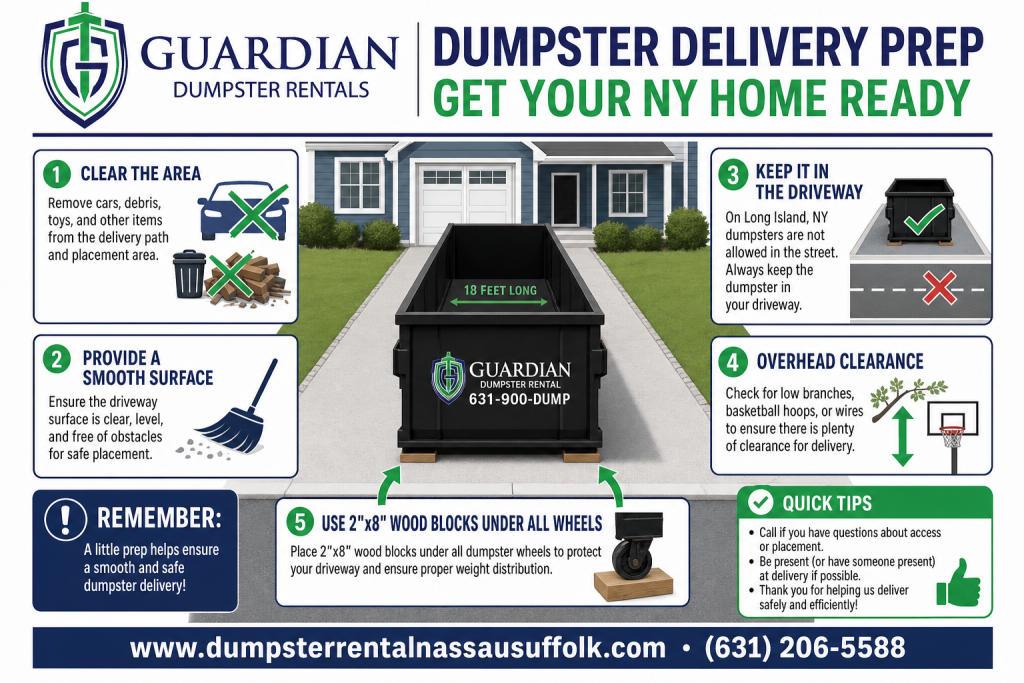
Mark your drop spot with traffic cones, chalk, or painter’s tape on the exact footprint where the dumpster should sit — ideally a flat driveway section. Lay plywood sheets where the container will rest to protect asphalt or pavers, and orient the marked area so the rear loading door stays accessible for walk-in loading.
Driveway vs. Street Placement
For most New York homeowners, the driveway is the better choice. It keeps the container on your own property, avoids the municipal permit process, and shortens the carry distance from your house to the bin. Street placement only makes sense when your driveway is too short, too steep, or blocked by vehicles you can’t move. If you do end up at the curb, position the marked spot so the dumpster doesn’t block hydrants, mailboxes, storm drains, or your neighbor’s sightlines when backing out.
How to Mark the Footprint Clearly
Drivers deliver dozens of containers a week, and a clearly marked spot removes all guesswork. A 10 yard dumpster typically runs around 12 feet long, a 20 yard around 22 feet, and a 30 yard around 22 feet with taller walls — so mark the full length plus a few extra feet at the door end. Homeowners arranging a roll off dumpster rental in Bay Shore NY often find that marking the spot the night before prevents the driver from having to guess between two possible placements.
- Traffic cones: The most visible option. Place one at each corner of the intended footprint.
- Sidewalk chalk: Draw the outline directly on the driveway — cheap, effective, and washes away.
- Painter’s tape: Works well on smooth asphalt or concrete driveways and won’t leave residue.
Protect Your Driveway with Plywood
Roll off containers are heavy even before you fill them, and the steel rails can dig into soft asphalt on a hot summer day or crack decorative pavers. Lay two runs of 3/4-inch plywood (or 2×8 lumber boards) where the container’s rails and rear rollers will land. The driver will set the dumpster down right on top, spreading the weight and sparing your driveway surface. This is a small step that saves an expensive repair.
Keep the Loading Door End Open
Every roll off has a swing-open door on one end so you can walk remodeling debris straight in rather than hoisting everything over the wall. When you mark your spot, make sure that door end faces open space — not a garage wall, fence, or parked car. Leave at least six to eight feet of clearance so the door can swing fully and you can wheel in a loaded hand truck. Customers who book a dumpster rental in Lindenhurst New York with the door facing their work area consistently report faster, easier loading throughout the project.
Do I Need a Permit to Put a Dumpster on a New York Street?
Yes — if the dumpster will sit on a public street, most New York municipalities require a street-placement or obstruction permit, including New York City and many Long Island towns and villages. Permits typically take a few business days to process. Placing the dumpster on your own driveway usually eliminates the permit requirement entirely.
The rules vary significantly depending on where you live, so this is the one part of dumpster delivery prep that deserves a phone call before you book. The key distinction is simple: public property (the street, and in some cases the sidewalk or right-of-way) generally requires permission from the municipality, while private property generally does not.
When a Street Permit Is Required
- New York City: Any container placed on a public street requires a permit from the NYC Department of Transportation, and placement rules around hydrants, crosswalks, and bus stops are strictly enforced.
- Long Island towns and villages: Many require a road obstruction or dumpster permit from the town highway department or village hall. Requirements can differ even between neighboring communities, so confirm with your specific town or village.
- Posted parking restrictions: Even with a permit, you may need to respect alternate-side parking rules, snow emergency routes, and street-sweeping schedules.
Lead times are the detail that catches homeowners off guard. Some municipalities issue permits same-day over the counter, while others take several business days. If you’re planning a roll off dumpster rental in West Islip or anywhere else with a tight project timeline, start the permit inquiry at least a week before your delivery date so paperwork never delays your container.
Don’t Forget the HOA
If you live in a community governed by a homeowners association, check your covenants even for driveway placement. Some HOAs limit how long a container can remain visible, require advance notice to the board, or ask for protective boards under the dumpster. A quick email to your HOA manager before booking avoids a violation letter mid-project.
Why Driveway Placement Is Usually the Easier Path
For most homeowners, the simplest answer is to skip the street altogether. A standard residential driveway comfortably fits a 10 yard or 20 yard container, and many can accommodate a 30 yard as well. Driveway placement means:
- No municipal permit, application fee, or waiting period in most cases
- No risk of parking tickets or towing complaints from neighbors
- Shorter carrying distance from your house to the container
If you’re unsure whether your property can accommodate the size you need, a reputable local provider can walk you through placement options when you call — something we do routinely for dumpster rental in Commack New York and surrounding Suffolk County communities. When driveway placement works, you save both paperwork and time.
What Should I Do the Morning of Delivery? Final Dumpster Delivery Prep
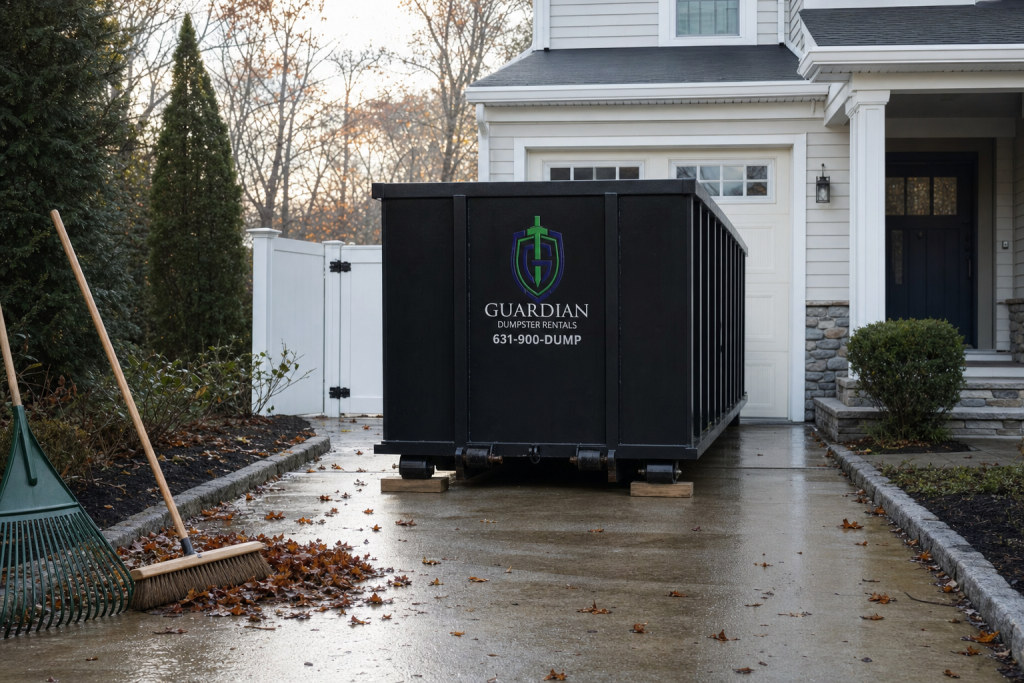
On delivery morning, sweep frost and leaves off the drop zone, re-check overhead clearance in full daylight, keep pets indoors, keep your phone on so the driver can reach you, and double-check that no banned materials — brick, concrete, dirt, or yard waste — are staged where they could end up in the container.
Most of the heavy lifting happens the day before, but the final hour matters just as much. New York mornings can undo your dumpster delivery prep overnight, especially in late fall and winter when frost, dew, and wind-blown leaves settle on the driveway. A five-minute walkthrough catches problems while there is still time to fix them.
Your Final-Hour Checklist
- Sweep the drop zone. Clear frost, wet leaves, and debris so the truck’s tires and the container’s rails get solid, even contact. Slick surfaces are the most common morning-of surprise.
- Re-check overhead clearance in daylight. Shorter fall and winter days mean many homeowners did their prep at dusk. Look up at sunrise for sagging branches, low wires, and gutters you may have missed — you can check your local forecast for frost and wind through the National Weather Service before the truck rolls.
- Keep pets inside. A roll off truck backing in with a 10, 20, or 30 yard container is loud and has limited rear visibility. Dogs and cats should stay indoors until the driver pulls away.
- Keep your phone on and nearby. Drivers often call when they are a few minutes out, or if they have a question about placement. A missed call can mean a missed delivery window.
- Confirm no banned materials are staged. Brick, concrete, dirt, and yard waste are not allowed in the dumpster. If any of these are piled near the drop spot, move them well away so they do not get tossed in by helpers once loading begins. The U.S. EPA’s sustainable materials management resources can point you toward proper handling options for those materials.
Think Ahead to Loading, Too
Once the container is down, it will not move until pickup, so the morning is your last chance to confirm the spot works. If you are still weighing placement questions for an upcoming project, the team handling residential dumpster rental in Northport NY can walk you through typical driveway setups for 10, 20, and 30 yard containers before your delivery date.
Finally, take two quick photos of the empty drop zone before the truck arrives. It documents the condition of your driveway and gives you a reference if anything shifts during the rental. Homeowners arranging a roll off dumpster rental in Commack often find this small habit makes the pickup process just as smooth as the drop-off.
About 10-12 feet of clear width
Minimum path width for delivery
Roughly 20+ feet (watch wires and branches)
Overhead clearance needed
Plywood boards under contact points
Driveway protection
No brick, concrete, dirt, or yard waste
Prohibited materials
Dumpster Delivery Prep: Space Requirements by Container Size
| Container Size | Typical Footprint | Recommended Clearance | Best For |
|---|---|---|---|
| 10 Yard Dumpster | Roughly 12-14 ft long x 7-8 ft wide | At least 60 ft of straight approach and 20+ ft of overhead clearance | Bathroom remodels, small cleanouts, single-room renovations |
| 20 Yard Dumpster | Roughly 20-22 ft long x 7-8 ft wide | At least 60 ft of straight approach and 20+ ft of overhead clearance | Kitchen remodels, flooring tear-outs, mid-size home projects |
| 30 Yard Dumpster | Roughly 20-22 ft long x 7-8 ft wide, taller walls | At least 60 ft of straight approach and 20+ ft of overhead clearance | Whole-home renovations, large remodels, major cleanouts |
Illustrative Example: A Smooth 20 Yard Delivery in Westchester
Illustrative example
Consider a hypothetical homeowner in Westchester County planning a kitchen and flooring remodel who ordered a 20 yard dumpster. The night before delivery, they moved both cars to the street, rolled trash bins aside, trimmed back one low-hanging branch, and marked the drop spot on the driveway with chalk and two sheets of plywood. Because the approach was clear and the target was obvious, the driver placed the container on the first attempt in under ten minutes. The homeowner had also confirmed their debris list in advance, keeping brick, concrete, dirt, and yard waste out of the container and avoiding any issues at pickup. This composite scenario shows how thirty minutes of prep can make delivery day effortless.
Frequently asked questions
What do I need to do for dumpster delivery prep before the truck arrives?
Clear the driveway or drop area of vehicles, equipment, toys, and low-hanging obstacles, then mark your preferred spot with cones, tape, or chalk. Measure the space to confirm it fits the container and the truck's approach. Unlock gates, move trash cans, and let the driver know about any tight turns or overhead wires. Doing this the night before prevents delays and failed deliveries.
How much space does a roll off dumpster truck need to deliver?
More than most homeowners expect. The truck needs room to back in straight, plus extra length in front of the container to tilt and roll it off, and vertical clearance for the raised bed. Check for overhead wires, tree branches, and eaves above the drop spot. If your driveway is narrow or curved, measure it and share the details with your rental company before delivery day.
How long does it take for a dumpster to be delivered and placed?
The actual drop-off usually takes only a few minutes once the truck arrives, assuming the area is clear and the spot is marked. Most companies give a delivery window rather than an exact time, so plan to have your prep done the night before. Blocked driveways, parked cars, or an undecided homeowner are the most common causes of delays or missed deliveries.
Do I need to be home when the dumpster is delivered?
Usually not, as long as you've prepped properly. Mark the exact drop spot clearly, leave gates unlocked, keep the approach free of vehicles, and give the company placement instructions and a phone number in advance. If your placement is complicated — a tight driveway, a specific angle, or a shared access lane — being home for the first few minutes can prevent a misplaced container.
Will a roll off dumpster damage my driveway, and how do I prevent it?
It can, especially on asphalt in warm weather or older concrete surfaces. The simplest prevention is laying down plywood boards where the container's rails and wheels will sit, which spreads the weight. Ask your rental company whether the driver carries boards or if you should supply your own. Avoid placing the dumpster on soft ground, pavers, or septic areas entirely.
What happens if the delivery driver can't place the dumpster where I wanted?
Drivers make the final call on safe placement. If your marked spot is blocked, unsafe, or unreachable, they'll either place it in the nearest workable location or leave without delivering, which often triggers a trip fee. Avoid this by clearing the approach completely, confirming overhead clearance, and having a backup spot in mind. Call the company immediately if the placement won't work for your project.
How do I choose between a 10 yard, 20 yard, and 30 yard dumpster for my remodel?
Match the size to your project scope and your available space. A 10 yard works for small cleanouts or a single-room remodel, a 20 yard suits kitchen or bathroom renovations and medium cleanouts, and a 30 yard handles large remodels or whole-home cleanouts. Remember bigger containers need a longer footprint and more truck clearance, so measure your driveway before committing to a 30 yard.
Do I need a permit to put a dumpster on the street in New York?
If the dumpster sits on a public street or right-of-way, most New York municipalities require a permit from the local building or public works department, and rules vary by town and city. A dumpster placed entirely on your own driveway typically doesn't need one. Check with your municipality before delivery day, since permit processing can take time and fines apply for unpermitted street placement.
What materials are not allowed in a roll off dumpster?
Common restrictions include hazardous waste like paint, chemicals, batteries, and tires. For these rentals, brick, concrete, dirt, and yard waste are also not allowed in the dumpster, so plan a separate disposal route for masonry debris or landscaping material. Loading prohibited items can mean extra fees or a refused pickup, so confirm the accepted materials list with your rental company before you start tossing debris.
What are the biggest mistakes people make before a dumpster delivery?
The most common ones: forgetting to move cars from the driveway, not measuring the space for both the container and the truck's approach, ignoring overhead wires and branches, placing the dumpster where it blocks garage or backyard access for the whole project, and skipping protective boards on the driveway. Walking the approach path the night before catches nearly all of these problems.
Roll Off Dumpster Rental help near you
- Roll Off Dumpster Rental Bay Shore NY
- Dumpster Rental For Remodeling
- Roll Off Dumpster Rental Greenlawn
Related local pages
- Dumpster Rental Northport New York
- Dumpster Rental Greenlawn New York
- Dumpster Rental Lindenhurst New York
Ready to schedule your roll off? Call us today to reserve a 10, 20, or 30 yard dumpster and get expert placement advice for your New York property. Get in touch.
Last updated: November 4, 2026
Recent Comments