
Estimate construction debris: How to Estimate Construction Debris Before Demo Day
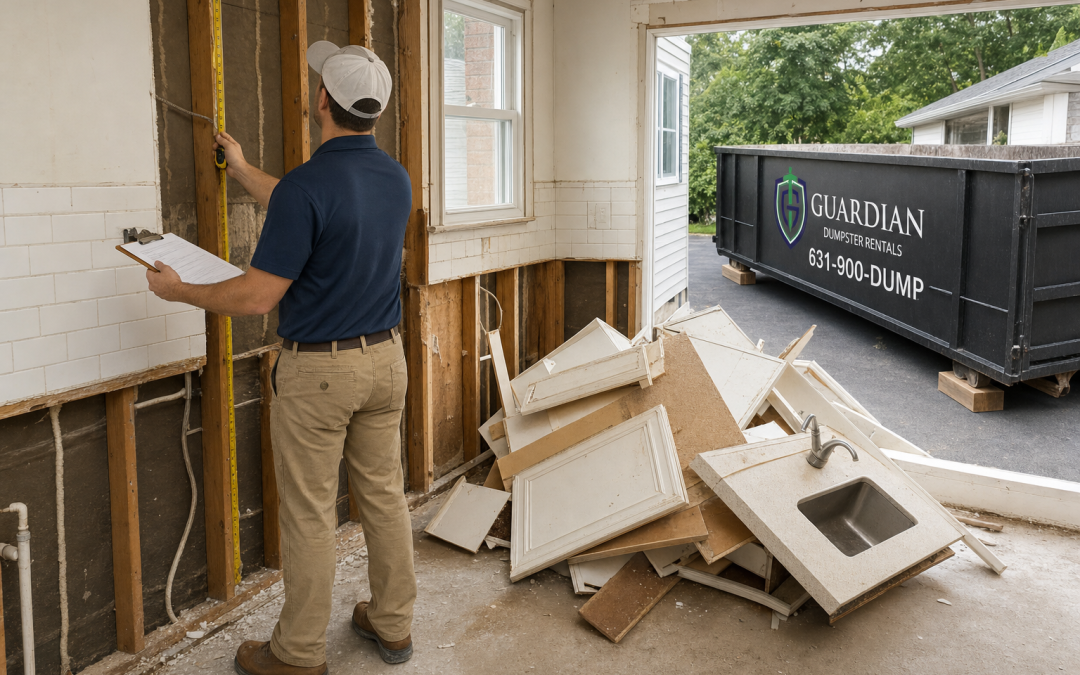
Why Estimating Construction Debris Volume Before Demo Saves NY Remodelers Money
The fastest way to estimate construction debris before demo day is to measure each room you’re gutting, list the materials coming out, and multiply by a 2–3x expansion factor — because drywall, cabinets, flooring, and framing take up far more space torn out than installed. That one calculation tells you whether a 10, 20, or 30 yard dumpster fits your project.
Key takeaways
- Walk each room on your demo plan and convert tear-out items into cubic yards before you book a dumpster, not after the pile starts growing.
- A gutted bathroom typically fills a few cubic yards, a full kitchen often fills 10 or more, and a whole-floor remodel usually points to a 20 or 30 yard container.
- When your room-by-room total lands between sizes, round up — a second dumpster haul almost always costs more than one size larger.
- Debris like drywall, cabinetry, flooring, and trim is bulky but light, so volume, not weight, usually drives your 10, 20, or 30 yard decision.
- Keep brick, concrete, dirt, and yard waste out of your estimate entirely — they are not allowed in these dumpsters and must be handled separately.
Most dumpster sizing mistakes happen before a single hammer swings. Homeowners look at an intact kitchen or bathroom and picture a tidy pile of materials. But demolition doesn’t produce neat stacks — it produces broken, jagged, air-filled rubble. A wall of drywall that measured a few inches thick becomes a tangle of shattered sheets. Cabinets that fit flush against a wall become a heap of splintered boxes and doors. That’s the 2–3x rule in action: whatever volume the materials occupied in place, expect two to three times that volume once they hit the container.
What Getting the Estimate Wrong Actually Costs
Guessing instead of estimating tends to go wrong in one of two expensive directions:
- Undersizing: You fill a 10 yard dumpster halfway through demo, work stops, and you pay for a swap-out or a second rental — plus the days your crew sits idle waiting for it.
- Oversizing: You rent a 30 yard container for a single-bathroom gut and pay for space you never use, while the oversized box eats up driveway room you needed for deliveries.
- Overfilling: Debris piled above the rim usually can’t be hauled legally, which means pulling material back out by hand before pickup.
A fifteen-minute room-by-room estimate before demo day avoids all three. Crews handling construction debris removal in Amityville see this constantly: the projects that run smoothly are the ones where the volume math was done before the first wall came down.
Why Fall Timing Raises the Stakes in New York
If you’re racing to finish interior work before winter — a common push across Long Island every fall — a sizing mistake hurts twice as much. Shorter daylight hours compress your working schedule, and a demo stall while you wait on a dumpster swap can push finish work into cold-weather territory. Getting the container right the first time keeps the project moving when the calendar is tightest.
The good news: estimating isn’t guesswork. In the sections that follow, we’ll walk through the room-by-room method — kitchens, bathrooms, flooring, and full gut jobs — then translate those numbers into a clear 10, 20, or 30 yard recommendation. Whether you’re coordinating a dumpster rental in Lindenhurst, New York or planning a project elsewhere on the South Shore, the math works the same. Measure first, demo second — your budget will thank you.
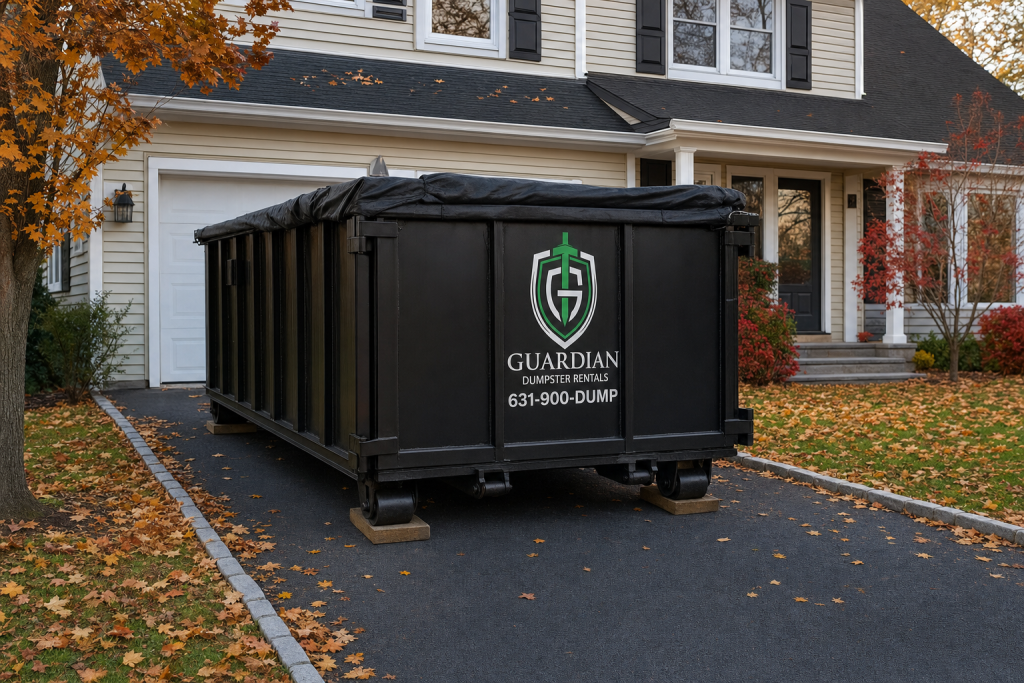
How Do You Estimate Construction Debris Room by Room?
To estimate construction debris, walk each room with your demo plan, measure the square footage of walls, floors, and ceilings coming out, convert each material into cubic yards using simple multipliers, then add the totals together with a 15–20% buffer to cover breakage, packaging, and air gaps in the load.
The walk-through is the step most homeowners skip, and it is where accuracy comes from. Bring a tape measure, your demo plan, and a notepad. In each room, note exactly what is being removed — not what is staying — and write down the measurements as you go. A bathroom where only the vanity and floor are changing produces a fraction of the debris of a bathroom being gutted to the studs.
Measure What’s Actually Coming Out
- Walls and ceilings: Multiply length by height for each drywall surface being demoed. Count both sides of any wall being fully removed.
- Flooring: Measure room length by width for each floor covering coming up, and note the material — carpet, laminate, hardwood, and tile all break down differently.
- Cabinetry and built-ins: Record the linear feet of upper and lower cabinets, plus countertops, shelving, and closet systems.
- Fixtures: List tubs, vanities, toilets, sinks, and appliances individually. These are bulky and awkward, so they take up more container space than their weight suggests.
Convert Square Footage to Cubic Yards
Demolished material doesn’t stack neatly, so use rough field multipliers rather than solid-volume math. As a working rule, every 100 square feet of drywall yields roughly half a cubic yard to a full cubic yard once it’s broken into pieces. Flooring runs similar — around half a cubic yard to a cubic yard per 100 square feet, with bulky carpet and pad on the higher end. A typical run of kitchen cabinets, broken down, often fills one to two cubic yards on its own, and each large fixture like a tub or vanity can claim another half yard or more. Tile and backer board are dense, so note them separately and confirm with your hauler how they want that material handled, as projects involving construction debris removal in West Islip NY often include mixed bathroom tear-outs where this matters.
Total It — Then Add Your Buffer
Add every room’s numbers together, then increase the total by 15–20%. Debris always takes up more space than the math suggests: boards splinter, drywall crumbles unevenly, and fixtures leave voids in the container that can’t be filled. That buffer is the difference between one clean haul and an unplanned second trip. If your totals land between container sizes, teams handling construction debris removal in Bay Shore generally recommend sizing up, since the cost gap between a 10 yard and 20 yard container is smaller than the cost of a second rental.
How Many Cubic Yards of Debris Does a Typical Remodel Produce? Benchmarks to Estimate Construction Debris
Most common home remodels generate between 5 and 30 cubic yards of debris. A small bathroom gut typically produces 5–10 cubic yards, a kitchen tear-out 10–20, a basement finishing demo 15–25, and a whole-floor remodel 25–30 or more, depending on finishes and square footage.
These benchmarks are the sanity check for your room-by-room math. If your tally says a powder room will fill 25 cubic yards, something is off — probably an overestimate on fixture volume. If it says a full kitchen with cabinets fits in 4 cubic yards, you’ve undercounted. When you estimate construction debris, compare your number against these real-world ranges before you book anything.
Typical Debris Volumes by Project Type
- Small bathroom gut (tub, vanity, toilet, wall tile, flooring): roughly 5–10 cubic yards. Tile and backer board are the sneaky volume here — broken tile piles up faster than most homeowners expect.
- Galley kitchen tear-out (cabinets, counters, flooring, some drywall): roughly 10–15 cubic yards. Cabinet boxes are bulky even when broken down, and old countertops don’t nest neatly.
- Full kitchen with cabinets, appliances removed, and ceiling or wall demo: roughly 15–20 cubic yards. Add more if you’re pulling multiple layers of old flooring.
- Basement finishing tear-out (drywall, framing, drop ceiling, carpet, paneling): roughly 15–25 cubic yards. Basements fool people because the materials are light but extremely bulky — drop ceiling tiles and insulation eat space fast.
- Whole-floor remodel (multiple rooms, flooring throughout, wall demo): roughly 25–30+ cubic yards. Large projects like this often fill a 30 yard container, and busy job sites sometimes need a swap-out mid-project.
Why Real-World Loads Run Larger Than the Math Says
Demolition debris never stacks as neatly as intact materials. Broken drywall, splintered framing, and tangled carpet create air gaps, so loose debris typically occupies 1.5 to 2 times the volume of the materials in place. That’s why a modest bathroom can fill most of a 10 yard container. Local haulers who handle construction debris removal in Islip NY see this expansion factor on nearly every residential job.
One more practical note: containers can only be filled level with the top rim for safe, legal hauling. If your estimate lands at the top of a size range — say, 18–20 cubic yards for a full kitchen — plan for the larger figure rather than hoping everything compresses. Providers offering dumpster rental in Commack, New York will tell you that slightly overestimating is almost always cheaper than paying for a second container because the first one overflowed on day two of demo.
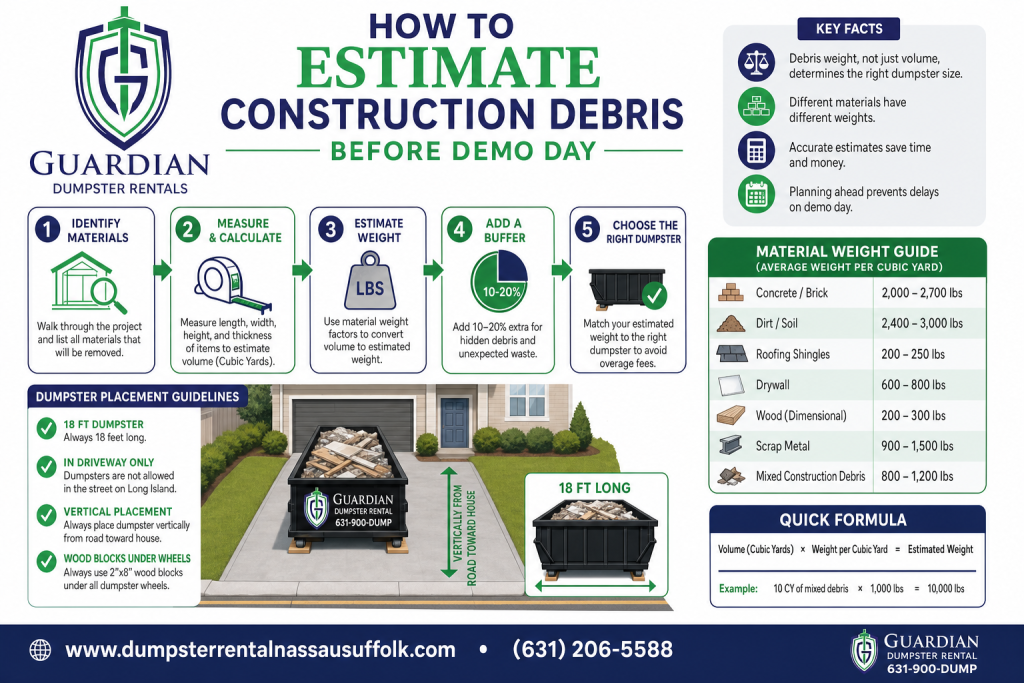
Should I Rent a 10, 20, or 30 Yard Dumpster for My Project?
Rent a 10 yard dumpster for single-room projects like a bathroom gut, a 20 yard for kitchen remodels or multi-room renovations, and a 30 yard for whole-home remodels or large additions. When your debris estimate lands near the top of a container’s capacity, size up one tier to avoid paying for a second rental mid-project.
Once you estimate construction debris for your project, matching that number to a container is straightforward — the trick is being honest about how much your tear-out will actually produce. Debris almost always takes up more space in a dumpster than it did installed in your home, because cabinets, drywall, and framing don’t stack neatly once they’re broken apart.
Container Sizes Table: 10, 20, and 30 Yard Dumpsters Compared
| Size | Typical Dimensions | Capacity (Pickup Loads) | Best-Fit Projects | When to Size Up |
|---|---|---|---|---|
| 10 Yard | Approx. 12 ft L x 8 ft W x 3.5 ft H | About 3 pickup-truck loads | Bathroom gut, small kitchen tear-out, single-room flooring and drywall removal | If you’re also pulling cabinets or demoing a second room, go to a 20 yard |
| 20 Yard | Approx. 22 ft L x 8 ft W x 4.5 ft H | About 6 pickup-truck loads | Full kitchen remodel, multi-room renovation, roofing tear-off on a modest home | If demo spans most of a floor or includes bulky framing, step up to a 30 yard |
| 30 Yard | Approx. 22 ft L x 8 ft W x 6 ft H | About 9 pickup-truck loads | Whole-home remodel, large addition demo, major gut renovation | This is the largest tier — if your estimate exceeds it, plan a scheduled swap-out in advance |
Why Sizing Up One Tier Usually Beats a Second Rental
The price gap between adjacent sizes is typically modest compared to the cost and schedule disruption of ordering a second container when the first fills early. If your estimate puts you at 80 percent or more of a container’s capacity, choose the next size. Homeowners comparing options for dumpster rental in Commack New York often find the 20 yard is the sweet spot for the common kitchen-plus-bath combination.
Quick Gut Checks Before You Book
- Driveway fit: the 20 and 30 yard containers share a similar footprint but differ in wall height — confirm your space handles the length either way.
- Bulky vs. dense debris: cabinets and framing eat volume fast; a bigger box often matters more than weight allowance for renovation debris.
- One delivery, one pickup: a single right-sized container keeps your project on one haul instead of two.
If you’d rather talk through your estimate with someone local, a provider handling construction debris removal in Dix Hills can help you sanity-check your numbers against similar projects before demo day.
What Can’t Go in the Dumpster — and How Does That Change Your Estimate Construction Debris Math?
Brick, concrete, dirt, and yard waste are not allowed in the dumpsters. That means any of these materials in your demo plan must be subtracted from your volume calculations and handled through separate disposal. Skipping this step is the most common reason homeowners order the wrong size container.
When you estimate construction debris for a remodel, it’s tempting to lump everything into one pile of numbers. But the restricted materials list changes the math significantly — especially on projects that involve masonry, excavation, or outdoor work. Here’s how to adjust your plan before you commit to a container size.
Materials You Must Subtract From Your Dumpster Estimate
- Brick: Chimney teardowns, brick veneer removal, and old brick walkways all produce material that cannot go in the container.
- Concrete: Broken slabs, footings, old patios, and concrete block from foundation work must be excluded from your volume total.
- Dirt: Soil from trenching, grading, or digging out a crawl space needs its own disposal plan entirely.
- Yard waste: Branches, stumps, leaves, and shrubs cleared to make room for the dumpster or an addition can’t ride along with your demo debris.
Go back through your room-by-room tally and pull out anything that falls into these four categories. A kitchen gut might lose very little from the total, while a project that includes removing a brick fireplace surround could drop by several cubic yards. If the subtracted material is substantial, you may be able to step down a size — say, from a 30 yard to a 20 yard — and save money. Teams that handle construction debris removal in Commack NY see this adjustment change the recommended container size on a regular basis.
Other Common Restrictions to Confirm
Beyond the four hard exclusions, most providers also restrict or prohibit:
- Hazardous materials such as paint, solvents, oils, and asbestos-containing products
- Tires and automotive batteries
- Appliances containing refrigerant, like refrigerators and air conditioners, unless properly drained
- Liquids of any kind
Always confirm the current list with your provider before demo day — restrictions protect you from surcharges or a rejected load at pickup.
Planning Separate Disposal for Excluded Materials
For brick, concrete, and dirt, look into local masonry recyclers or aggregate yards, which often accept clean material. Yard waste can usually go through municipal collection programs or a dedicated green-waste facility. Build this into your demo schedule so the excluded material isn’t sitting on your driveway blocking the container. If you’re unsure whether your adjusted volume still fits a 10, 20, or 30 yard container, a provider offering dumpster rental in West Babylon New York can walk through your revised numbers and confirm the right fit.
The takeaway: your true dumpster estimate is your total debris volume minus brick, concrete, dirt, and yard waste. Do that subtraction before you book, and you’ll size the container for what’s actually going into it.
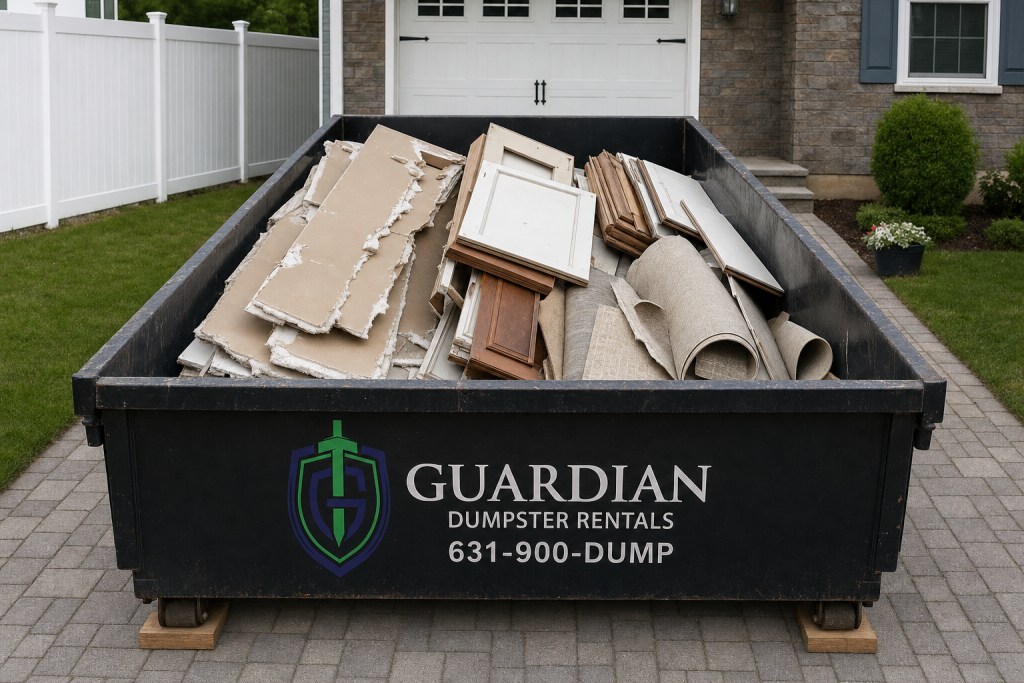
What Fall Conditions in New York Mean for Your Dumpster Plan
Fall in New York adds three variables to your dumpster plan: rain and wind that can soak debris and add weight, falling leaves that must stay out of the container (yard waste isn’t allowed), and shorter, colder days that shrink your working window. Tarp your load, place the dumpster before cold snaps, and schedule rentals around daylight.
Tarp the Load — Wet Drywall Weighs More
Drywall, lumber, and insulation act like sponges. A few autumn rainstorms can noticeably increase the weight of an open container, and most rentals are priced with a weight allowance. When you estimate construction debris for a fall project, assume some moisture exposure and protect against it: keep a heavy-duty tarp secured over the dumpster whenever you’re not actively loading, and weigh it down against gusty fall winds. This is also why many homeowners doing kitchen or bath gut-outs schedule construction debris removal in Babylon NY with a quick turnaround — the less time debris sits exposed, the less water weight you pay for.
Keep Leaves and Yard Waste Out
An open dumpster parked under trees in October will collect leaves fast — and yard waste is not allowed in the container. Beyond the rule itself, a layer of wet leaves adds weight and can get your load flagged at the facility. The EPA’s guidance on construction and demolition materials treats C&D debris as its own waste stream for good reason: mixing in organics complicates disposal. A tarp solves both the rain and the leaf problem at once.
Place the Dumpster Before the First Cold Snap
Early freezes make driveway placement harder. Frozen ground can be deceptively soft underneath, and ice complicates safe roll-off delivery. Practical fall steps:
- Schedule delivery before overnight lows dip toward freezing, when drivers can still position the container precisely.
- Lay plywood under the dumpster rails to protect asphalt, which becomes more brittle in cold weather.
- Clear leaves from the placement spot — wet leaves on a sloped driveway are a slip hazard for your crew.
If you’re working near the shore or on a tight suburban lot, talk through placement in advance. Providers who handle roll off dumpster rental near Greenlawn deal with fall driveway conditions every season and can advise on the best spot before the truck arrives.
Plan Around Shorter Daylight
By late fall, usable daylight in New York ends well before dinnertime. If your demo crew works evenings and weekends, a loading window that was comfortable in July gets tight in November. Build this into your rental period: a slightly longer window beats rushing a load in the dark. Check the National Weather Service forecast for the NYC and Long Island region before demo day so you can load heavy, absorbent materials like drywall during dry stretches and keep the tarp on when rain is coming.
About 3–4 pickup truck loads of debris
10 Yard Capacity
About 6–8 pickup truck loads of debris
20 Yard Capacity
About 9–12 pickup truck loads of debris
30 Yard Capacity
Brick, concrete, dirt, and yard waste
Not Allowed in Dumpsters
Estimate Construction Debris by Project Scope: 10, 20, or 30 Yard Dumpster
| Project Scope | Typical Debris Volume | Recommended Dumpster | Common Debris Types |
|---|---|---|---|
| Single bathroom or small room demo | Roughly 4–10 cubic yards | 10 Yard Dumpster | Drywall, tile backer, vanity, flooring, trim |
| Kitchen gut or 2–3 room remodel | Roughly 10–20 cubic yards | 20 Yard Dumpster | Cabinets, countertops, drywall, flooring, fixtures |
| Whole-floor or whole-home interior remodel | Roughly 20–30 cubic yards | 30 Yard Dumpster | Framing lumber, drywall, cabinetry, doors, flooring |
Illustrative Example: Sizing a Two-Story NY Remodel Room by Room
Illustrative example
Consider a hypothetical Hudson Valley homeowner planning to gut a kitchen, one full bathroom, and remove flooring from two bedrooms before a remodel. Walking room by room, they estimated roughly 10–12 cubic yards for the kitchen cabinets, countertops, and drywall, another 5–6 for the bathroom tear-out, and 3–4 for the flooring and trim. The total of around 18–22 cubic yards put them right at the edge of a 20 yard dumpster, so they rounded up to a 30 yard container to avoid a second haul mid-project. Because brick, concrete, dirt, and yard waste were not allowed in the dumpster, they excluded their old patio pavers from the estimate and arranged separate disposal, keeping the container legal and the project on schedule. This composite scenario shows how a simple room-by-room count turns a demo plan into a confident 10, 20, or 30 yard decision.
Frequently asked questions
How do I estimate construction debris before starting a demo project?
Walk through each room with your demo plan and list what's coming out: flooring, drywall, cabinets, fixtures, and framing. Convert those materials into rough cubic yardage, remembering debris takes up more space broken apart than installed. Add everything up room by room, then build in a cushion of roughly 10-20% for surprises behind walls. That total tells you whether a 10, 20, or 30 yard dumpster fits your project.
What happens if I order a dumpster that's too small for my demo?
You'll either need a second haul or a swap-out, which means paying an additional delivery and pickup fee and possibly waiting for the truck while your crew sits idle. Overfilled dumpsters loaded above the rim often can't legally be hauled, so the driver may refuse pickup until you remove material. When your estimate lands between two sizes, going up one size is almost always cheaper than ordering twice.
Is it cheaper to rent one 30 yard dumpster or two 10 yard dumpsters?
A single 30 yard dumpster is usually the better value because you pay one delivery fee instead of two, and you get the full capacity on site at once. Two 10 yard containers only make sense when your driveway or street can't physically fit a larger box, or when your demo happens in separate phases weeks apart. Compare total quoted costs, not just the per-container price.
How long does it take to estimate debris for a whole-house remodel?
For most homeowners, a careful room-by-room walkthrough with a tape measure and notepad takes one to two hours. Measure floor areas, count cabinets and fixtures, and note wall sections being removed. Larger or multi-story homes take longer, but rushing this step is the main reason people order the wrong dumpster size. If a contractor is running your demo, ask them to verify your numbers before you book.
What size dumpster do I need for a kitchen remodel?
A full kitchen gut, including cabinets, countertops, flooring, drywall, and appliances headed for disposal, typically fits in a 10 yard dumpster. If you're also opening walls, redoing an adjacent room, or replacing subfloor, a 20 yard container gives you breathing room. Cabinets are bulky and don't break down flat easily, so they eat volume faster than most people expect when they estimate.
What's the most common mistake people make when estimating demo debris?
Underestimating how much materials expand once demolished. Drywall, cabinetry, and flooring stack flat in a house but break into irregular, air-filled piles in a dumpster. People estimate based on installed dimensions and come up short. The fix is simple: calculate your installed volume, then apply a generous expansion factor and round up. It's also common to forget hidden debris like old insulation, plaster lath, or layered flooring under the visible surface.
Can I put brick, concrete, or dirt in my construction dumpster?
No. Brick, concrete, dirt, and yard waste are not allowed in these dumpsters. These heavy materials require separate handling, so plan your disposal for them through another method before demo day. Keeping them out of your estimate also makes your volume math more accurate, since your 10, 20, or 30 yard container should only account for allowed construction debris like drywall, wood, flooring, cabinetry, and fixtures.
Do I need a permit to put a dumpster on the street in New York?
If the dumpster sits on your own driveway or private property, you generally don't need a permit. Placing it on a public street or sidewalk typically requires a permit from your local municipality, and rules vary widely across New York towns and NYC boroughs. Check with your local government office before delivery day, since permit processing can take time and you don't want demo delayed waiting on paperwork.
How full can I load a dumpster before pickup?
Debris must stay level with or below the top rim of the container. Haulers tarp loads for transport, and anything sticking above the rim creates a road hazard the driver can't legally haul. If your pile is mounding over the top, you'll be asked to remove material before pickup. This is another reason to size up to a 20 or 30 yard dumpster when your estimate is borderline.
Should I estimate debris myself or let my contractor choose the dumpster size?
Do both. An experienced contractor has seen hundreds of demos and can sanity-check your numbers, but contractors sometimes default to a familiar size rather than one matched to your specific scope. Run your own room-by-room estimate, compare it against their recommendation, and discuss any gap. If you're paying for the dumpster directly, you benefit most from getting the 10, 20, or 30 yard decision right.
Construction Debris Removal help near you
- Construction Debris Removal West Babylon NY
- Load A 30 Yard Dumpster
- Construction Debris Removal Islip NY
Related local pages
- Dumpster Rental Greenlawn New York
- Dumpster Rental Dix Hills New York
- Dumpster Rental Lindenhurst New York
Get the right size dumpster delivered to your NY job site — call us for a fast quote and honest sizing advice before your demo begins. Get in touch.
Last updated: October 30, 2026
Recent Comments