
10 Yard Dumpster Enough for a Full House Cleanout?
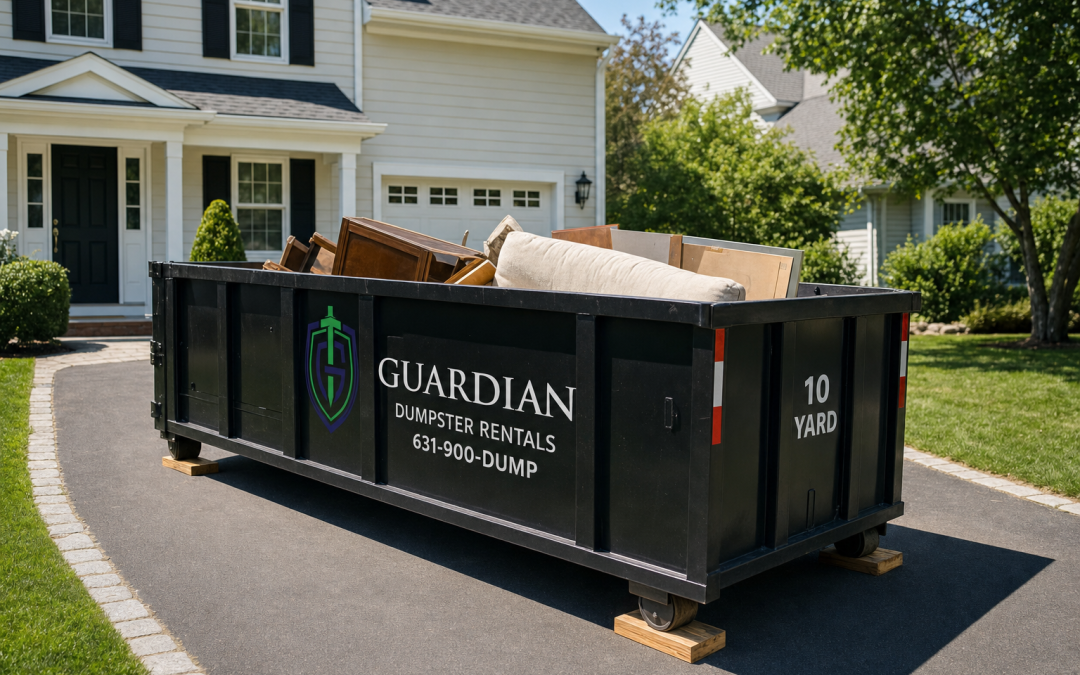
Is a 10 Yard Dumpster Enough for a Full House Cleanout?
A 10 yard dumpster is usually not enough for a full house cleanout, but it’s often the right size for a partial one. It holds about 10 cubic yards of debris — roughly three pickup truck loads — which covers one or two rooms, a garage, or a basement, but not the contents of an entire home.
Key takeaways
- A 10 yard dumpster holds roughly 3-4 pickup truck loads, which typically covers only 2-3 rooms of a full house cleanout.
- Full house cleanouts in NY usually require a 20-30 yard dumpster or multiple 10 yard swaps, so plan capacity before you book.
- Bulky furniture like sofas, mattresses, and dressers eat dumpster space fast — volume runs out long before weight limits do.
- A 10 yard dumpster works well for single-room cleanouts, garage purges, or estate cleanouts done in phases.
- Sorting donations and recyclables first can cut your debris volume significantly and may let a smaller dumpster work.
That’s the honest answer most homeowners are looking for before they book anything. The trouble is that “full house cleanout” means different things to different people. If you’re clearing a lightly furnished two-bedroom home that’s already been mostly emptied, a 10 yarder might squeak by. If you’re dealing with decades of accumulated belongings, furniture in every room, and a packed attic, you’ll fill it before you finish the first floor.
What 10 Cubic Yards Looks Like in Plain English
Numbers like “cubic yards” don’t mean much until you picture them. Here are a few practical comparisons:
- About 3 pickup truck loads of loosely piled junk
- Roughly 50–70 standard trash bags, depending on how full and how bulky the contents are
- The contents of a single cluttered garage or a small basement
- One room’s worth of furniture plus boxes, with a little room to spare
Most 10 yard containers measure somewhere around 12 to 14 feet long and 3.5 to 4 feet high, so they fit easily in a standard driveway — one reason they’re so popular for residential jobs.
Who a 10 Yard Dumpster Genuinely Fits
This size is a smart, budget-friendly choice when your project is contained rather than whole-house scale. It works well for:
- Cleaning out a single garage, attic, or basement
- Clearing one or two bedrooms during a downsizing project
- A small estate cleanout where most items are being donated or kept
- Removing old carpet, a few pieces of furniture, and general household junk
- Follow-up loads after the bulk of a cleanout is already done
If your project falls into one of those categories, you’re in the sweet spot. Homeowners in Suffolk County handling this kind of job often start with a 10 yard dumpster rental in Babylon precisely because it’s easy to place, easy to load, and doesn’t take over the driveway.
The Quick Gut-Check Before You Book
Walk through the house and mentally count pickup truck loads. If you get past three or four, a 10 yard container will fill fast and you may end up paying for a second haul — which often costs more than simply renting a larger dumpster from the start. The sections below break down exactly how the math works room by room, and when stepping up to a 20 or 30 yard container makes better sense.
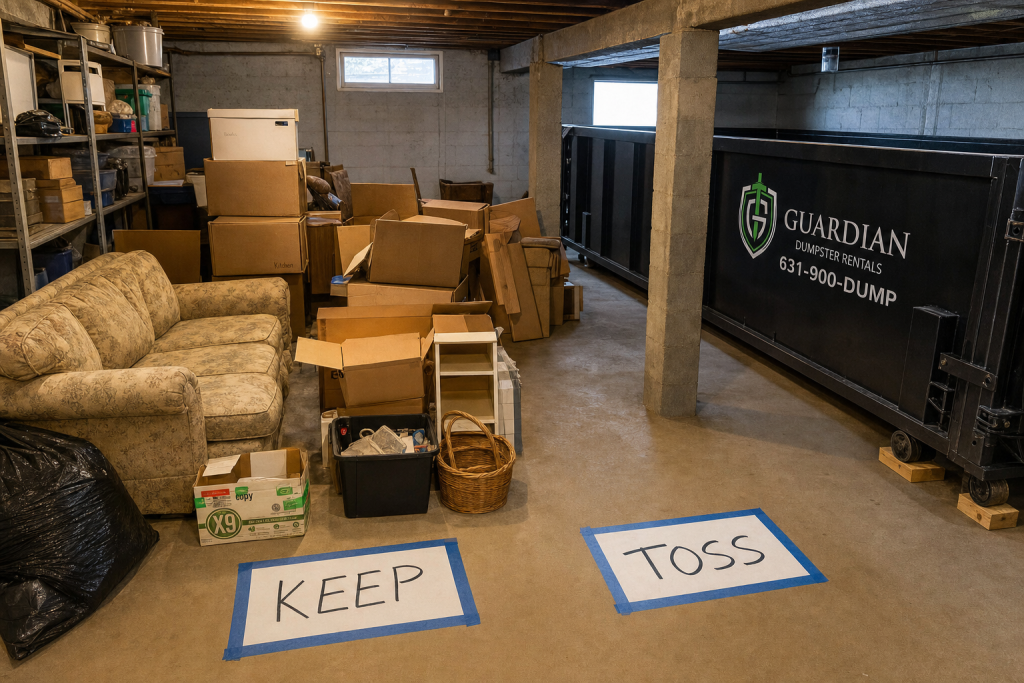
How Much Does a 10 Yard Dumpster Actually Hold?
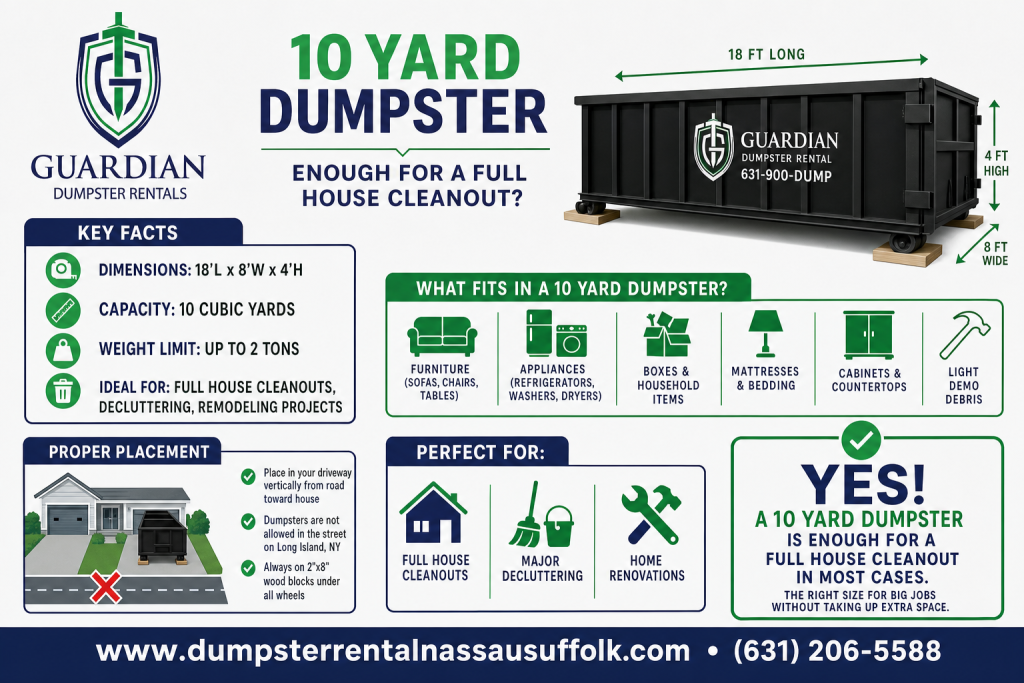
A 10 yard dumpster holds 10 cubic yards of debris — roughly the equivalent of three full-size pickup truck loads. Most measure about 12 to 14 feet long, 7 to 8 feet wide, and 3.5 feet tall, with weight allowances typically in the 1 to 2 ton range depending on the hauler.
Those numbers sound generous on paper, but cubic yards are hard to picture until you start filling one. Here’s how the capacity translates into real household terms.
Picturing 10 Cubic Yards in Everyday Terms
- About 3 pickup truck loads — imagine loading your truck bed to the brim three separate times.
- Roughly 50 to 70 standard trash bags — depending on how tightly they’re packed and what’s inside them.
- One small room’s worth of contents — a packed garage bay or a cluttered spare bedroom can fill it on its own.
The low sidewalls (around 3.5 feet) are actually a plus for cleanouts. You can walk items in through the rear door or lift them over the side without a struggle, which matters when you’re hauling out dressers and bed frames all day.
Why Furniture Eats Space Faster Than You Expect
Bulky items are the capacity killers. Furniture doesn’t stack neatly, so it traps air pockets and dead space that count against your volume without adding much actual debris. A few examples of how quickly things add up:
- A queen mattress and box spring can consume close to a full cubic yard each if laid flat, and they don’t compress.
- A sofa takes up 2 to 3 cubic yards on its own unless you break it down.
- An upholstered recliner or armchair is awkward to stack and often wastes the space around it.
- Boxed clutter is deceptive — 20 to 30 medium moving boxes of books, dishes, and keepsakes can fill a third of the container.
A practical rule: disassemble what you can. Removing legs from tables, breaking down bed frames, and flattening boxes can effectively recover 20 to 30 percent of your container’s usable space.
Don’t Forget the Weight Limit
Volume isn’t the only ceiling. Most 10 yard containers include a weight allowance of roughly 1 to 2 tons, and going over usually means a per-ton overage fee. Household furniture and clothing rarely hit the limit, but dense items — old exercise equipment, filing cabinets full of paper, tile, or stacks of books — can push you toward it before the container looks full. If your cleanout includes a lot of heavy material, ask your hauler about the included tonnage before delivery. Local providers offering 10 yard dumpster rental in Babylon can walk you through typical weight allowances for household debris so there are no surprises on the final invoice.
Bottom line: a 10 yard dumpster is genuinely useful capacity — but between bulky furniture and boxed clutter, it fills faster than most homeowners anticipate.
What Does a Room-by-Room Cleanout Really Add Up To?
A full house cleanout typically generates far more debris than a 10 yard dumpster can hold. Once you tally the kitchen, bedrooms, living room, basement, attic, and garage, most homes produce somewhere between 20 and 40 cubic yards of material — often two to four times the capacity of a 10 yard container.
The reason homeowners underestimate this is simple: furniture and boxes look compact when they’re arranged neatly inside a house. Once everything is pulled out, disassembled, and piled loosely, the volume balloons. Here’s a realistic room-by-room breakdown for a typical home.
Kitchen: 2–4 Cubic Yards
Even without cabinets or countertops, a kitchen cleanout adds up fast. Expect to fill several yards with:
- Small appliances, cookware, and dishware
- Pantry contents and expired food packaging
- An old kitchen table and chairs
Bedrooms: 3–5 Cubic Yards Each
Bedrooms are deceptively heavy contributors. A single mattress and box spring can take up close to a cubic yard on their own, and most bedrooms also include a dresser, nightstands, a bed frame, and closets packed with clothing, shoes, and bedding. A three-bedroom home can easily generate 10 to 15 yards from bedrooms alone — enough to fill a 10 yard dumpster before you’ve touched the rest of the house.
Living Room: 3–6 Cubic Yards
Sofas, recliners, coffee tables, entertainment centers, bookshelves, and rugs are bulky and don’t break down small. A sectional sofa by itself can occupy two or more cubic yards of container space because of how awkwardly it loads.
Basement: 5–10+ Cubic Yards
Basements are usually the biggest wildcard. Decades of storage — old furniture, holiday decorations, exercise equipment, tools, and boxes that haven’t been opened in years — tend to accumulate here. In older homes, this is frequently the single largest source of debris.
Attic: 2–5 Cubic Yards
Attics hold lighter but bulky items: boxes of keepsakes, old luggage, seasonal items, and sometimes leftover building materials or insulation scraps from past projects.
Garage: 4–8 Cubic Yards
Between lawn equipment, bikes, scrap lumber, half-empty storage bins, and shelving, garages routinely rival basements for volume. Yard tools and outdoor furniture add awkward, space-eating shapes to the pile.
The Running Total
Add it up conservatively — kitchen, three bedrooms, living room, basement, attic, and garage — and you’re looking at roughly 20 to 35 cubic yards for a typical whole-house cleanout. Even a modest, lightly furnished home usually exceeds 10 yards once everything is actually out on the curb. That doesn’t mean a 10 yard dumpster is never the right call, but for a true top-to-bottom cleanout, the math rarely works in its favor.
When Should You Choose a 20 or 30 Yard Dumpster Instead?
Choose a 20 yard dumpster for most full 2–3 bedroom house cleanouts, and a 30 yard for estates, hoarding situations, or cleanouts combined with a move-out. One right-sized container almost always costs less than renting a 10 yard dumpster twice, because you avoid paying a second delivery and haul-away fee.
The honest truth is that a full house cleanout outgrows a 10 yard dumpster faster than most people expect. Once you’re clearing more than a couple of rooms — especially if furniture, mattresses, and appliances are involved — bulky items eat up space quickly. Here’s how to think through the upgrade.
When a 20 Yard Dumpster Makes Sense
A 20 yard container holds roughly twice the volume of a 10 yard dumpster, and it’s the sweet spot for most whole-home projects. It’s the right call when:
- You’re cleaning out a full 2–3 bedroom house, including furniture and closets
- The basement, attic, or garage is part of the job — these areas alone can fill a 10 yard dumpster
- You’re clearing decades of accumulated belongings, not just recent clutter
- You want breathing room so you’re not playing Tetris with every couch cushion
When to Go Straight to a 30 Yard
A 30 yard dumpster is built for the biggest residential jobs. Choose it when:
- Estate cleanouts: A lifetime of belongings — full bedroom sets, china cabinets, workshop contents — adds up fast
- Hoarding situations: Volume is nearly always underestimated in these cleanouts, and a second rental mid-job stalls momentum
- Cleanout plus move-out: If you’re emptying the house completely before a sale or a tenant turnover, everything that isn’t going with someone has to go in the container
- Cleanout plus light renovation: Ripping out old carpet or cabinets while you clear the house pushes you well past 20 yard territory
Why One Bigger Dumpster Beats Two Small Ones
It’s tempting to book a 10 yard dumpster and “see how it goes,” but that gamble rarely pays off on a whole-house job. If you fill it and need a swap, you’re typically paying for:
- A second delivery and pickup trip
- A second base rental fee
- Downtime while you wait for the empty container to arrive
Two 10 yard rentals give you the same total capacity as one 20 yard dumpster, but at a higher combined cost and with your project stalled in between. A single larger container means one delivery, one pickup, one bill — and no debris piled in the driveway waiting for round two.
Rule of thumb: if you’re hesitating between two sizes for a full house cleanout, take the larger one. Unused space costs you little; running out of space costs you time, money, and momentum.
What Can’t Go in the Dumpster During a House Cleanout?
Hazardous and regulated items cannot go in a rented dumpster during a house cleanout. That includes paints, solvents, household chemicals, tires, electronics, and appliances containing refrigerant, such as refrigerators and air conditioners. Heavy debris like brick, concrete, and dirt is also typically excluded because of weight limits. These items need separate, proper disposal channels.
Most homeowners are surprised by this list. A house cleanout unearths decades of half-used paint cans, old TVs, and mystery chemicals from the garage — exactly the things a dumpster company will refuse or charge extra fees for. Knowing what’s off-limits before the container arrives saves you from surcharges and the hassle of unloading rejected items.
Common Prohibited Items in NY House Cleanouts
- Paints, stains, and solvents: Liquid paint is a hazardous material. Latex paint that has been fully dried out (often by mixing in kitty litter or a paint hardener) is sometimes accepted, but always confirm with your hauler first.
- Household chemicals: Pesticides, pool chemicals, cleaners, motor oil, antifreeze, and propane tanks are all prohibited.
- Appliances with refrigerant: Refrigerators, freezers, air conditioners, and dehumidifiers contain refrigerant that must be professionally removed by a certified technician before disposal.
- Tires: Landfills won’t accept them in mixed loads, so dumpster companies won’t either.
- Electronics: New York State law prohibits throwing most electronics — TVs, computers, monitors, printers — in the trash. They must be recycled through approved programs.
- Batteries, fluorescent bulbs, and mercury items: These require hazardous waste handling.
Why Brick, Concrete, and Dirt Are a Problem
It’s not that these materials are hazardous — they’re just extremely heavy. A 10 yard dumpster loaded with concrete or soil can easily exceed the weight limits of the truck hauling it. Most companies either prohibit heavy debris outright in standard containers or require a dedicated “clean fill” dumpster that holds only concrete, brick, or dirt with no mixed household waste. If your cleanout involves tearing out a patio or masonry, ask your hauler about a separate heavy-debris container rather than sneaking material into your household load, which can trigger overage fees or a refused pickup.
How to Dispose of Prohibited Items Properly
- Household hazardous waste days: Most NY counties host periodic collection events for paints, chemicals, and batteries. Check your county’s solid waste department for the schedule.
- Electronics recycling: Many retailers and manufacturers offer free take-back programs, and some municipal transfer stations accept e-waste year-round.
- Appliance pickup: Some utility companies and scrap metal recyclers will haul away refrigerant-containing appliances, and utilities occasionally offer incentives for old working refrigerators.
- Tires: Tire retailers typically accept old tires for a small per-tire recycling fee.
A quick call to your dumpster provider with a list of questionable items takes five minutes and prevents the two most common cleanout headaches: surprise fees and a load that gets rejected at the landfill.
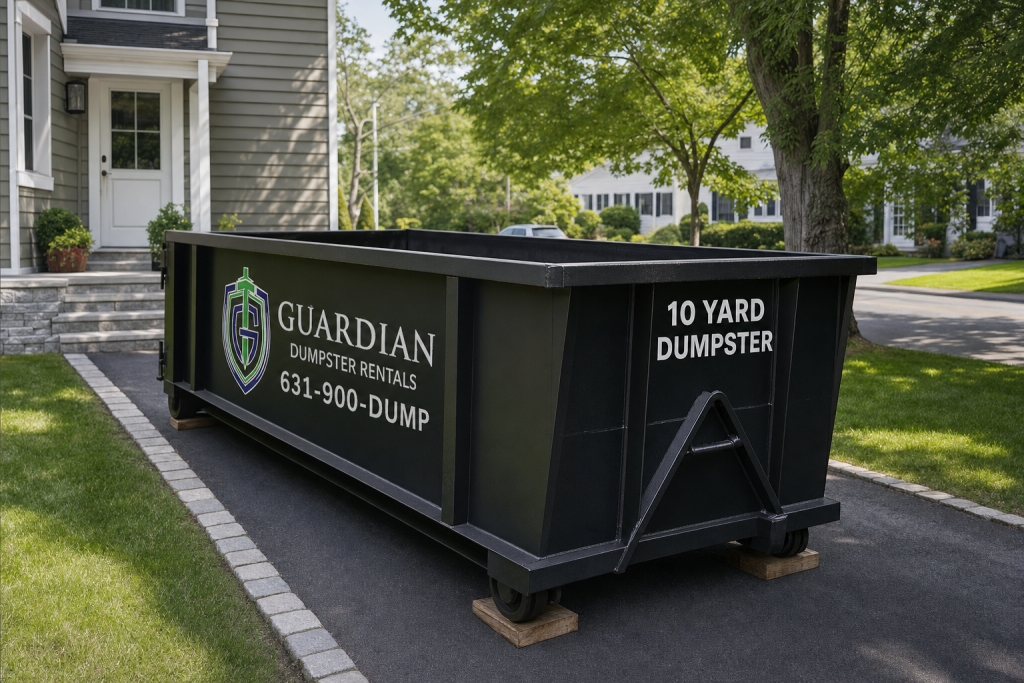
How Can You Make a Summer Cleanout in NY Go Smoothly?
To make a summer cleanout in New York go smoothly, load your 10 yard dumpster early in the morning before heat and humidity peak, tarp the container before afternoon thunderstorms add water weight, check tropical-storm forecasts before scheduling delivery, and stage items room by room so the dumpster fills efficiently within your rental window.
New York summers bring real challenges for a house cleanout: sticky humidity, sudden downpours, and the occasional tropical system moving up the coast. A little planning around the weather turns a miserable weekend into a manageable one.
Beat the Heat by Loading Early
Hauling furniture and boxes down a driveway in 90-degree humidity is exhausting and genuinely risky. Plan your heaviest loading sessions for early morning, take breaks in the shade, and keep water on hand. Heat exhaustion sneaks up fast during physical work, so it’s worth reviewing the warning signs on the CDC’s extreme heat resource page before a big cleanout day. If you have helpers, rotate who does the carrying and who does the sorting indoors.
Tarp the Load Before Afternoon Storms
Summer thunderstorms in New York tend to build in the afternoon and evening. Rain soaking into a dumpster full of carpet, mattresses, upholstered furniture, and cardboard adds significant water weight — and most rentals bill overages by the ton. A simple habit prevents this:
- Keep an inexpensive heavy-duty tarp and bungee cords on hand from day one.
- Cover the dumpster every time you stop loading, not just overnight.
- Check the daily forecast at weather.gov and plan loading around storm timing.
- Set absorbent items like mattresses and rugs deep in the container where they’re easier to keep covered.
Plan Around Tropical-Storm Forecasts
From late summer into fall, tropical systems can affect the Northeast. If a storm is projected within your rental window, talk to your hauler about adjusting delivery or pickup dates — a dumpster sitting through days of tropical rain will be heavy, and high winds can scatter loose debris. The National Hurricane Center publishes forecast tracks several days out, which is usually enough lead time to shift your schedule.
Stage Rooms So the Dumpster Fills Efficiently
The clock starts when the container lands in your driveway, so don’t spend rental days deciding what to keep. Instead:
- Sort each room into keep, donate, and toss piles before delivery day.
- Move “toss” piles to the garage or a spot near the driveway so loading is a straight shot.
- Break down furniture and flatten boxes in advance — dense loading is how a 10 yard dumpster handles more than people expect.
- Load heavy, flat items first, then fill gaps with bagged debris.
With staging done ahead of time, most homeowners can fill the container in a day or two of morning sessions and return it before the next round of summer storms rolls through.
About 3-4 pickup truck loads of debris
10 Yard Capacity
Roughly 12-14 ft long — fits most NY driveways
Typical Footprint
Often 1-2 tons included, varies by hauler
Common Weight Allowance
Most whole-home cleanouts need 20+ yards total
Full House Reality
10 Yard Dumpster vs. Larger Sizes for a House Cleanout
| Dumpster Size | Approx. Capacity | Best For | Full House Cleanout Fit? |
|---|---|---|---|
| 10 yard | 3-4 pickup truck loads | 1-3 rooms, garage, or basement purge | Usually too small — expect multiple hauls |
| 15 yard | 4-5 pickup truck loads | Small home or apartment cleanout | Tight fit for smaller homes |
| 20 yard | 6-8 pickup truck loads | Average full house cleanout | Often the sweet spot |
| 30 yard | 9-12 pickup truck loads | Large homes, estates, hoarding situations | Comfortable for most full cleanouts |
Illustrative Example: A Phased Cleanout in Upstate NY
Illustrative example
Consider a hypothetical homeowner clearing out a three-bedroom family home after inheriting it. They initially booked a 10 yard dumpster, expecting it to handle everything, but it filled up after just the basement and one bedroom of furniture. Rather than paying for two more swaps, they upgraded to a 20 yard container for the remainder and donated usable items to reduce volume. This composite scenario reflects a common pattern: 10 yard dumpsters shine for phased or single-area cleanouts, but full house projects almost always demand more capacity than owners expect.
Frequently asked questions
Is a 10 yard dumpster big enough for a whole house cleanout?
Usually not. A 10 yard dumpster holds roughly three pickup truck loads of debris, which typically covers one or two rooms of furniture and boxes, not an entire home. Full house cleanouts more often need a 20 or 30 yard container, or multiple 10 yard swaps. It works if the house is lightly furnished, already partially cleared, or if you plan to donate and sell most large items first.
How many rooms of stuff fits in a 10 yard dumpster?
As a practical rule, expect one to two average furnished rooms per 10 yard container. A bedroom set, a couch, a few dressers, and a stack of boxes fill it faster than most people expect. Bulky items like mattresses, sectionals, and appliances eat volume quickly. If you break down furniture, flatten boxes, and load tightly, you can stretch it, but three or more full rooms is rarely realistic.
What happens if I overfill a 10 yard dumpster?
The hauler can refuse to pick it up until you remove the overage, charge extra fees for debris above the fill line, or both. Drivers are legally required to tarp loads, so anything sticking above the rim is a problem. If you're getting close to full, stop loading, call the company, and ask about a swap-out or an additional charge before pickup day rather than after.
Is it cheaper to rent two 10 yard dumpsters or one 20 yard dumpster?
One 20 yard dumpster is almost always cheaper than two 10 yard rentals, because you pay delivery, pickup, and base fees once instead of twice. Two smaller containers only make sense when driveway space or weight limits force it, or when the cleanout happens in phases weeks apart. If you're unsure of volume, ask the hauler about a swap-out rate up front so you know the real cost of guessing small.
How long does it take to fill a dumpster during a house cleanout?
Most homeowners fill a 10 yard dumpster in a single weekend, and often in one long day if two or more people are working. The cleanout itself is what takes time — sorting keepsakes, donations, and trash room by room is slower than the actual loading. Standard rental periods usually run about a week, which is enough for the container portion, but budget extra days if you're sorting a lifetime of belongings.
What can't I throw in a dumpster during a house cleanout in NY?
Haulers typically prohibit hazardous materials: paint, solvents, motor oil, propane tanks, batteries, chemicals, and asbestos. Tires, refrigerators, and other appliances with refrigerant are often restricted or carry extra fees, and some companies charge for mattresses. Electronics have disposal rules in New York, so check with your hauler or local e-waste program. Always confirm the prohibited items list before delivery — surprise items left in the load can trigger contamination fees.
What's the biggest mistake people make when renting a dumpster for a cleanout?
Underestimating volume. People picture their furniture in place and assume it's a small job, then discover that couches, mattresses, and decades of closet contents pile up fast. The second biggest mistake is loading loosely — tossing items in whole instead of breaking down furniture and filling gaps. Sort before the dumpster arrives, get the size the hauler recommends rather than the cheapest, and load it like a puzzle, heaviest items first.
Do I need a permit to put a dumpster in my driveway in New York?
If the dumpster sits entirely on your own driveway or property, you generally don't need a permit. If it must go on the street or public right-of-way, most New York municipalities require a street occupancy permit from the town, village, or city. Rules and fees vary by location, so call your local building or highway department before delivery. Many rental companies can tell you the local requirements when you book.
Should I clean out the house first or order the dumpster first?
Sort first, then order. Walk through every room and separate items into keep, sell, donate, and trash piles before the container arrives. This tells you how much true junk you have, which lets you order the right size instead of guessing. It also means the rental period isn't wasted on decision-making — once the dumpster lands, you're just loading. Ordering first often leads to a container sitting half-empty while you sort.
How full can a 10 yard dumpster be with heavy stuff like books or tile?
Watch the weight limit, not just the volume. Dense materials — books, dishes, tile, concrete, wet carpet — can hit a 10 yard container's weight allowance well before it looks full. Exceeding the included tonnage triggers overage charges billed per ton after weighing. If your cleanout includes a lot of heavy material, tell the rental company in advance; they may recommend a heavy-debris container or advise spreading dense items across the load.
Related local pages
- Dumpster Rental Babylon New York
- Dumpster Rental Bay Shore New York
- Dumpster Rental Commack New York
Not sure which size fits your cleanout? Call us for honest, no-pressure sizing advice and same-week delivery anywhere in our NY service area. Get in touch.
Last updated: August 27, 2026
Recent Comments