
10 Yard Dumpster Projects: Small NY Remodels That Fit
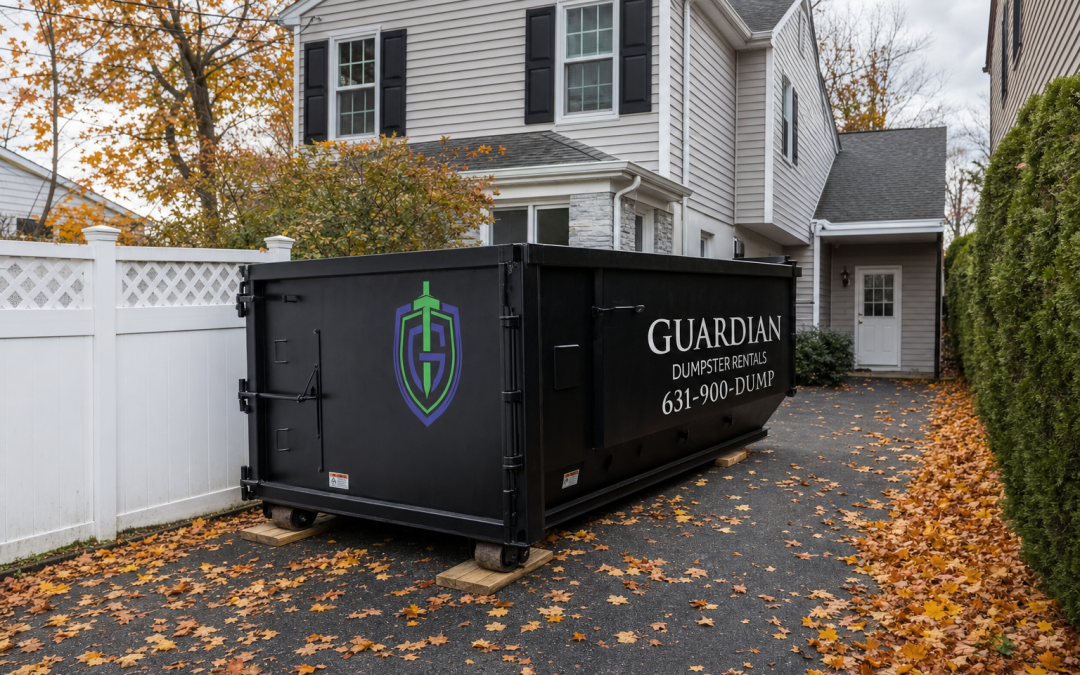
Why a 10 Yard Dumpster Is the Smart Pick for Small NY Remodels
10 yard dumpster projects are small-scope jobs — think bathroom gut-outs, single-room renovations, and garage cleanouts — that generate roughly three to four pickup truck loads of debris. A 10 yard container holds all of that in a compact footprint that fits tight New York driveways, making it the right-sized, budget-friendly choice for most small fall remodels.
Key takeaways
- A 10 yard dumpster holds roughly 3-4 pickup truck loads of debris, making it ideal for single-room NY remodels like a bathroom, small kitchen, or basement cleanout.
- Compact 10 yard containers typically fit in a standard driveway or single parking space, often avoiding the NYC street permit hassles that larger dumpsters trigger.
- Choosing a right-sized 10 yard dumpster over an oversized 20 or 30 yard container can cut rental costs and prevent paying for unused capacity.
- Heavy materials like tile, plaster, and concrete are often better suited to a 10 yard dumpster because weight limits, not volume, are usually the constraint.
- If your project spans multiple rooms or includes bulky furniture and cabinetry, size up rather than risk overloading a 10 yard container.
If you’ve ever tried to squeeze a full-size roll-off container onto a narrow Long Island driveway, you already understand the appeal. A 10 yard dumpster is typically short enough and low enough that it tucks in beside the house without blocking the garage, hanging over the sidewalk, or forcing you to park on the street for a week. For homeowners in dense neighborhoods, that footprint alone often settles the sizing question.
What a 10 Yard Dumpster Actually Holds
Ten cubic yards is a genuinely useful amount of space for a small remodel. As a mental benchmark, picture stacking about three to four standard pickup truck beds of debris into one container. That comfortably covers:
- Torn-out vanities, tile, and drywall from a small bathroom remodel
- Old flooring and trim from one or two rooms
- A garage, basement corner, or attic cleanout
- Debris from a small deck removal or fence teardown
- Yard waste and brush from a fall landscaping refresh
The lower sidewalls are a practical bonus, too — you can lift heavier items like old cabinets or bags of plaster over the edge without a ramp or a second set of hands. Many homeowners searching for a 10 yard dumpster rental in Islip are tackling exactly these kinds of one-weekend or one-week projects.
Why Compact Containers Suit New York Properties
Suburban lots across Nassau and Suffolk counties often come with shared driveways, mature trees, and limited curb space. A smaller container means easier delivery, fewer placement headaches, and less risk of damage to pavers or asphalt. It also means you’re not paying for empty air — a common mistake when homeowners default to a larger box “just in case.” Local providers offering dumpster rental in Amityville, New York and surrounding towns regularly place 10 yard containers on driveways where a 20 or 30 yard box simply wouldn’t fit.
What This Guide Covers
In the sections ahead, we’ll walk through a practical checklist: the best projects for a 10 yard container, how it compares to 20 and 30 yard sizes, when it makes sense to size up, what materials can’t go in the box under New York rules, and how fall weather affects delivery and placement. By the end, you’ll know exactly whether a 10 yard dumpster fits your remodel — and how to plan around it.
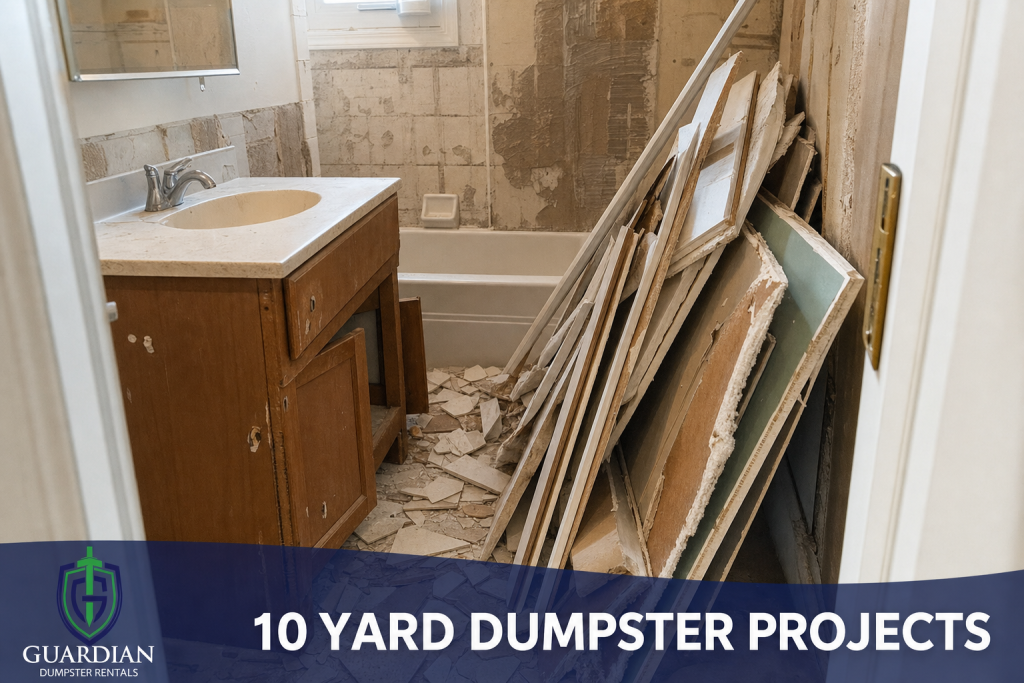
What Are the Best 10 Yard Dumpster Projects for a NY Home?
The best 10 yard dumpster projects are single-room jobs: a full bathroom gut, one-room flooring or carpet tear-out, a kitchen cabinet swap, small deck board removal, and pre-winter attic or basement cleanouts. Each of these typically produces between two and eight cubic yards of debris, leaving comfortable room to spare in a 10 yard container.
A 10 yard dumpster holds roughly three to four pickup truck loads of material, which is exactly the range most single-room New York remodels land in. Here’s how the most common projects break down.
Single Bathroom Gut
Tearing out a tub or shower surround, vanity, toilet, tile, and drywall from one standard bathroom usually generates around five to seven cubic yards of debris. Tile and cast-iron tubs are heavy, so a 10 yard container’s lower weight allowance still handles it as long as you’re only gutting one bathroom.
One-Room Flooring or Carpet Tear-Out
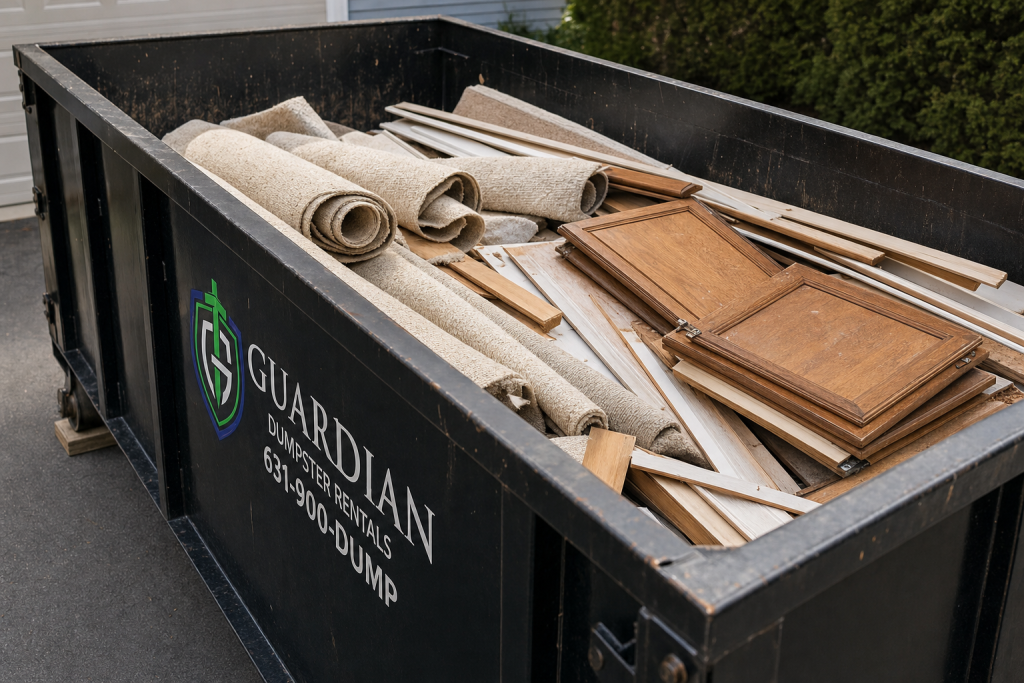
- Carpet and padding: A typical living room or bedroom (200–400 square feet) produces about one to three cubic yards once rolled and stacked.
- Hardwood, laminate, or tile: Expect two to five cubic yards for the same footage, plus underlayment. Tile adds weight fast, so keep it to one or two rooms.
Homeowners booking a 10 yard dumpster rental in Bay Shore for flooring jobs often finish with room left over for baseboards, trim, and a few boxes of accumulated clutter.
Kitchen Cabinet Swap
Removing upper and lower cabinets, a countertop, and a backsplash from an average kitchen creates roughly four to six cubic yards of debris. Cabinets are bulky but light, so volume — not weight — is the constraint, and a 10 yard box absorbs them easily. If you’re also pulling appliances, check with your hauler first, since some units need separate handling.
Small Deck Board Removal
Replacing the boards on a small deck (up to about 150–200 square feet) while keeping the frame intact yields around three to four cubic yards of lumber. Stack boards flat rather than tossing them in crosswise and you’ll use the container’s space far more efficiently.
Pre-Winter Attic or Basement Cleanout
Fall cleanouts are where the 10 yard size really earns its keep on Long Island. Old furniture, broken storage bins, worn rugs, and years of accumulated boxes from an attic or basement typically total four to eight cubic yards. Clearing that space before the holidays — and before you’re storing snow blowers and winter gear — is one of the most satisfying weekend projects there is.
If your project falls into any of these categories, a compact container that fits in a standard driveway is all you need. For projects on the South Shore, a dumpster rental in West Islip, New York can usually be placed without blocking your garage or the street.
How Big Is a 10 Yard Dumpster Compared to a 20 or 30 Yard?
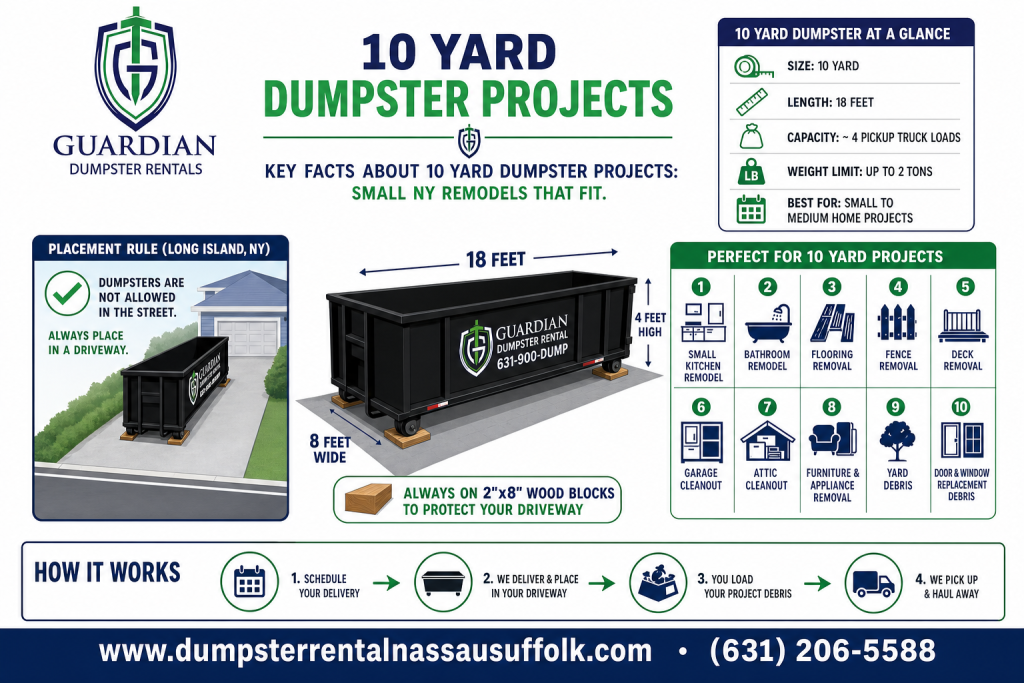
A 10 yard dumpster typically measures about 12 feet long, 8 feet wide, and 3.5 feet tall, holding roughly 3 to 4 pickup truck loads of debris. A 20 yard holds about double that, and a 30 yard roughly triple — but both take up noticeably more driveway space than the compact 10 yard.
Seeing the numbers side by side makes the choice much easier, especially when your project debris is measured in bathroom tiles and kitchen cabinets rather than whole-house gut jobs. Here’s how the three most common residential sizes stack up:
Container Sizes at a Glance
| Size | Typical Dimensions | Pickup Truck Loads | Driveway Footprint | Best Project Match |
|---|---|---|---|---|
| 10 Yard | ~12′ L x 8′ W x 3.5′ H | 3–4 loads | Fits a single parking space with room to spare | Bathroom remodels, small kitchen refreshes, garage cleanouts, deck removal |
| 20 Yard | ~22′ L x 8′ W x 4.5′ H | 6–8 loads | Takes up most of a standard two-car driveway lane | Full kitchen remodels, flooring removal across multiple rooms, medium roofing jobs |
| 30 Yard | ~22′ L x 8′ W x 6′ H | 9–12 loads | Same length as a 20 yard but with much taller walls | Whole-home cleanouts, large additions, major renovation debris |
Why the Footprint Matters on Long Island Driveways
Many Nassau and Suffolk driveways are narrow, sloped, or shared, which is exactly why the 10 yard’s short 12-foot length is such an advantage. You can still park a car behind it, and the low 3.5-foot walls mean you can toss debris over the side instead of walking everything up through the rear door. If you’re comparing options in a tighter neighborhood, a 10 yard dumpster rental near Commack or Bay Shore is often the only size that fits without blocking the garage entirely.
Quick Ways to Estimate Your Debris Volume
- Think in pickup loads: If your debris pile would fill more than 4 pickup beds, you’ve outgrown the 10 yard.
- Count the rooms: Most classic 10 yard dumpster projects involve one room — a single bathroom, a small kitchen, or one cluttered garage.
- Watch the weight: Heavy materials like concrete, dirt, or plaster fill weight limits long before they fill the container, so a smaller box often makes more sense for dense debris.
Truck access matters as much as container size. A roll off dumpster rental in West Babylon still requires clearance for the delivery truck to back in and tilt the container off, so measure your driveway length — not just the spot where the box will sit — before you book.
When Should You Size Up to a 20 or 30 Yard Dumpster Instead?
Size up to a 20 or 30 yard dumpster when your project spans multiple rooms, involves whole-home flooring or roofing tear-offs, or includes a full estate cleanout. If your debris pile will outgrow a small container, one right-sized dumpster is almost always cheaper and faster than ordering a second haul.
A 10 yard container is a workhorse for single-room jobs, but it has real limits. The most common mistake homeowners make is underestimating debris volume — demolition material takes up far more space out of the wall than it did in it. If any of the signals below apply to your project, plan for a bigger box from the start.
Clear Signs You’ve Outgrown a 10 Yard Container
- Multi-room remodels. Gutting a kitchen and a bathroom, or renovating several bedrooms at once, generates cabinetry, drywall, fixtures, and framing debris that quickly overwhelms 10 cubic yards.
- Whole-home flooring removal. Ripping out carpet, hardwood, or tile across an entire house — especially with underlayment or old subfloor — is bulky, awkward waste that stacks poorly and eats volume fast.
- Large cleanouts. Estate cleanouts, hoarding situations, or clearing a full basement, attic, and garage in one push typically call for 20 yards or more.
- Bulky furniture and appliances in quantity. Sofas, mattresses, and dressers don’t compact. A handful of large items can fill half a small container before the real debris starts.
- Additions or structural work. Any project involving framing, sheathing, or exterior demolition tends to produce contractor-scale volume.
Heavy material is a separate consideration. Concrete, brick, plaster, and dirt hit weight limits long before they fill a container, so mixed loads with masonry often need a different plan entirely. Talking through the debris type with a provider that handles construction debris removal in Dix Hills and surrounding Suffolk County towns can save you from an overloaded — and unhaulable — container.
Why One Right-Sized Dumpster Beats Two Swap-Outs
Some homeowners figure they’ll start small and order a second dumpster if needed. In practice, that approach usually costs more and slows the job down:
- Two hauls means two delivery and pickup fees. The price gap between a 10 and a 20 yard container is almost always smaller than paying for a full second rental.
- Swap-outs stall your project. Once the first container is full, demolition stops until the exchange happens — and delivery schedules in busy Long Island seasons aren’t always same-day.
- Debris piles up on your property. Waiting on a swap often means bags and broken material sitting in the driveway or yard, which is exactly what the dumpster was supposed to prevent.
If you’re on the fence, describe your project honestly when you book. A company offering roll off dumpster rental in Commack can walk you through typical volumes for similar remodels and steer you to the size that gets everything gone in one trip.
What Can’t Go in a 10 Yard Dumpster in New York?
Heavy inert materials — brick, concrete, dirt, rock, and asphalt — plus yard waste like fall leaves, branches, and grass clippings can’t go in a standard 10 yard dumpster in New York. Hazardous items such as paint, chemicals, tires, and appliances with refrigerant are also prohibited. Loading them risks refusal at pickup or extra charges.
The reason is simple: it’s about weight and disposal rules, not container space. A 10 yard container could physically hold a lot of broken concrete, but the load would quickly exceed what the truck can legally haul on New York roads. And in much of the state, yard waste is required to be composted or processed separately from construction debris, so mixing bagged leaves into a remodel load can get the whole container flagged at the transfer station.
Materials to Keep Out of the Container
- Brick, block, and concrete — too heavy for a standard mixed-debris load
- Dirt, sod, sand, and rock — dense fill that pushes loads overweight fast
- Yard waste — leaves, brush, stumps, and clippings, which many NY municipalities require to be composted
- Hazardous materials — paint, solvents, oil, propane tanks, and batteries
- Tires and refrigerant appliances — refrigerators, freezers, and AC units need certified handling
- Electronics — New York law requires most e-waste to be recycled, not landfilled
What to Do With Those Items Instead
For masonry and soil, ask your rental company about a dedicated clean-fill or concrete-only container — these are hauled and priced differently because the material can be crushed and recycled. Teams that handle construction debris removal in Dix Hills and surrounding Suffolk County towns can usually tell you in one phone call whether your material needs a separate box or a special rate.
Fall leaves and brush typically belong in your town’s curbside yard waste collection or at a municipal compost drop-off. Paint, chemicals, and electronics should go to a household hazardous waste event or an e-waste recycling location — most Long Island towns run these programs seasonally.
How Overweight Loads Affect Your Bill
Every rental includes a weight allowance, and the container is weighed at the disposal facility after pickup. Go over that allowance and you’ll pay an overage fee for each additional ton — which is exactly why sneaking in a few dozen broken pavers or wet, leaf-filled bags is a costly shortcut. Wet debris is a particular trap in autumn, since rain-soaked material weighs dramatically more than dry.
The good news: typical 10 yard dumpster projects — bathroom gut-outs, flooring tear-ups, garage cleanouts — rarely come close to the weight limit when you keep prohibited materials out. If you’re unsure whether your debris qualifies, providers offering a 10 yard dumpster rental in Commack can walk you through what’s allowed before the container ever hits your driveway.
How Does Fall Weather Affect Dumpster Delivery and Placement in NY?
Fall weather in New York affects dumpster delivery in a few practical ways: wet leaves make driveways slick for delivery trucks, cold snaps can freeze debris in place, and shorter daylight compresses your work window. Clearing the drop zone, laying plywood under the container, and scheduling early in the season keeps small remodels on track.
Autumn is actually one of the best times to rent a container in New York. Contractors are less slammed than in summer, the ground is still firm enough for clean placement, and you have a natural deadline — finishing interior work before the holidays and the first real freeze. That said, the season comes with quirks worth planning around.
Prep Your Driveway Before the Truck Arrives
- Clear wet leaves. A leaf-covered driveway is surprisingly slippery for a roll-off truck backing in. Rake or blow the drop zone clear the morning of delivery so the driver has traction and can see the pavement edges.
- Lay down boards. Place plywood or 2×10 planks where the container’s rails and wheels will sit. Asphalt softens on warm fall afternoons and gets brittle in overnight cold, so boards spread the weight and protect the surface either way.
- Mark obstacles. Low-hanging branches, sprinkler heads, and drainage grates are easy to miss once leaves pile up. Flag anything the driver should avoid.
If you’re planning a bathroom gut or a single-room refresh, a compact container like a 10 yard dumpster rental in Commack tucks neatly into a standard driveway, which matters more in fall when street placement can conflict with municipal leaf collection routes.
Plan Around Cold Snaps and Shorter Days
An early freeze can turn wet drywall, plaster, and soil into a frozen block inside the container, making it heavier and harder to tip at the transfer station. Keep a tarp over the dumpster on rainy nights, and load heavy wet debris last so it doesn’t sit for days. Check the National Weather Service forecast before scheduling delivery — a two-day shift can mean the difference between loading in daylight and hauling debris by floodlight at 5 p.m.
Shorter daylight also compresses weekend work sessions, so many homeowners in South Shore towns book a 10 yard dumpster rental near Islip for a full week rather than trying to load everything in one Saturday.
Why Fall Is the Ideal Window for 10 Yard Dumpster Projects
Interior work — kitchens, bathrooms, flooring, basement cleanouts — doesn’t depend on outdoor conditions, and finishing before winter means you’re not tracking snow and salt through a job site. Sorting recyclable materials like clean wood, metal, and cardboard as you load also keeps disposal responsible; the EPA’s sustainable materials management guidance is a good reference for what can be diverted from landfills. Wrap the project up in October or November, and you’ll spend the winter enjoying the results instead of working around them.
About 3-4 pickup truck loads
Typical capacity
Roughly 12-14 ft long — fits most driveways
Common footprint
Often 1-2 tons included, varies by hauler
Typical weight allowance
One room or one material type
Best-fit project scope
Best-Fit 10 Yard Dumpster Projects vs. When to Size Up
| Project Type | Typical Debris | 10 Yard Fit? |
|---|---|---|
| Bathroom remodel | Tile, vanity, tub, drywall | Yes — ideal fit |
| Small kitchen refresh | Cabinets, countertop, flooring | Yes — for galley or compact kitchens |
| Single-room flooring tear-out | Hardwood, carpet, underlayment | Yes — well within capacity |
| Basement or attic cleanout | Boxes, old furniture, misc. junk | Usually — unless heavily cluttered |
| Whole-floor gut renovation | Mixed demolition debris, framing | No — size up to 20+ yards |
Illustrative Example: A Queens Bathroom Gut in One Compact Container
Illustrative example
Consider a hypothetical homeowner in Queens planning a full gut of a 5×8 bathroom: old tile, a cast-iron tub, a vanity, and water-damaged drywall. Initially tempted to order a 20 yard dumpster 'just in case,' they instead measured their narrow driveway and realized only a 10 yard container would fit without a street permit. The compact dumpster comfortably held all the demolition debris, and the heavy tile and tub stayed within the included weight allowance. This composite scenario reflects a common pattern: for single-room NY remodels, the smaller container is often both the practical and the economical choice.
Frequently asked questions
What are the best 10 yard dumpster projects for a small home remodel?
A 10 yard dumpster works well for single-room projects: a small bathroom gutting, a kitchen cabinet and countertop tear-out, flooring removal from one or two rooms, a deck under roughly 300 square feet, or a small roofing job on a shed or porch. It also fits garage cleanouts and minor drywall demolition. If your project involves whole-house debris or heavy structural demo, you'll likely need a larger container.
How much does a 10 yard dumpster rental cost in New York?
Pricing varies by region, hauler, and debris type, but a 10 yard dumpster is typically the cheapest roll-off size a company offers, often several hundred dollars for a standard rental period. Rates in New York City and its suburbs tend to run higher than upstate. Always confirm what's included: rental days, weight allowance, delivery, pickup, and overage fees, since those extras are where quotes differ most.
How long can I keep a 10 yard dumpster for a small renovation?
Most haulers include a standard rental window, commonly around 7 to 14 days, which suits most single-room remodels. A bathroom or flooring tear-out often fills the container in a weekend, so many people schedule pickup early. If your project runs long, extensions are usually available for a daily fee. Ask about the extension rate before you book so a delayed contractor doesn't turn into a surprise bill.
Will a 10 yard dumpster fit in a New York driveway?
Usually, yes. A 10 yard dumpster has roughly the footprint of a compact car—shorter and narrower than larger roll-offs—so it fits most residential driveways, even tight ones common in NY neighborhoods. Plan for extra clearance so the delivery truck can maneuver, and check overhead for wires or branches. If you have no driveway, you may need a street placement permit from your municipality, which the hauler can often advise on.
What happens if I overload a 10 yard dumpster?
Overloading is the most common and costly mistake. If debris rises above the container's fill line, the driver may refuse pickup or require you to remove material, since overfilled loads are illegal to haul. Exceeding the weight limit triggers per-ton overage charges. Heavy materials like tile, plaster, and concrete hit weight limits fast even when the container looks half empty, so ask your hauler about weight before loading dense debris.
What can't I put in a 10 yard dumpster in NY?
Standard prohibitions include paints, solvents, motor oil, batteries, tires, propane tanks, refrigerants, and other hazardous materials. Many haulers also restrict or surcharge mattresses, appliances, and electronics, which New York State requires to be recycled separately in many cases. Putting banned items in the container can mean contamination fees or a refused load. Get your hauler's specific prohibited list in writing before you start tossing demolition debris.
Should I get a 10 yard or 20 yard dumpster for my remodel?
Choose based on debris volume and material weight, not project ambition. A 10 yard container suits one-room demos and lighter loads; a 20 yard makes sense for multi-room projects or bulky debris like cabinetry and decking from a larger structure. If you're on the fence, a second 10 yard swap-out is sometimes cheaper than an unused 20, but two rentals can also cost more—ask your hauler to price both scenarios.
Do I need a permit for a dumpster in New York?
If the dumpster sits entirely on your private property, such as a driveway, you generally don't need a permit. If it must go on a public street or sidewalk, most New York municipalities—including NYC—require a permit, and rules vary by town. Apply before your delivery date, since processing can take several days. Your dumpster company often knows local requirements and may handle the paperwork for a fee.
How do I load a 10 yard dumpster to fit the most debris?
Load flat, heavy items like drywall and plywood first to create a level base, then break down bulky pieces—disassemble cabinets, cut lumber, flatten boxes—before tossing them in. Fill gaps with small debris as you go rather than throwing everything in randomly. Distribute weight evenly across the container and keep everything below the fill line. Smart loading can effectively add real capacity to a small container.
What are the most common mistakes people make renting a small dumpster?
The big ones: underestimating debris and ordering too small, ignoring weight limits on heavy materials like tile and plaster, tossing prohibited items that trigger fees, skipping the street permit when there's no driveway space, and scheduling delivery before demolition is actually ready to start—burning paid rental days. Comparing quotes only on the headline price, without checking included tonnage and rental length, is how a cheap rental becomes an expensive one.
Related local pages
- Dumpster Rental Amityville New York
- Dumpster Rental West Islip New York
- Dumpster Rental Islip New York
Ready to tackle your fall remodel? Reserve a 10 yard dumpster today and get same-week delivery anywhere in our NY service area. Get in touch.
Last updated: September 12, 2026
Recent Comments