
20 Yard Dumpster: The Sweet Spot for Long Island Remodels
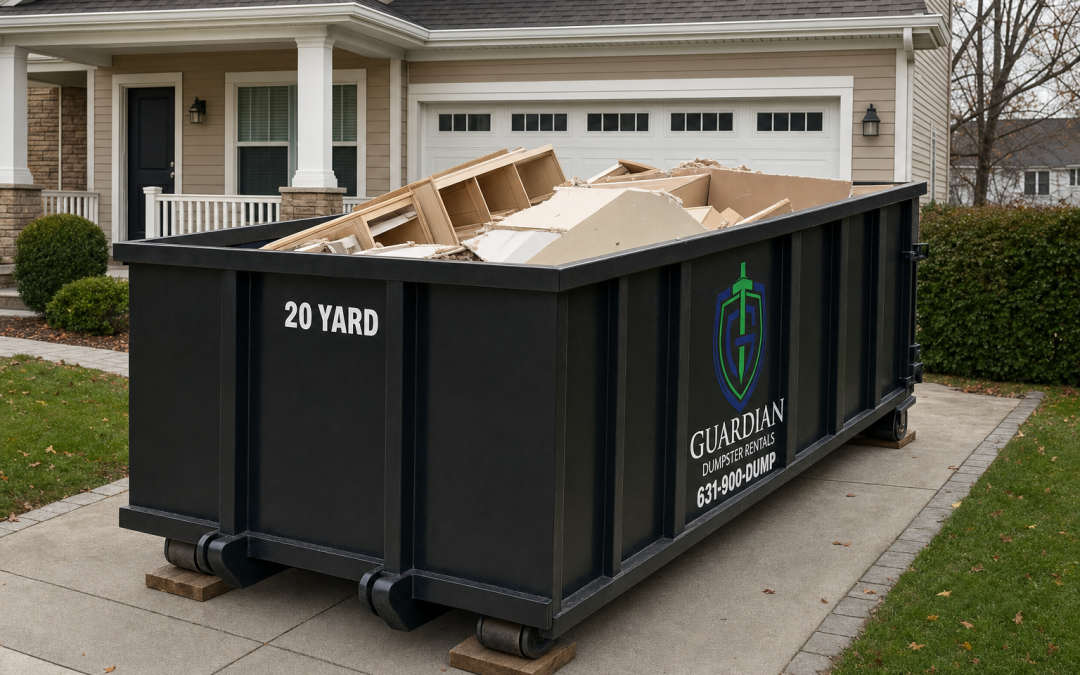
Why the 20 Yard Dumpster Is the Go-To for NY Remodeling Projects
A 20 yard dumpster is the go-to size for most New York remodels because it holds the debris from a full kitchen, bathroom, or multi-room renovation while still fitting in a standard residential driveway. It offers the best balance of capacity, footprint, and value for typical home projects.
Key takeaways
- A 20 yard dumpster hits the sweet spot for most NY remodels, holding roughly 6-8 pickup truck loads of debris while still fitting in a standard driveway.
- Kitchen and bathroom gut jobs, flooring tear-outs, and mid-size renovation projects typically generate exactly the volume a 20 yard container handles.
- Renting one 20 yard dumpster is usually cheaper than renting a 10 yard twice, so when in doubt between sizes, size up.
- Skip the 20 yard for heavy materials like concrete, brick, or dirt — weight limits mean a smaller 10 yard container is often the smarter choice for dense debris.
- In many NY municipalities, placing a dumpster on the street requires a permit, so a driveway-friendly 20 yard footprint can save time and paperwork.
Ask any contractor working across Long Island what container they order most, and the answer is almost always the same: the 20 yarder. It’s big enough that you won’t be caught mid-demo with a full box and nowhere to throw the old cabinets, but compact enough that it won’t block your garage, hang into the street, or create headaches on a tight suburban lot. During the busy summer renovation season in NY, when driveways are doing double duty for contractors’ trucks and material deliveries, that footprint matters just as much as the capacity.
The Balance of Size and Space
Remodeling debris is bulkier than most homeowners expect. Old cabinetry, drywall, flooring, vanities, and framing scraps pile up fast, and underestimating your container size usually means paying for a second haul. The 20 yard hits the sweet spot for projects like:
- Full kitchen remodels — cabinets, countertops, flooring, and drywall
- Bathroom gut renovations — tubs, tile, vanities, and fixtures
- Multi-room updates — flooring replacement plus wall and trim work
- Basement finishing or refinishing — old paneling, carpet, and framing
- Combined cleanout-plus-remodel projects — clearing out a space before rebuilding it
Homeowners tackling these kinds of projects often start with a 20 yard dumpster rental in West Babylon and surrounding towns because it handles the entire job in one container, one delivery, and one pickup.
When Another Size Makes More Sense
The 20 yard isn’t the answer for every project, and the rest of this guide breaks down exactly where the lines fall. If you’re doing a whole-home gut, a large addition, or a roof tear-off alongside your remodel, sizing up to a 30 yard can save you a second rental. On the other end, a small single-bathroom refresh or a garage cleanout may only call for something like a 10 yard dumpster rental in Commack — smaller, cheaper, and easier to place.
In the sections ahead, we’ll cover what actually fits in a 20 yard container, what you can expect to pay in New York, the clear signals that you should size up or down, and how summer storms can affect your rental timeline. By the end, you’ll know exactly which container fits your remodel — and in most cases, it’ll be the 20 yard.
What Fits in a 20 Yard Dumpster?
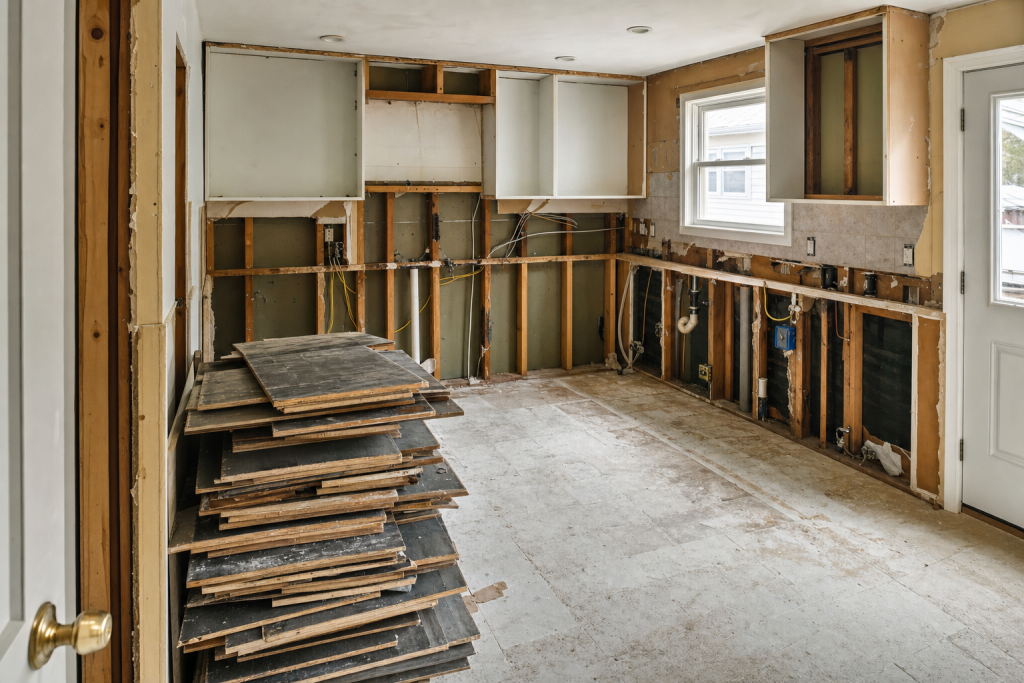
A 20 yard dumpster holds roughly 20 cubic yards of debris — about the equivalent of six pickup truck loads. It typically measures around 22 feet long, 7.5 feet wide, and 4.5 feet tall, and it comfortably handles a full kitchen tear-out, cabinetry, drywall, flooring, old fixtures, and bulky furniture in a single haul.
Because the container walls are only about waist-to-chest high, loading is easy: you can walk debris in through the rear swing door or toss lighter material over the side. That low profile matters when you’re hauling heavy items like countertops or a cast-iron tub — you’re not lifting everything over your head.
Real Remodel Examples That Fit
- Full kitchen gut: Upper and lower cabinets, countertops, an old sink, appliances (where accepted), backsplash tile, and the flooring underneath — with room left over for drywall scraps.
- Bathroom remodel plus extras: A tub, vanity, toilet, tile, and cement board, along with debris from an adjacent hallway or bedroom refresh.
- Flooring removal: Carpet, padding, hardwood, or laminate from a mid-sized home, including tack strips and underlayment.
- Drywall and framing debris: Tear-out material from several rooms during an interior reconfiguration.
- Furniture and fixtures: Couches, mattresses, dressers, old doors, and light fixtures cleared out ahead of the renovation.
For a typical Long Island kitchen or whole-floor interior remodel, this size hits the mark — big enough that you’re not calling for a swap mid-project, small enough to fit in most residential driveways. Homeowners searching for 20 yard dumpster rental in West Babylon are usually tackling exactly these kinds of projects.
Watch the Weight, Not Just the Volume
Most 20 yard rentals come with a weight allowance of a few tons, which covers standard remodel debris easily. Where homeowners get caught is with dense materials — concrete, brick, plaster, and tile add up fast. Mixed remodel waste rarely maxes out the weight limit, but if your project involves demolishing a masonry chimney or breaking up a slab, mention it when you book so the hauler can advise you. Heavier tear-outs may be better handled through dedicated construction debris removal in Babylon, where dense material can be managed properly rather than overloading a single container.
Picture the Volume
If pickup truck math helps: one standard pickup bed holds about 3 cubic yards loosely piled. Six of those loads — six separate trips to a transfer station, with loading and unloading each time — fit into one 20 yard dumpster sitting in your driveway. For a multi-week remodel, that convenience alone is often worth the rental.
How Much Does a 20 Yard Dumpster Cost in NY?
In most of New York, including Long Island, a 20 yard dumpster rental typically runs several hundred dollars — often somewhere in the $400 to $700 range — as a flat rate that covers delivery, pickup, a set rental period, and a weight allowance. Your exact price depends on your town, debris type, and how heavy your load is.
What’s Included in the Flat Rate
Most reputable haulers quote an all-in price rather than nickel-and-diming you line by line. A standard quote generally bundles:
- Delivery and pickup — the driver drops the container where you want it and hauls it away when you’re done.
- A rental period — usually 7 to 14 days, which is plenty for most kitchen, bath, or basement remodels.
- A weight allowance — commonly in the range of 2 to 3 tons for a 20 yard container, though this varies by company and material type.
- Disposal fees — the cost of tipping your debris at the transfer station or landfill, up to your included tonnage.
What Moves the Price Up or Down
The number on your quote isn’t random. These are the levers that change it:
- Overage fees: Go past your included tonnage and you’ll pay a per-ton charge on the difference. Heavy materials like tile, plaster, and roofing shingles eat up weight fast.
- Extended rental days: Keeping the container beyond the included period usually adds a modest daily fee. Worth budgeting for if your contractor’s timeline tends to slip.
- Debris type: Clean, single-material loads (like concrete-only) sometimes price differently than mixed construction debris.
- Location: Disposal costs vary town to town across Nassau and Suffolk, so a quote for a 20 yard dumpster rental in Bay Shore may differ slightly from one a few towns over.
Why One 20 Beats Two 10s
Here’s where the math favors the mid-size container. Every dumpster delivery involves the same fixed costs — a truck, a driver, fuel, and two trips to your driveway. Renting a single 20 yard container means you pay those fixed costs once. Booking a 10 yard dumpster rental near Commack twice means paying them twice, plus juggling two delivery windows around your project schedule.
On a per-cubic-yard basis, the 20 yard container almost always comes out cheaper — often significantly so. Unless you’re genuinely certain your remodel will produce a small, one-and-done load, the larger container is the safer financial bet. Running out of room mid-demo and scrambling for a second delivery is the most expensive way to rent a dumpster.
When Should You Size Up to a 30 Yard Dumpster?
Size up to a 30 yard dumpster when you’re gutting an entire home, building a large addition, combining an estate cleanout with remodel debris, or hauling bulky lightweight materials like insulation and cabinetry. If your project touches most rooms in the house, a 20 yard dumpster will likely fill before the work is done.
The 20 yard dumpster hits the sweet spot for single-room and mid-size remodels, but there’s a point where it stops making sense. Here are the clearest signals you should jump up a size before the dumpster ever arrives.
Whole-Home Gut Renovations
When you’re stripping a house down to the studs — flooring, drywall, kitchen, bathrooms, and fixtures all coming out at once — the debris adds up faster than most homeowners expect. Demolition material is deceptively bulky. Broken drywall and lath don’t stack neatly, so they eat container space quickly. For full guts, a 30 yard dumpster rental in Babylon gives you the breathing room to keep demo moving without stopping to wait for a swap.
Large Additions and Major Structural Work
Additions generate two waste streams at once: demolition debris from opening up the existing structure, plus construction offcuts, packaging, and scrap from the new build. That combination routinely overwhelms a 20 yard container, especially once framing lumber and sheathing scraps start piling up.
Estate Cleanouts Combined with Remodel Debris
Clearing out decades of furniture, boxes, and household contents before a remodel is one of the most common ways homeowners underestimate volume. Couches, mattresses, and old appliances take up enormous space relative to their weight. When a cleanout and a renovation share the same container, sizing up is almost always the right call.
Bulky, Lightweight Materials
Some debris is light but takes up serious room:
- Cabinetry and built-ins that can’t be broken down flat
- Insulation, which compresses poorly once removed
- Carpet and padding rolled from multiple rooms
- Hollow-core doors, trim, and paneling
With these materials, you’ll hit the volume limit long before you approach any weight limit — a scenario where the larger container’s extra space is exactly what you’re paying for.
The Real Cost of Underestimating
If a 20 yard dumpster fills up mid-project, you’re not just paying for more space — you’re paying for a second delivery, a second haul-away, and potentially days of downtime while debris piles up on your property. In most cases, the price gap between a 20 and a 30 yard container is far smaller than the cost of a second full rental. When your estimate lands anywhere near the top of a 20 yard container’s capacity, choosing a 30 yard dumpster rental in Bay Shore from the start is the cheaper, less stressful path.
When Is a 10 Yard Dumpster Enough?
A 10 yard dumpster is enough when you’re tackling a single-room project — a small bathroom refresh, one room of flooring or drywall, or a modest cleanout — and when a tight New York driveway or narrow street makes a compact footprint more valuable than extra capacity. If your debris fits in roughly three to four pickup truck loads, a 10 yarder will usually handle it.
While a 20 yard dumpster is the safe default for whole-room remodels, plenty of Long Island and NYC-area projects genuinely don’t need that much space. Paying for capacity you won’t use — or squeezing a larger container into a spot where it barely fits — creates headaches you can avoid with honest math about your debris volume.
Projects That Fit a 10 Yard Dumpster
- Small bathroom refreshes: Removing a vanity, toilet, tub surround, tile, and a modest amount of drywall typically stays well within 10 yards.
- Single-room flooring: Tearing out carpet, laminate, or hardwood from one or two rooms rarely justifies a larger container.
- Drywall from one room: A single-room gut of drywall and trim is a classic 10 yard job.
- Minor cleanouts: Clearing a small basement corner, a shed, or a garage bay of accumulated clutter.
Homeowners handling these lighter projects often find that a smaller container paired with residential dumpster rental in Babylon keeps the job simple: easier delivery, easier placement, and no wasted capacity.
When the Footprint Matters More Than Capacity
In many New York neighborhoods, the deciding factor isn’t how much debris you have — it’s where the container can physically go. A 10 yard dumpster is shorter and lower than larger sizes, which matters when:
- Your driveway is short, shared, or steeply sloped
- You need to keep one car in the driveway during the project
- Overhead wires or tree branches limit where a delivery truck can lift the container
- The only available spot is a narrow side yard or a tight curbside space
Placement and Permit Basics for Smaller Urban Spaces
Even a compact container needs a plan. If the dumpster fits entirely on your private driveway, you generally won’t need a permit — but if any part of it sits on a public street or sidewalk, check with your village or town first, as many Long Island municipalities require a street-use permit. Rules vary block to block, so it’s worth a quick call before delivery day. Local providers who handle dumpster rental in Bay Shore New York and surrounding communities can usually tell you what your specific placement will require.
One honest caveat: if you’re on the fence between sizes, undersizing costs more than oversizing. A second haul for an overflowing 10 yarder typically erases any savings. Choose the 10 yard only when you’re confident the debris is genuinely limited to one room’s worth of material.
How Do Summer Storms Affect Your Dumpster Rental in NY?
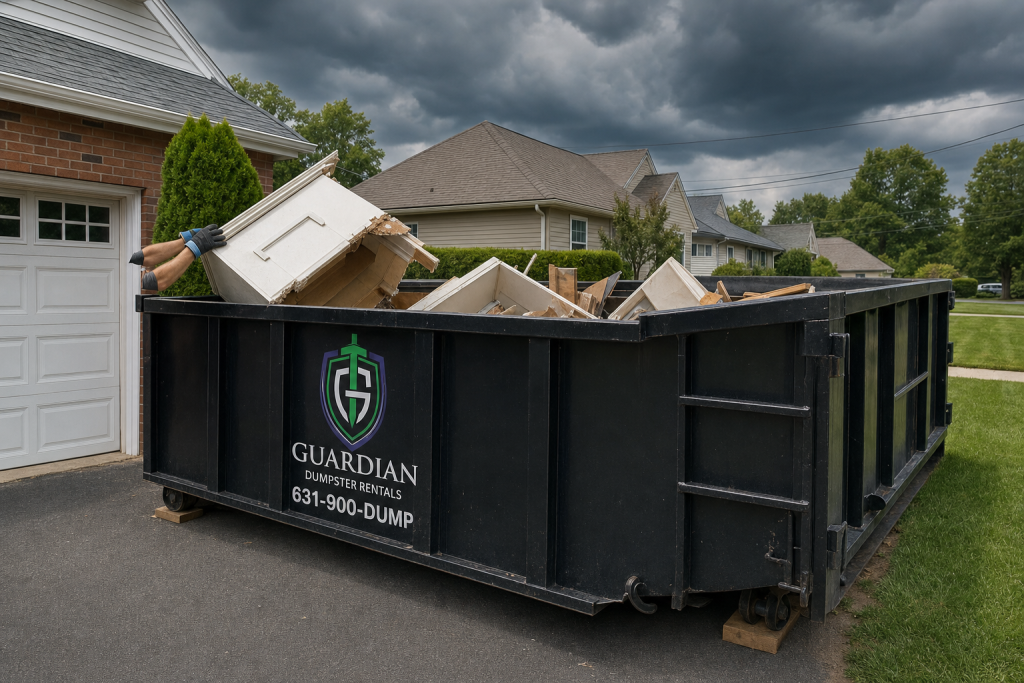
Summer storms affect your dumpster rental in two main ways: rainwater soaks into debris and adds weight that can push you over your tonnage limit, and peak-season demand makes containers harder to book on short notice. Covering your load before storms and reserving a week or more ahead solves both problems.
New York summers bring pop-up thunderstorms and, occasionally, the soggy remnants of tropical systems moving up the coast. That matters more than most homeowners realize, because dumpster rentals are priced with a weight allowance. Materials like drywall, carpet, insulation, and plywood act like sponges — a load that was comfortably under the limit on Friday can weigh noticeably more after a weekend of heavy rain. Since overage fees are charged by the ton at the scale, water weight is one of the easiest and most avoidable ways to blow your budget.
Keep Water Out of Your Load
- Cover the container. A heavy-duty tarp bungeed over the top before rain arrives keeps absorbent debris dry. Check the forecast daily at the National Weather Service while your rental is on site.
- Load absorbent materials last. If you can, keep drywall, carpet, and fabric out of the bin until close to pickup day so they spend less time exposed.
- Don’t let it become a pool. An uncovered dumpster with a compacted load can hold standing water, which adds weight and can attract mosquitoes in humid weather.
Book Earlier Than You Think
Summer is peak season for remodels, roof work, and cleanouts across Long Island, so containers get claimed fast. If your project timeline is firm, reserve at least a week ahead — earlier for holiday weekends. Homeowners planning a 20 yard dumpster rental in Babylon during July or August will have far more flexibility on delivery dates by calling ahead rather than hoping for next-day availability.
It’s also worth remembering that Atlantic hurricane season runs June through November, and even a weakened tropical system can dump several inches of rain on Long Island. If a named storm is in the forecast, secure your tarp, avoid overfilling above the rim, and review basic storm-prep guidance from Ready.gov so loose debris around the container doesn’t become a hazard.
Smart Loading in Heat and Humidity
Work in the cooler morning hours, stay hydrated, and break heavy loading into shorter sessions — humid July afternoons are no time to be hauling wet lumber. Bag anything that could smell in the heat, like old carpet padding or kitchen demo debris, before it goes in. If you’re coordinating a coastal project, providers handling dumpster rental in Bay Shore, New York can often time your pickup around a storm window so a full container isn’t sitting out in a downpour longer than it needs to.
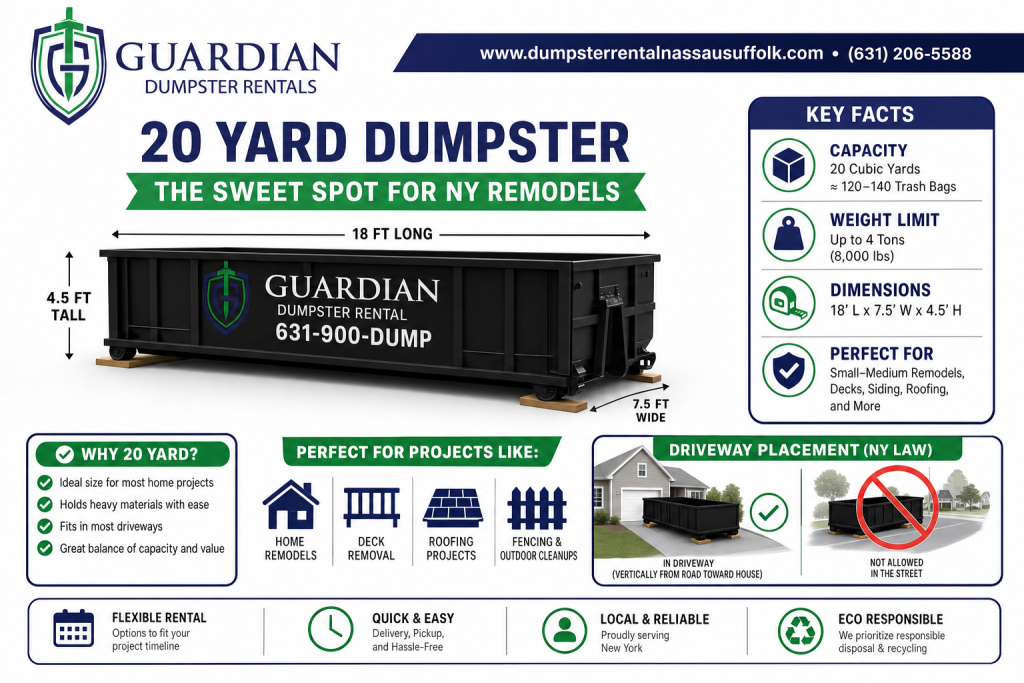
Roughly 22 ft long x 8 ft wide — fits most standard driveways
Typical 20 yard footprint
About 6-8 full pickup truck loads of debris
Capacity equivalent
Typically 2-3 tons included, varying by hauler and material
Common weight allowance
Usually 7-14 days, with extensions available for a fee
Standard rental window
20 Yard Dumpster vs. Other Common Rental Sizes for NY Remodels
| Dumpster Size | Typical Capacity | Best For | Watch Out For |
|---|---|---|---|
| 10 Yard | About 3-4 pickup loads | Small bathroom remodels, concrete/brick, single-room cleanouts | Fills up fast on multi-room projects |
| 20 Yard | About 6-8 pickup loads | Kitchen/bath guts, flooring tear-outs, roofing, most mid-size remodels | Weight limits with dense materials like tile or masonry |
| 30 Yard | About 9-12 pickup loads | Whole-home renovations, additions, large cleanouts | May not fit tight NY driveways; costs more if half-empty |
| 40 Yard | About 12-16 pickup loads | Major construction, commercial jobs, demolition | Overkill for most residential remodels; footprint and permit issues |
Illustrative Example: A Composite Long Island Kitchen Remodel
Illustrative example
Consider a hypothetical homeowner in Suffolk County gutting a dated kitchen — cabinets, countertops, tile flooring, and old drywall all coming out. Initially tempted by the lower price of a 10 yard dumpster, they consulted their hauler and learned the debris estimate pointed squarely at a 20 yard container. The 20 yard fit comfortably in their driveway, avoiding the need for a street permit from the town. The tear-out filled the container to about three-quarters capacity, leaving room for surprises like water-damaged subflooring discovered mid-project. This composite scenario reflects a common pattern: the 20 yard dumpster covers the project in one haul, where a smaller bin would have meant a second rental and a stalled timeline.
Frequently asked questions
How much does a 20 yard dumpster cost to rent in New York?
Pricing varies by county, hauler, and debris type, but most 20 yard rentals in New York fall somewhere in the mid hundreds of dollars for a standard rental period with a set weight allowance included. Get quotes from two or three local haulers and ask what the price includes—rental days, tonnage, delivery, and pickup—so you can compare flat-rate offers fairly and avoid surprise overage fees on the final bill.
What actually fits in a 20 yard dumpster?
A 20 yard container holds roughly 20 cubic yards of debris, which is often compared to about eight to ten pickup truck loads. In practice, that covers a full kitchen or bathroom gut, flooring removal from several rooms, a medium basement or garage cleanout, or roofing debris from a modest home. Bulky items like cabinets, drywall, and old furniture fit comfortably if you break them down and load flat pieces first.
How long can I keep a rented dumpster before extra fees kick in?
Most haulers include a standard rental window—commonly around a week to ten days—then charge a daily rate for extra time. The exact terms vary by company, so confirm the included period and the per-day extension fee before you book. If your remodel timeline is uncertain, tell the hauler upfront; many will work with you on scheduling pickup rather than automatically billing extensions.
Do I need a permit to put a dumpster on the street in New York?
If the dumpster sits entirely on your private driveway or property, you typically don’t need a permit. If it will occupy a public street or sidewalk, most New York municipalities require a permit from the local department of transportation or public works, and rules differ significantly between NYC and upstate towns. Check with your city or village office before delivery—your hauler can often tell you what’s required locally.
What happens if I overfill the dumpster?
Haulers legally can’t transport a container with debris sticking above the rim, because loads must be tarped and secured. If it’s overfilled, the driver may refuse pickup, charge a trip fee, or require you to remove the excess before hauling. Load heavy, flat items on the bottom, break down bulky pieces, and stop at the fill line. If you’re getting close, call your hauler about a swap-out before piling higher.
Will a dumpster damage my driveway, and how do I prevent it?
A loaded dumpster is heavy and can crack asphalt, scratch concrete, or leave depressions, especially in hot weather when pavement softens. The standard fix is simple: lay plywood sheets or boards where the container’s rails and wheels will sit before delivery. Most haulers recommend this, and some require it. Also avoid placing the dumpster on a fresh driveway or over a septic system, leach field, or shallow utilities.
When is a 20 yard dumpster too small for a remodeling project?
Size up to a 30 yard if you’re gutting multiple rooms at once, doing a whole-house renovation, removing an addition, or clearing a large estate. Also consider it when debris is bulky but light—framing lumber, insulation, furniture—since you’ll hit the volume limit before the weight limit. Paying for one larger container is almost always cheaper than a second delivery and haul of a smaller one.
What can’t I throw in a rental dumpster?
Standard exclusions include hazardous materials: paint, solvents, motor oil, batteries, propane tanks, chemicals, and asbestos. Tires, appliances with refrigerants, and electronics are often restricted or carry extra fees. Rules vary by hauler and New York locality, so ask for the prohibited items list when you book. Tossing banned materials can trigger contamination fees or a refused pickup, so plan a separate drop-off for hazardous waste.
How do weight limits work, and how do I avoid overage charges?
Your rental includes a tonnage allowance; the load is weighed at the disposal facility, and anything over the allowance is billed per ton. Heavy materials—tile, plaster, concrete, wet drywall, shingles—add up fast even when the container looks half empty. Ask what tonnage is included, keep dense debris to a reasonable share of the load, and keep the dumpster covered or ask for a lid so rain doesn’t add water weight.
What are the biggest mistakes people make when renting a dumpster for a remodel?
The common ones: choosing size based on price alone and needing a second haul, not confirming what the quote includes, placing the container where the delivery truck can’t reach or where it blocks contractor access, skipping driveway protection, and tossing prohibited items that trigger fees. Measure your placement spot, clear overhead wires and branches, and book a few days before demo starts rather than the morning of.
Related local pages
- Dumpster Rental Islip New York
- Dumpster Rental West Islip New York
- Dumpster Rental Dix Hills New York
Ready to get your remodel rolling? Call us today for fast 20 yard dumpster delivery anywhere in NY — honest sizing advice, upfront pricing, and summer scheduling that works around your project. Get in touch.
Last updated: August 31, 2026
Recent Comments