
Bathroom Remodel Dumpster Size: A 10 Yard Filled Fast
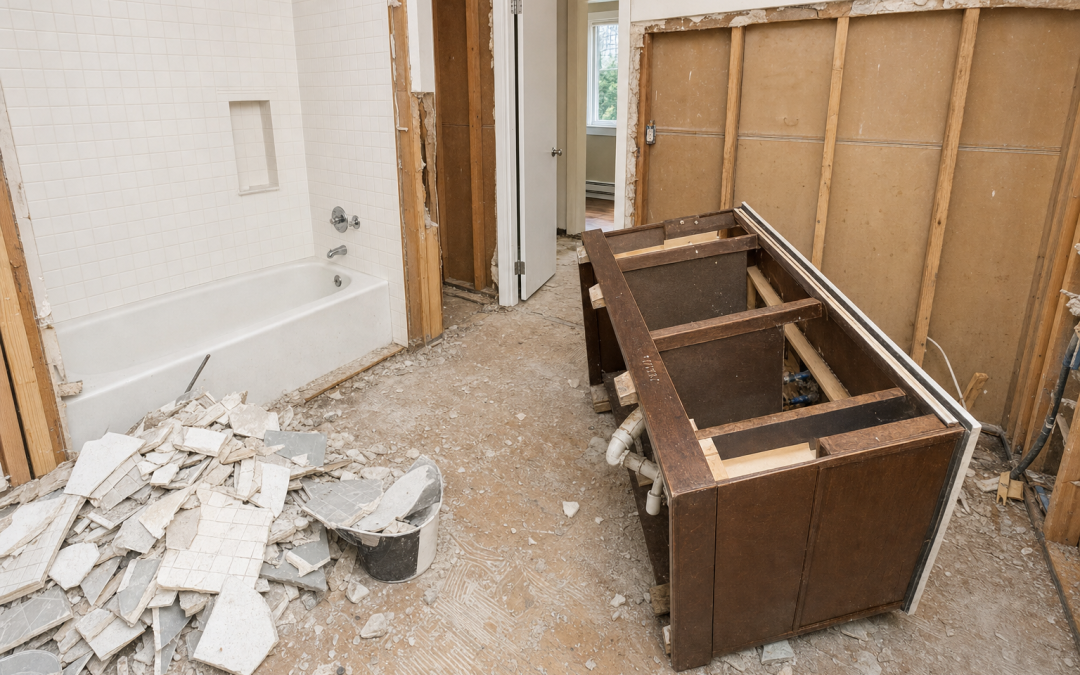
Why Bathroom Demo Debris Piles Up Faster Than You Think
A bathroom remodel dumpster fills faster than most homeowners expect because tile, cast iron tubs, cement backer board, and vanities are dense, heavy materials packed into a small room. A single-day tear-out of one full bathroom can completely fill a 10 yard container, which is why sizing and load planning matter before demo day.
Key takeaways
- A full bathroom gut — tile, tub, vanity, and drywall — typically fills a 10 yard dumpster faster than most homeowners expect.
- A cast iron tub alone can weigh 300 to 500 pounds, so heavy fixtures eat into your dumpster's weight limit quickly.
- If you're remodeling more than one bathroom or opening up walls, step up to a 20 yard dumpster to avoid a costly second haul.
- Brick, concrete, dirt, and yard waste are not allowed in the dumpster, so plan a separate disposal route for any masonry or landscaping debris.
- Demo debris expands — broken tile and drywall take up far more volume in a container than they did on your walls and floor.
Here’s a scenario we see all the time on Long Island: a couple gutting their only full bath figures a small container will be half empty by the end of the weekend. They pull the vanity, break out the wall and floor tile, wrestle the old cast iron tub out the door, and by mid-afternoon the dumpster is full to the rim — with the toilet, drywall scraps, and subfloor still sitting in the driveway. Nothing went wrong. Bathroom debris is simply heavier and bulkier than it looks when it’s still installed.
Why a Small Room Creates So Much Debris
Bathrooms are the densest rooms in the house from a demolition standpoint. Almost every surface is layered with heavy material:
- Tile and mortar: Floor and wall tile comes off in chunks with thinset and grout attached, often over a mud bed or cement board that adds serious weight.
- Cast iron tubs: An old cast iron tub alone can weigh several hundred pounds and eats up floor space in the container.
- Fixtures and cabinetry: Toilets, sinks, vanities, and mirrors are awkward shapes that don’t stack neatly, so they waste volume.
- Wet drywall and subfloor: Bathrooms often hide water damage, meaning more material comes out than you planned for.
Because so much of this debris is broken masonry and metal, weight limits matter as much as volume. Homeowners comparing options for a 10 yard dumpster rental in Islip are usually surprised to learn that a container can hit its weight allowance before it looks full — especially with tile and a tub in the mix.
What This Guide Will Cover
In the sections ahead, we’ll walk through how much debris a typical bathroom remodel actually generates, how to choose between a 10 yard and larger container, whether that cast iron tub can go in the dumpster (short answer: usually yes, with a couple of caveats), what’s off-limits in a demo container, and how to plan a smooth one-day fall tear-out.
If you’re planning a gut job in western Suffolk County, options like a dumpster rental in Amityville New York make it easy to have the container in the driveway before demo starts — which, as you’ll see, is the single biggest factor in getting a bathroom tear-out done in one day.
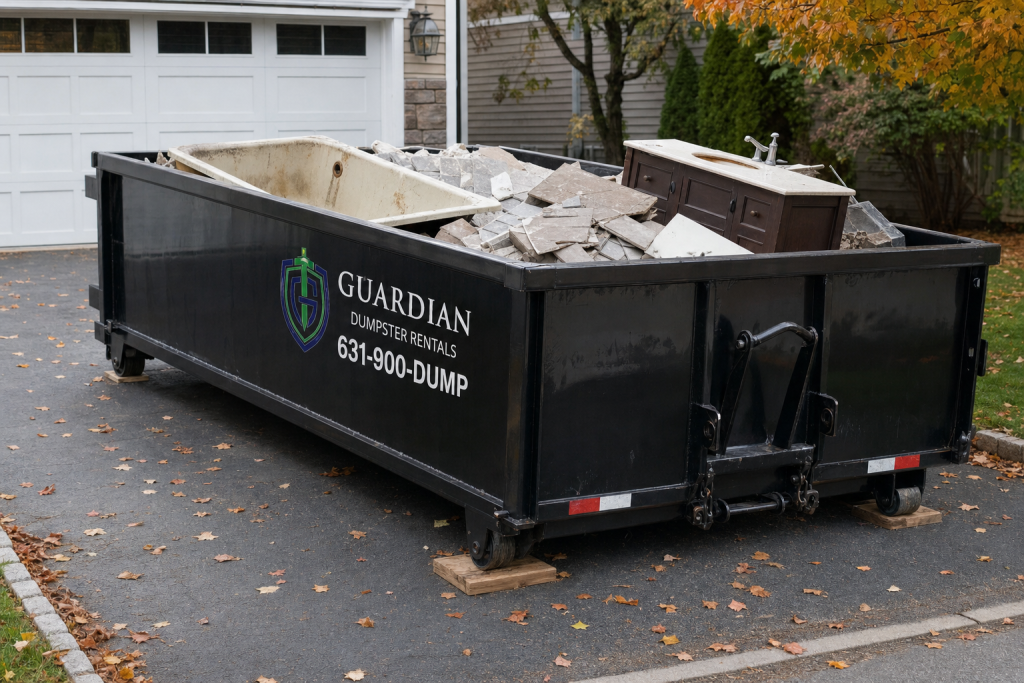
How Much Debris Does a Bathroom Remodel Actually Create? A Bathroom Remodel Dumpster Reality Check
A full gut of a standard 5×8 bathroom typically produces two to three tons of debris and fills most of a 10 yard container. Tile, cement backer board, and a cast iron tub account for the bulk of the weight, while the vanity, toilet, drywall, and fixtures eat up the remaining volume.
Those numbers surprise most homeowners because a small room doesn’t look like it holds two tons of anything. But bathrooms are built dense — layers of masonry, mortar, and metal packed into a tight footprint. The couple whose project inspired this post gutted a modest hall bathroom and watched their 10 yard bathroom remodel dumpster reach the fill line before lunch. Here’s roughly where the weight came from.
The Heavy Hitters: Tile, Backer Board, and the Tub
- Wall and floor tile with mortar: Ceramic tile bonded to thick mortar beds comes off in dense, jagged chunks. A fully tiled tub surround plus floor can easily run 800 to 1,500 pounds once you include the setting material.
- Cement backer board: Each sheet weighs far more than drywall — often 2 to 3 pounds per square foot. Several sheets from walls and floors add hundreds of pounds.
- Cast iron tub: The single heaviest item in most tear-outs, commonly 300 to 500 pounds intact. Breaking it into pieces (covered later in this post) makes it manageable, but the weight goes in the dumpster either way.
The Bulky-but-Lighter Items
- Vanity and countertop: Maybe 100 to 200 pounds, but awkwardly shaped — it swallows volume fast unless you break down the cabinet box.
- Toilet: Roughly 60 to 100 pounds of porcelain that shatters into sharp, space-filling shards.
- Drywall and plaster: Old plaster-and-lath walls are dramatically heavier than modern drywall. If your home predates the 1950s, budget extra weight here.
- Fixtures, trim, and subfloor: Faucets, towel bars, the medicine cabinet, and any rotted subfloor sections round out the load.
Add it up and a single-bathroom gut lands between 2,000 and 5,000 pounds depending on tile coverage, tub material, and wall construction. That’s why a 10 yard dumpster rental in Islip is the sweet spot for this kind of project — big enough for the volume, and its weight allowance lines up well with masonry-heavy debris.
One practical tip: tally your materials before you swing a hammer. Walk the room, note every tiled surface, and check whether the tub is cast iron (tap it — iron rings, steel sounds hollow, fiberglass thuds). If you’re planning a project locally, a provider handling dumpster rental in West Islip, New York can help you match the container to your specific tally so you’re not caught with an overloaded box or a second haul fee.
What Size Bathroom Remodel Dumpster Do I Need?
For a single-bathroom demo, a 10 yard dumpster is almost always the right size. Choose a 20 yard container if you’re gutting two bathrooms or pairing a bath with a kitchen remodel, and step up to a 30 yard dumpster only for whole-home renovations where bathroom debris is one part of a much larger tear-out.
Sizing a bathroom remodel dumpster comes down to matching the container to the full scope of your project — not just the bathroom itself. Tile, backer board, a tub, a vanity, and drywall from one bathroom fit comfortably in 10 yards, but the math changes quickly once you add a second room or any structural work.
Container Sizes at a Glance
| Dumpster Size | Best For | Typical Capacity |
|---|---|---|
| 10 Yard | Single-bathroom gut: tub or shower, vanity, toilet, tile, drywall | Roughly 3–4 pickup truck loads |
| 20 Yard | Two bathrooms, or a bathroom plus kitchen remodel | Roughly 6–8 pickup truck loads |
| 30 Yard | Whole-home renovation that includes bathroom demo | Roughly 9–12 pickup truck loads |
When a 10 Yard Is the Right Call
If you’re demoing one full bathroom down to the studs, a 10 yard container handles the job without paying for space you won’t use. Its smaller footprint also fits tight driveways, which matters on narrower suburban lots. Homeowners tackling a hall bath or primary bath gut often book a 10 yard dumpster rental in Dix Hills for exactly this kind of one-room project.
When to Size Up to a 20 Yard
Step up to 20 yards if any of these apply:
- You’re gutting two or more bathrooms at once
- The bathroom demo is happening alongside a kitchen tear-out
- You’re removing significant flooring, framing, or plaster beyond the bathroom walls
- You’d rather have breathing room than risk an overflowing container mid-project
The jump in cost from 10 to 20 yards is usually modest compared with the cost of ordering a second dumpster after the first one fills. For combined bath-and-kitchen projects, a 20 yard dumpster rental in Commack gives you enough capacity to keep both demos moving without a swap-out.
When 30 Yards Makes Sense
Reserve a 30 yard container for whole-home renovations — multiple rooms, flooring throughout, and bathroom debris mixed with everything else. For a bathroom-only job, a 30 yard dumpster is overkill in both price and driveway space.
One practical tip: weight matters as much as volume. Tile, mortar, and cast iron are dense, so even if your debris looks like it would fit in a smaller box, heavy material can push you toward the container’s weight limit. When in doubt, tell your rental company what you’re tearing out and let them confirm the size.
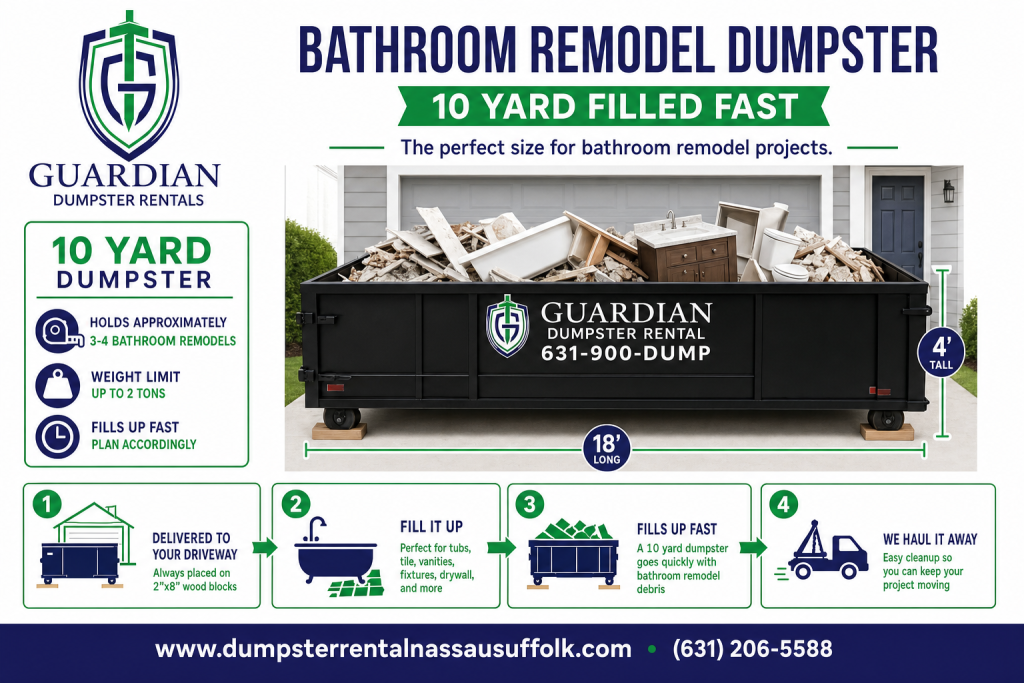
Can a Cast Iron Tub Go in a Bathroom Remodel Dumpster?
Yes. Cast iron tubs, along with tile, vanities, toilets, and sinks, are accepted in a standard bathroom remodel dumpster. The main considerations are weight, not the material itself: load the tub low and first, distribute heavy debris evenly, and stay within your rental’s tonnage limit to avoid overage fees.
That answer surprises a lot of homeowners. Because a cast iron tub can weigh 300 to 500 pounds, people assume it needs special disposal. It doesn’t — it’s inert, non-hazardous metal, and haulers take them every day. The real challenge is getting it out of the bathroom and into the container without hurting yourself or blowing your weight allowance.
How to Handle a Cast Iron Tub Safely
You have two practical options: move it whole or break it apart. Many DIYers choose the second, because cast iron is brittle and fractures cleanly.
- Break it in place. Cover the tub with a heavy drop cloth or old blanket to contain flying shards, then strike it with a sledgehammer. Wear safety glasses, hearing protection, gloves, and long sleeves. The pieces become manageable two-person loads.
- Move it whole. If you’d rather not swing a sledge, use an appliance dolly, ramps or plywood skids, and at least two strong helpers. Protect door frames and flooring along the exit path.
- Never lift blind. Clear the route first, and keep fingers out from under the tub at all times — cast iron gives no warning if a grip slips.
Load Heavy Items Low and First
Order matters when you’re filling the container. Put the tub — whole or in pieces — on the floor of the dumpster before anything else, ideally centered over the axle area rather than piled at one end. Tile, mortar, and the vanity go on next, and lighter debris like drywall, backer board, and packaging fills the gaps on top. A low, level load is safer for the driver to haul and keeps you from wasting airspace under awkward bulky items. If you’re planning a compact tear-out, a 10 yard dumpster rental in Dix Hills handles a tub, tile, and vanity comfortably when it’s loaded this way.
Watch the Weight, Not Just the Space
A cast iron tub plus a full bathroom’s worth of ceramic tile and mortar adds up fast on the scale, even when the container looks half empty. Ask your hauler what tonnage is included with your rental and what overage costs per additional ton, then mention the tub up front so they can advise you. Providers offering dumpster rental in Bay Shore New York and surrounding areas deal with cast iron tubs routinely and can tell you exactly how yours will affect the final weight ticket.
What Can’t I Throw in a Bathroom Demo Dumpster?
Brick, concrete, dirt, and yard waste are not allowed in a bathroom demo dumpster. You also can’t toss hazardous items like paint, solvents, adhesives, aerosol cans, batteries, or anything containing asbestos. These materials require separate handling, and putting them in your container can lead to extra fees or a refused pickup.
Most of what comes out of a bathroom — drywall, tile, cabinetry, fixtures, flooring, and framing lumber — is perfectly fine for a bathroom remodel dumpster. The trouble starts when homeowners treat the container as a catch-all for every project on the property. Knowing the exclusions before demo day keeps your rental simple and your final bill predictable.
The Four Hard No’s: Brick, Concrete, Dirt, and Yard Waste
These four materials are prohibited outright, so plan a separate disposal route for them:
- Brick — even a small pile from a removed hearth or exterior patch job stays out of the container.
- Concrete — broken slab pieces, mortar bed chunks, and concrete backer debris that’s mostly cement need a different destination.
- Dirt — soil dug out for a plumbing trench or dragged in from outside cannot go in the dumpster.
- Yard waste — branches, leaves, sod, and shrubs are excluded, even if you’re tempted to top off the load with fall cleanup debris.
If your bathroom project involves any of these, ask about disposal options before you order. A 10 Yard Dumpster Rental in Dix Hills handles bathroom demolition debris well, but the load still has to follow the same material rules as any other container.
Hazardous and Restricted Household Items
Beyond the four hard exclusions, keep these common bathroom-adjacent items out of the container:
- Paints, stains, and solvents — including old cans found under the sink during demo.
- Adhesives and sealants — liquid or partially used tubes and buckets.
- Aerosol cans — hairspray, cleaners, and spray paints.
- Batteries and electronics — these have their own recycling streams in New York.
- Suspected asbestos materials — older vinyl flooring, pipe insulation, or certain tile adhesives in pre-1980s homes should be tested and professionally abated, never tossed in a demo dumpster.
- Refrigerants and appliances containing them — not typical in a bathroom, but worth noting if you’re clearing adjacent spaces.
Why the Rules Matter for Your Budget
Landfills and transfer stations sort and inspect loads. When prohibited material shows up in a container, the hauler passes the sorting or rejection cost back to the customer. A quick five-minute conversation about what’s in your debris pile is far cheaper than a contaminated-load fee. If you’re unsure whether a specific item qualifies, ask before demo day — the team behind Roll Off Dumpster Rental in West Babylon can tell you exactly what’s accepted so nothing surprises you at pickup.
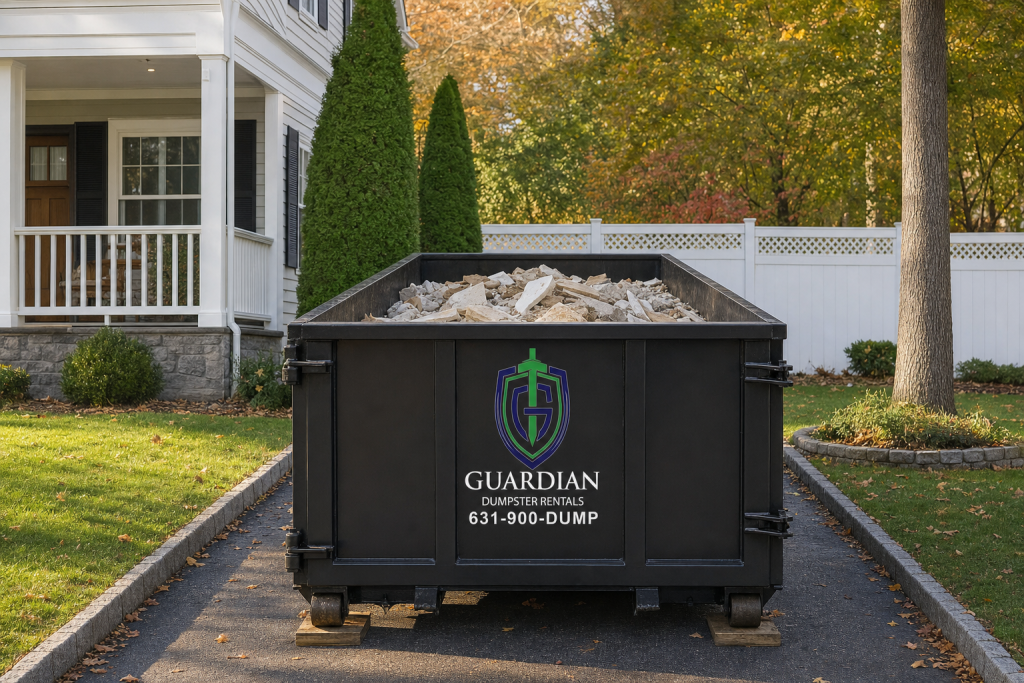
How Do I Plan a One-Day Bathroom Tear-Out in the Fall?
Schedule your bathroom remodel dumpster delivery for the morning before demo day, clear a level driveway spot of wet leaves, lay protective runners from the bathroom to the door, and demo in sequence: fixtures first, then tile and drywall, then flooring. In fall on Long Island, book early — cold snaps and shorter days compress your working window.
Time the Delivery Around Fall Weather
Autumn in New York is one of the busiest seasons for interior projects, so dumpsters get reserved quickly. Aim to have the container dropped the afternoon or morning before your tear-out so you lose zero demo time waiting on a truck. Watch the forecast on weather.gov for early cold snaps or heavy rain — a frozen or soaked driveway makes placement harder and hauling debris outside miserable. Homeowners searching for a 10 yard dumpster rental in Amityville often find that a compact container fits neatly on a standard driveway without blocking the garage, which matters when you’re making dozens of trips with heavy loads.
Prep the Placement Spot and the Path
- Rake and sweep the driveway spot the night before. Wet leaves are slippery underfoot and can hide cracks or soft edges the driver needs to see.
- Keep the walking path clear. You’ll be carrying a heavy tub surround, vanity, and buckets of tile — one slick patch is all it takes for an injury.
- Protect interior floors. Lay down ram board, plywood strips, or heavy canvas runners from the bathroom to the exit. Tile shards and porcelain chips will scratch hardwood fast.
- Use a wheelbarrow or heavy-duty contractor bags for tile and drywall so each trip to the dumpster counts.
Sequence the Demo to Finish by Dark
A one-day tear-out works when the heavy, awkward items come out first while you’re fresh. One couple’s approach that works well: shut off water and disconnect fixtures the night before, then start at 7 a.m. with the vanity, toilet, and mirror, tackle the tub or shower surround mid-morning, break tile and pull drywall through the afternoon, and finish with flooring and a final sweep before sunset — which arrives noticeably earlier by October. If your home was built before 1978, review the EPA’s lead-safe renovation guidance before disturbing painted plaster or trim.
Finally, confirm pickup timing when you book. Most one-bathroom tear-outs fill a 10 yard container in a single day, so arranging next-day pickup keeps your driveway clear before the next storm rolls in. If you’re elsewhere in Suffolk County, providers offering dumpster rental in Babylon, New York can typically accommodate quick-turnaround fall schedules — just ask about delivery windows when you reserve.
Typically 300-500 lbs
Cast iron tub weight
10 yard dumpster
Common bathroom demo size
Roughly 3-4 pickup loads
Typical 10 yard capacity
Brick, concrete, dirt, yard waste
Not allowed in dumpster
Bathroom Remodel Dumpster Size Comparison: 10, 20, and 30 Yard Options
| Dumpster Size | Best For | Typical Capacity | Fit Consideration |
|---|---|---|---|
| 10 Yard | Single bathroom tear-out (tile, tub, vanity, drywall) | About 3-4 pickup truck loads | Fits in most driveways; ideal for tight urban lots |
| 20 Yard | Two bathrooms or a bathroom plus another room | About 6-8 pickup truck loads | Needs a standard driveway length; most popular remodel size |
| 30 Yard | Whole-floor or multi-room renovation including bathrooms | About 9-12 pickup truck loads | Requires longer clearance; best for larger gut projects |
Illustrative Example: A One-Day Bathroom Tear-Out
Illustrative example
Consider a hypothetical New York couple gutting a single dated bathroom: by mid-morning the old cast iron tub, wall and floor tile, vanity, toilet, and cut-up drywall were stacked curbside. A 10 yard dumpster delivered that morning swallowed the entire tear-out by early evening, with the heavy tub loaded first and flat debris layered on top to maximize space. Because they kept prohibited materials like brick, concrete, dirt, and yard waste out of the container, pickup went smoothly the next day. This composite scenario reflects a common pattern: one bathroom, one day, one 10 yard dumpster — but a second bathroom would have pushed them into a 20 yard container.
Frequently asked questions
What size bathroom remodel dumpster do I need?
A 10 yard dumpster handles most single-bathroom tear-outs, including tile, a tub, a vanity, and drywall. If you're gutting a large master bath, remodeling two bathrooms, or removing flooring in adjacent rooms too, a 20 yard gives you breathing room. A 30 yard is usually only needed when the bathroom is part of a whole-home renovation. When in doubt, size up one container rather than paying for a second haul.
Can I throw a cast iron tub in a dumpster?
Yes, cast iron tubs are generally accepted in roll-off dumpsters, but they're extremely heavy — often 300 pounds or more. That weight counts toward your dumpster's tonnage limit, so factor it in before loading other dense debris like tile. Some homeowners break the tub into pieces with a sledgehammer (wear eye protection) to make it easier to carry and to distribute weight evenly in the container.
How heavy is bathroom demolition debris?
Heavier than most people expect. Ceramic tile, mortar bed, cement backer board, and a cast iron tub can add up to well over a ton from a single bathroom. Weight, not volume, is often what limits a 10 yard dumpster on a bathroom demo. Check your rental's included tonnage before you start, and ask about overage fees so a heavy load doesn't surprise you on the final bill.
How long does it take to demo a bathroom?
An average full-gut bathroom demo takes one to three days for DIYers, and experienced crews can often finish in a single day. Removing tile set in a mortar bed is usually the slowest, most labor-intensive part. Shutting off water, disconnecting fixtures, and protecting hallways with drop cloths adds time up front but prevents damage and mess as you haul debris out to the dumpster.
What can't go in a dumpster during a bathroom remodel?
Common prohibited items include paints, solvents, adhesives, aerosol cans, batteries, and anything with refrigerant. Many haulers also restrict or ban brick, concrete, dirt, and yard waste, so keep those out of the container entirely. If your home predates the 1980s, tile, flooring, or insulation could contain asbestos — have suspect materials tested before demolition, because asbestos requires certified abatement and can never go in a standard dumpster.
Is it cheaper to rent a dumpster or haul bathroom debris myself?
For a full bathroom gut, a dumpster usually wins. Hauling it yourself means multiple truck trips, transfer station fees charged by weight, and hours of extra loading and unloading — plus heavy items like a cast iron tub are difficult to move twice. A 10 yard dumpster sits in your driveway so you can toss debris as you demo, which is why most remodelers consider it money well spent.
What's the biggest mistake people make when renting a dumpster for a bathroom demo?
Underestimating weight. Tile, mortar, and cast iron fixtures fill the tonnage limit long before the container looks full, leading to overage charges. Other common mistakes: scheduling delivery after demo starts (debris piles up in the house), loading all the heavy material on one end, and stacking debris above the rim, which drivers can refuse to haul. Order the dumpster before swinging a hammer and load heavy items first, spread evenly.
Where should the dumpster go if my driveway is short or I live on a tight street?
A 10 yard dumpster is the most driveway-friendly option — it has a compact footprint that fits most residential driveways. If you must place it on the street, many municipalities require a permit, so check with your city or town first. Lay plywood boards under the container to protect asphalt or pavers, and keep the swing-door end accessible so you can walk heavy debris in instead of lifting it over the side.
How long can I keep a bathroom remodel dumpster?
Most companies include a standard rental period of about a week or more, which is plenty for a bathroom demo that often wraps in a day or two. Extra days beyond the included period typically cost a small daily fee. To save money, schedule delivery for the morning demo begins and request pickup as soon as you finish loading — there's no benefit to letting a full container sit in the driveway.
Do I need to break up the vanity and cabinets before putting them in the dumpster?
You don't have to, but you should. Breaking down the vanity, removing doors, and knocking cabinets flat lets debris nest together so you use every cubic yard of a 10 yard container. Bulky intact pieces trap air pockets and can push you toward needing a 20 yard when a 10 would have worked. Load flat, dense items like tile and drywall first, then fit broken-down cabinetry into the gaps.
Related local pages
- Dumpster Rental Lindenhurst New York
- Dumpster Rental Deer Park New York
- Dumpster Rental Amityville New York
Planning a bathroom tear-out this fall? Reserve your 10, 20, or 30 yard dumpster today and get it delivered before demo day. Get in touch.
Last updated: September 22, 2026
Recent Comments