
Commercial Dumpster Rotation: Keep Renovation Crews Moving
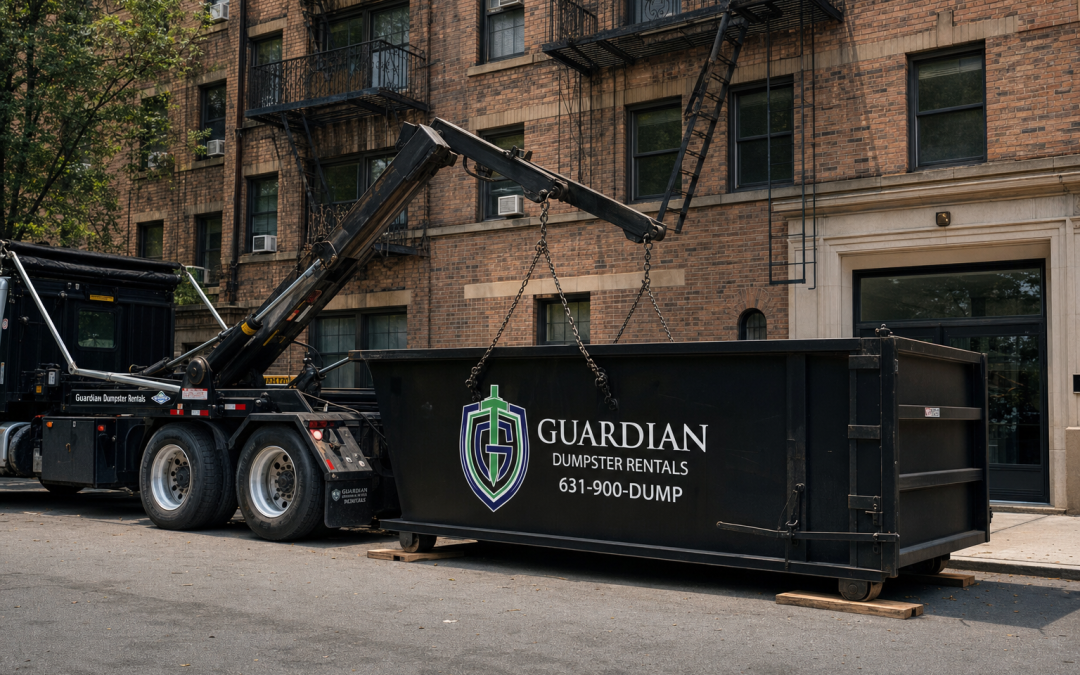
Why a Full Dumpster Is the Most Expensive Delay on a Multi-Unit Job
Commercial dumpster rotation is how New York contractors avoid the costliest delay on a multi-unit renovation: a topped-out container that stops demolition cold. By scheduling swaps of 20 and 30 yard dumpsters before each one fills, crews always have somewhere to throw debris, and the job keeps producing progress every single day.
Key takeaways
- Scheduling a swap-out before a container hits 80% capacity prevents crews from stalling while waiting on a full dumpster.
- Rotating 20 and 30 yard containers on a staggered schedule lets one dumpster stay active on site while the other is being hauled and emptied.
- Booking swaps 24-48 hours in advance with your hauler is the single most reliable way to avoid losing a workday to a full container.
- Matching container size to project phase — 30 yard for demolition, 20 yard for finish work — keeps costs and site footprint efficient.
- A single point of contact coordinating dumpster rotation across multi-unit jobs eliminates duplicate calls and missed pickups.
If you own a multi-family building or manage a renovation across several units, the math is brutal. A full dumpster does not just pause one task. It pauses everything downstream. Demo crews stop swinging, laborers stop hauling, and the trades waiting on cleared rooms stop too. You are still paying for that crew’s day whether debris is moving or not, which is why a container sitting full for even a few hours can quietly become the most expensive line item on the job.
What Actually Happens When the Container Tops Out
On a multi-unit job, debris comes in waves. Kitchen tear-outs, bathroom gut-outs, and flooring removal can fill a container far faster than a single-family project would. When it tops out mid-day, you typically see:
- Crews standing idle or shifting to low-value busywork while the site waits for a swap.
- Debris piling on the ground, creating trip hazards, blocking access, and inviting violations.
- Same-day emergency swaps that may not arrive until the next morning, killing a full afternoon of demo.
- Overloaded containers that haulers can refuse to pick up, adding another day of delay.
Contractors on Long Island jobs often pair a primary container with a right-sized backup, such as a 20 yard dumpster rental in West Babylon, so a heavy demo day never outpaces capacity.
Rotation Turns Disposal Into a Schedule, Not a Scramble
The fix is treating debris removal like any other trade on the schedule. Instead of calling for a swap when the container is already full, rotation means the next empty dumpster is booked before the current one hits capacity. The hauler pulls the full box and drops a fresh one, ideally during off-hours or a natural break in the workday, so the crew never notices the changeover.
This is where sizing and delivery logistics matter as much as timing. A dependable roll off dumpster rental in West Islip or a nearby town works best when the driver knows the site, the placement spot, and the swap cadence in advance.
The rest of this guide breaks down how commercial dumpster rotation works in practice, how to choose between 20 and 30 yard containers, and how to build a swap schedule so your renovation crews never wait on an empty box again.
What Is Commercial Dumpster Rotation and How Does It Work?
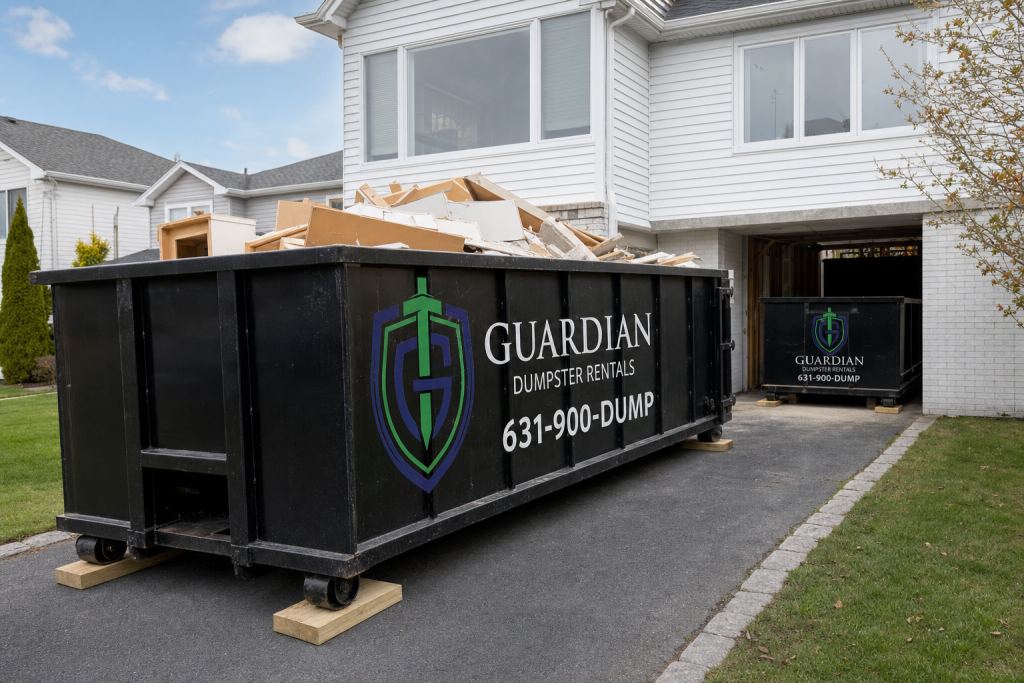
Commercial dumpster rotation is a service model where the hauler delivers a fresh, empty container at the same time the full one is picked up, so a renovation site never sits without disposal capacity. Swaps are triggered by fill level or a standing schedule, keeping debris moving off-site without work stoppages.
On a single-family cleanout, one dumpster is usually enough: it gets dropped, filled, and hauled away once. Multi-unit renovations generate debris continuously — drywall, flooring, cabinets, and fixtures come out of one unit after another for weeks. Rotation treats disposal as an ongoing pipeline rather than a one-time event, which is why property owners managing apartment turnovers or phased remodels rely on it.
The Two Ways Swaps Get Triggered
- On-call swaps: Your site contact calls or texts the hauler when the box hits roughly three-quarters full, and the swap happens on the next available truck run. This works well when demolition pace varies week to week.
- Standing pickup schedules: The hauler swaps the container on a fixed cadence — every Monday and Thursday, for example — based on how fast your crew typically fills it. This removes the guesswork and the risk that someone forgets to call.
Many contractors combine the two: a standing schedule as the baseline, with the option to call in an extra swap during heavy demo phases. A local provider handling dumpster rental in West Babylon New York and the surrounding area can usually set up either arrangement, so it pays to discuss your project timeline before the first drop-off.
Why Rotation Beats Calling Only When the Box Overflows
Waiting until a dumpster is overflowing to request a haul creates several problems at once:
- Overloaded containers can’t legally leave the site. Debris piled above the rim may need to be pulled off before the driver can haul it, wasting crew hours.
- Same-day pickups aren’t guaranteed. If you call after the box is full, you’re at the mercy of the hauler’s route availability, and demo debris starts piling up on the ground.
- Debris staging eats up space. On tight multi-unit properties, there’s rarely room to stack material while waiting for an empty container.
With rotation, the empty container arrives on the same truck run that removes the full one, so the gap in capacity lasts minutes instead of days. For phased projects where each unit produces a predictable load, some owners even stage a mid-size box — something like a 20 yard dumpster rental in Commack — on a recurring swap cycle timed to each unit’s demolition day.
The bottom line: rotation shifts disposal from a reactive scramble to a planned rhythm, and the crew never has to stop swinging hammers to wait on a truck.
Should You Use a 20 Yard or 30 Yard Dumpster for Multi-Unit Renovations?
For most multi-unit renovations, a 30 yard dumpster is the better choice because full-floor demo, cabinetry, drywall, and framing debris fill smaller containers too quickly. A 20 yard works well for phased kitchen and bath gut-outs or flooring tear-outs, while 10 yard containers suit punch-list and single-unit refresh debris.
The right size isn’t just about total volume — it’s about matching the container to the phase of work so your rotation schedule stays predictable. A container that’s too small forces extra swaps mid-shift, while one that’s too large can waste money during light-debris phases like trim-out and painting.
Match the Container to the Debris Type
- Bulky, lightweight debris (cabinetry, doors, framing lumber): fills space fast without hitting weight limits, so a 30 yard box makes sense.
- Dense, heavy debris (tile, plaster, flooring underlayment): reaches weight limits before the container looks full, so a 20 yard often loads more efficiently.
- Mixed light loads (touch-ups, single-unit turnovers): a 10 yard keeps costs down and fits tighter parking areas.
Container Sizes at a Glance
| Container Size | Best For | Typical Renovation Phase |
|---|---|---|
| 10 Yard | Punch-list debris, single-unit refresh, small flooring pulls | Final walkthrough fixes, unit turnovers |
| 20 Yard | Kitchen and bath gut-outs, flooring tear-outs, tile and cabinet removal | Mid-project phased demo, unit-by-unit work |
| 30 Yard | Full-floor demo, cabinetry, drywall, and framing loads | Heavy demolition, whole-building gut phases |
If your crews are gutting one unit at a time — say a kitchen and bath in each apartment before moving to the next — a mid-size container hits the sweet spot. Something like a 20 yard dumpster rental in West Babylon handles a full kitchen tear-out plus bathroom fixtures without pushing you into oversized-container pricing you don’t need.
Size Down as the Project Winds Down
A smart rotation plan changes container sizes as the job progresses. Start with 30 yard boxes during heavy demo, step down to 20 yards during phased gut-outs, and finish with smaller containers for cleanup. On the back end of a project, a 10 yard dumpster rental in Dix Hills is often all you need for punch-list debris, packaging waste, and final site cleanup — and it costs less to haul.
One practical tip for property owners: ask your hauler about weight allowances before choosing a size. Two containers of the same volume can carry very different tonnage limits, and overweight fees on a poorly matched container can erase whatever you saved by sizing down.
How Do You Schedule Dumpster Swaps So Crews Never Wait?
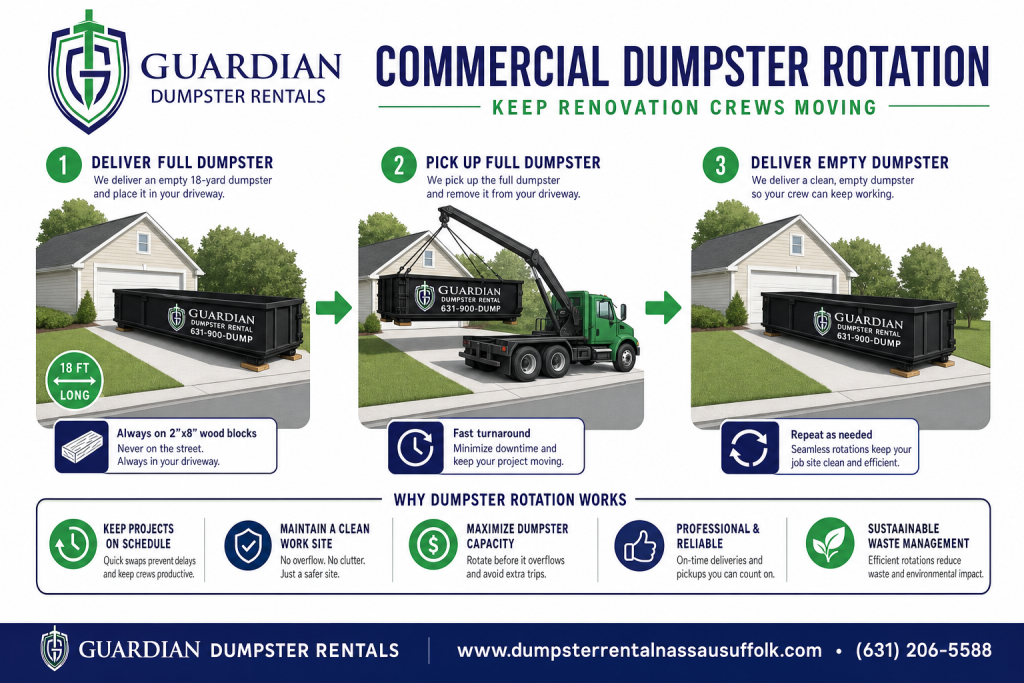
Schedule dumpster swaps by estimating debris volume per unit, mapping demolition phases to specific swap days, and calling for a swap when the container hits 75% full. Confirm driver windows in advance and clear site access before each swap, so a fresh dumpster arrives before the current one runs out of room.
That framework sounds simple, but each step matters. Skip one and you end up with a crew standing around a full container or a driver who can’t reach the pad. Here’s how to work through it on a multi-unit renovation.
Step 1: Estimate Debris Volume Per Unit
Before the first container arrives, walk one representative unit and estimate what a full gut or partial demo will produce. Kitchens and bathrooms generate far more volume per square foot than bedrooms, and bulky items like cabinets and tubs eat space fast. Multiply your per-unit estimate by the number of units in each phase, then add a cushion of roughly 20% for packing inefficiency, since renovation debris rarely stacks neatly.
Step 2: Map Demo Phases to Swap Days
Lay your demolition schedule next to your debris estimate and mark the days when heavy tear-out happens. Those are your likely swap days. If units 1-4 get gutted Monday through Wednesday, pencil in a swap for Wednesday morning rather than waiting to see how it goes. A provider experienced with commercial dumpster rental in Babylon can help you match container sizes and swap frequency to your phase plan before work starts.
Step 3: Set a 75%-Full Trigger
The single most useful rule in commercial dumpster rotation is the 75% trigger. Assign one person, usually the site super, to check fill level at the end of each day. When the container hits three-quarters full, they call for the swap. That buffer covers the lead time between your call and the driver’s arrival, so the crew never demos into a container with no room left.
Step 4: Coordinate Driver Windows and Site Access
On NY job sites, the swap itself is often the hardest part. Before each scheduled swap:
- Confirm the driver’s arrival window the day before, not the morning of.
- Keep the dumpster pad and approach path clear of vehicles, material deliveries, and staging.
- Check whether street placement requires a permit or if cones are needed to hold the spot.
- Avoid scheduling swaps during school drop-off hours or tight delivery windows on narrow streets.
On larger phases, some contractors stage a second container so demo never pauses. If your per-phase volume justifies it, a larger box like a 30 yard dumpster rental in Amityville can stretch the time between swaps and reduce how often you juggle driver windows at all.
What Can’t Go in a Commercial Renovation Dumpster in NY?
Standard commercial renovation dumpsters in New York cannot take brick, concrete, dirt, or yard waste. These heavy or regulated materials must be hauled separately, and mixing them into a renovation load can get the entire swap rejected — creating the exact downtime a commercial dumpster rotation is designed to prevent.
The reason comes down to weight and disposal rules. Brick, concrete, and dirt are dense enough to push a container past legal road weight limits long before it looks full, and facilities that accept mixed renovation debris are not set up to process clean fill or organic material. Yard waste, meanwhile, is typically routed to composting or mulching facilities rather than construction and demolition transfer stations, so it can’t ride along with drywall and lumber.
The Four Materials to Keep Out of Rotation Loads
- Brick — including pavers, block, and masonry rubble from demoed walls or facades
- Concrete — slab pieces, footings, sidewalk sections, and mortar debris
- Dirt — excavated soil, fill, and sod from grading or trenching work
- Yard waste — branches, brush, leaves, and stumps cleared from the property
If your multi-unit project involves masonry demolition or excavation, plan a separate, dedicated container for that material from the start. Providers who handle commercial dumpster rental in Babylon can typically arrange a clean-load container for heavy debris alongside your rotation dumpsters, so each stream goes where it’s supposed to.
How One Banned Load Breaks the Whole Rotation
Here’s where prohibited materials get expensive on a rotation schedule. When the driver arrives for a scheduled swap and spots concrete chunks or a pile of dirt in the container, several things can happen — none of them good:
- Rejected swap: The driver may refuse to haul the load, leaving a full dumpster on site and no empty replacement.
- Contamination fees: If the load makes it to the transfer station and gets flagged, sorting or reclassification charges land on your invoice.
- Overweight problems: Dense material can push the container over hauling limits, forcing you to offload debris by hand before the truck can legally leave.
- Lost rotation slot: A failed pickup often means waiting for the next available route window — the crew stands around exactly as if you’d never scheduled a rotation at all.
The fix is simple site discipline: post a prohibited-materials list at the container, brief every sub before demo day, and stage masonry and soil in a separate area. Teams coordinating a roll off dumpster rental in West Babylon or elsewhere in Suffolk County can confirm exactly which materials their hauler accepts before the first container ever lands, so every swap goes off without a hitch.
How Does Fall Weather Change Dumpster Scheduling on NY Job Sites?
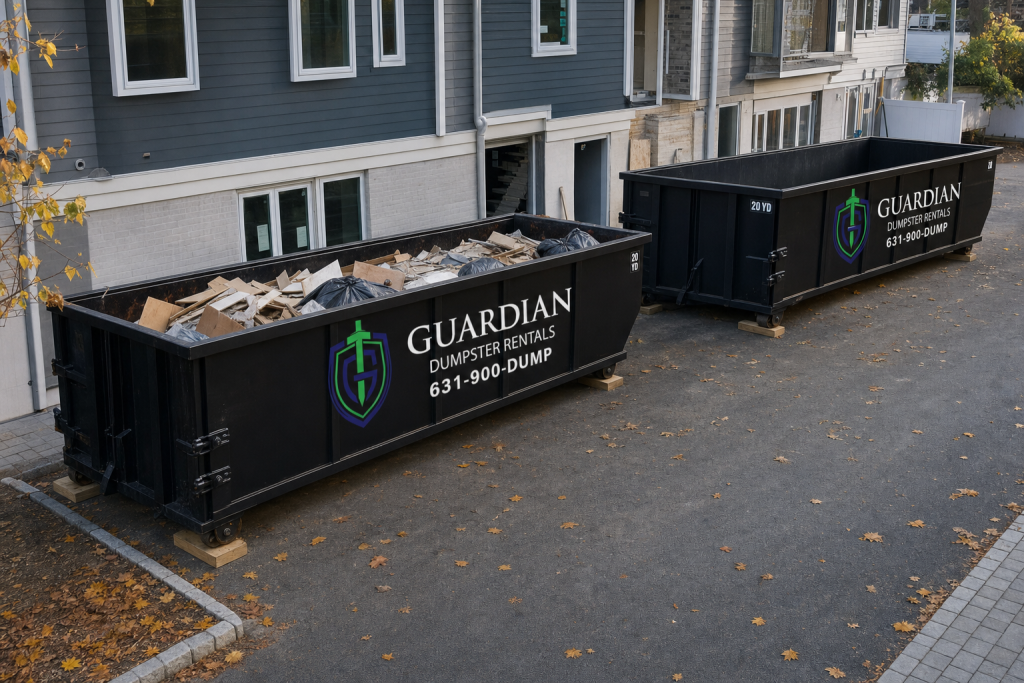
Fall shortens the workable day, compresses interior demo timelines ahead of the first cold snaps, and adds wind and rain to the equation. On New York job sites, that means booking swaps earlier in the day, tarping loads against gusts, and reserving rotations further ahead as autumn renovation demand peaks before winter.
A commercial dumpster rotation plan that worked fine in July can start slipping in October. Haulers are running the same routes with less daylight, more traffic around school hours, and a wave of property owners racing to finish projects before the holidays. Here is how to adjust.
Shorter Daylight Tightens Haul Windows
As sunset creeps earlier, the practical window for safe container swaps shrinks. Drivers hooking a loaded roll-off in low light face reduced visibility, and many sites restrict heavy truck movement after dark. Schedule swaps for morning slots whenever possible, and confirm pickup times the day before rather than the morning of. Crews handling roll off dumpster rental in West Babylon and nearby towns typically see their tightest scheduling pressure in late October and November, so an early-morning standing swap time is worth locking in.
Cold Snaps Compress Interior Demo Timelines
Early freezes push contractors to close up building envelopes fast, which front-loads demolition debris into a shorter burst. If your crews plan to gut three units before winterizing, expect debris volume to spike over days rather than weeks. Order the next container before the current one hits three-quarters full, and consider staging a second unit on-site during the demo push. Property owners coordinating a 30 yard dumpster rental in Amityville for a fall gut-out often pair it with a pre-scheduled swap so the second container arrives the same day the first leaves.
Wind, Rain, and Tarping Loads
Fall nor’easters and gusty cold fronts can turn an open container of drywall scraps and insulation into a litter problem. Blown debris is more than a nuisance — poor housekeeping around containers is a genuine safety issue that OSHA’s construction housekeeping standard requires contractors to control. Practical steps:
- Tarp or net the container at the end of every shift, not just before pickup.
- Break down cardboard and bag lightweight debris so it can’t lift out.
- Keep loads below the rim — overfilled containers can’t be tarped or legally hauled.
- Rain adds real weight to absorbent debris like drywall and carpet, so covered loads also protect you from tonnage overages.
Book Swaps Earlier as Demand Peaks
Fall is the last full renovation season before winter slows exterior work, and dumpster availability tightens accordingly. Where a next-day swap might be routine in midsummer, plan on 48–72 hours of lead time in the fall. Watch the forecast, too — checking the National Weather Service a few days out lets you pull a swap forward ahead of a storm instead of losing a workday to a container you can’t fill in the rain.
Schedule pickup at roughly 75-80% container capacity
Recommended swap trigger
24-48 hours notice for most commercial haulers
Typical swap lead time
Two containers alternating: one on site, one in transit
Common rotation setup
30 yard for demo phases, 20 yard for finish phases
Size pairing for scale jobs
Commercial Dumpster Rotation: 20 Yard vs. 30 Yard for Multi-Unit Renovations
| Factor | 20 Yard Dumpster | 30 Yard Dumpster |
|---|---|---|
| Best project phase | Finish work, single-floor gut-outs, punch-list debris | Full demolition, multi-unit tear-outs, bulky materials |
| Typical footprint | Fits tighter urban curb space and smaller lots | Requires more staging room or street permit space |
| Swap frequency on active jobs | More frequent swaps; good for fast rotation cycles | Fewer swaps; holds heavy demo phases longer |
| Weight considerations | Better for dense debris like tile, plaster, masonry | Better for high-volume, lighter debris like drywall and framing |
Illustrative Example: Rotating Containers Across a Six-Unit Brooklyn Renovation
Illustrative example
Consider a hypothetical general contractor renovating six apartment units across two adjacent buildings in Brooklyn. Instead of ordering one large dumpster and waiting for pickups, the GC set up a rotation: a 30 yard container handled the active demolition floor while a 20 yard container staged finish-phase debris next door, with swaps pre-booked 48 hours out. When the 30 yarder reached about three-quarters full, the hauler swapped it the next morning before the demo crew arrived, so no laborers stood idle. By treating dumpster rotation as part of the project schedule rather than an afterthought, the composite contractor kept all crews working continuously through every phase. This scenario is illustrative, but it reflects the scheduling approach many NY contractors use on multi-unit jobs.
Frequently asked questions
What is commercial dumpster rotation and how does it work?
Commercial dumpster rotation means the hauler swaps a full container for an empty one on a set or on-call schedule instead of leaving a single dumpster until the job ends. On multi-unit renovations, the driver picks up the full 20 or 30 yard container and drops a fresh one in the same visit, so crews keep loading debris without waiting. Most contractors set rotations by phase, like demo weeks, when debris volume spikes.
How much does it cost to swap out a dumpster during a project?
Most haulers charge a swap or exchange fee for each rotation, plus disposal charges based on the weight or volume of the full container being hauled away. Pricing varies by market, hauler, and debris type, so ask whether swap fees are flat or bundled into a project rate. For large multi-unit jobs, negotiating a per-pull rate up front is usually cheaper than paying one-off rental fees each time.
How much notice does a hauler need to rotate a full dumpster?
Many haulers ask for 24 to 48 hours' notice for a swap, though same-day service is sometimes possible in busy metro areas for an added fee. On tightly scheduled renovation jobs, the safer move is to call for a rotation when the container is about three-quarters full rather than waiting until it's packed. Some contractors pre-book standing swaps during heavy demo phases to remove the guesswork entirely.
Should I get a 20 yard or 30 yard dumpster for a multi-unit renovation?
It depends on debris type and site space. A 30 yard container handles bulky, lighter material like drywall, cabinetry, and framing lumber with fewer swaps. A 20 yard is better for dense debris such as plaster, tile, or concrete, because weight limits often max out before a 30 yard fills anyway. Many crews run both: 30s for volume debris and 20s for heavy material, rotated on separate schedules.
What happens if my dumpster fills up before the swap arrives?
Crews either stop hauling debris, which stalls demo, or start staging piles on site, which creates safety and access problems and doubles handling labor. Overfilled containers can also be refused at pickup or hit with overage fees. The fix is proactive: track fill rates during demo, request rotation at roughly 75 percent full, and keep the hauler's dispatcher informed of your schedule so swaps land before capacity runs out.
What are the biggest mistakes contractors make with dumpster rotation scheduling?
Common mistakes include waiting until the container overflows to call for a swap, mixing prohibited or heavy materials that trigger overage and contamination fees, blocking the swap zone with vehicles or material deliveries so the driver can't complete the exchange, and failing to match rotation frequency to project phases. Demo weeks generate far more debris than finish weeks, so a flat rotation schedule almost always leaves you short when it matters most.
Do I need a permit to keep a rotating dumpster on a New York job site?
If the container sits entirely on private property, a permit usually isn't required. If it occupies a street, sidewalk, or public right-of-way, most New York municipalities require a permit from the local department of transportation or buildings office, and rules vary by city. Because rotating swaps mean repeated placements, confirm whether your permit covers the full project duration or each placement, and verify requirements with the local authority before the first drop.
How do I keep crews working while a dumpster is being swapped?
Sequence the work so debris-heavy tasks pause briefly during the exchange, and stage a small covered debris area or wheeled carts so demo can continue for the 30 to 60 minutes a typical swap takes. Better yet, schedule swaps for early morning before crews arrive, or run two containers so one is always available. Keep the swap zone clear of trucks and materials so the driver isn't delayed.
Can I put concrete, brick, or plaster in the same dumpster as regular renovation debris?
You can, but it's usually a bad idea. Heavy masonry debris pushes a mixed container over its weight limit quickly, triggering overage charges, and it disqualifies the load from cheaper clean-fill or recycling rates many haulers offer. On multi-unit jobs, dedicate a separate container, often a 20 yard or smaller, to concrete, brick, and plaster, and rotate it independently. Ask your hauler about clean heavy-debris pricing before demo starts.
Is it cheaper to rotate one dumpster or rent two dumpsters at once?
For steady, high-volume debris like multi-unit demo, running two containers often costs less per day of production because crews never stop loading. Rotation of a single container saves on rental and footprint costs but risks downtime between swaps. Compare your hauler's per-swap fee and monthly rental rates against the labor cost of an idle crew; on most large jobs, even a half day of lost crew time outweighs a second container's rent.
Related local pages
- Dumpster Rental Deer Park New York
- Dumpster Rental Amityville New York
- Dumpster Rental Dix Hills New York
Running back-to-back renovation phases this fall? Call us to set up a standing commercial dumpster rotation with 20 and 30 yard containers timed to your demo schedule — so your crews never stand around waiting on a full box. Get in touch.
Last updated: September 19, 2026
Recent Comments