
Dumpster Placement 101: Where to Put a Roll Off On Long Island
Where Is the Best Dumpster Placement for a House Cleanout?
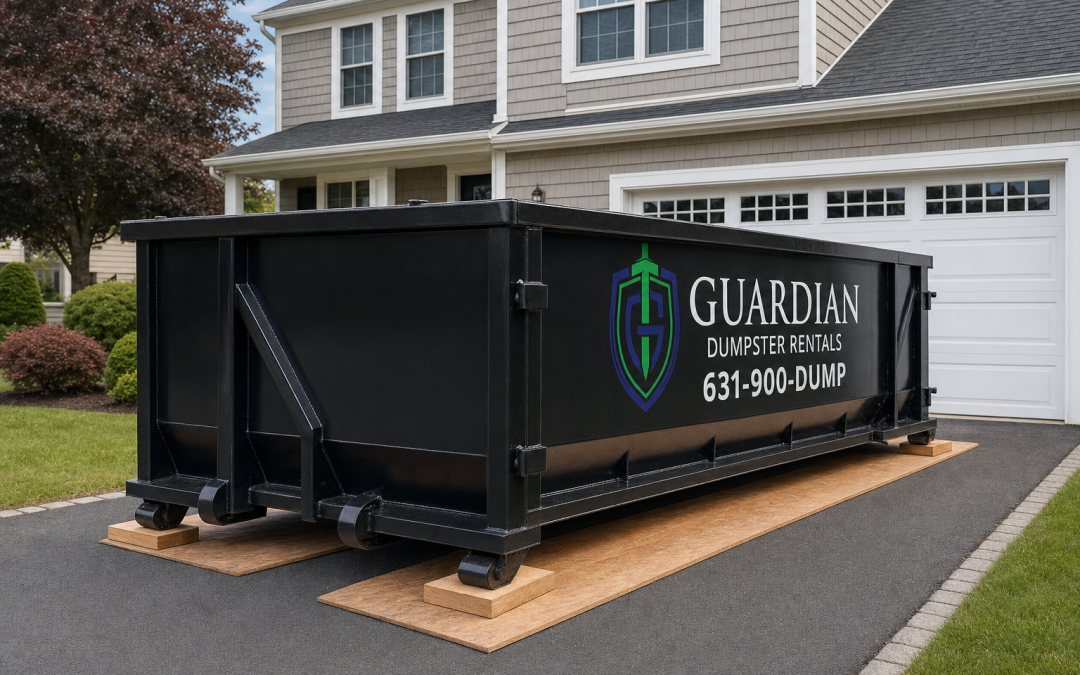
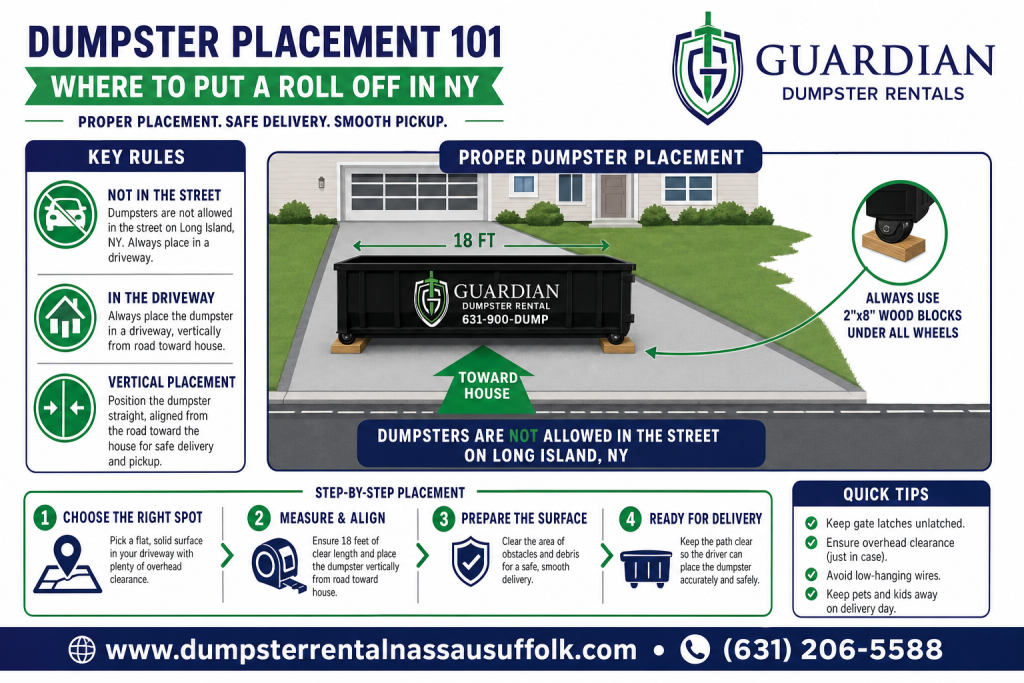
The best dumpster placement for a house cleanout is a flat, paved driveway positioned as close as possible to the door you’ll carry debris through — usually the garage or front entrance. This keeps the container on private property, avoids street permits, protects the truck’s access, and cuts down the walking distance for every single load you haul out.
Key takeaways
- A flat, paved driveway is the best spot for a roll off dumpster because it keeps the container on private property and avoids street permit requirements.
- Placing a dumpster on a public street or right-of-way in most New York municipalities requires a permit from the local DOT or highway department before delivery.
- Leave roughly 60 feet of straight-line clearance in front of the placement spot and about 20-25 feet of overhead clearance so the delivery truck can safely roll the container off.
- Protect your driveway by asking the hauler to place plywood or boards under the dumpster’s steel wheels and rails, especially on asphalt in warm weather.
- Keep the loading door end of the dumpster facing your work area and leave a few feet of walk-around space on all sides for safe, easy loading.
That short answer covers most New York homes, but the reasoning behind it matters. A roll off container arrives on a large truck that tilts its bed and rolls the box off hydraulically. That process needs solid, level ground. Grass and soft soil can rut or sink under the weight, and a sloped surface can make loading awkward and the container harder to pick up when it’s full.
Why the Driveway Beats the Street or the Yard
- No permit required: Keeping the dumpster on your own driveway means you typically skip the municipal street-occupancy permit process entirely (more on street rules in the section below).
- Shorter carry distance: During a cleanout you’ll make dozens or hundreds of trips. Shaving even ten steps off each one saves real time and energy.
- Stable, level surface: Pavement supports the container evenly, keeps the door swinging freely, and makes pickup smooth for the driver.
- Better security: A dumpster on your property is less likely to attract illegal dumping from passersby than one sitting at the curb.
How to Pick the Exact Spot
Walk your cleanout route before delivery day. Which door will most of the debris exit through? Aim to have the dumpster’s open rear door facing that path so you can walk items straight in rather than lifting them over the side. Then check the approach: the delivery truck needs a clear, straight run into the driveway, with no low branches, wires, or parked cars in the way, plus overhead clearance to raise its bed.
If your driveway is short, shared, or steep, you still have options — a level side yard with firm ground, a parking pad, or in some cases the street with the proper permission. Companies that handle residential dumpster rental in Babylon and surrounding Long Island towns deal with tight suburban driveways constantly and can usually suggest a workable spot when you book.
What Else Affects Placement
The ideal location also depends on three factors we’ll cover in the sections that follow: how much physical space your container size actually needs (a 30 yard box has a much bigger footprint than a 10), whether your municipality allows street placement and requires a permit, and how weather — especially summer heat and thunderstorms — should influence where the container sits. Get those three right, and your cleanout runs noticeably smoother from delivery to final pickup.
How Much Space Does a 10, 20, or 30 Yard Dumpster Need?
A 10 yard dumpster needs roughly 12 feet of length, a 20 yard about 22 feet, and a 30 yard about 22 feet — all around 8 feet wide. But the container is only half the equation: the delivery truck needs about 60 feet of straight-line clearance and 20 to 25 feet of overhead room to tilt its bed and roll the box off safely.
Before you book, walk the spot with a tape measure. Good dumpster placement starts with knowing the real footprint of each size, not just the yardage number on the quote.
Typical Roll Off Dimensions by Size
Exact dimensions vary slightly by manufacturer, but these are the standard footprints for most roll off containers:
- 10 yard: about 12 ft long × 8 ft wide × 3.5 ft tall. Fits in a single driveway parking space, which makes it the easiest size to position on a tight lot.
- 20 yard: about 22 ft long × 8 ft wide × 4.5 ft tall. Roughly the length of two parked cars end to end — the most common choice for full house cleanouts.
- 30 yard: about 22 ft long × 8 ft wide × 6 ft tall. Same footprint as the 20, but the taller walls matter if you plan to walk debris in through the rear door.
The Truck Needs More Room Than the Box
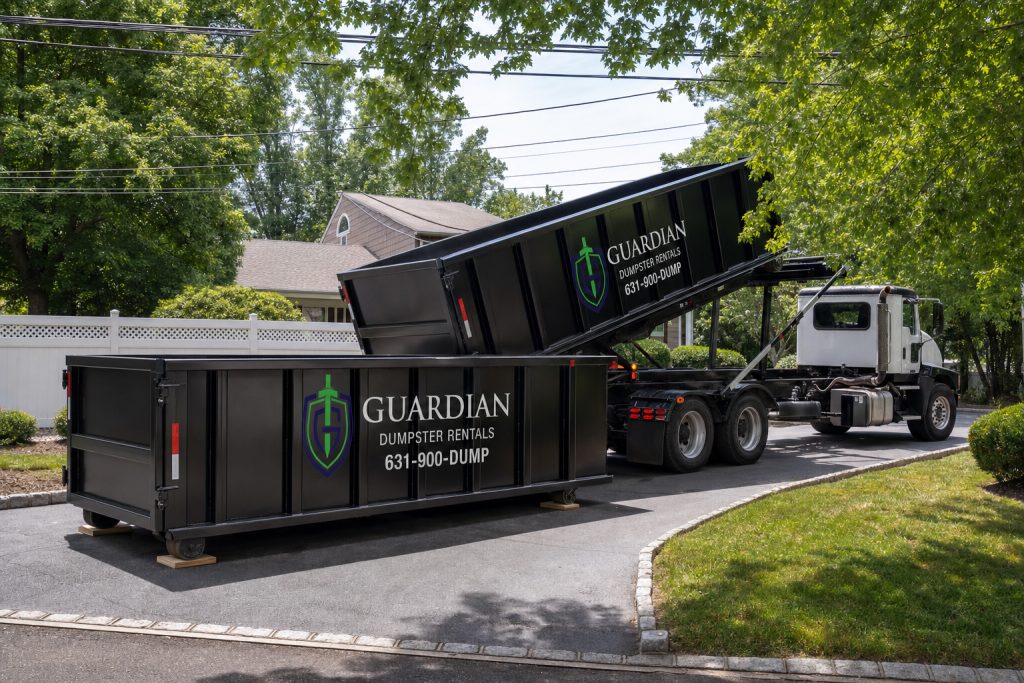
This is where most homeowners get caught off guard. The roll off truck backs into position, tilts its bed at a steep angle, and slides the container off the rails. That process requires:
- About 60 feet of straight clearance — the truck plus the container plus room to pull forward as the box rolls off. Measure from where the back of the dumpster will sit outward toward the street.
- 20 to 25 feet of vertical clearance — the raised truck bed reaches well above the container height, so power lines, tree limbs, and low-hanging branches directly over the drop zone are dealbreakers.
- 10.5 to 12 feet of width — the truck is wider than the box, and the driver needs room for mirrors and a straight backing path. Gates, fence posts, and parked cars along the approach all count.
Leave Swing Room for Pickup Day
Pickup requires the same clearances in reverse, plus a little extra: the driver hooks the container and winches it up the tilted bed, and the box shifts as it loads. Keep vehicles, material piles, and equipment at least a few feet clear on all sides so the truck can line up on the first try.
If you’re not sure which size fits your lot, a 20 yard dumpster rental in Babylon hits the sweet spot for most Long Island driveways — big enough for a serious cleanout, short enough to fit without blocking the garage.
Can I Put a Dumpster on the Street in New York?
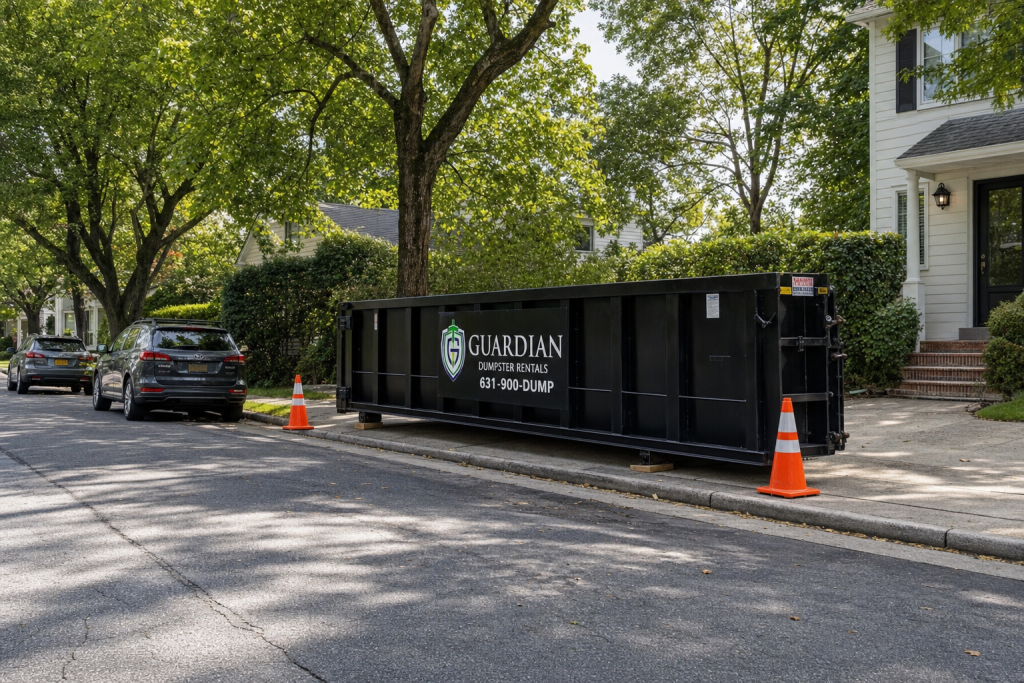
Yes, but only with a permit. In New York City, curbside dumpster placement requires a right-of-way permit from the NYC Department of Transportation, while upstate towns and Long Island villages issue permits through their local highway, public works, or code enforcement offices. Placing a roll off on any public street without approval can lead to fines or forced removal.
Street placement is usually a fallback, not a first choice. Most municipalities expect you to use private property when you can, and they will ask on the permit application why the driveway or yard won’t work. Common acceptable reasons include no driveway at all, a shared driveway you can’t block, or active work that makes the property inaccessible. If you rent, some jurisdictions also require the property owner’s sign-off.
How Right-of-Way Permits Work: NYC vs. Upstate and Long Island
The process differs quite a bit depending on where you live:
- New York City: Permits go through NYC DOT, and in many cases the dumpster company or a licensed contractor handles the application rather than the homeowner. Expect stricter rules about which streets qualify, restrictions near bus stops, hydrants, and crosswalks, and limits on how many days the container can stay.
- Upstate towns and small cities: You’ll typically apply directly at the town or village hall, often with a simple one-page form. Approval can be faster and requirements lighter, but rules vary block to block, so call before you book delivery.
- Long Island villages: Incorporated villages often have their own permit process separate from the surrounding town, and some prohibit street placement entirely on narrow residential roads. Always confirm whether your address falls under village or town jurisdiction.
Costs and Lead Times
Permit fees vary widely by municipality — smaller towns tend to charge modest flat fees, while NYC permits generally cost more and may be priced per day or per week. Lead times range from same-day or next-day approval in some small towns to a week or more in NYC, especially if the application needs contractor involvement. Build that timeline into your project schedule; a dumpster delivered before the permit is active is a violation from day one.
Safety Requirements for Curbside Dumpsters
Once a street permit is approved, most jurisdictions attach safety conditions. Typical requirements include:
- Reflective markings: Reflective tape or panels on the corners facing traffic so the container is visible at night.
- Traffic cones or barricades: Placed at each end of the dumpster to guide drivers around it.
- Lights in some areas: Certain municipalities require amber warning lights after dark, particularly on busier roads.
- Clearance rules: Keeping the container clear of hydrants, driveways, intersections, and storm drains, and leaving enough lane width for emergency vehicles.
Ask your rental company whether they supply reflective markings and cones — many do, but it’s ultimately the permit holder’s responsibility to keep the setup compliant for the entire rental period.
How Do I Protect My Driveway From Dumpster Damage?
The most reliable way to protect your driveway is to lay sheets of plywood under the dumpster’s rails and wheels before delivery. Plywood spreads the container’s weight across a wider area, preventing gouges, cracks, and depressions — especially on asphalt, which softens in summer heat and marks far more easily than concrete.
A roll off container is heavy even when it arrives empty, and it only gets heavier as you fill it. Add the pressure of steel rails and wheels concentrated on a few narrow contact points, and an unprotected driveway can end up with scrapes, rust stains, or permanent indentations. A few simple precautions before the truck arrives will save you a repair bill later.
Use Plywood Under the Rails and Wheels
Ask your rental company where the container’s rails and wheels will sit, then place boards accordingly:
- Use sheets of 3/4-inch plywood (or thicker) — thin boards can crack under load.
- Position boards where the rails and wheels will make contact, plus the spot where the container is rolled off the truck.
- Overlap or butt boards tightly so edges don’t dig into the surface as the dumpster settles.
- Leave the boards in place for the entire rental — the container shifts slightly as weight is added.
Why Summer Heat Makes Asphalt Especially Vulnerable
Asphalt is a flexible surface, and during hot New York summers it softens noticeably. A loaded container sitting on sun-baked blacktop can sink in, leaving rail impressions and wheel dents that remain after the dumpster is gone. If your driveway is asphalt and your rental falls in July or August, treat plywood as mandatory rather than optional. Choosing a dumpster placement spot that gets some shade during the hottest part of the day helps too, when the layout allows it.
Watch the Weight in 20 and 30 Yard Containers
Larger containers invite heavier loads. A 20 or 30 yard dumpster filled with dense household junk — old furniture, appliances, books, exercise equipment, tile, or plaster — puts enormous pressure on the surface below. To keep the load manageable:
- Distribute heavy items evenly across the floor of the container rather than piling them at one end.
- Ask your provider about weight limits before loading dense debris like concrete, brick, or dirt, which often belong in a dedicated heavy-debris container.
- Avoid overfilling — an overweight container is harder on your driveway and may not be legal to haul.
What to Check Before Delivery Day
- Inspect the driveway for existing cracks or soft spots and photograph them so you have a record of pre-existing conditions.
- Confirm the surface can handle the truck itself — the delivery vehicle is heavier than most passenger cars.
- Clear the area of vehicles, hoses, and low-hanging branches so the driver can set the container down gently instead of dropping it.
- Have your plywood laid out and ready before the truck arrives.
What Dumpster Placement Mistakes Slow Down a House Cleanout?
The biggest dumpster placement mistakes are setting the container too far from the door you’ll actually use, blocking the rear swing door so you can’t walk heavy items inside, boxing in your own vehicles, and picking a spot that forces long carries with furniture. Each one adds steps, time, and fatigue to every single load.
A cleanout is really hundreds of small trips. A placement error that adds even twenty extra feet per trip multiplies across the whole weekend, and by Sunday afternoon that “minor” inconvenience is the reason you’re exhausted and only half done. Here are the mistakes worth avoiding before the truck ever arrives.
Placing the Dumpster Too Far From Your Working Door
Homeowners often default to the far end of the driveway or a side yard to keep the dumpster out of sight. That’s fine for curb appeal, but brutal for your back. Measure the path from the door you’ll actually use — usually the garage or a side entrance — and put the container as close to it as the driver can safely manage. Shorter carries mean faster loading and fewer dropped items.
Blocking the Rear Swing Door
Most roll off dumpsters have a swing door on one end so you can walk items in instead of hoisting everything over the wall. A common mistake is having the container dropped with that door facing a fence, a wall, or the garage. Tell the driver which direction the door should face, and leave enough clearance behind it to open fully and wheel in a dolly or hand truck. Walking a couch through the door is dramatically easier than lifting it over a four-foot steel side.
Boxing In Your Own Vehicles
It’s easy to focus on loading access and forget that the dumpster may sit in your driveway for a week or more. If it traps a car in the garage, you’ll either be stuck or tempted to park on the street for days. Before delivery, pull vehicles out that you’ll need, and plan the placement so at least one lane in or out stays clear.
Other Time-Wasting Errors
- Ignoring the loading path: A route that crosses soft lawn, steps, or gravel slows every trip and gets worse as you tire.
- No staging area: Without a clear spot near the dumpster to pile items between trips, people bottleneck at the door.
- Placing it under low wires or branches: The driver may refuse the spot entirely, forcing a last-minute change to a worse location.
- Forgetting pickup access: If cars, equipment, or debris piles block the container by the end of the weekend, the haul-away gets delayed.
Five minutes of planning — walking the path, checking clearances, and deciding which way the door should face — is the cheapest productivity boost your cleanout will get.
Does Summer Weather Change Where the Dumpster Should Go?
Yes. In New York’s thunderstorm and tropical-storm season, dumpster placement should avoid low spots where runoff pools, stay clear of trees that drop limbs in high wind, and sit where you can tarp the load easily. Rain adds real water weight, so cover the container and time pickup around forecasted storms.
New York summers bring sudden downpours, gusty thunderstorms, and the occasional tropical system moving up the coast. None of that means you can’t run a cleanout in July — it just means the spot you choose in April isn’t automatically the right spot in August. A few weather-aware adjustments keep the project on schedule and keep your final invoice from creeping up.
Avoid Low Spots Where Runoff Collects
Walk your property during or right after a rainstorm and note where water pools. A dumpster parked in a low spot can end up sitting in standing water, which softens gravel and soil, lets the container sink, and can make it difficult for the truck to hook up and haul away. Choose higher, well-drained ground — even a few inches of elevation change matters when a summer storm drops an inch of rain in an hour.
Tarp the Load So Rain Doesn’t Add Weight
Roll off dumpsters are billed partly by weight, and an open container full of drywall, carpet, upholstered furniture, or cardboard acts like a sponge. Waterlogged debris weighs dramatically more than dry debris. To protect yourself:
- Keep a heavy-duty tarp and bungee cords or rope on hand from day one.
- Cover the container every evening and any time rain is in the forecast.
- Pull the tarp tight so it sheds water instead of collecting it in a pocket.
- Place absorbent materials (mattresses, carpet, drywall) lower in the load and cover them first.
Stay Clear of Trees in High Wind
Summer thunderstorms and tropical remnants routinely produce winds strong enough to shed dead limbs — or drop whole branches. A limb landing in or on the container can damage it (a cost that may pass to you) and can injure anyone loading at the time. Keep the dumpster out from under large canopies, especially older maples, oaks, and any tree with visible dead wood.
Plan Pickup Timing Around Forecasted Storms
If a major storm system is approaching, it’s often smarter to call for pickup a day early than to leave a full, heavy, wind-exposed container sitting through it. Check the local forecast from the National Weather Service as your project wraps up, and during hurricane season keep an eye on the National Hurricane Center for tropical systems tracking toward the Northeast. Hauler schedules fill up fast before big storms, so booking your pickup a day or two ahead of forecasted weather gives you the best odds of getting the container off your property before conditions turn.
~60 ft of straight approach space
Truck clearance needed
About 20-25 ft (watch wires and branches)
Overhead clearance
Roughly 8 ft wide by 12-22 ft long
Typical roll off footprint
Permit typically required from your municipality
Street placement in NY
Dumpster Placement Options Compared: Driveway vs. Street vs. Yard for NY Homes
| Placement Spot | Permit Usually Needed? | Pros | Cons |
|---|---|---|---|
| Driveway | No (private property) | Convenient access, no street permit, more secure | Can block vehicles; surface protection recommended |
| Street / Curbside | Yes, in most NY municipalities | Frees up the driveway; works for homes without one | Permit fees and lead time; traffic and parking rules apply |
| Yard / Lawn | No, but check HOA rules | Close to backyard or gut-job projects | Ruts and turf damage likely; soft ground can be unsafe |
| Alley or Shared Lot | Often yes, plus neighbor/landlord approval | Useful for tight urban lots | Access conflicts; may violate local codes without approval |
Illustrative Example: A Smooth Two-Week Cleanout in a Suburban NY Home
Illustrative example
Consider a hypothetical homeowner in a Hudson Valley suburb clearing out a parent’s house before a sale. Their first instinct was curbside placement, but a quick call to the town revealed a street permit would add paperwork and lead time, so they opted for the driveway instead. They measured the approach, trimmed one low-hanging branch, and asked the hauler to set the dumpster on plywood with the door facing the garage. Loading went quickly because they kept a clear walking path on both sides, and the driveway showed no marks after pickup. This composite scenario reflects the most common outcome when placement is planned before delivery day.
Frequently asked questions
Do I need a permit for dumpster placement in New York?
It depends on where the dumpster sits. Placing it entirely on your own driveway or private property usually requires no permit. Putting it on a public street, sidewalk, or right-of-way almost always requires a permit from your city or town, and rules vary widely across New York municipalities. Call your local building or public works department before delivery, since fines for an unpermitted street placement can exceed the permit cost.
Will a roll off dumpster damage my driveway?
It can if you don’t take precautions. Roll off containers are heavy, and the steel rails or wheels can scratch, gouge, or crack asphalt and concrete, especially in hot weather when asphalt softens. The standard fix is laying plywood sheets or wood boards where the dumpster will rest so the weight spreads out. Ask your hauler to place it on boards, and avoid overloading the container beyond its weight limit.
How much space does the truck need to drop off a roll off dumpster?
More than most people expect. The truck needs roughly the length of the dumpster plus additional room behind it to tilt and roll the container off, plus overhead clearance for the raised truck bed, which can extend well over 20 feet high. Low-hanging branches, power lines, carports, and tight turns are common problems. Ask your rental company for their exact clearance requirements and walk the delivery path before booking.
Can I put a dumpster on the street in front of my house?
Often yes, but only with local approval. Most New York municipalities require a street-use or obstruction permit, and some require reflective markers, cones, or lights so drivers can see the container at night. Street placement may also be restricted during snow season so plows can pass. If your driveway can handle the dumpster, that’s almost always the simpler and cheaper option.
What happens if the dumpster spot I picked doesn’t work on delivery day?
The driver decides on-site whether placement is safe and legal. If your chosen spot is blocked, too soft, too steep, or lacks clearance, the driver may place it elsewhere, or leave without delivering, which can trigger a dry-run or failed-delivery fee. Avoid this by clearing vehicles from the driveway, marking the exact spot, trimming low branches, and confirming measurements with the company beforehand.
How far from the house should a roll off dumpster be placed?
Close enough for easy loading but with working room around it. You want clear space on the side with the swing door so you can walk debris in rather than lifting everything over the wall. Keep it away from anything overhanging, like eaves or wires, and never block egress doors, gas meters, or septic access. A spot near the main debris exit of the house saves an enormous amount of carrying during a cleanout.
Can a dumpster be placed on grass or dirt instead of pavement?
Sometimes, but it’s risky. Soft ground can’t always support a loaded container, and the dumpster can sink, tip, or leave deep ruts, especially after rain or during spring thaw in New York. The delivery truck itself can also get stuck on a soft lawn. If pavement isn’t an option, ask the hauler first, choose the driest and most level area, and lay down plywood to distribute the weight.
What are the biggest mistakes people make with dumpster placement?
The most common ones: skipping the permit check for street placement, forgetting overhead clearance for wires and branches, blocking the garage or their own car for the entire rental period, putting the dumpster too far from where the debris actually is, not laying boards to protect the driveway, and choosing a sloped spot where the container can shift. Most of these are avoided by walking the site and measuring before you book.
Do I need to be home when the dumpster is delivered?
Usually not, as long as you’ve prepared. Most companies deliver without the homeowner present if the placement spot is clearly marked, accessible, and free of vehicles. Marking the spot with cones, chalk, or a note removes guesswork. That said, being home for the first delivery is smart if your property has tight access or you have specific placement preferences, since repositioning a dumpster later typically costs an extra trip fee.
Can the dumpster be moved once it’s been dropped off?
Not by you. A loaded or even empty roll off is far too heavy to reposition by hand, and dragging it damages pavement. If it’s in the wrong spot, you’ll need to call the rental company and request a relocation, which usually means a service fee for the extra truck trip. This is why confirming the exact placement spot before or during delivery matters so much.
Related local pages
- Dumpster Rental Babylon New York
- Dumpster Rental Bay Shore New York
- Dumpster Rental Commack New York
Ready to schedule your house cleanout? Call us today for fast delivery and expert dumpster placement advice for your NY property. Get in touch.
Last updated: August 28, 2026
Recent Comments