
Dumpster Rental for Remodel Projects: A Phase-by-Phase Plan
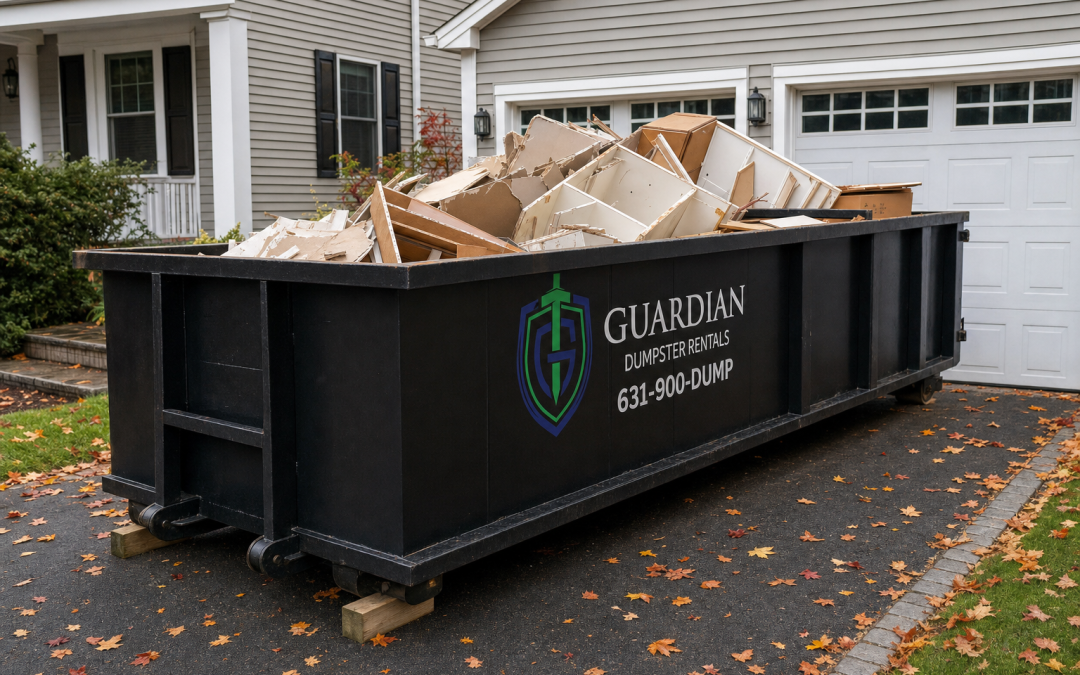
Quick Answer: Time Your Dumpster Rental for Remodel Demo Day, Not Day One
The short answer for any dumpster rental for remodel projects: schedule delivery one to two days before demolition begins, not when your permits are approved. Demo is when debris actually appears, and matching your container’s arrival — and its size — to that moment prevents paying for empty rental days or expensive overage fees.
Key takeaways
- Schedule your dumpster delivery for demo day, since demolition generates the bulk of a remodel’s debris in the first week.
- A 20 yard dumpster typically handles a single-room remodel, but whole-home or multi-room projects in NY often need a 30 yard container or a scheduled swap-out.
- Heavy materials like tile, plaster, and concrete can hit weight limits before the dumpster looks full, so plan by weight as well as volume.
- Timing debris removal around each phase — demo, rough-in, and finish work — keeps the jobsite safe and avoids paying for idle rental days.
- Confirm placement rules early: many NY municipalities require a permit if the dumpster sits on the street rather than a driveway.
It’s a common and understandable mistake. Homeowners get excited when the permit clears, the contractor is booked, and the project finally feels real — so they order the dumpster right away. But between permit approval and the first swing of a sledgehammer, there’s often a gap of days or even weeks filled with material deliveries, layout work, and scheduling. During that entire stretch, an early dumpster just sits in your driveway burning through your rental period and blocking space your contractor needs for lumber, cabinets, or a delivery truck.
Why Demo Day Is the Real Starting Line
Roughly 70 to 80 percent of a typical remodel’s debris is generated during demolition — old cabinets, drywall, flooring, tile, fixtures, and framing all come out in a concentrated burst over just a few days. The rest of the project produces a comparative trickle: packaging, cutoffs, and scraps. Timing your container to that front-loaded burst is the single highest-leverage scheduling decision you can make. For heavier tear-outs, planning ahead for construction debris removal in Dix Hills and similar Suffolk County towns means the container arrives full-ready exactly when the mess starts.
How Phase-Matched Sizing Saves You Money
Ordering one oversized dumpster “just in case” or one undersized bin that overflows both cost you. Instead, think in phases:
- Demolition phase: your largest debris volume — this is where a mid-size or large container earns its keep.
- Rough-in phase: plumbing, electrical, and framing produce modest scrap that rarely justifies a big box.
- Finish phase: packaging, trim cutoffs, and touch-up waste — often manageable with a small container or a final cleanout load.
For most single-room and kitchen or bath gut jobs, a mid-size container hits the sweet spot; something like a 20 yard dumpster rental in West Babylon handles a full demolition phase without the footprint or price of a 30 yard box. Later sections of this guide break down exactly how much debris each phase produces and when a swap-out beats a single big container.
The Two Rules to Remember
- Delivery timing: book the dumpster to arrive 1–2 days before demolition starts, giving you a buffer without wasting rental days.
- Size to the phase: match container capacity to the debris the current phase actually produces, not to the whole project at once.
Get those two decisions right and you’ll avoid the two biggest budget leaks in remodel waste management: idle rental days and overloaded containers.
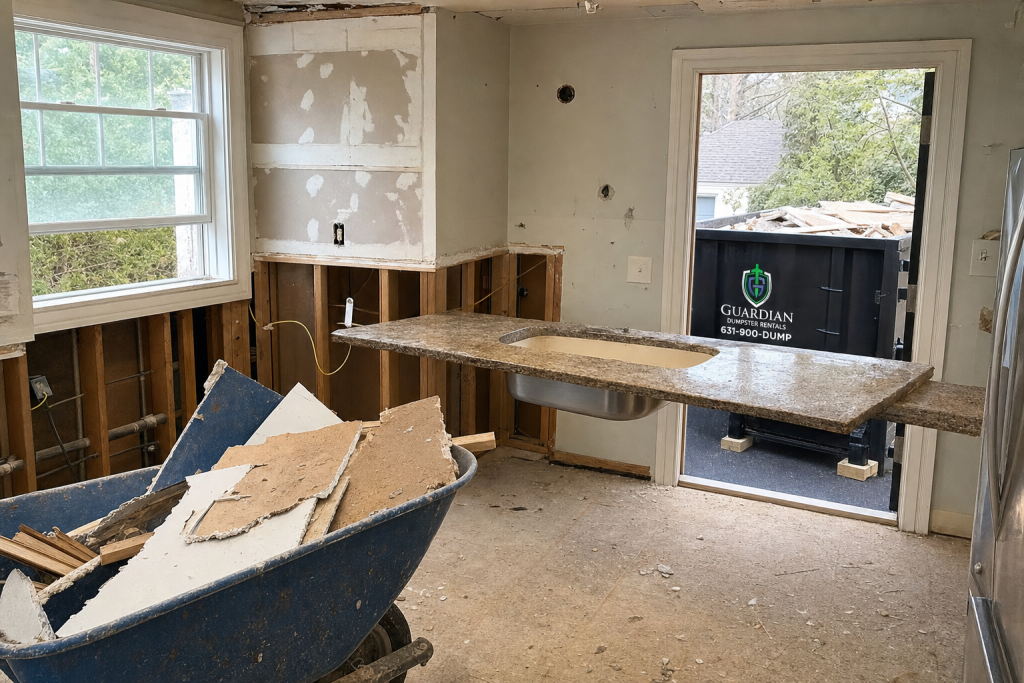
When Should I Schedule My Dumpster Rental for a Remodel?
Schedule delivery one to two days before demolition begins, keep the container through the end of demo (usually 3–7 days for a kitchen or bath), then release it during rough-in when debris slows to a trickle. Bring a second, smaller container back for the drywall and finish phase if needed.
Phase 1: Demolition — Container On Site Before the First Swing
Demo is when 60–80% of your remodel’s debris is generated, so this is the phase your dumpster rental for remodel work should be built around. Have the container dropped a day or two ahead of demo day so the crew can load directly as they tear out cabinets, tile, flooring, and old fixtures. Loading straight from the room to the container saves hours compared to staging debris in the garage and moving it twice.
- Arrival: 1–2 days before demolition starts
- Keep it: Through the last day of tear-out, plus one buffer day for cleanup
- Pickup: As soon as demo debris is loaded — don’t let it linger
Phase 2: Rough-In — Send the Dumpster Home
Once plumbing, electrical, and framing work begins, waste output drops sharply. Rough-in generates mostly wire clippings, pipe offcuts, and lumber scraps — material a few contractor bags can handle. An empty 20 or 30 yard container sitting in your driveway during this two-to-four-week stretch is pure rental-extension cost with no benefit, and in many Long Island neighborhoods it also eats a parking spot or blocks driveway access your trades actually need.
If your project is in western Suffolk, coordinating a swap is straightforward — providers offering roll off dumpster rental in West Babylon and surrounding towns can typically pick up and redeliver on a few days’ notice.
Phase 3: Drywall and Finish — A Smaller Container Returns
Drywall hanging and finish carpentry produce a second, smaller wave of debris: board offcuts, joint compound buckets, trim scraps, flooring boxes, and packaging from cabinets and fixtures. This is where downsizing pays off. A compact container — something like a 10 yard dumpster rental in Commack — usually handles this phase without the footprint or price of a full-size roll-off. Time delivery for the first day of drywall hanging and keep it through cabinet and fixture installation.
Phase 4: Punch List — Usually No Dumpster Needed
Final touch-ups, paint, and hardware installation rarely justify a container. Plan for curbside bags or a single trip to the transfer station, and release your second dumpster once the finish materials are installed rather than holding it “just in case.”
The takeaway: your rental should track your debris curve, not your project calendar. Two well-timed windows almost always beat one container parked for the full remodel.
How Much Debris Does Each Remodeling Phase Actually Produce?
Demolition generates the bulk of remodel waste — roughly 60 to 80 percent of your total project debris comes out on demo day alone, including cabinets, drywall, flooring, and fixtures. The rough-in and finish phases produce far less: mostly packaging, offcuts, and trim scraps that fit in a much smaller container.
Understanding this lopsided distribution is the key to sizing a dumpster rental for remodel work correctly. Most homeowners overestimate how evenly waste is spread across the project and end up paying for capacity that sits empty during the middle weeks.
Demo Phase: The Heavy Hitter
When walls open up and old materials come out, volume adds up fast. A typical kitchen or bathroom demo produces:
- Cabinetry and countertops — bulky and awkward, they eat container space quickly even though they’re not especially heavy
- Drywall and plaster — dense and dusty; old plaster-and-lath walls weigh significantly more than modern drywall
- Flooring — tile and mortar bed are the heavyweights, while carpet and laminate are light but voluminous
- Fixtures — tubs, vanities, toilets, and appliances that can’t go out with regular trash
A single-room demo often fills a 10 yard container on its own, while a kitchen-plus-bath demo or whole-floor gut typically calls for a 20 yard. For a compact bathroom refresh, a 10 yard dumpster rental in Bay Shore is usually the right match — big enough for the tear-out without wasting driveway space.
Rough-In Phase: A Trickle, Not a Flood
Once framing, plumbing, and electrical work begin, debris slows dramatically. Expect lumber offcuts, pipe and wire scraps, and small amounts of insulation. This phase rarely justifies its own container — most crews consolidate rough-in waste into whatever capacity remains from demo, or hold it for the finish-phase load.
Finish Phase: Light but Bulky
Finish work produces mostly cardboard, foam, pallets, and shrink wrap from cabinets, appliances, and fixtures, plus trim and flooring offcuts. It’s high-volume but low-weight material. A 10 yard container almost always covers it, and if you’ve broken down boxes diligently, you may not need a second container at all.
Matching Container Size to the Phase
- 10 yard: single bathroom demo, finish-phase packaging, flooring tear-out from one or two rooms
- 20 yard: full kitchen demo, kitchen-and-bath combo, basement remodel tear-out
- 30 yard: whole-floor gut, multi-room remodel demo, or projects removing plaster walls throughout
For larger single-family projects where demo spans multiple rooms, a residential dumpster rental in Dix Hills sized at 20 yards handles the demo surge, leaving you flexibility to decide later whether the lighter finish-phase debris warrants a second, smaller container.
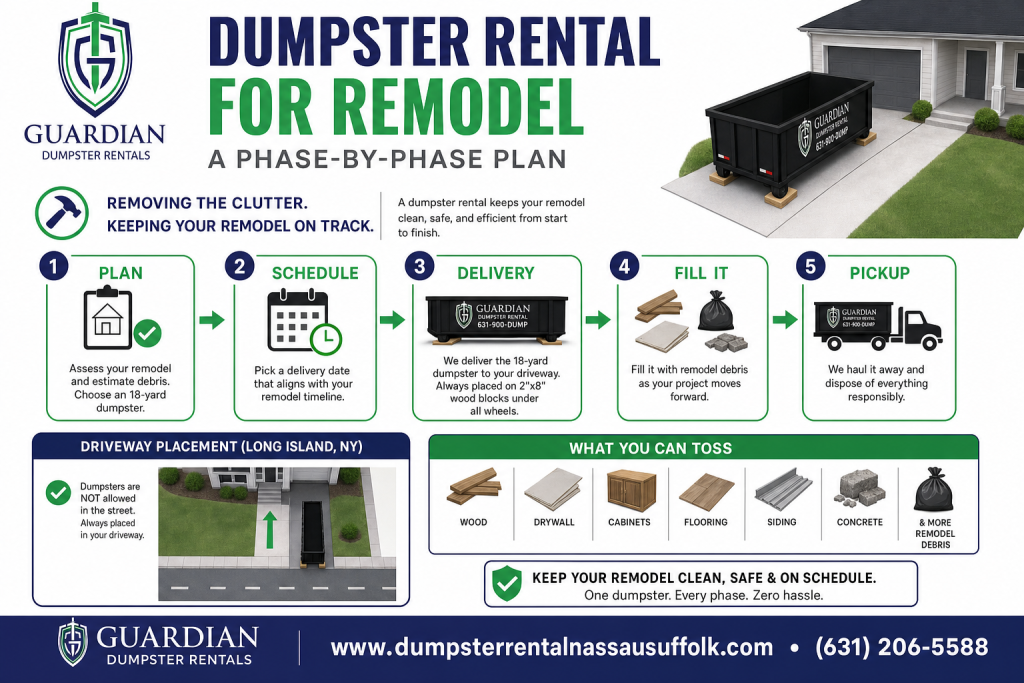
Is One 20 Yard Dumpster Enough for a Full Remodel?
A single 20 yard dumpster is usually enough for a one-room remodel — a typical kitchen or bathroom gut fits with room to spare. It is rarely enough for a whole-floor gut, a multi-room renovation, or any project that involves tearing out old plaster walls, which fill containers far faster than homeowners expect.
The honest answer depends less on square footage and more on what is coming out of the house. A 20 yard container holds roughly 20 cubic yards of material, which sounds generous until you start stacking bulky cabinets, tub surrounds, and drywall sheets that refuse to lie flat. Debris almost never packs as tightly in real life as it does on paper.
When a Single 20 Yard Works
- Kitchen remodel: Cabinets, countertops, flooring, appliances, and drywall from one kitchen typically fit in a 20 yard with capacity left over.
- Bathroom gut: Even with a tub, vanity, tile, and cement board, a full bath demo rarely exceeds half the container.
- Single-room flooring and drywall: One bedroom or living room down to the studs is comfortably within range.
For these single-room jobs, a residential dumpster rental in Dix Hills sized at 20 yards is the sweet spot — big enough that you are not rationing space, small enough to fit in most driveways.
When It Overflows Fast
- Whole-floor guts: Demoing an entire level multiplies drywall, flooring, and framing scrap well past 20 yards.
- Multi-room renovations: Two bathrooms plus a kitchen is not “a bit more” — it is often double the debris.
- Old plaster and lath: Plaster is dense and heavy. Homes built before drywall became standard can max out a container’s weight limit before it looks full.
- Roofing or masonry mixed in: Shingles, tile, brick, or concrete added to a remodel load eat capacity and tonnage quickly.
Warning Signs You’re About to Run Out of Room
- The container is half full and demo is not finished — debris volume rarely slows down in the second half.
- You are already breaking down cabinets and snapping drywall to make things fit; that is a capacity problem, not a packing skill.
- Material is mounding above the rim. Overfilled containers cannot be legally hauled and will need to be leveled before pickup.
- Heavy material like plaster or tile is going in early — you may hit the weight cap with visible space remaining.
If any of those sound like your project, plan for a larger container or a mid-project swap before demo begins rather than scrambling later. Teams handling construction debris removal in Babylon see this constantly: the cost of underestimating a dumpster rental for remodel work is usually a stalled job site, not just an extra fee.
Should I Rent One 30 Yard for a Dumpster Rental for Remodel, or Schedule Two Smaller Swap-Outs?
Choose a single 30 yard if your remodel runs on a tight timeline and you have the driveway space to hold it. Choose a 20 yard swap-out or a 10 yard follow-up if your lot is narrow, your project has a long gap between demo and finish work, or street placement is your only option.
Both approaches can work for a whole-home remodel on Long Island — the deciding factors are usually physical space and project pacing, not just price. Here is how the trade-offs break down for typical New York properties.
The Case for One 30 Yard Container
A 30 yard holds roughly the volume of a demo phase plus most of the construction phase, which means fewer scheduling calls and no risk of waiting on a swap while debris piles up. A 30 yard dumpster rental in Bay Shore or a similar large container works best when:
- Your contractor is compressing demo and rough construction into back-to-back weeks
- You have a wide, straight driveway with clear overhead access (no low wires or branches)
- You want one delivery and one pickup instead of coordinating multiple truck visits
The catch: 30 yard containers are long. On narrow Suffolk County lots — especially older neighborhoods with short driveways — the container can block garage access for the entire rental period, and street placement of a large box often requires a permit from your town or village.
The Case for a 20 Yard Swap-Out or 10 Yard Follow-Up
Two smaller containers spread the footprint over time. A 20 yard handles the heavy demo phase, gets hauled away, and then a smaller box arrives when finish-phase debris actually starts accumulating. This suits remodels where weeks of plumbing, electrical, and inspection work separate demo from drywall and trim. For that lighter second phase, a 10 yard dumpster rental in Babylon is often all the finish stage needs.
The swap-out approach makes sense when:
- Your driveway is too short or narrow for a 30 yard box
- There’s a multi-week lull mid-project where a big container would sit half-empty, accruing rental days
- You’re paying by weight and want to keep heavy demo debris separate from lighter finish waste
The Deciding Question
Ask your contractor for a realistic phase schedule before you book. If demo through rough construction happens inside a few continuous weeks, one 30 yard is simpler. If your timeline has gaps — permits, inspections, back-ordered materials — two smaller containers usually mean you’re not paying to store an empty box, and your driveway stays usable in between.
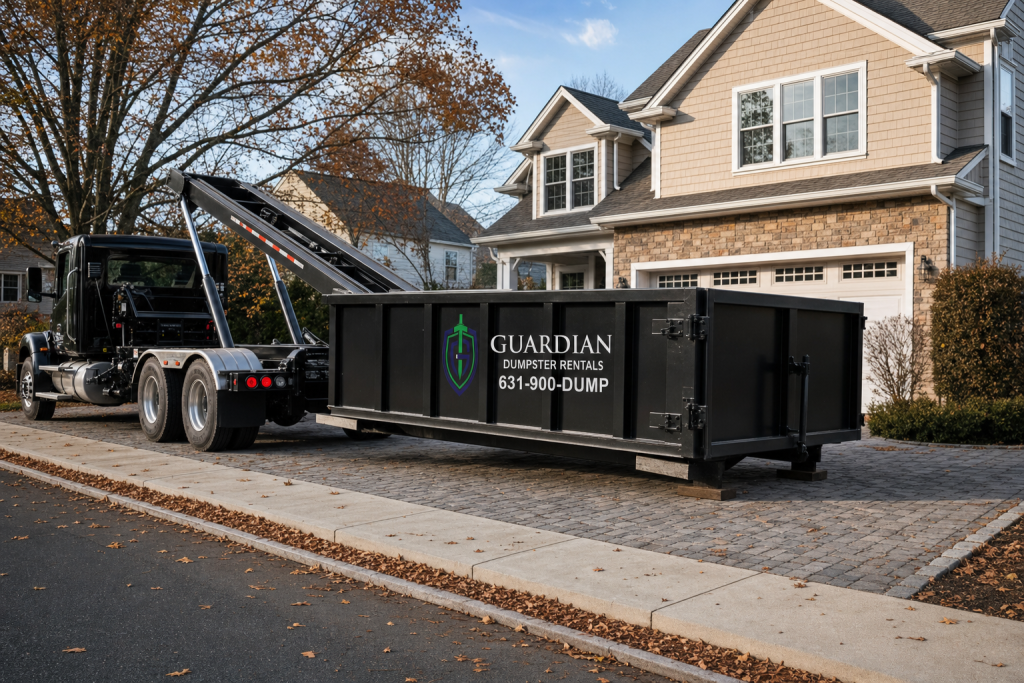
How Does Fall Weather in NY Change Debris Removal Timing?
Fall on Long Island compresses the remodeling calendar. Contractors race to close up projects before winter, dumpster inventory tightens, and rain plus wind-blown leaves add hidden weight to open containers. Book your dumpster a week or more ahead in autumn, keep loads covered, and schedule pickups before the first hard cold snap slows haulers down.
The core problem is demand. September and October are peak months for exterior work — roofing, siding, decks, and last-chance kitchen and bath remodels — so every hauler in Nassau and Suffolk is juggling more delivery requests than in midsummer. Companies that book roll off dumpster rental in Dix Hills and surrounding towns often see next-day availability disappear in fall, replaced by two- to four-day lead times. If your demo day is locked in with a contractor, reserve the container at least a week ahead so the crew isn’t standing around with nowhere to throw debris.
Watch the Weight: Rain and Leaves Add Up Fast
Fall weather doesn’t just complicate scheduling — it can quietly increase your final bill. Most rentals include a weight allowance, and anything soaking into your load counts against it. A container full of demolished drywall, carpet, and lumber can absorb a surprising amount of water during a multi-day nor’easter.
- Tarp the container overnight and before any forecast rain. Drywall and carpet act like sponges.
- Keep leaves out. Wind-blown leaves fill corners quickly, take up billable space, and hold moisture. Some facilities also require yard waste to be separated from construction debris, since construction and demolition materials are often processed differently.
- Load heavy materials early in the week if storms are forecast, so you can call for pickup before the debris gets soaked.
Beat the Cold Snap, Not Just the Calendar
An early freeze creates two headaches: debris can literally freeze into the container floor, and icy driveways make delivery and pickup riskier — some haulers will postpone a swap-out rather than drag a loaded roll-off across a slick sloped driveway. Checking the extended outlook from the National Weather Service before you set demo and pickup dates helps you avoid scheduling around the season’s first hard frost or coastal storm.
Practically, that means front-loading your timeline. If you’re planning bathroom demo or a whole-house gut in October, arrange construction debris removal in Babylon or your local area before you swing the first hammer, not after the debris pile is already blocking the driveway. A dumpster rental for remodel work in autumn rewards early planning: reserve early, cover the load, and get pickups done while the ground is still dry and the trucks are still running on schedule.
Roughly 6–8 pickup truck loads of debris
20 yard dumpster capacity
7–14 days, with per-day fees after
Typical rental period
Plaster, tile, and concrete — watch weight caps
Heaviest remodel debris
Often requires a municipal permit
Street placement in NY
Dumpster Rental for Remodel Projects: Sizing by Phase and Scope
| Project Scope | Typical Dumpster Size | Phase With Most Debris | Swap-Out Likely? |
|---|---|---|---|
| Bathroom remodel | 10 yard | Demo (tile, fixtures, drywall) | Rarely |
| Kitchen remodel | 20 yard | Demo (cabinets, counters, flooring) | Sometimes |
| Multi-room renovation | 20–30 yard | Demo and drywall phases | Often |
| Whole-home or gut remodel | 30 yard or multiple containers | Full gut demolition | Almost always |
Illustrative Example: A Two-Phase Kitchen and Bath Remodel
Illustrative example
Consider a hypothetical Westchester homeowner tackling a combined kitchen and bathroom remodel over six weeks. They initially ordered a single 20 yard dumpster, but the demo phase alone — old cabinets, tile flooring, plaster walls, and a cast-iron tub — filled it within days and approached the weight limit. By scheduling a swap-out at the end of demolition and bringing in a second container for the finish phase, they kept the driveway clear during rough-in when no dumpster was needed. This phased approach, rather than one oversized rental sitting idle, matched debris removal to the actual workflow and avoided extended rental-day charges.
Frequently asked questions
How much does a dumpster rental for remodel projects usually cost in New York?
Costs vary widely by container size, rental length, debris weight, and your location within New York, but most residential remodel rentals fall in the several-hundred-dollar range for a one-week term. The quoted price typically includes delivery, pickup, and a set weight allowance; overage fees apply if you exceed it. Get itemized quotes from two or three local haulers so you can compare weight limits and rental periods, not just the base price.
How long can I keep a rental dumpster during a remodel?
Standard rental periods usually run 7 to 14 days, but most companies allow extensions for a daily fee if your project runs long. For multi-phase remodels, some haulers offer a swap-out service: they haul away the full container and drop an empty one, which is often cheaper than paying extended rental plus overweight fees. Confirm the base period and extension cost before you book.
Is a 20 yard dumpster big enough for a full kitchen remodel?
A 20-yard dumpster handles most single-room remodels, including a typical kitchen gut with cabinets, countertops, drywall, and flooring. It usually isn’t enough if you’re also removing tile over mortar bed, plaster walls, or doing multiple rooms at once, since those materials are dense and hit weight limits before the container looks full. If you’re combining a kitchen with a bath or whole-floor demo, plan on a 30-yard container or a scheduled swap.
What happens if my dumpster is overweight when it’s picked up?
The hauler weighs the load at the disposal facility, and anything over your included tonnage is billed per ton at the rate in your contract. With heavy debris like tile, plaster, or concrete, overage fees can add up quickly. To avoid surprises, ask about your weight allowance up front, distribute heavy material evenly, and consider a dedicated heavy-debris container if you’re removing masonry or a mortar-bed floor.
Do I need a permit to put a dumpster on the street in New York?
If the dumpster sits entirely on your private driveway or property, you generally don’t need a permit. If it will occupy the street or public right-of-way, most New York municipalities—including NYC—require a street occupancy permit, and rules vary by city and even by block. Your dumpster company can often tell you local requirements or handle the permit, but confirm who is responsible before delivery day to avoid fines or a refused drop-off.
What can’t I throw in a remodel dumpster?
Most haulers prohibit hazardous materials: paint, solvents, adhesives, asbestos, chemicals, batteries, tires, propane tanks, and refrigerant-containing appliances like fridges and AC units. Some also restrict mattresses, electronics, and railroad ties, or charge extra for them. Anything suspected of containing asbestos—common in pre-1980 New York homes—requires licensed abatement, not a dumpster. Ask for your hauler’s prohibited items list before demo day so illegal items don’t get buried in the load and trigger contamination fees.
Should I rent the dumpster myself or let my contractor handle debris removal?
If your contract includes debris removal, the contractor handles it and builds the cost into the bid—convenient, but you pay a markup. Renting it yourself can save money and gives you control over sizing and timing, but you’re then responsible for permits, overweight fees, and prohibited items your crew tosses in. If you self-rent, put it in writing that the contractor’s crew follows the fill rules, and clarify who pays any overage charges.
What’s the biggest mistake people make when timing a dumpster for a remodel?
Ordering the dumpster too early and letting it sit half-empty burning rental days before demo actually starts—or worse, letting it fill with neighbors’ trash. The second most common mistake is trying to stretch one container across every phase, then hitting weight limits mid-project with nowhere to put debris. Schedule delivery for the day before demo begins, and match container swaps to your heaviest debris phases rather than the calendar.
How do I keep neighbors or strangers from dumping trash in my dumpster?
Illegal dumping is common, especially with street-placed containers, and you pay for the extra weight. Keep the dumpster on your property if possible, place it under exterior lighting, and use a tarp or lockable lid overnight and between phases. Some renters post a simple ‘private container—no dumping’ sign. If you find prohibited items like paint or tires dumped in, remove them before pickup, since contamination fees fall on the account holder.
Can a dumpster damage my driveway, and how do I prevent it?
A loaded dumpster is heavy enough to crack asphalt, chip concrete, or leave rust stains and gouges, especially in summer heat when asphalt softens. Ask the driver to place plywood sheets or boards under the container’s rails and wheels—most haulers will do this if boards are ready at delivery. Avoid placing dumpsters on pavers or newer driveways when possible, and note any existing damage with photos before drop-off.
Related local pages
- Dumpster Rental Islip New York
- Dumpster Rental West Islip New York
- Dumpster Rental Dix Hills New York
Remodeling this fall? Call us to schedule your dumpster delivery around demo day — we’ll help you pick between a 10, 20, or 30 yard and time your swap-outs so debris never slows the crew down. Get in touch.
Last updated: September 11, 2026
Recent Comments