
Dumpster Swap-Out or Second Container? A NY Remodel Guide
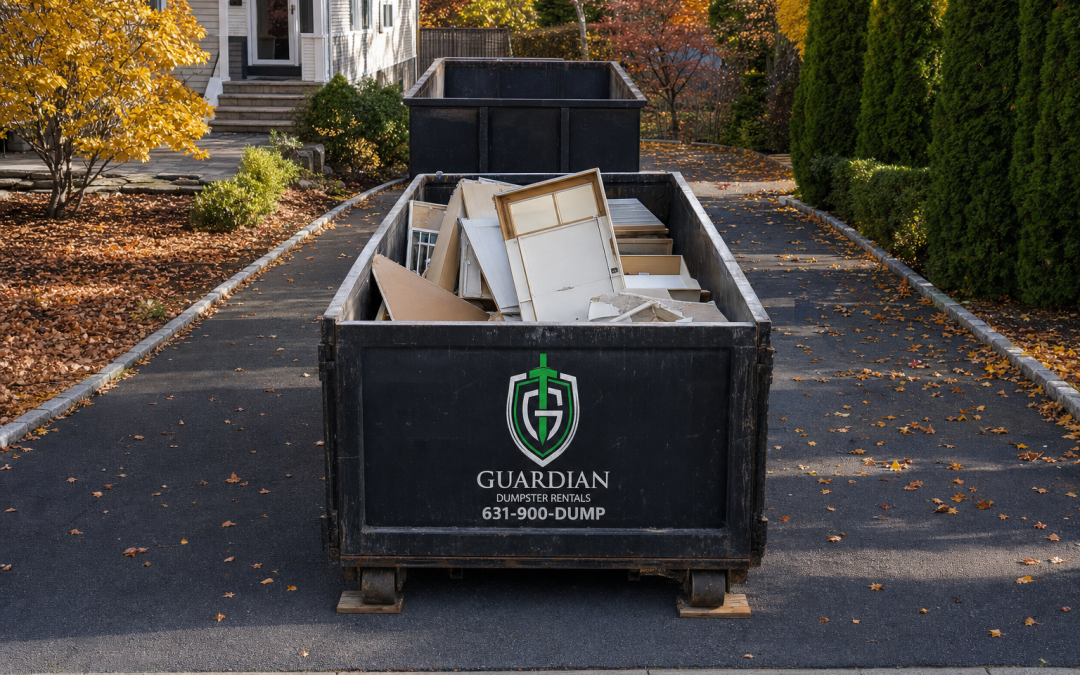
Your Dumpster Is Full Mid-Remodel — Now What?
A dumpster swap-out means the hauler empties your full container and returns it (or an identical one) so work continues, while a second dumpster adds another container alongside the first. The 10-second rule: if debris comes in waves and you have driveway room for only one box, swap out; if demolition is nonstop, order a second container.
Key takeaways
- A dumpster swap-out means the hauler picks up your full container, empties it, and returns the same size — keeping your remodel moving without juggling two units on site.
- Order a swap-out when debris comes in predictable phases; order a second 10, 20, or 30 yard container when demo and build-out generate waste at the same time.
- Swap-outs typically take a scheduled truck trip, so plan 1-3 business days ahead in most New York markets to avoid crews stacking debris on the ground.
- If driveway or street space is tight — common in many NY neighborhoods — a swap-out usually beats squeezing in a second container.
- Remember that brick, concrete, dirt, and yard waste are not allowed in these dumpsters, so plan your swap-out timing around household remodel debris only.
Hitting the rim of a full container halfway through a kitchen gut or bathroom tear-out is one of the most common mid-project headaches New York homeowners face. The good news is that both solutions are routine for any roll-off company — the trick is knowing which one keeps your crew moving without paying for capacity you don’t need.
Swap-Out vs. Second Container at a Glance
- Swap-out (empty and return): The driver hauls away your full 10, 20, or 30 yard container and drops a fresh one in the same spot, usually on the same trip. You keep one footprint on the property, which matters on tight driveways and narrow streets.
- Second container: A new dumpster is delivered while the first stays put. You get double the capacity at once, but you need the space for two boxes and you’ll pay for two active rentals.
The 10-Second Rule of Thumb
Ask yourself one question: is debris being generated faster than a single container can be emptied and returned? If demo is paused anyway — waiting on inspections, deliveries, or subcontractors — a swap-out keeps costs lean. If you’re tearing out multiple rooms at once and a half-day without a container stalls the whole crew, a second dumpster is the safer call. Homeowners arranging a roll off dumpster rental in Northport NY often make this decision based on driveway space alone, since many village lots simply can’t fit two containers side by side.
Why Fall Timing Changes the Math
Autumn in New York compresses remodel schedules. Shorter daylight, earlier frost risk, and the push to close up exterior work before winter mean a stalled project loses days it can’t easily recover. If your remodel has a hard deadline before the holidays, leaning toward the second container — or scheduling your swap-out a day before you expect the box to top off — protects the timeline. Local providers handling dumpster rental in East Northport New York can usually advise on realistic turnaround times for a swap during the busy fall season, which helps you plan demo days around pickup windows.
The rest of this guide breaks down exactly how a swap-out works, when each option wins, how to choose between a 10, 20, or 30 yard container for round two, and what to expect on cost.
How Does a Dumpster Swap-Out Actually Work?
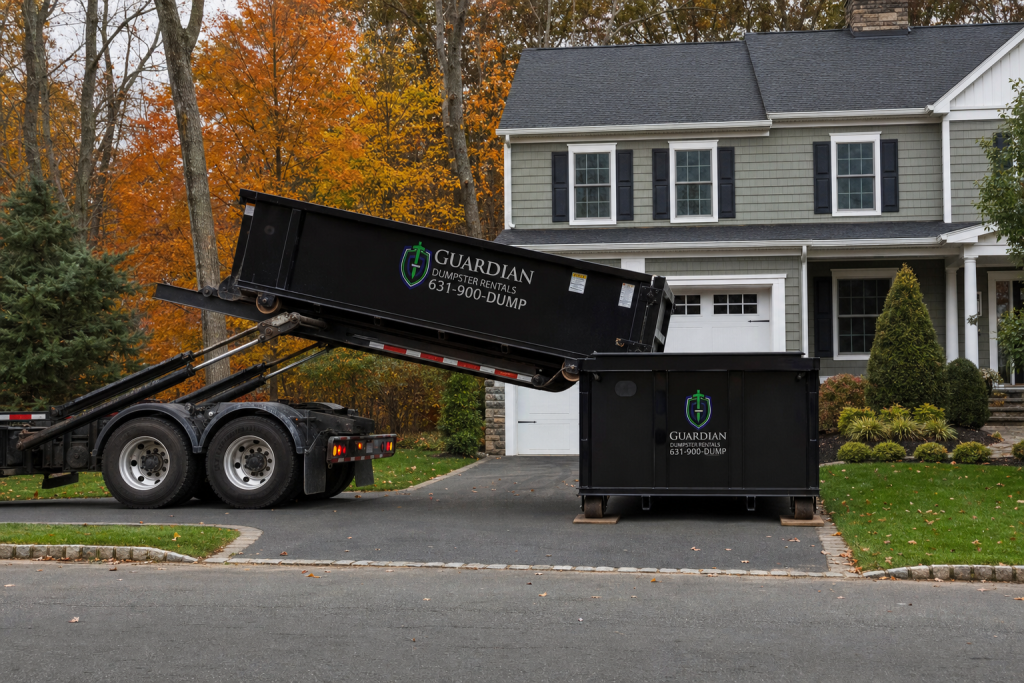
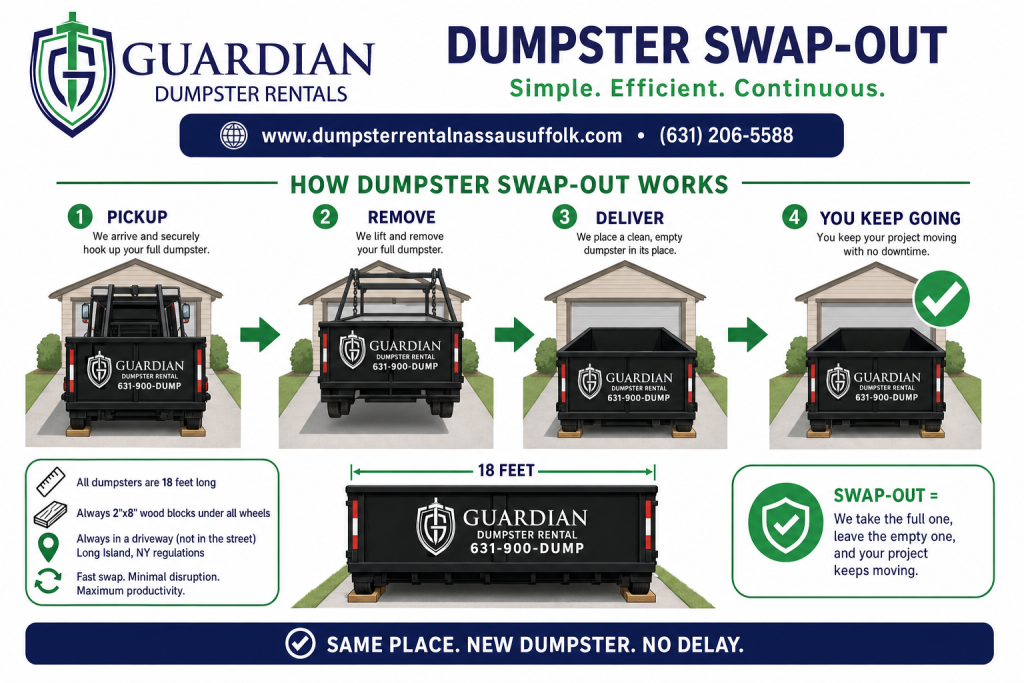
A dumpster swap-out is simple: you call your rental company, a driver hauls away your full container, empties it at a licensed transfer station, and returns the same-size dumpster to the same spot on your property. In most of New York, the whole cycle typically happens within one to two business days.
That short answer covers the basics, but knowing what happens at each step helps you plan your demo days around the truck instead of the other way around.
The Swap-Out, Step by Step
- The call. Contact your provider as soon as the container is getting close to full — ideally when it’s about three-quarters loaded, not the morning you need it gone. Confirm the size you want back, whether that’s the same 10, 20, or 30 yard container or a size up.
- The haul. A roll-off truck arrives, winches the full dumpster onto the bed, and drives it off. Make sure nothing is piled above the rim and the area around the container is clear — an overloaded or blocked box can delay or cancel the pickup.
- The dump. The driver empties the load at a transfer station or disposal facility, where it’s weighed. This is where overage charges originate if you’ve packed the container with unusually heavy debris.
- The return. The emptied container (or a fresh one) is dropped back in the same position, and your remodel keeps rolling.
Turnaround depends heavily on route density and demand. Crews handling roll off dumpster rental in Northport NY and surrounding Suffolk County towns often run tight daily routes, so calling before noon can sometimes get you on the next morning’s schedule. Calling late Friday for a Saturday swap is a much tougher ask.
How Fall and Early Winter Affect Swap-Out Timing
New York weather adds real friction to swap-out scheduling once autumn arrives:
- Early darkness. Shorter daylight compresses delivery windows. Drivers avoid placing containers in the dark on tight driveways, so late-afternoon swap requests often slide to the next morning.
- Wet leaves. A leaf-slicked driveway reduces traction for a truck carrying a loaded roll-off. Sweep or blow the approach path clear before the driver arrives to avoid a refused placement.
- Cold snaps. A dumpster that sat through freezing rain can literally freeze to the ground, and frozen debris inside adds weight. Breaking the container loose takes extra time, which backs up the day’s route for everyone behind you.
These same conditions apply across the North Shore — homeowners arranging a dumpster rental in East Northport New York deal with the identical mix of narrow driveways, mature trees, and fall weather. The fix is the same everywhere: call early, clear the approach, and give the driver a safe, visible place to work.
When Should You Order a Dumpster Swap-Out vs. a Second Dumpster?
Order a swap-out when your project moves in distinct phases and you can afford a short pause between hauls. Order a second dumpster when demo and rebuild overlap, your crew can’t stop loading, or you’re racing weather. Space is the deciding factor: two containers need room, a swap-out only needs timing.
Both options solve the same problem — a full container — but they fit very different job rhythms. Here’s a practical framework for choosing.
Choose a Swap-Out When Your Project Moves in Phases
If your remodel has natural breaks — demo this week, rough-in next week, finishes after that — a swap-out slots neatly into those gaps. The hauler pulls the full container and drops an empty one, often in the same trip, so you lose little momentum. This works especially well on tighter residential lots. If your driveway can only hold one container to begin with, a roll off dumpster rental in East Northport NY paired with a scheduled swap-out is usually the cleaner play than trying to squeeze in a second box.
- Phased work: clear start-and-stop points between demo, framing, and finish stages
- Limited footprint: a single-car driveway or narrow street frontage with no room for two containers
- Small crew: one or two workers who won’t generate debris faster than a swap can be scheduled
Choose a Second Dumpster When Downtime Costs More Than the Rental
A paid crew standing around waiting for an empty container is the most expensive scenario on any remodel. If demolition and reconstruction are running at the same time — say, gutting the kitchen while the bath tear-out continues — two containers let each phase load independently. A common setup is a 10 or 20 yard box for the lighter finish debris and a larger container for heavy demo volume; something like a 30 yard dumpster rental in Deer Park NY handles bulky tear-out material so the smaller box stays free for day-to-day loading.
- Overlapping demo phases: multiple rooms or trades producing debris simultaneously
- Full crews on the clock: any pause in loading means paying people to wait
- Adequate space: a wide driveway, long frontage, or room for street placement with proper permits
The Fall-Remodel Factor
New York remodels that start in September or October are often racing the first hard freeze. Exterior demo, window swaps, and additions need to be weathertight before deep cold sets in, and every day waiting on an empty container is a day lost. For these fast-moving fall projects, keeping two containers on site at once is frequently the cheaper decision over the life of the job — the second rental costs less than a stalled schedule pushing finish work into winter conditions.
The short version: tight space and phased work favor the swap-out; overlapping phases, busy crews, and a weather deadline favor two containers side by side.
Should Your Next Container Be 10, 20, or 30 Yards?
Match the container to the debris you have left, not the one you started with. A 10 yard works for small finish-stage cleanups, a 20 yard suits most kitchen and bath remodels, and a 30 yard handles whole-home gut work. A swap-out is the perfect moment to change sizes, up or down.
Container Sizes Table: Remodel Debris Examples
| Size | Best For | Typical Remodel Debris |
|---|---|---|
| 10 Yard | Small projects and final-stage cleanup | One bathroom tear-out, old cabinets and countertops, carpet and padding from a few rooms, punch-list debris at the end of a job |
| 20 Yard | Mid-size remodels | Full kitchen demo, flooring removal across a main level, drywall and framing scraps, old doors and trim |
| 30 Yard | Large or whole-home remodels | Multi-room gut renovations, bulky built-ins, large volumes of drywall, lumber, old furniture, and packaging from new materials |
Upsizing or Downsizing at Swap-Out Time
One of the most useful parts of a dumpster swap-out is that you are not locked into your original size. When the driver hauls away the full container, you can request a different size for the replacement. Homeowners planning a dumpster rental in Deer Park New York often make this call mid-project once they see how fast the first container filled.
- Upsize if the first container filled faster than expected. If your 10 yard was packed before demo finished, a 20 or 30 yard replacement usually costs less overall than paying for a third swap later.
- Downsize if the heavy demo phase is over. If the big tear-out is done and you mainly have trim scraps, packaging, and cleanup debris ahead, dropping from a 30 to a 10 or 20 yard can save money.
- Stay the same size if your pace is steady. If the first container filled roughly on schedule, a like-for-like swap keeps things simple.
Think about what remains in the project, not what you have already thrown away. A quick walkthrough of the rooms still to be demoed is the best way to estimate the next load. If you are unsure, ask the provider — teams that handle roll off dumpster rental in Lindenhurst size remodel loads every day and can recommend the right replacement based on what you describe.
A Reminder Before You Load the Next Container
No matter which size you choose, brick, concrete, dirt, and yard waste — including bagged fall leaves — are never allowed in the container. Keep these materials out of every load. Tossing them in can lead to rejected pickups or extra charges, and it slows down your swap-out when you need it most. Stick to standard remodel debris like drywall, wood, cabinetry, flooring, and fixtures, and your replacement container will arrive and depart without a hitch.
How Much Does a Dumpster Swap-Out Cost in New York?
A dumpster swap-out in New York typically costs less than a brand-new rental because you’re paying for an additional haul and dump fee rather than a full second delivery, rental period, and pickup. Your final cost depends on the haul fee, the weight of each load, and whether your rental window resets.
What You’re Actually Paying For
When you order a dumpster swap-out, the driver hauls your full container to the disposal facility, dumps it, and returns an empty one. Most companies bill this as a haul fee plus disposal based on tonnage. A second dumpster, by contrast, usually means a fresh delivery fee, a separate rental period, its own weight allowance, and a separate pickup charge. Pricing structures vary by hauler, so when comparing quotes for a dumpster rental in Amityville New York or anywhere else on Long Island, ask for both numbers side by side before deciding.
Key Cost Factors to Ask About
- Haul fee: The base charge for the trip to the disposal facility and back with an empty container.
- Weight allowance: Find out whether a swap-out comes with a fresh tonnage allowance or whether both loads count against your original cap. This single detail often decides which option is cheaper.
- Overage charges: Exceeding your included tonnage triggers per-ton fees, and they add up fast on heavy remodel debris like tile and plaster.
- Rental-period reset: Some haulers restart your rental clock with a swap-out; others keep the original end date. Confirm this in writing so you’re not surprised by daily extension fees.
- Trip fees: If the driver arrives and the container is overfilled, blocked, or unsafe to haul, you may be charged for a wasted trip.
Hidden Tonnage: Overfilling and Rain
Two things quietly inflate swap-out bills. First, debris piled above the rim usually has to be offloaded before hauling, which can mean a delay plus a trip fee. Second, rain-soaked materials get heavy — wet drywall, lumber, and carpet can weigh dramatically more than dry debris, pushing you over your weight allowance. If rain is in the forecast, tarp the container or time your swap-out before the storm hits. Local providers offering roll off dumpster rental in Lindenhurst can often schedule a swap within a day or two, so calling early keeps you ahead of the weather.
How to Compare Total Cost
Don’t compare the swap-out fee against the second rental’s base price alone. Add up the full picture for each option: delivery or haul fee, included tonnage, likely overage, rental-period charges, and pickup. For most New York remodels generating waste in stages, a swap-out on a 10, 20, or 30 yard container wins on price. A second dumpster only makes financial sense when you need two containers sitting on site at the same time.
How Do You Avoid Needing an Emergency Dumpster Swap-Out?
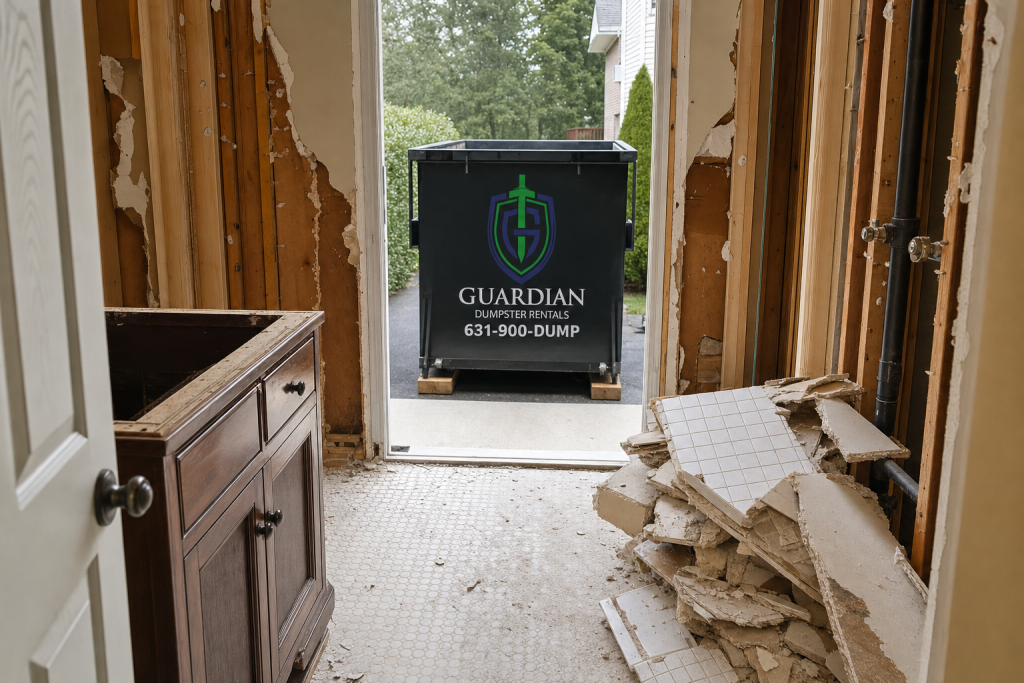
You avoid an emergency dumpster swap-out by loading flat and level, breaking down bulky items before they go in, tarping the container ahead of rain so water weight doesn’t eat your allowance, keeping leaves and yard waste out entirely, and scheduling your empty-and-return a full day before your crew actually needs the fresh container.
Most “emergency” swap-outs aren’t really emergencies — they’re the predictable result of a dumpster that filled faster than it should have. A little loading discipline buys you days of extra capacity and keeps your remodel on schedule.
Load Flat and Level, Not in Mounds
A dumpster loaded in a heap can look full when it’s only two-thirds used. Spread debris evenly across the floor of the container, fill corners first, and compress layers as you go. On a 20 yard or 30 yard container, that habit alone can recover several cubic yards of space. Crews working on a dumpster rental in Lindenhurst, New York see this constantly — the same demo debris fits or doesn’t fit depending entirely on how it was stacked.
Break Down Bulky Items Before They Go In
- Cabinets and vanities: remove doors and drawers, then nest the boxes inside each other.
- Doors and trim: lay them flat along the bottom of the container as a base layer.
- Drywall: stack sheets flat rather than leaning them against the walls, where they create dead air space.
- Furniture: unscrew legs, collapse frames, and cut up box springs if your crew has time.
The EPA’s guidance on construction and demolition materials is also worth a look — separating out reusable or recyclable items like intact fixtures and clean lumber means less volume in the container in the first place.
Tarp the Container Before Fall Rain
Rain-soaked drywall, carpet, and plywood weigh dramatically more than dry debris, and that water weight counts against your tonnage allowance. In a New York fall, an uncovered container can absorb a serious amount of rain in a single storm. Keep a heavy-duty tarp on hand, cover the dumpster every night, and check the National Weather Service forecast before leaving it open over a weekend.
Keep Leaves and Yard Waste Out
Leaves blowing into an open container — or a helpful neighbor tossing in bagged yard debris — is a real problem on Long Island in autumn. Yard waste isn’t allowed in the dumpster, so it takes up space you paid for and can create issues at the transfer station. Tarping solves most of this too.
Schedule the Empty-and-Return a Day Early
Order your swap for the day before your crew needs the empty container, not the morning of. Trucks run routes, and a same-day request is never guaranteed. Homeowners coordinating a roll off dumpster rental in West Islip around a demo schedule do best when the fresh 10, 20, or 30 yard container is already sitting in the driveway when the crew arrives — not stuck in traffic while workers stand around.
1-3 business days in most NY service areas
Typical swap-out scheduling window
10, 20, and 30 yard roll off dumpsters
Available container sizes
10 yd ≈ 3 pickup loads; 20 yd ≈ 6; 30 yd ≈ 9
Rough capacity guide
Brick, concrete, dirt, and yard waste
Not allowed in any container
Dumpster Swap-Out vs. Second Container: Which Fits Your NY Remodel?
| Scenario | Best Option | Why It Works |
|---|---|---|
| Phased remodel (demo first, finish work later) | Swap-out of your 10, 20, or 30 yard dumpster | Same footprint, fresh capacity exactly when the next phase starts |
| Large whole-home remodel with overlapping crews | Second 20 or 30 yard container | Continuous disposal with no downtime waiting on a pickup |
| Tight NY driveway or permit-restricted street | Swap-out | Only one container footprint needed at any time |
| Small bathroom or kitchen refresh running long | Swap-out of a 10 yard dumpster | Cheaper than upsizing when debris volume is modest but ongoing |
| Unknown total debris volume at project start | Start with a 20 yard, swap out as needed | Flexible capacity without committing to a 30 yard upfront |
Illustrative Example: A Hudson Valley Kitchen-to-Basement Remodel
Illustrative example
Consider a hypothetical New York homeowner tackling a kitchen gut followed by a basement finish. They started with a 20 yard dumpster for cabinet and drywall demo, and because the basement work wouldn't begin for two weeks, a swap-out made more sense than a second container crowding the driveway. When the first container filled, they scheduled an empty-and-return a few days before the basement crew arrived, so fresh capacity was waiting on day one. The result was one container footprint the whole project, no debris piles on the lawn, and no overlap fees for an idle second unit. This composite scenario shows how timing debris phases is the real decision point between a swap-out and ordering a second 10, 20, or 30 yard dumpster.
Frequently asked questions
How does a dumpster swap-out actually work?
When your container is full, you call the dumpster company and schedule a swap-out, also called an empty-and-return. The driver arrives, hauls away the full container, and drops an empty one in the same spot — usually on the same trip. You keep working with minimal downtime. Make sure the dumpster is loaded level with the top rim and the driveway is clear so the driver can complete the exchange without delays.
Is a dumpster swap-out cheaper than renting a second dumpster?
It depends on the hauler's pricing. A swap-out typically charges you for a new haul and disposal but often avoids a second full rental fee, while two containers on site means paying two rentals at once. If your project generates debris in waves, a swap-out usually makes more sense. If demolition produces everything at once and you have the space, a second 20 or 30 yard container side by side can keep the crew moving faster.
How far in advance should I schedule an empty-and-return in New York?
Call as soon as the container is about three-quarters full rather than waiting until it's overflowing. Most haulers need at least a business day of notice, and busy seasons or dense NY neighborhoods can stretch that longer. Scheduling early prevents your crew from standing around with nowhere to put debris, which is one of the most common and expensive delays during a mid-remodel swap-out.
What happens if I overfill the dumpster before the swap-out?
Drivers can legally refuse to haul a container loaded above the rim because debris can fall off during transport. If that happens, you'll have to offload the excess before the truck returns, which wastes a day or more. Overage weight charges can also apply. Keep everything level with the top of the container and break down bulky items like cabinets to use the space efficiently.
Should I get a 10, 20, or 30 yard dumpster for a home remodel?
A 10 yard container suits a single-room project like a small bathroom. A 20 yard handles kitchen remodels or multi-room jobs and is the most common remodel size. A 30 yard fits whole-home renovations or projects with bulky debris like cabinetry and framing. If you're unsure, sizing up or planning for a swap-out is usually cheaper than ordering an extra container you didn't budget for.
Can I keep working while the dumpster is being swapped out?
Yes, but plan for a short gap. The driver needs clear access to pull the full container and set the empty one, so pause loading and move vehicles out of the way. Many crews stage debris in a pile or on tarps during the exchange so demolition doesn't stop entirely. If timed well, the swap takes a small part of the workday rather than killing it.
When does it make sense to have two dumpsters on site at once?
Two containers work best when debris comes out fast and all at once — like a full gut demolition — or when you want to separate materials. If your driveway or street space can fit two containers and your hauler serves your area quickly, a second 10, 20, or 30 yard dumpster eliminates downtime entirely. If debris flows in phases over weeks, swap-outs are usually the smarter choice.
What can't I put in a roll off dumpster during a remodel?
Brick, concrete, dirt, and yard waste are not allowed in the dumpsters, so plan separate disposal for those materials before demolition starts. Hazardous items like paint, solvents, batteries, and appliances with refrigerant are also commonly prohibited. Mixing banned materials into your load can trigger extra fees or a refused pickup, which delays your swap-out. Confirm the hauler's prohibited items list when you book.
What are the most common mistakes people make with mid-remodel dumpster swaps?
The big ones: waiting until the container overflows to schedule, blocking driver access with vehicles or materials, loading debris unevenly so space runs out early, and tossing in prohibited items like brick, concrete, dirt, or yard waste that cause a refused haul. Another is undersizing from the start — ordering a 10 yard for a job that clearly needs a 20 or 30 yard, forcing multiple swaps.
Does the empty dumpster go back in the exact same spot after a swap-out?
Usually yes, if the spot is still accessible. The driver needs the same clearance to set the empty container that was needed for the original delivery, so keep that area free of cars, material deliveries, and debris piles. If you want the new container placed differently — closer to a new work zone, for example — tell the hauler when you schedule so the driver knows in advance.
Roll Off Dumpster Rental help near you
- Roll Off Dumpster Rental Elwood NY
- Roll Off Dumpster Rental Centerport NY
- Roll Off Dumpster Rental Northport NY
Related local pages
- Dumpster Rental Elwood New York
- Dumpster Rental Centerport New York
- Dumpster Rental East Northport New York
Mid-project and running out of room? Call us to schedule a fast dumpster swap-out or reserve a second 10, 20, or 30 yard container anywhere in New York. Get in touch.
Last updated: November 22, 2026
Recent Comments