
Commercial Dumpster Size for NY Office Remodels: A Guide
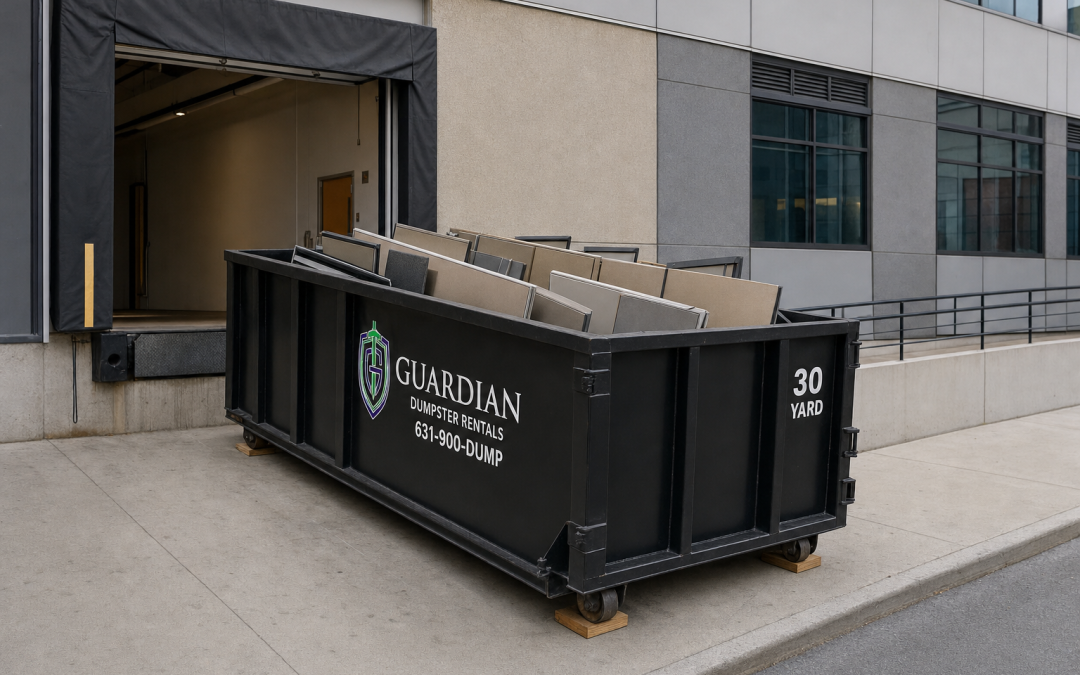
What Commercial Dumpster Size Fits an Office Cubicle Teardown?
The right commercial dumpster size for an office cubicle teardown depends on the scale of the job: a 10 yard dumpster handles small teardowns of roughly 15 cubicles or fewer, a 20 yard dumpster suits mid-size office floors, and a 30 yard dumpster is the standard choice for full-floor open-plan conversions.
Key takeaways
- A 10 yard commercial dumpster typically handles small cubicle teardowns of roughly 5-15 workstations, making it the right fit for single-suite office refreshes.
- A 20 yard dumpster is the most common choice for mid-size cubicle-to-open-plan conversions, balancing footprint with capacity for panels, desks, and drywall debris.
- A 30 yard dumpster suits full-floor NY office remodels where bulky cubicle partitions, ceiling tiles, and furniture pile up fast.
- Cubicle panels are bulky but light, so volume fills before weight limits do — size up one container rather than booking multiple hauls.
- Never load brick, concrete, dirt, or yard waste into your commercial dumpster — these materials are prohibited and require separate disposal arrangements.
Cubicle debris is deceptive. Each workstation breaks down into fabric-wrapped panels, laminate work surfaces, metal frames, file pedestals, and task chairs — bulky, awkward pieces that eat container space faster than their weight suggests. That is why volume, not tonnage, usually drives the decision for office remodels, and why most New York property owners end up choosing between just three sizes: 10, 20, or 30 yards.
The Quick Rule of Thumb
- 10 yard dumpster: Small teardowns — roughly 15 cubicles or fewer, a single department, or a partial-floor refresh.
- 20 yard dumpster: Mid-size projects — a typical suburban office floor, including cubicle panels, old carpet tiles, and ceiling grid sections.
- 30 yard dumpster: Full-floor cubicle-to-open-plan conversions, especially when drywall, doors, and built-in millwork come out alongside the workstations.
If your project sits on the border between two sizes, most contractors recommend sizing up for office demolition. Panels and desks don’t stack neatly, so real-world capacity is lower than the math suggests. Local providers who handle Commercial Dumpster Rental in Centerport NY see this constantly with office tenants who underestimate how much space disassembled cubicles consume.
Why Fall Is Peak Season for NY Office Remodels
In New York, autumn is when office conversions spike. Businesses push to complete remodels before the holidays, use remaining budget before year-end, and prepare refreshed space for January leases and new hires. Cooler weather also makes demolition and haul-out work easier on crews. The downside: dumpster availability tightens, so booking early matters more in September and October than almost any other time of year. Companies offering Commercial Dumpster Rental in Amityville and across Long Island typically see their commercial calendars fill well in advance during this stretch.
What This Guide Covers
The rest of this article breaks the decision down step by step, so you can order once and order right:
- How much debris a cubicle-to-open-plan conversion actually generates
- How to match a 10, 20, or 30 yard dumpster to your specific office square footage
- What materials can’t go in a commercial dumpster during an office remodel
- How to avoid overfilling a container — or paying for capacity you don’t need
- When to schedule delivery for a fall conversion so the container is on-site exactly when demolition starts
Getting the commercial dumpster size right on the first try keeps your remodel on schedule and avoids swap-out fees, overage charges, and idle crews waiting on an empty container.
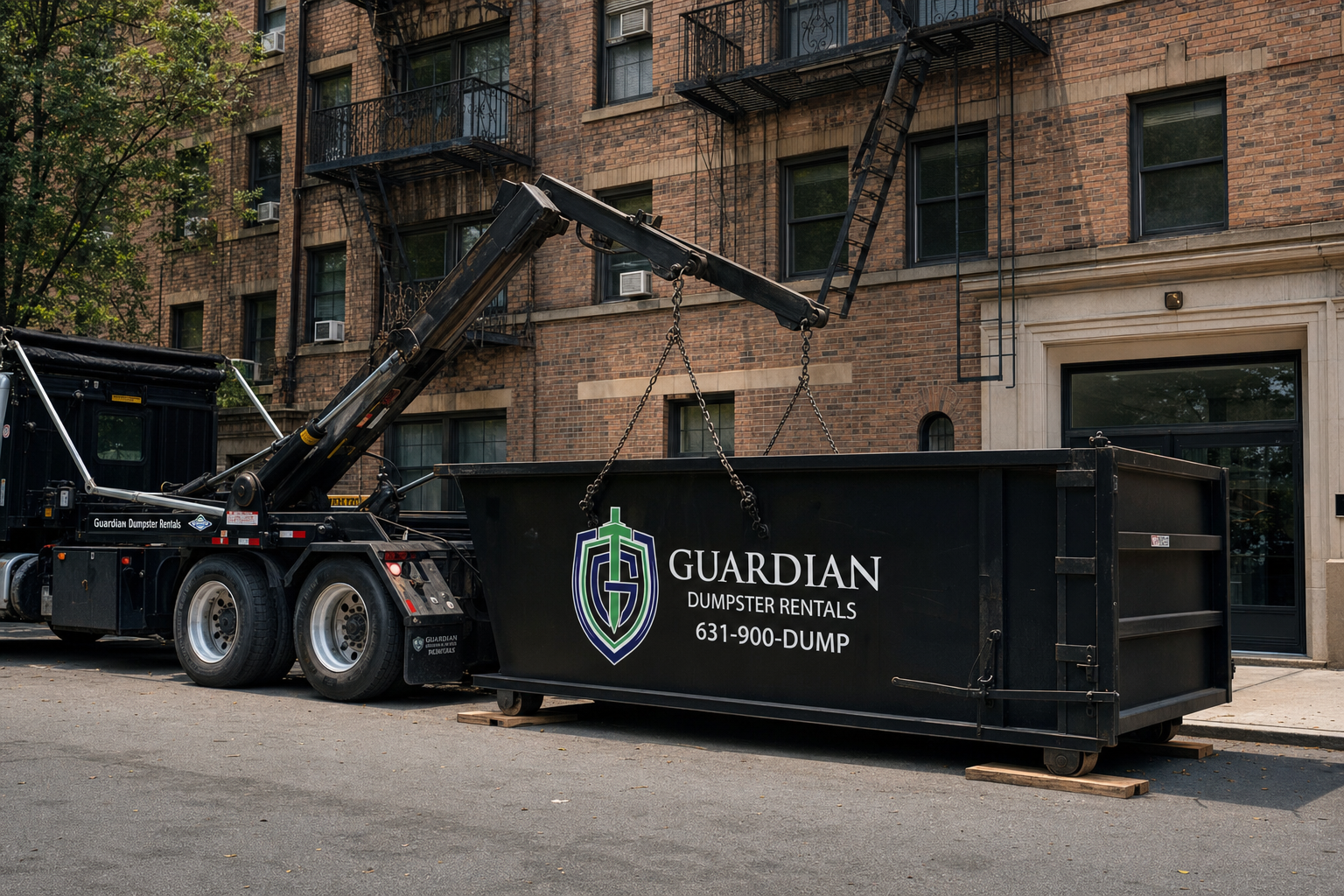
How Much Debris Does a Cubicle-to-Open-Plan Conversion Actually Create?
A typical office cubicle breaks down into roughly 1.5 to 2 cubic yards of debris once panels, work surfaces, and pedestal files are disassembled. Add carpet tiles, ceiling tiles, and drywall from demising walls, and most cubicle-to-open-plan conversions generate 2 to 3 cubic yards per workstation overall.
Those per-station numbers are the key to estimating the right commercial dumpster size before you call for a quote. Instead of guessing, walk your floor plan, count the workstations and walls coming out, and run the math below.
Per-Workstation Volume Estimates
- Panel systems: A standard three- or four-panel cubicle produces roughly 1 to 1.5 cubic yards once stacked flat. Panels are bulky but stack efficiently if your crew lays them in the container rather than tossing them loose.
- Work surfaces: Laminate desktops and corner surfaces add about 0.25 to 0.5 cubic yards per station. These also stack flat, so load them with the panels.
- Pedestal files: Each two- or three-drawer pedestal takes up around 0.25 cubic yards. If they’re metal, ask whether your hauler prefers them separated for recycling.
- Carpet tiles: Figure roughly 1 cubic yard per 500 square feet of flooring when tiles are stacked. Loose, tangled broadloom carpet can double that, so cut and roll it tightly.
- Ceiling tiles: Dropped-ceiling tiles are light but voluminous — expect about 1 cubic yard per 300 to 400 square feet of ceiling removed.
- Drywall from demising walls: A demolished wall yields roughly 1 cubic yard per 10 linear feet of standard-height wall, including studs and track.
Running the Math on Your Floor Plan
Say you’re clearing 20 cubicles, replacing 2,000 square feet of carpet tile, and removing 30 linear feet of demising wall. That’s roughly 35 to 40 cubic yards of panel and furniture debris, 4 cubic yards of carpet, and 3 cubic yards of drywall — about 42 to 47 cubic yards total. That volume points you toward a 30 yard container with a swap, or two scheduled hauls. For smaller jobs, a commercial dumpster rental in Bay Shore NY sized at 10 or 20 yards often covers a single-suite teardown in one go.
Two caveats will keep your estimate honest. First, loose loading inflates volume fast — disassembled, flat-stacked panels can cut your real-world volume by a third compared with throwing pieces in whole. Second, demolition always uncovers extras: old wiring, abandoned furniture in storage rooms, and damaged subfloor sections. Padding your estimate by about 15 to 20 percent is a smart habit, and providers offering dumpster rental in Islip New York can usually help you sanity-check your numbers against similar office projects before you commit to a container size.
10, 20, or 30 Yard Dumpster: Which One Matches Your Office Size? Choosing the Right Commercial Dumpster Size
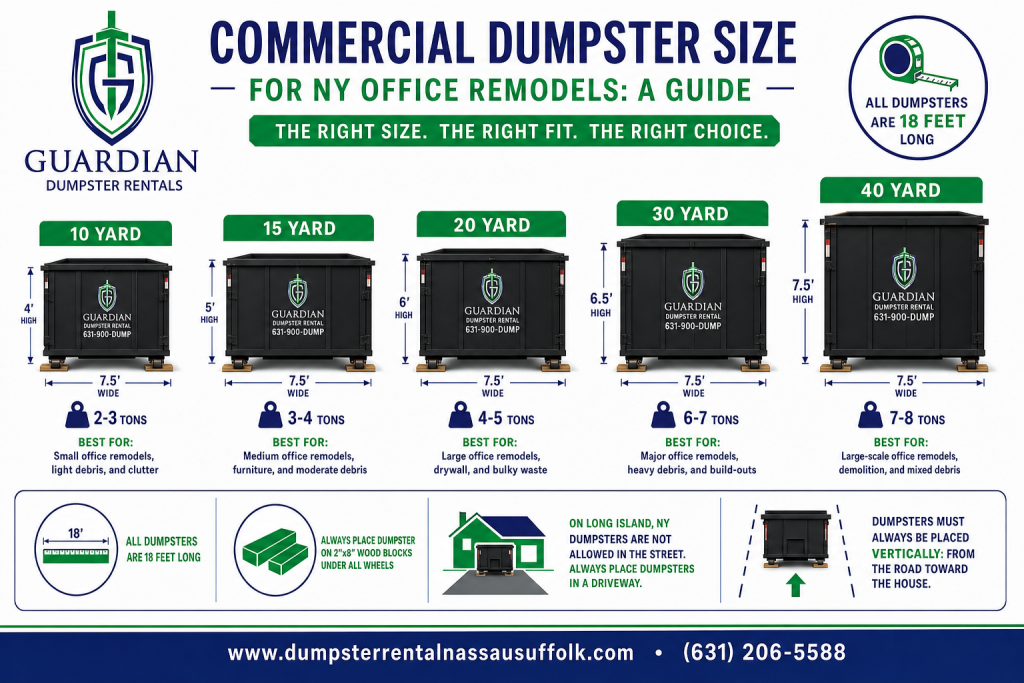
For most New York office remodels, a 10 yard dumpster handles a small suite refresh of up to roughly 10 cubicles, a 20 yard suits mid-size conversions around 15 to 25 workstations, and a 30 yard covers a full-floor gut of partitions, ceiling tile, and furniture across an entire 5,000+ square foot floor.
Picking the right commercial dumpster size comes down to matching container volume to the number of workstations and partitions coming out — not just square footage. Cubicle panels, desks, and demolition debris are bulky but relatively light, so volume usually fills up long before weight limits do.
Container Sizes Table
- 10 Yard Dumpster — Approx. 12 ft long x 8 ft wide x 3.5 ft high. Holds 10 cubic yards of debris. Handles roughly 5–10 cubicles. Typical NY project: a small suite refresh — removing a handful of workstations, old carpet, and a reception desk in a professional office under about 1,500 sq ft.
- 20 Yard Dumpster — Approx. 22 ft long x 8 ft wide x 4 ft high. Holds 20 cubic yards of debris. Handles roughly 15–25 cubicles. Typical NY project: a cubicle-to-open-plan conversion on a 5,000 sq ft floor, including panels, desks, chairs, and drop-ceiling tile.
- 30 Yard Dumpster — Approx. 22 ft long x 8 ft wide x 6 ft high. Holds 30 cubic yards of debris. Handles roughly 30–50 cubicles. Typical NY project: a full-floor gut of partitions and built-ins, where drywall, framing, flooring, and every workstation on the floor is coming out at once.
How to Decide Between Two Sizes
If your project sits between sizes — say, 12 cubicles plus flooring removal — sizing up to the 20 yard is usually smarter than risking a second haul with a 10 yard. Businesses arranging a commercial dumpster rental in West Islip NY for office teardowns often find that disassembled cubicle panels stack flatter than expected, but desks, task chairs, and file cabinets eat space fast.
A few quick guidelines for New York office projects:
- Count workstations first. Each full cubicle (panels, work surface, chair, storage) typically produces about half a cubic yard to a full cubic yard once broken down.
- Add volume for building materials. If drywall partitions, ceiling grid, or flooring are coming out too, move up a size.
- Check the footprint. A 30 yard container needs roughly 22 feet of clear space plus room for the truck to maneuver — a real consideration in tight commercial parking lots.
Property owners planning a conversion near Suffolk County can compare these three sizes against their floor plan before booking a dumpster rental in Bay Shore New York, since the right size on day one keeps the demolition crew moving without a mid-project swap.
What Can’t Go in a Commercial Dumpster During an Office Remodel?
Brick, concrete, dirt, and yard waste — including fall leaves that blow into an open container — are not allowed in a commercial dumpster during an office remodel. Electronics, fluorescent tubes, batteries, and other hazardous items also need separate handling, and loading any prohibited material can delay your pickup or add fees.
Most office teardown debris is perfectly fine: drywall, wood framing, carpet, ceiling tiles, cubicle panels, and non-electronic office furniture all load without a problem into a 10, 20, or 30 yard container. The trouble starts with the materials below, so it pays to know the exclusions before your crew starts tossing things over the side.
Heavy Materials That Are Never Allowed
- Brick — even a partial load from a demolished interior feature wall is prohibited.
- Concrete — slab pieces, old floor leveling material, and concrete anchors must go elsewhere.
- Dirt — soil from planters or landscaped lobby areas cannot be mixed into remodel debris.
- Yard waste — branches, clippings, and leaves are excluded. During fall projects, keep the lid or a tarp over the container so windblown leaves don’t collect inside and compromise the load.
These materials are rejected regardless of commercial dumpster size, so it doesn’t matter whether you’ve ordered a 10 yard container for a small suite or a 30 yard for a full floor — the rules are the same. If your renovation produces any of these, talk to your hauler about separate disposal options before delivery day. Providers of commercial dumpster rental in Bay Shore NY can walk you through what’s accepted before you book.
Items That Need Separate Handling
- Electronics — monitors, computers, printers, and servers fall under New York’s electronics recycling rules and must be recycled through an approved channel.
- Fluorescent tubes and ballasts — common in older office ceilings, these contain mercury and require certified recycling or hazardous-waste drop-off.
- Batteries — UPS backup units and lithium batteries are fire risks and are never accepted.
- Refrigerants — break-room fridges and window AC units need the refrigerant professionally evacuated first.
- Paints, solvents, and aerosols — liquid chemicals of any kind are prohibited.
How Prohibited Materials Affect Your Pickup
Drivers inspect containers before hauling. If prohibited items are visible, the driver may refuse the pickup entirely, leaving the dumpster on site until the load is corrected — which stalls your remodel timeline and can trigger extra rental days or trip charges. Contaminated loads discovered at the transfer station can also result in sorting fees passed back to you. The simplest fix is a quick briefing for your demo crew on day one. If you’re planning a project in western Suffolk, a commercial dumpster rental near Commack NY provider can confirm the accepted-materials list for your specific job before the container arrives.
How Do You Avoid Overfilling or Ordering Too Big with Your Commercial Dumpster Size in NY?
Match the container to your curb space, not just your debris volume. On a tight street, a 20 yard dumpster with a scheduled swap-out often beats a single 30 yard container. Load flat and dense, keep debris below the fill line, confirm permit and placement rules before delivery, and tarp the load against fall weather.
When a 20 Yard with a Swap-Out Beats a 30 Yard
A 30 yard dumpster holds more, but it also needs more curb length and a larger truck to place and pull it. On congested Manhattan blocks and tight commercial lots, that extra footprint can block loading zones or neighboring entrances. Ordering a 20 yard container and scheduling a swap-out when it fills gives you the same total capacity in a smaller footprint, and it keeps your sidewalk and fire lane clearances intact. Providers who handle Commercial Dumpster Rental in West Babylon NY and similar commercial jobs can usually time a swap-out so your crew never stands around waiting for an empty container.
Load Flat and Dense to Maximize Space
Most office remodel debris is awkwardly shaped, and sloppy loading wastes a surprising amount of capacity. A few habits make a real difference:
- Break down panels and desks before they go in — disassembled cubicle components stack far tighter than intact ones.
- Load flat items first (panels, desktops, shelving) in horizontal layers, like flooring a room.
- Fill gaps as you go with smaller debris, hardware, and trim rather than tossing everything in at random.
- Keep the load level — nothing above the rim, ever.
Respect the Fill Line
Every dumpster has a marked fill line, and it isn’t a suggestion. Haulers cannot legally transport an overfilled container, so debris above the rim means your pickup gets refused or your crew spends an afternoon offloading by hand. If you’re consistently brushing the fill line on a 20 yard, that’s your signal to plan a swap-out rather than piling higher.
Permits, Placement, and Fall Weather
If the dumpster sits on a public street or sidewalk in New York, you’ll typically need a permit from the local municipality — rules and timelines vary, so confirm requirements before the container arrives. Placing it on private property, like your building’s parking lot, usually avoids the permit step entirely, but check with building management first. Companies offering Commercial Dumpster Rental in Commack NY can often advise on local placement rules when you book.
Finally, fall remodels mean wind and rain. Tarp the container at the end of each workday. An uncovered load lets lightweight debris blow onto the street — a liability and a cleanup headache — and rainwater soaks into drywall and carpet, adding weight that can push you over your tonnage allowance.
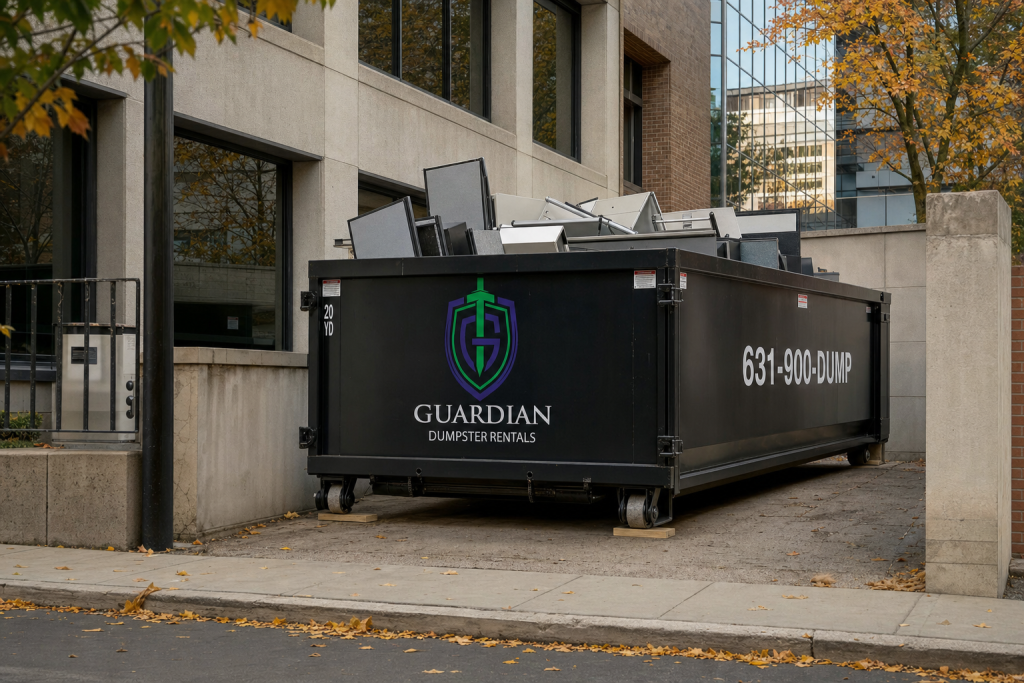
When Should You Schedule Delivery for a Fall Office Conversion?
For a fall office remodel in New York, book your dumpster one to two weeks before demo day, with delivery scheduled the business day before teardown begins. Autumn is peak season as companies race year-end budgets and January move-ins, so reserving early — ideally by mid-October — protects your timeline and your choice of commercial dumpster size.
Fall remodels are deadline-driven in a way spring projects rarely are. Finance teams want invoices dated before the fiscal year closes, and leadership wants staff settled into the new open-plan layout before January. That compresses demo, haul-away, and build-out into a tight window — and the dumpster is the one piece you can lock in early without costing you anything in flexibility.
Time Delivery to Demo Day, Not Move-Out Day
The most common scheduling mistake is ordering the container for the week furniture gets cleared. Instead, align delivery with the first day walls, cubicle panels, or ceiling grid actually come down. A dumpster sitting empty for a week eats rental days; one arriving late stalls your demo crew. Have it dropped the afternoon before demolition starts so the crew loads from hour one. If you’re comparing providers, a local commercial dumpster rental in Commack NY can usually confirm a specific delivery window rather than a vague multi-day range — ask before you book.
Plan Swap-Outs Around Short Daylight
After the clocks change in early November — the end of daylight saving time — usable outdoor working light in New York shrinks dramatically. If your project needs more than one container, schedule swap-outs for morning pickups:
- Morning swaps keep crews productive: a full 20 yard hauled at 8 a.m. and replaced by 10 a.m. loses almost no demo time.
- Afternoon swaps risk a dead day: a truck arriving at 4 p.m. in November is working in the dark, and your crew may have already stopped loading.
- Confirm lot lighting and access: make sure the drop zone is lit and clear for early arrivals.
Beat the End-of-Year Rush
Demand for 10, 20, and 30 yard containers tightens from late October through mid-December as commercial projects stack up ahead of the holidays. Booking two weeks out in September often becomes a necessity by November. Sorting recyclable materials like metal cubicle frames and cardboard separately can also speed up swaps — the EPA’s guidance on construction and demolition materials is a useful reference for what’s worth diverting.
Finally, if your building sits in a busy Suffolk County corridor, confirm property-manager approval and placement logistics early. A provider handling dumpster rental in Dix Hills New York and surrounding areas can advise on whether your lot placement needs any paperwork — resolving that in October is easy; resolving it the week of demo is not.
20 yard dumpster
Most popular size for office conversions
7-10 days, with extensions often available
Typical rental period
High volume, relatively low weight — plan by volume
Cubicle debris characteristic
No brick, concrete, dirt, or yard waste
Prohibited materials
Commercial Dumpster Size Comparison for NY Office Remodels
| Dumpster Size | Typical Project Scope | Approximate Capacity | Best For |
|---|---|---|---|
| 10 Yard | Small suite or partial cubicle removal (roughly 5-15 workstations) | About 3-4 pickup truck loads | Light demo, furniture-only cleanouts |
| 20 Yard | Mid-size cubicle-to-open-plan conversion (roughly 15-40 workstations) | About 6-8 pickup truck loads | Panels, desks, drywall, and ceiling tile debris |
| 30 Yard | Full-floor or multi-suite office remodel (40+ workstations) | About 9-12 pickup truck loads | Large-scale demo with bulky partitions and furniture |
Illustrative Example: A Midtown Cubicle-to-Open-Plan Conversion
Illustrative example
Consider a hypothetical composite scenario: a NY office manager planning to convert a floor of roughly 30 cubicles into an open collaborative layout. Initially leaning toward a 10 yard dumpster to save on cost, she measured the stacked volume of partition panels, work surfaces, and old task chairs and realized the debris would far exceed that container. By choosing a single 20 yard dumpster instead, the crew completed the teardown in one haul rather than scheduling multiple swaps. The team also confirmed in advance that no brick, concrete, dirt, or yard waste would go into the container, keeping the load compliant and avoiding surprise issues at pickup.
Frequently asked questions
What commercial dumpster size do I need for an office cubicle-to-open-plan conversion?
It depends on your square footage and how much you’re removing. A 10 yard dumpster typically handles a small suite where you’re only pulling a handful of cubicles. A 20 yard works for mid-size offices with full cubicle teardown plus some drywall and ceiling tile. A 30 yard suits full-floor conversions with dozens of workstations, carpet, and partition walls. When in doubt between two sizes, size up—one larger container usually costs less than a second haul.
How many cubicles fit in a 20 yard dumpster?
There’s no exact number because cubicle systems vary widely in panel size and materials, but a 20 yard container generally absorbs the debris from a mid-size cluster of broken-down workstations along with associated carpet and trim. The key is disassembly: cubicle panels, work surfaces, and frames stacked flat take far less space than tossed whole. If your cubicles won’t break down easily, plan on more volume or step up to a 30 yard.
Is it cheaper to rent one 30 yard dumpster or two 10 yard dumpsters?
One 30 yard is almost always the better deal. Each rental carries its own delivery, pickup, and base fees, so two 10 yard containers mean paying those costs twice for less total capacity than a single 30 yard. Two smaller dumpsters mainly make sense when the job site can’t physically fit a larger container, or when demolition happens in widely separated phases and you can’t hold debris between them.
What can’t I throw in a commercial dumpster during an office remodel?
Brick, concrete, dirt, and yard waste are not allowed in these dumpsters, so plan separate handling if your remodel exposes any of that material. Hazardous items are also prohibited—think fluorescent tubes and ballasts, paints, solvents, batteries, refrigerants, and anything containing asbestos. Electronics often have separate disposal rules in New York, so check before tossing old monitors or servers. Confirm the full prohibited list with your hauler before delivery to avoid rejection or extra fees.
How long does demolition take for a cubicle-to-open-plan office conversion?
Most cubicle teardown and interior demolition for a single office floor takes anywhere from a couple of days to a couple of weeks, depending on square footage, how many partition walls come down, and whether work is restricted to nights or weekends—common in occupied New York buildings. Schedule your dumpster delivery for the first day of demolition and confirm your rental period covers the full window, including any buffer for delays.
What happens if I overfill my dumpster?
Haulers can’t legally transport a container loaded above its fill line, so an overfilled dumpster may be refused at pickup until you remove the excess, or you’ll be charged overage fees for exceeding the weight limit. Either outcome stalls your project. Load heavy, flat items like broken-down cubicle panels first, fill gaps with smaller debris, and keep everything below the rim. If you’re approaching the top with demolition remaining, call for a swap-out early.
Do I need a permit to put a dumpster outside an office building in NY?
If the dumpster sits on private property like a loading dock or private parking area, you typically don’t need a permit. If it must go on a public street or sidewalk—common in dense New York locations—you’ll generally need a permit from the local authority, and requirements vary by municipality. Your hauler can often tell you what’s required for your address. Sort this out before delivery day, because permit delays are a frequent cause of stalled remodels.
What’s the most common mistake when choosing a dumpster for an office remodel?
Underestimating volume. People picture the cubicles but forget everything that comes with the conversion: old carpet, ceiling tiles, drywall from removed partition walls, doors, trim, and abandoned furniture. That hidden debris routinely pushes a job from a 10 yard into a 20 yard, or a 20 into a 30. Walk the space and inventory everything leaving the building before you book. The second most common mistake is not confirming the container fits the delivery spot.
Can a 30 yard dumpster fit in a typical office building loading dock?
Often yes, but you must verify first. A 30 yard container is roughly the length of a large truck and the delivery vehicle needs substantial additional clearance to roll it off, plus overhead clearance for the lift. Measure your dock or placement area, check for low canopies, wires, and parking garages, and confirm access hours with building management. If space is tight, a 20 yard with a scheduled swap-out is a practical workaround.
Should I donate old cubicles instead of putting them in the dumpster?
If the cubicles are in usable condition, donation or liquidation is worth exploring before demolition. Office furniture dealers, nonprofits, and reuse organizations sometimes accept or purchase intact workstation systems, which shrinks your debris volume—potentially letting you drop from a 30 yard to a 20 yard container—and may offer tax benefits. The catch is timing: arranging pickup takes lead time, so start those conversations weeks before demo day rather than after the dumpster arrives.
Commercial Dumpster Rental help near you
- Commercial Dumpster Rental Centerport NY
- Medical Office Renovation Dumpster
- Commercial Dumpster Rental West Babylon NY
Related local pages
- Dumpster Rental Elwood New York
- Dumpster Rental Centerport New York
- Dumpster Rental Northport New York
Ready to order the right container the first time? Call us for same-week delivery of 10, 20, or 30 yard dumpsters anywhere in New York. Get in touch.
Last updated: November 20, 2026
Recent Comments