
Dumpster Placement Tips for Living Through a NY Reno
The Quick Answer: Dumpster Placement When You’re Still Living in the House
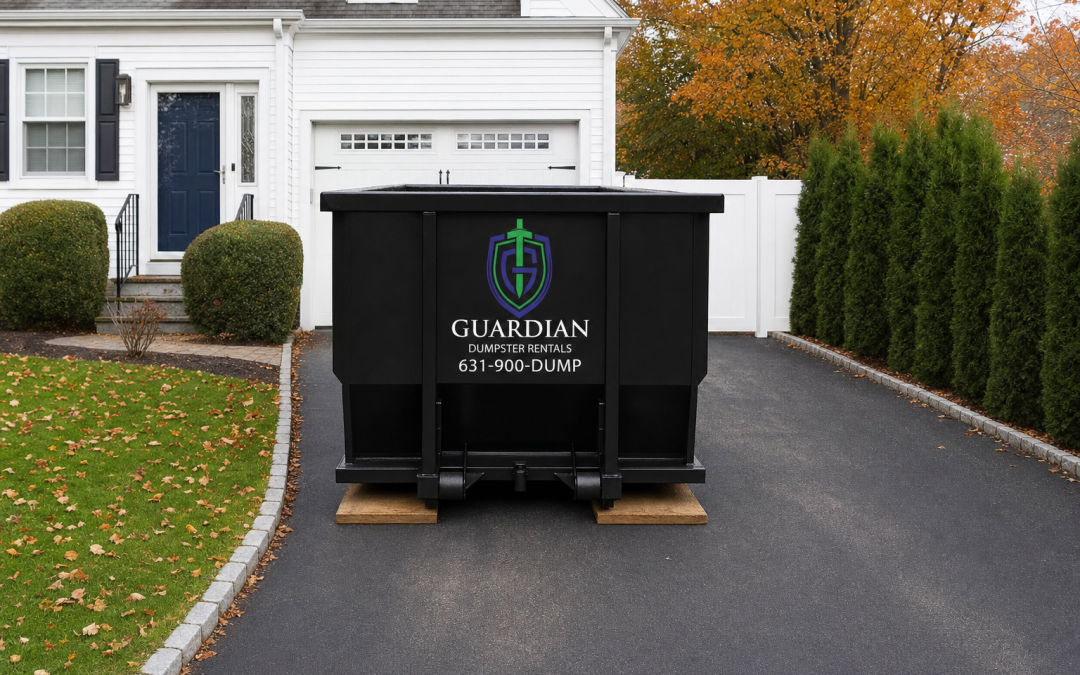
The best dumpster placement during a live-in renovation is on the driveway side closest to the demo zone, positioned so you keep one clear car lane, a protected walking path to your main door, and open curb space for your weekly trash pickup. Get those four things right and daily life stays functional while the work gets done.
Key takeaways
- Place your dumpster on the driveway side closest to the demo zone but leave at least one car-width of clearance so your family can still come and go daily.
- Keep the dumpster's rear loading door facing the work area and the street side clear so haulers can swap a full 20 yard or 30 yard container without blocking your home's entrance.
- Never position a dumpster under power lines, low tree limbs, or within a few feet of your curbside trash pickup spot, or you risk missed collections and failed swap-outs.
- In many NY municipalities, street placement requires a permit, so a driveway spot with plywood under the wheels is usually the faster, cheaper option.
- Match the container to the phase: a 10 yard for a single-room gut, a 20 yard for multi-room demo, and a 30 yard for whole-house renovation debris.
That short answer sounds simple, but each piece solves a real problem you’ll hit during a whole-house New York renovation. When you’re living through the project — not relocating — the dumpster becomes part of your daily routine for weeks. Here’s why each element of that placement formula matters.
Why the Demo-Zone Side of the Driveway Wins
Every extra step between the demolition area and the dumpster slows the crew down and tracks more dust and debris through your home. Placing the container on the driveway side nearest the tear-out means shorter wheelbarrow runs, fewer trips past living spaces, and less mess at the end of each workday. It also keeps the container on your own property, which avoids most street-permit headaches that come with curbside placement in many Long Island towns. Homeowners arranging a residential dumpster rental in Northport NY often find the driveway spot closest to the work zone is the one the delivery driver recommends anyway.
The Four Non-Negotiables of Live-In Placement
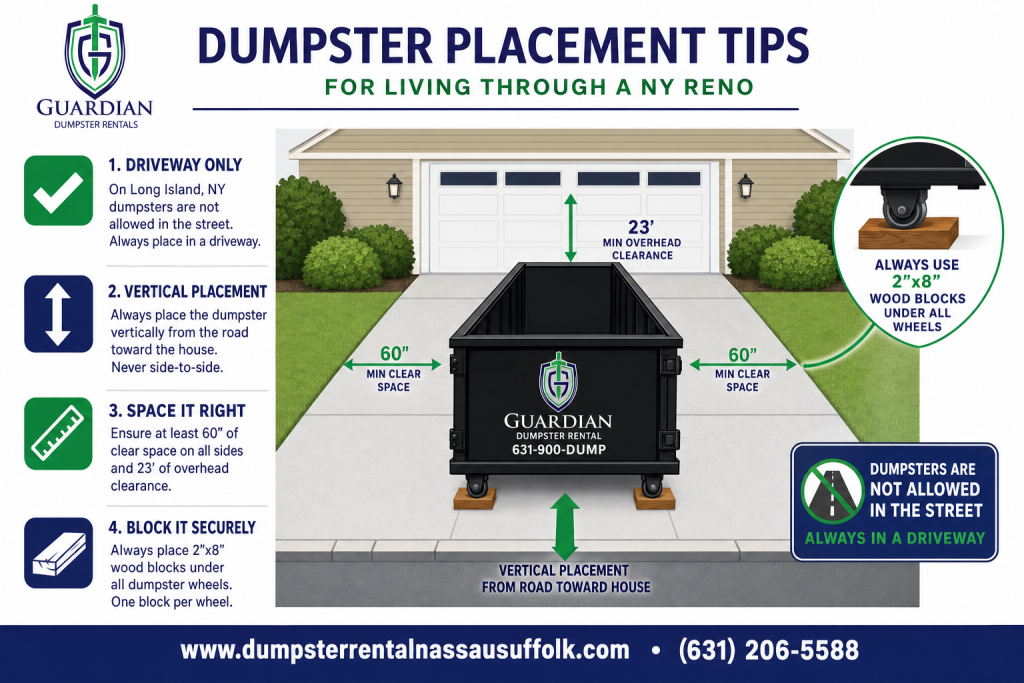
- A clear car lane: You still need to get to work, school, and the grocery store. A 10, 20, or 30 yard dumpster takes up roughly one car’s width, so position it to one side and confirm you can back out without a 12-point turn.
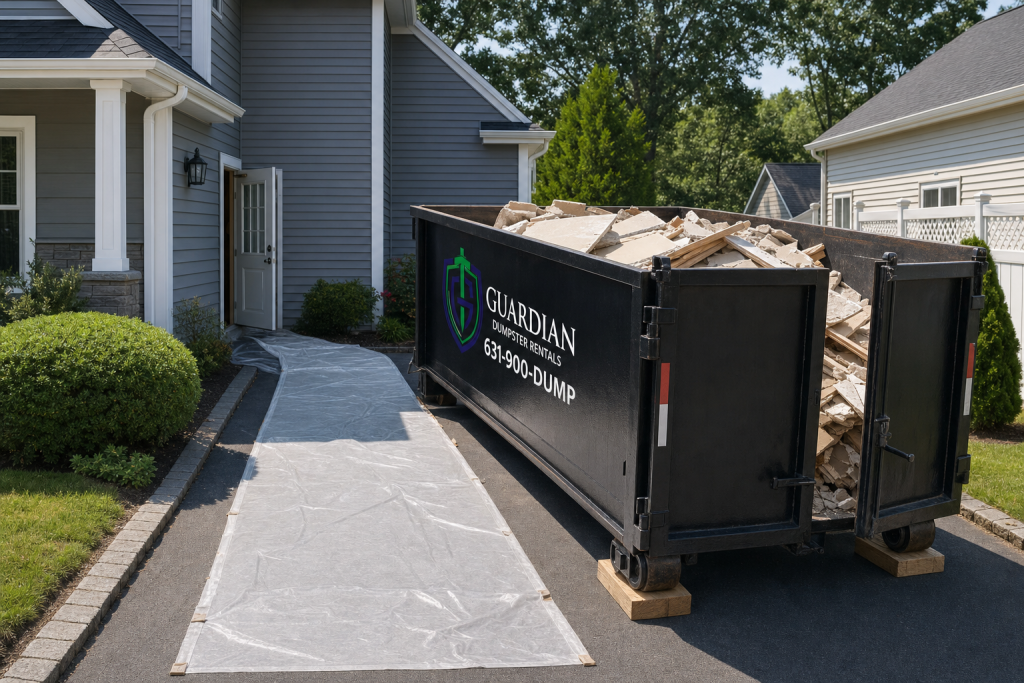
- A protected walk path: Keep a debris-free route from the street or garage to your most-used entrance. Nails, splinters, and drywall chunks near a doorway are how renovations send people to urgent care.
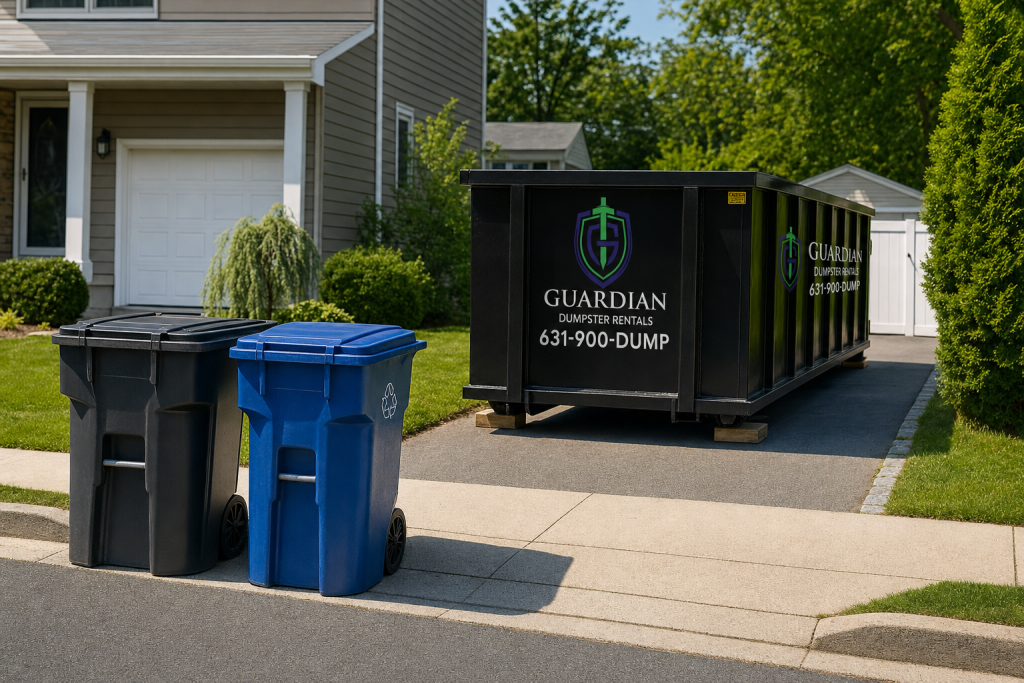
- Curb space for trash day: Your regular household garbage doesn’t stop during a reno. Leave the curb open so sanitation trucks can grab your cans without maneuvering around a steel container.
- Clearance for the roll-off truck: Delivery trucks need vertical clearance and straight-line room to set and retrieve the container, so avoid spots under low branches or wires.
One More Thing Before Delivery Day
Measure before you book. A driveway that fits two cars side by side usually handles a dumpster plus a drive lane; a single-wide driveway may force a curbside or front-yard plan instead. If you’re comparing options for a project farther west in Suffolk County, a local provider handling dumpster rental in Amityville, New York can tell you which container footprint fits your layout before the truck ever arrives. The sections below break down scheduling around trash pickup, sizing for a whole-house reno, and what fall weather in NY does to your plan.
Where Should You Put a Dumpster When You’re Living at Home During a Renovation? Dumpster Placement Basics
Put the dumpster on your driveway whenever possible, positioned so one garage bay or one car lane stays open for daily comings and goings. Lay plywood under the wheels and rails to protect the surface, leave swing room for the rear door, and treat street placement as a last resort in New York.
Driveway First, Street Last
When you’re still living in the house, the driveway is almost always the right call. It keeps the container on your own property, out of traffic, and close to the demo zone so you’re not hauling debris across the lawn. The common mistake is centering the dumpster on the driveway, which blocks everything. Instead, hug one side so a car can still squeeze past or at least back out of the garage. If your driveway is a single-lane strip, plan on parking one vehicle at the curb for the duration of the rental.
A side yard can work if it’s paved or firm gravel and the delivery truck can actually reach it — most trucks need a wide, straight approach and overhead clearance free of low branches and wires. Soft grass after rain is a recipe for ruts and a stuck container. Homeowners arranging a residential dumpster rental in Lindenhurst NY often find the driveway is the only spot that satisfies both the truck and daily life.
Protect the Surface and Plan for the Door
- Plywood under the contact points: Sheets of 3/4-inch plywood under the wheels and rails spread the load and prevent scrapes, gouges, and asphalt dents, especially on hot days or newer blacktop.
- Rear-door swing clearance: Most 10, 20, and 30 yard dumpsters have a swinging rear door for walk-in loading. Leave several feet of open space behind the container — a door pinned against the garage or a fence forces you to toss everything over the side.
- Orient the door toward the work: Tell the driver which direction the door should face before drop-off. Repositioning later usually means a service call.
New York Street-Placement Realities
Putting a dumpster on a public street in New York typically requires a permit from your village or town, and rules vary block to block. You may also need reflective markers or cones, and alternate-side parking rules can complicate where the container is allowed to sit. On narrow Suffolk County streets, a curbside container can pinch traffic and draw neighbor complaints fast. If you’re weighing street versus driveway for a project served by a dumpster rental in Islip New York, ask the hauler and your local building or highway department before delivery day — a quick phone call beats a ticket or a forced relocation mid-project.
How Do You Keep the Dumpster From Blocking Trash Pickup and the Demo Crew?
Keep the curb strip clear for municipal trash and recycling bins, set the container so the crew has a one-way debris path that never crosses your family’s entry, post loading hours everyone follows, and schedule swap-outs a day before the dumpster fills so demo never stalls waiting on an empty container.
A renovation while you’re still in the house really means three traffic flows sharing one driveway: the garbage truck, the demo crew, and your family. Smart dumpster placement is less about where the box looks tidy and more about keeping those three streams from colliding. Walk the property with your contractor before delivery and map each flow on paper — it takes ten minutes and prevents weeks of friction.
Protect the Curb Strip for Municipal Pickup
Sanitation trucks need a clear stretch of curb to grab bins, and drivers will skip a house where the container crowds the pickup zone. Keep the dumpster a full car length or more from where your cans sit, and never let the swing of the rear door block the strip. Many haulers offering a residential dumpster rental in Islip NY will position the box on delivery day exactly where you mark it, so chalk or tape the spot before the truck arrives.
Create a One-Way Debris Path
The fastest demo crews move in a loop: debris out one route, empty hands back another. That loop should never cross the door your family uses. Practical ways to make it work:
- Route the crew through a side door, garage bay, or window chute directly to the loading side of the container.
- Keep the dumpster’s open end facing the work exit, not the street, so wheelbarrows roll straight in.
- Lay plywood over the path to protect the driveway and keep footing stable on loaded trips.
- Reserve the opposite side of the driveway strictly for family parking and entry.
Set Loading-Hour House Rules
Agree on a loading window — commonly mid-morning to late afternoon — so you aren’t woken by crashing debris and neighbors stay friendly. Outside those hours, the crew staging piles inside the work zone keeps mornings quiet. Posting the rules on the container itself removes any ambiguity for subs who rotate through the job.
Schedule Swap-Outs Before the Box Is Full
A full dumpster on demo day stops everything, and debris stacked on the lawn as a workaround creates its own hazard. Call for the swap when the container hits roughly three-quarters full, and ask your hauler how much lead time they need. Companies that handle dumpster rental in Bay Shore New York can often coordinate same-position swaps, dropping the fresh 20 yard or 30 yard container in the exact footprint the full one left — so your carefully planned traffic flows never have to be redrawn mid-project.
What Size Dumpster Do You Need for a Whole-House Renovation?
For a live-in, whole-house renovation, a 20 yard dumpster is the sweet spot for most phases, handling a kitchen remodel plus flooring in one container. Use a 10 yard for single-room or bathroom phases, and step up to a 30 yard when you hit full gut stages with heavy demolition debris.
Because you’re living in the house, you’re probably tackling the project in phases — and that changes the math. Rather than ordering one giant container for months, many Long Island homeowners swap sizes as the work shifts, keeping the driveway footprint as small as possible for as long as possible.
Container Sizes at a Glance
| Size | Typical Footprint | Best For |
|---|---|---|
| 10 Yard | Roughly 12 ft long x 8 ft wide x 3.5 ft tall | Bathroom gut, single-room demo, small flooring tear-out |
| 20 Yard | Roughly 22 ft long x 8 ft wide x 4.5 ft tall | Kitchen remodel plus flooring — the most popular live-in reno choice |
| 30 Yard | Roughly 22 ft long x 8 ft wide x 6 ft tall | Full gut phases, multiple rooms demoed at once |
Measure your driveway before you order. All three sizes need about 8 feet of width, but the 20 and 30 yard containers run around 22 feet long — plus the truck needs room to back in and roll the container off, so plan for extra clearance beyond the container itself. If you’re working through a project and want size guidance specific to your street and driveway, a local provider offering dumpster rental in West Islip New York can tell you exactly what fits before the truck ever shows up.
How to Choose Between the Three Sizes
- 10 yard: Ideal when you’re renovating one room at a time and want to keep most of the driveway free for your own cars. Easiest size to position around daily life.
- 20 yard: The go-to for kitchen demos with cabinets, countertops, and old flooring. It holds roughly twice the volume of a 10 yard without a dramatically different footprint length-wise versus a 30 yard.
- 30 yard: Choose this when a gut phase generates bulky debris — walls, framing, fixtures, and built-ins. The extra height means fewer swap-outs, which matters when every truck visit disrupts your household routine.
One common mistake: ordering a 10 yard to save money, filling it in two days, and paying for a second haul. If your contractor says “we’re opening up walls,” assume you’ll generate more debris than you expect. Homeowners comparing options for residential dumpster rental in Bay Shore NY often find that sizing up once beats hauling twice.
When in doubt between two sizes, go bigger — an under-filled dumpster costs you nothing extra in frustration, but an overflowing one can delay pickup and your project.
What Can’t Go in a Residential Dumpster in New York?
Brick, concrete, dirt, and yard waste — including fall leaves — cannot go in a standard residential dumpster in New York. These heavy and organic materials are processed separately, so hauling companies prohibit them in mixed-debris containers. Loading them anyway typically leads to extra fees, refused pickups, or delays that stall your renovation.
When you’re living in the house during a reno, the dumpster in the driveway starts to feel like a magic disappearing box for everything. It isn’t. Knowing what stays out of the container before demo day keeps your project moving and your final bill predictable.
The Big Four Prohibited Materials
- Brick — from old chimneys, facades, or patios. Masonry is extremely dense and can push a container past legal road-weight limits fast.
- Concrete — slabs, footings, broken sidewalk sections, and old stoop pieces all need a dedicated disposal route, not your renovation dumpster.
- Dirt — excavated soil from regrading or foundation work weighs far more than it looks like it should and isn’t accepted in mixed loads.
- Yard waste — branches, brush, grass clippings, and those October leaf piles. Organic material is diverted to composting or mulching facilities in most NY municipalities, so it can’t ride along with construction debris.
Why These Rules Exist
It mostly comes down to weight and processing. Trucks hauling 10 yard, 20 yard, and 30 yard containers must stay under road-weight limits, and a container half-filled with concrete or wet soil can exceed what the truck can legally or safely lift. Facilities that accept mixed renovation debris also aren’t set up to handle organics or clean fill, so contaminated loads get rejected or surcharged. Providers who handle residential dumpster rental in Dix Hills and surrounding towns will spell out these restrictions in your rental agreement — read it before the first load goes in.
What to Do With Banned Items Instead
- Brick and concrete: Ask your hauler about a dedicated clean-fill or masonry-only container, or have your contractor arrange separate disposal for hardscape demo.
- Dirt: Soil from excavation can often be reused on-site for grading, offered to neighbors or landscapers, or hauled by a company that handles clean fill.
- Fall leaves and brush: Use your town’s curbside leaf collection or yard waste drop-off program — most Long Island municipalities run seasonal pickups exactly for this. Bag or pile leaves per local rules rather than sneaking them into the container.
The Cost of Getting It Wrong
Overloading a container — by weight or by filling it above the rim — means the driver may refuse to haul it until you remove material, which can stall your demo crew for days. Prohibited items discovered at the facility can trigger contamination charges passed back to you. If you’re unsure whether something is allowed, call before you toss it; a company offering dumpster rental in Commack, New York would rather answer a quick question than send you a surprise invoice. A thirty-second phone call beats an unplanned fee every time.
How Does Fall Weather in NY Change Your Dumpster Placement Plan?
Fall in New York means wind, early cold snaps, slick leaves, and shorter days — all of which affect dumpster placement. Tarp the load nightly, keep the walking path swept clear of wet leaves, avoid low spots where cold rain pools, schedule loading before early sunsets, and book your rental before the pre-winter rush fills delivery calendars.
A placement spot that worked fine in July can turn into a headache by late October. A few small adjustments to your plan will keep the container usable and the path to it safe through the whole season.
Tarp the Load Before Wind and Cold Snaps
Autumn wind gusts on Long Island can lift loose drywall scraps, insulation, and cardboard right out of an open container. Cover the dumpster with a secured tarp at the end of every loading day. Tarping also keeps rain and early frost out of the load — waterlogged debris is heavier, and a soaked load can push a 20 yard or 30 yard container toward its weight limit faster than you expect. You can track incoming wind and rain through the National Weather Service and plan your heaviest loading days around dry windows.
Keep the Path Clear of Wet Leaves — But Not in the Dumpster
Wet leaves on a driveway are genuinely slippery, especially when you’re carrying awkward debris with limited visibility. Sweep or blow the route between your door and the container every morning before loading starts. One important note: leaves and other yard waste are not allowed in the dumpster, so bag them for your town’s curbside leaf collection instead. Slips and falls while carrying materials are a leading cause of home-project injuries, and OSHA’s walking-working surfaces guidance is a useful reference even for homeowner projects.
Avoid Low Spots Where Cold Rain Pools
That slight dip at the end of the driveway you never noticed in summer becomes a standing puddle after a fall nor’easter. A dumpster sitting in pooled water is harder to load safely, and the saturated ground underneath can shift under the container’s weight. Walk your property after a rainstorm before delivery day and pick the highest, best-draining spot available. Teams handling residential dumpster rental in Babylon see this issue often in low-lying South Shore driveways after heavy fall rain.
Plan Around Earlier Sunsets
By mid-fall, usable daylight ends before 5 p.m. If your crew or your own evening loading sessions run past dark, position the dumpster where porch or garage lighting reaches it, or stage a portable work light nearby. Loading a 10 yard or 30 yard container blind is how toes get stubbed and loads get stacked badly.
Beat the Pre-Winter Rush
Fall is peak season as homeowners race to finish projects before the holidays, so delivery slots tighten quickly. If you’re searching for dumpster rental in Commack New York or elsewhere in Suffolk County, book a week or more ahead to lock in your preferred drop-off date and placement spot before schedules fill.
Lay plywood or boards under wheels and rails to prevent surface scratching and cracking
Driveway protection
Roll-off trucks typically need around 20+ feet of vertical clearance to lift and swap containers
Overhead clearance
Often requires a municipal permit; rules vary by town and city
Street placement in NY
Keep the dumpster several feet from your regular trash can spot so collection trucks aren't blocked
Curbside pickup buffer
Dumpster Placement Options by Container Size for a NY Home Renovation
| Container Size | Typical Footprint Needed | Best Placement Spot | Living-at-Home Consideration |
|---|---|---|---|
| 10 yard | Roughly 12-14 ft long plus loading clearance | Short driveway or side yard pad near the demo entrance | Small enough to leave a parking space free for daily use |
| 20 yard | Roughly 22 ft long plus truck swap clearance | Standard two-car driveway, offset to one side | Keep the swing door facing the work zone, not the front walk |
| 30 yard | Roughly 22 ft long with taller walls; needs extra overhead clearance | Long or wide driveway with no overhead lines or branches | Plan a walking path around it so trash cans still reach the curb on pickup day |
Illustrative Example: A Whole-House Reno Without Driveway Gridlock (Hypothetical)
Illustrative example
In this hypothetical composite scenario, a family of four in a Hudson Valley suburb stayed home through a six-month whole-house renovation. They started with a 10 yard dumpster for the kitchen gut, placed at the top of the driveway with plywood under the rails, leaving one lane open for the family car. When demo expanded to the second floor, they swapped up to a 30 yard container and marked a walking path with cones so the kids could reach the bus stop and the trash cans could still reach the curb each week. Because the loading door always faced the garage-side work entrance, the demo crew, the hauler's swap truck, and the municipal trash pickup never collided.
Frequently asked questions
Where is the best dumpster placement if I'm still living in the house during the renovation?
Place the dumpster on the driveway side closest to where demo is happening, but leave a clear path to at least one entrance you'll use daily. Keep it away from the door where kids, pets, or deliveries come and go, and avoid blocking your garage if you still park there. A spot the crew can reach without crossing your main living path keeps wheelbarrow traffic and family traffic from colliding.
Do I need a permit to put a dumpster on the street in New York?
In most New York municipalities, yes—if the dumpster sits on a public street or right-of-way, you'll typically need a permit from the city or town. Dumpsters placed entirely on your own driveway or property usually don't require one, though some HOAs have their own rules. Check with your local building or public works department before delivery, since permit timelines and fees vary widely between NYC boroughs and upstate towns.
Will a dumpster in my driveway damage the asphalt or concrete?
It can if you skip protection. The weight of a loaded dumpster, plus the roll-off truck dragging it on and off, can crack asphalt or scratch concrete—especially in summer heat when asphalt softens. Ask your hauler to place plywood sheets or wood planks under the rails before drop-off. Most companies will do this if the boards are ready when the driver arrives, and it's one of the cheapest ways to avoid a repair bill.
What size dumpster do I need for a whole-house renovation?
Most whole-house renovations call for a 30 yard dumpster, which handles large volumes of demo debris like drywall, flooring, cabinets, and fixtures. A 20 yard works well if you're renovating in phases and want to keep a smaller footprint on the driveway. A 10 yard suits single-room phases like one bathroom. If you're living at home and tight on space, swapping out a smaller dumpster more often can beat one oversized container.
How do I keep the dumpster from blocking my regular trash pickup?
Walk the curb before delivery day and note exactly where your garbage and recycling bins sit on collection morning. Position the dumpster so the collection truck's arm or crew can still reach your bins—usually that means keeping the dumpster at least several feet from where bins go. If the only placement spot conflicts, move your bins to the other side of the driveway apron and confirm your hauler's truck can still access the container.
What happens if the dumpster blocks the demo crew's access during the project?
Work slows down fast—crews end up carrying debris longer distances or staging it in piles, which clutters your living space. Talk with your contractor before scheduling delivery and ask which doorway or window they'll use to toss debris. Position the open end of the dumpster facing that exit point. If the project shifts to a different part of the house mid-reno, most haulers can reposition the container for a fee during a swap.
Can I throw concrete, brick, or dirt in my renovation dumpster?
No—brick, concrete, dirt, and yard waste are not allowed in these dumpsters. They're intended for general renovation debris like drywall, wood trim, flooring, cabinets, and fixtures. Loading prohibited heavy materials can result in extra charges or a refused pickup. If your project involves masonry or excavation, ask your contractor how that material will be handled separately before demo begins so it doesn't end up mixed into your container.
How long can I keep a dumpster rental during a long renovation?
Most rentals include a standard period—often around a week to two weeks—then charge a daily rate for extra time. For a months-long whole-house renovation, it's usually smarter to schedule swap-outs: the hauler picks up the full container and drops an empty one the same day. This keeps debris from sitting at your house and lets you adjust sizes between phases, like a 30 yard for demo and a 10 yard for finish work.
What are the biggest dumpster placement mistakes homeowners make during a renovation?
The common ones: blocking the garage or the only usable entrance, placing it where the delivery truck can't get overhead clearance from trees or wires, forgetting to leave swing room for the container door, putting it over a septic system or soft lawn, and skipping driveway protection boards. Also, overfilling past the rim—drivers can legally refuse an overloaded pickup. Walk the site with your contractor and measure before you book.
Should I get one big dumpster or several smaller swaps for a phased renovation?
If you're living at home, multiple swaps often win. A 20 yard dumpster swapped out between phases takes up less driveway, keeps the site cleaner, and matches debris flow to the work schedule. One 30 yard makes sense when demo happens all at once and you want crews loading continuously. Compare the swap fees against extended rental days for a big container, and factor in how much driveway you can realistically give up.
Residential Dumpster Rental help near you
- Residential Dumpster Rental Northport NY
- Residential Dumpster Rental West Babylon NY
- Dumpster Permit
Related local pages
- Dumpster Rental Elwood New York
- Dumpster Rental Centerport New York
- Dumpster Rental Northport New York
Renovating while living at home? Call us for same-week delivery and we'll help you pick the perfect spot and size for your dumpster — 10, 20, or 30 yard containers available across New York. Get in touch.
Last updated: November 13, 2026
Recent Comments