
Winter Dumpster Rental in NY: Book Before the Snow Flies
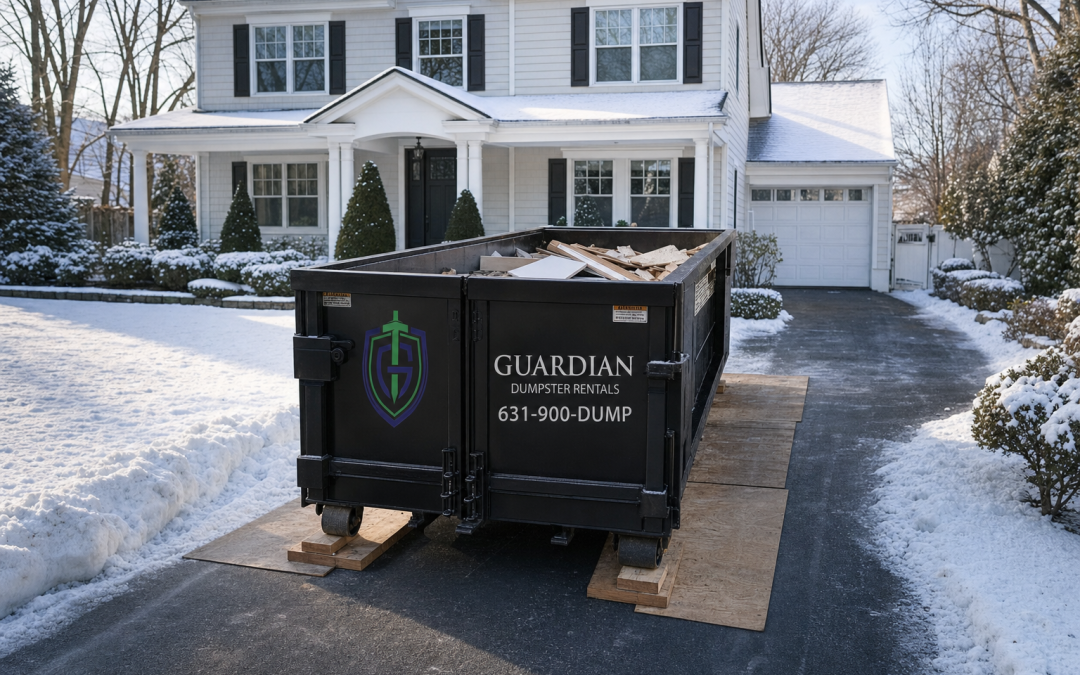
Why Fall Is the Smartest Time to Plan a Winter Dumpster Rental in NY
Booking a winter dumpster rental in the fall is the smartest move for New York remodelers because it locks in your delivery date before snow, frozen ground, and holiday scheduling crunches cause delays. Ordering now means clear driveway access, better container availability, and a project that starts on time instead of waiting out a storm.
Key takeaways
- Book your winter dumpster rental in NY at least 1-2 weeks before your project starts, since holiday crew schedules and reduced hauler availability can stretch delivery timelines.
- Clear snow and ice from your driveway or placement spot before delivery day — drivers can't safely drop a 10, 20, or 30 yard dumpster on an unplowed or icy surface.
- Frozen ground can actually help protect driveways from container weight, but snow accumulating inside an uncovered dumpster adds weight and can push you over your tonnage limit.
- Remember that brick, concrete, dirt, and yard waste are not allowed in the dumpster, so plan a separate disposal route for those materials before winter weather complicates logistics.
- Choose your size based on debris volume, not season: a 10 yard works for small interior jobs, a 20 yard suits full-room remodels, and a 30 yard handles major winter renovations.
Every year, the same pattern plays out across Long Island and the rest of New York: homeowners plan a winter kitchen remodel or basement renovation, wait until December to order a container, and then run into the one-two punch of snowstorms and holiday closures. The remodelers who sail through winter are almost always the ones who arranged their dumpster weeks ahead, while the weather was still cooperative and delivery routes were wide open.
What You Avoid by Booking Early
- Snow-related delivery delays: Once plowed snowbanks line your street and your driveway ices over, a roll-off truck may not be able to place the container safely — or at all.
- Frozen-ground access problems: A dry fall driveway or firm side yard is a far easier drop spot than one buried under snow or glazed in ice.
- Holiday scheduling crunch: Between Thanksgiving and New Year’s, crews run reduced routes and demand spikes from year-end cleanouts, so last-minute orders often get pushed back.
- Limited container selection: Booking early gives you a better shot at the exact 10, 20, or 30 yard size your project actually needs, rather than settling for whatever is left.
This matters most for interior projects — kitchens, bathrooms, basements, and whole-room renovations — that generate steady construction debris all season long. If you’re planning that kind of work on Long Island, arranging dumpster rental in East Northport New York during the fall puts you ahead of the winter rush instead of behind it.
Early planning also gives you time to think through the details that trip people up in January: where the container will sit once snow piles accumulate, how long your rental period should run if weather slows the crew, and which materials are allowed in the container. Homeowners handling construction debris removal in Lindenhurst NY face the same seasonal pressures, and the ones who reserve ahead consistently have the smoothest projects.
What This Guide Covers
In the sections ahead, we’ll walk through exactly how snow and frozen ground affect dumpster delivery in New York, whether holiday crew schedules really slow down debris removal, how to choose between a 10, 20, or 30 yard container, what can’t go in your dumpster during a winter remodel, and the ideal window to lock in your booking. By the end, you’ll have a clear timeline for getting your container in place before the first flakes fly.

How Do Snow and Frozen Ground Affect Dumpster Delivery in New York?
Snowbanks, ice, and frozen or soft ground all shrink the safe placement options for a roll-off truck. Drivers need a cleared, level, solid surface to drop a container, and they can refuse delivery if the site looks unsafe. Clearing snow and laying down plywood before the truck arrives keeps your winter dumpster rental on schedule.
A loaded roll-off truck is heavy, and the driver has to back it into position, tilt the bed, and roll the container off with precision. In July, that’s routine. In a New York January, every one of those steps gets harder. Plowed snowbanks at the curb can block the exact spot you had in mind, icy driveways make it risky for the truck to get traction on an incline, and the ground itself behaves differently once temperatures swing above and below freezing.
Why Frozen and Thawing Ground Is a Problem
Frozen ground is actually firm enough to support a container in many cases. The trouble starts during mid-winter thaws, when the top few inches soften while deeper soil stays frozen. A truck or a loaded 20 or 30 yard container can sink into that mushy layer, rut up a lawn, or crack the edge of an unsupported driveway apron. Homeowners planning a project in communities like Dumpster Rental Deer Park New York service areas should think about placement surface before delivery day, not during it.
Why Drivers Refuse Unsafe Drop Sites
Roll-off drivers are trained to walk away from a drop they can’t do safely, and that protects you as much as them. Common reasons a winter delivery gets turned around include:
- An icy or steep driveway where the truck can’t maintain traction
- Snowbanks blocking the approach or the container footprint
- Soft, thawing ground that could swallow the truck’s wheels
- Overhead obstacles like snow-laden tree limbs or sagging lines
- No cleared path long enough for the truck to back in and tilt the bed
A refused drop usually means a rescheduled delivery, which can push your whole project back days in a busy winter season.
How to Prep Your Site Before the Truck Arrives
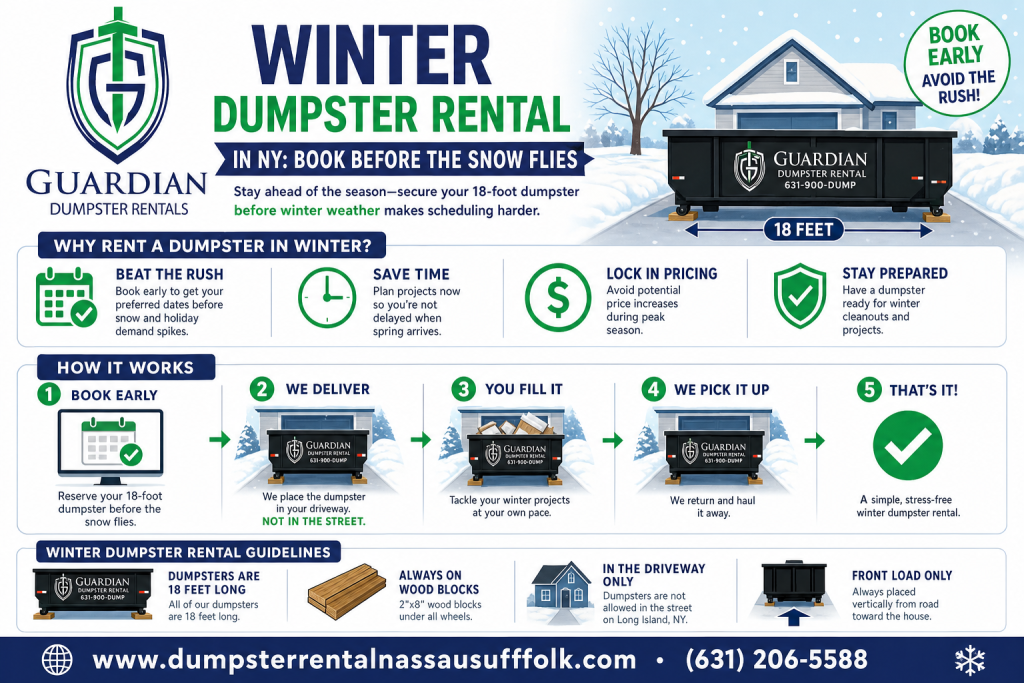
A little prep work almost always prevents a failed delivery. Clear snow from the full footprint of the container plus the truck’s approach path, and salt or sand any ice. Lay sheets of plywood where the container will sit; they spread the weight, protect your driveway surface, and keep the container from freezing to the pavement. Mark the spot clearly so the driver knows exactly where you want it. Crews handling a Dumpster Rental Lindenhurst New York delivery will tell you the same thing: a cleared, plywood-protected pad makes the drop fast and keeps your 10, 20, or 30 yard container right where you need it.
Do Holiday Crew Schedules Really Slow Down Debris Removal?
Yes. Between Thanksgiving and New Year’s, contractor downtime, reduced hauler routes, and shortened transfer station hours all combine to stretch pickup and swap times. A dumpster swap that normally happens in a day or two can take noticeably longer during the holidays, so smart homeowners build extra buffer days into their remodeling timelines.
It is easy to assume the waste industry runs at full speed year-round, but the stretch from late November through the first week of January is genuinely different. Understanding why helps you plan around it instead of getting stuck with a full container and nowhere to put debris.
Why the Holiday Window Creates Delays
- Contractor downtime: Many remodeling crews take time off around Thanksgiving, Christmas, and New Year’s. If your project pauses, your dumpster may sit full while you wait for both the crew and the hauler to get back on schedule.
- Reduced hauler routes: Drivers take vacation too, and companies often run condensed routes around holidays. Fewer trucks on the road means pickup and swap requests get queued rather than handled same-day or next-day.
- Transfer station holiday hours: Haulers can only dump when disposal facilities are open. When transfer stations close or shorten hours for holidays, every truck’s daily capacity drops, and that backlog ripples out to customers.
- Year-end demand spikes: Plenty of homeowners rush to finish projects before the new year, and businesses clear out space before closing their books. That surge lands exactly when the system has the least capacity.
How to Build Holiday Gaps Into Your Timeline
The fix is simple: plan as though every pickup or swap during the holidays will take a few days longer than usual. If your remodel generates heavy debris loads, schedule your swap request a few days before you actually expect the container to fill. Homeowners coordinating construction debris removal in Bay Shore around a kitchen or bathroom remodel often find that requesting service early in the week, rather than right before a holiday weekend, keeps the project moving.
A few practical habits make a big difference:
- Ask your hauler about their holiday closure dates when you book, not after.
- Request swaps and final pickups at least two to three business days ahead during December.
- Avoid scheduling demolition-heavy work the day before a major holiday, when a full box could sit untouched.
- If your project spans the holidays, confirm whether keeping the dumpster a few extra days is cheaper than risking a mid-project gap.
The companies that communicate their holiday schedules clearly are the ones worth working with. When you arrange a dumpster rental in Lindenhurst, New York, ask directly how pickups are handled during holiday weeks so you can set your crew’s schedule accordingly. A little planning in November prevents a stalled project in December.
What Size Winter Dumpster Rental Do You Need: 10, 20, or 30 Yard?
For a winter dumpster rental, choose a 10 yard container for a bathroom gut or small kitchen refresh, a 20 yard for a full kitchen remodel or flooring tear-out, and a 30 yard for a whole-home interior renovation. When in doubt, size up — a second delivery in snow season is harder to schedule than a slightly larger box.
Winter projects tend to generate bulkier debris than homeowners expect. Cabinets, drywall, insulation, and old flooring take up volume fast, and once snow is on the ground you don’t want to be caught mid-demo with a full container. Here’s a quick comparison to help you match the box to the job.
Container Sizes Table
| Size | Best For | Typical Footprint Notes |
|---|---|---|
| 10 Yard | Bathroom gut, small kitchen refresh, single-room cleanout | Compact footprint; fits most driveways even with snowbanks along the edges |
| 20 Yard | Full kitchen remodel, flooring tear-out across multiple rooms | The most popular middle ground; needs a longer cleared stretch of driveway |
| 30 Yard | Whole-home interior renovation, major multi-room demo | Largest footprint; plan placement carefully so plows and shovels can still work around it |
Winter Placement Tips for Each Size
- Clear the full footprint plus truck access. The delivery truck needs room to back in and roll the container off, so shovel beyond the box’s actual length — especially for 20 and 30 yard sizes.
- Think about where plowed snow will go. A 30 yard container can block the spot where your plow service normally pushes snow. Walk the driveway and pick a position before delivery day.
- Keep the door end accessible. Walk-in doors are a back-saver when carrying heavy debris over slippery ground, but only if snow isn’t drifting against them.
- Protect the surface. Plywood under the container rails helps on driveways that freeze and thaw repeatedly through the season.
If you’re remodeling a kitchen or tearing out flooring, a 20 yard is usually the sweet spot for a dumpster rental in Bay Shore, New York and similar South Shore neighborhoods, where driveway lengths typically accommodate it without spilling toward the street.
For heavier interior demolition loads — think full gut jobs with lots of drywall, cabinetry, and old fixtures — a 30 yard container paired with professional construction debris removal in Islip, NY keeps the project moving even when the weather doesn’t cooperate.
One last sizing rule for winter: estimate your debris, then consider whether your project might expand once walls are open. Cold-season surprises like hidden water damage are common, and the cost difference between a 20 and 30 yard container is usually small compared to the hassle of a swap-out between storms.
What Can’t Go in Your Dumpster During a Winter Remodel?
Brick, concrete, dirt, and yard waste are never allowed in the containers, no matter the season. Standard winter remodel debris — drywall, cabinetry, flooring, trim, and fixtures — is accepted in 10, 20, and 30 yard dumpsters. Also keep in mind that snow and ice can add hidden weight to your load.
Winter projects tend to focus on interiors, which works in your favor. Most of what comes out of a kitchen, bathroom, or basement remodel is exactly the kind of material a roll-off container is built to handle. The trouble starts when heavy masonry or outdoor material gets mixed in, so it pays to know the rules before the first swing of the sledgehammer.
Materials That Are Never Allowed
These items cannot go in the dumpster under any circumstances:
- Brick — including fireplace surrounds and old pavers
- Concrete — slabs, footings, broken sidewalk pieces
- Dirt — excavated soil, fill, or sand
- Yard waste — branches, leaves, stumps, and brush
If your winter remodel involves tearing out a brick hearth or breaking up a concrete basement floor, plan separate disposal for those materials. Mixing them into a general debris load can result in a rejected container or extra charges. A local construction debris removal in Commack NY provider can walk you through what your specific tear-out will generate and how to keep the load compliant.
Common Winter Remodel Debris That’s Accepted
The good news is that nearly everything from a typical interior renovation is fair game:
- Drywall — full sheets, broken pieces, and plaster from older homes
- Cabinetry — kitchen and bathroom cabinets, vanities, and shelving
- Flooring — hardwood, laminate, tile backing, and old carpet
- Trim and millwork — baseboards, crown molding, door casings
- Fixtures — sinks, tubs, toilets, and light fixtures
Watch Out for Hidden Snow and Ice Weight
Here’s a winter-specific issue many homeowners overlook: an uncovered dumpster collects snow, and that snow turns to ice. Water is heavy, and a container that sits through a nor’easter can pick up a surprising amount of weight before your debris is even counted. That added weight can push a 10, 20, or 30 yard load over its limit and lead to overage fees. The fix is simple — tarp the container when you’re not actively loading it, and shovel off accumulation after storms. Debris like soaked drywall and carpet also absorbs meltwater, so keeping the load covered protects you twice over.
If you’re unsure whether a specific material is accepted, ask before you toss it. When you arrange a dumpster rental in Bay Shore New York, the team can confirm what’s allowed for your project so the pickup goes smoothly the first time.
When Should You Book Your Winter Dumpster Rental in NY?
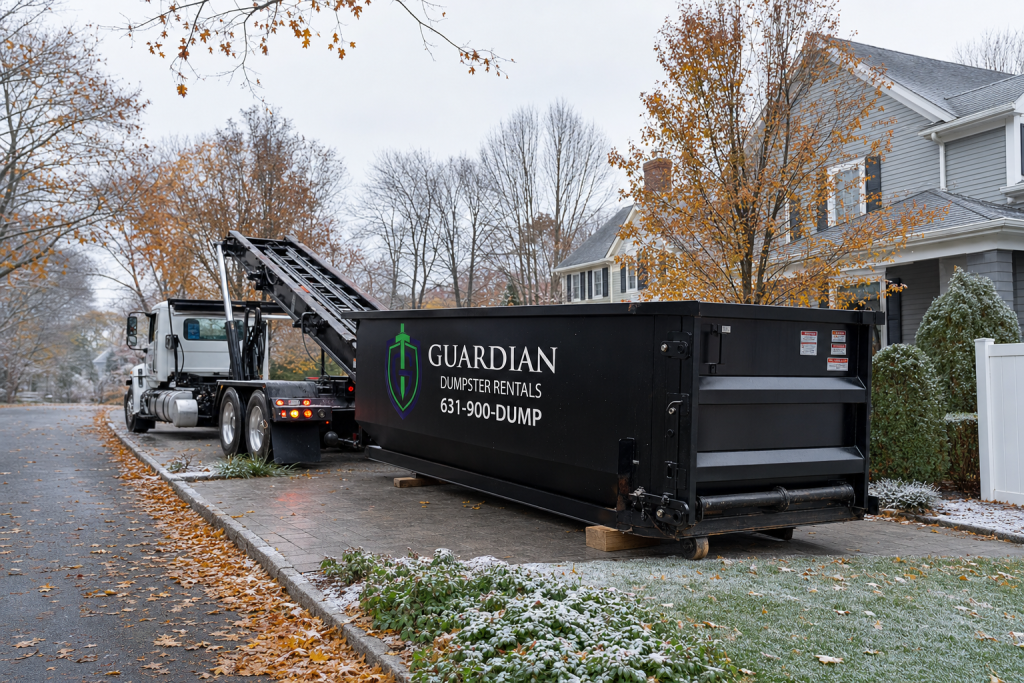
For December through February projects in New York, reserve your dumpster two to four weeks before your start date, and ideally lock in the booking during October or November. Fall reservations secure your preferred container size and delivery window before snowstorms, holiday closures, and reduced crew schedules tighten availability across Long Island.
A Practical Booking Timeline for Winter Projects
Here is a realistic schedule homeowners can follow for a winter remodel or cleanout:
- 6–8 weeks out (fall): Confirm your project scope with your contractor and decide whether a 10, 20, or 30 yard container fits the job.
- 2–4 weeks out: Place your reservation and confirm the delivery address, placement spot, and start date in writing.
- 1 week out: Reconfirm delivery, clear the driveway or placement area, and check the extended forecast through the National Weather Service so you can flag any storm concerns early.
- Day before delivery: Shovel and salt the placement area so the truck can position the container safely.
Why Fall Reservations Beat the Post-Storm Scramble
After a major snowstorm, dumpster demand spikes as delayed projects restart all at once. Homeowners who wait often face longer lead times and limited size options. Booking a dumpster rental in Commack New York or a neighboring town in the fall means your container is already on the schedule before the rush begins, so your project keeps moving while others wait.
Coordinate With Your Contractor’s Holiday Calendar
Many contractors pause work between mid-December and early January. Before you reserve, ask your contractor for their exact holiday closure dates and plan delivery so the dumpster arrives when the crew is actually producing debris—not sitting empty while you pay for idle rental days. For heavier renovation tear-outs, coordinating pickup timing matters too; services handling construction debris removal in Dix Hills can align swap-outs with your contractor’s restart date so a full container never stalls the job.
What Flexible Rental Periods Mean When Weather Delays Hit
Winter in New York is unpredictable, so ask about flexible terms before you book:
- Extension options: Confirm how extra rental days are handled if a storm pushes your project back.
- Weather-delay policies: Ask whether delivery or pickup can shift without penalty when roads are unsafe.
- Swap scheduling: If your project may need a second container, ask how quickly a swap can be arranged in winter conditions.
Finally, keep safe loading practices in mind even when you’re racing daylight and cold temperatures—the OSHA winter weather guidance is a useful reference for working safely around containers on snow and ice. Book early, build in flexibility, and your winter project will run on your schedule, not the weather’s.
1-2 weeks before your winter project start date
Recommended Booking Lead Time
7-14 days, with extensions often available
Typical Rental Period
A snow-cleared area roughly 60 ft long for safe truck access
Placement Clearance Needed
No brick, concrete, dirt, or yard waste in any dumpster
Prohibited Materials
Winter Dumpster Rental Size Guide for NY Remodeling Projects
| Dumpster Size | Best Winter Projects | Typical Capacity | Winter Booking Tip |
|---|---|---|---|
| 10 Yard | Bathroom remodels, small kitchen refreshes, basement cleanouts | Roughly 3-4 pickup truck loads | Easiest to place in tight, plowed driveway spots |
| 20 Yard | Full kitchen remodels, flooring tear-outs, multi-room interior renovations | Roughly 6-8 pickup truck loads | Most popular size — book early around the holidays |
| 30 Yard | Whole-home interior renovations, large additions, major demo debris | Roughly 9-12 pickup truck loads | Confirm a long, cleared placement area before delivery |
Illustrative Example: A Mid-Winter Kitchen Remodel in Upstate NY
Illustrative example
Consider a hypothetical homeowner in upstate New York planning a full kitchen gut-and-remodel for January. By reserving a 20 yard dumpster two weeks before demo day, they avoided the holiday scheduling crunch that delayed a neighbor's project. They kept the driveway plowed and salted so the delivery truck could place the container safely, and tarped the dumpster between loads so heavy snow didn't add weight toward their tonnage limit. Because brick, concrete, dirt, and yard waste weren't allowed in the container, they arranged a separate pickup for a small amount of old masonry before winter storms hit. The remodel debris — cabinets, drywall, flooring, and countertops — fit comfortably in the 20 yard container, and the project stayed on schedule despite two snowstorms.
Frequently asked questions
Does winter dumpster rental cost more than renting in other seasons?
Not usually. Winter is often a slower season for haulers, so base rates for 10, 20, and 30 yard dumpsters are typically similar to or slightly lower than peak summer pricing. However, you may face added fees if a driver can't access an unplowed driveway or if snow-covered debris adds significant weight. Clearing your drop-off spot before delivery helps you avoid those extra charges.
How far in advance should I book a dumpster before a winter remodel in NY?
Book one to two weeks ahead whenever possible, and even earlier around Thanksgiving through New Year's. Holiday crew schedules reduce available delivery slots, and incoming storms can push deliveries back days at a time. Reserving early locks in your preferred 10, 20, or 30 yard container and gives you flexibility to adjust the delivery date if a storm hits.
Can a dumpster be delivered when there's snow on the ground?
Yes, as long as the delivery area is plowed and reasonably level. Drivers need a clear, stable path to place the container safely, so shovel or plow the spot before the truck arrives. Deep snow, ice, or a blocked driveway can force the driver to skip the stop, which often means a failed-delivery fee and rescheduling delays during an already busy season.
Will a dumpster freeze to the ground in winter?
It can. Containers sitting on snow or wet ground can freeze in place when temperatures drop, making pickup difficult. To prevent this, have the dumpster placed on plywood or boards on a plowed, dry surface. Also keep a path to the container clear throughout the rental so the truck can reach it on pickup day without delays.
What size dumpster do I need for an indoor winter remodeling project?
A 10 yard dumpster suits small jobs like a bathroom remodel or single-room cleanout. A 20 yard works well for kitchen renovations or flooring removal across several rooms. A 30 yard handles major projects like whole-home remodels or large additions. When in doubt, size up one container rather than paying for a second delivery in unpredictable winter weather.
What can't I put in a winter dumpster rental?
Brick, concrete, dirt, and yard waste are not allowed in the dumpsters, so plan separate disposal for any masonry or excavation material from your project. Hazardous items like paint, chemicals, batteries, and propane tanks are also prohibited, as with any rental. Stick to general construction debris — drywall, wood, cabinets, flooring, and fixtures — and confirm anything questionable with your hauler before loading.
Does snow in the dumpster count toward my weight limit?
It can. Snow that accumulates in an open container melts into the debris and adds real weight, which may push you over your included tonnage and trigger overage fees. Cover the dumpster with a tarp when you're not actively loading, especially before storms. This simple step also keeps debris dry and easier to work around during your project.
What happens if a snowstorm delays my dumpster pickup or delivery?
Haulers typically reschedule to the next safe, available day, but storm backlogs can stretch that to several days during busy weeks. Most companies won't charge extra rental days for weather delays on their end, though policies vary, so ask when booking. Build buffer time into your project schedule and keep the container accessible so pickup can happen as soon as roads clear.
Is winter actually a good time to rent a dumpster for remodeling?
Often, yes. Contractors and haulers are generally less busy outside peak season, which can mean faster scheduling, better availability of 10, 20, and 30 yard containers, and more flexible delivery windows. Interior projects like kitchens, bathrooms, and basements aren't weather-dependent, so winter is a smart time to tackle them — as long as you book around storms and holiday closures.
Do I need a permit to put a dumpster in the street during winter in NY?
If the dumpster goes on a public street, most NY municipalities require a permit, and winter adds a complication: many towns enforce snow emergency rules that prohibit street obstructions so plows can pass. A container on your own driveway usually needs no permit. Check with your local municipality before delivery, and choose a driveway placement whenever possible during snow season.
Construction Debris Removal help near you
- Load A 10 Yard Dumpster
- Construction Debris Removal East Northport NY
- Construction Debris Removal Deer Park NY
Related local pages
- Dumpster Rental Elwood New York
- Dumpster Rental Centerport New York
- Dumpster Rental Northport New York
Lock in your winter dumpster before the first big snow — call us today for fast delivery and honest pricing on 10, 20, and 30 yard containers across New York. Get in touch.
Last updated: November 18, 2026
Recent Comments