
Attic Conversion Dumpster Timing: Protect Your NY Roof
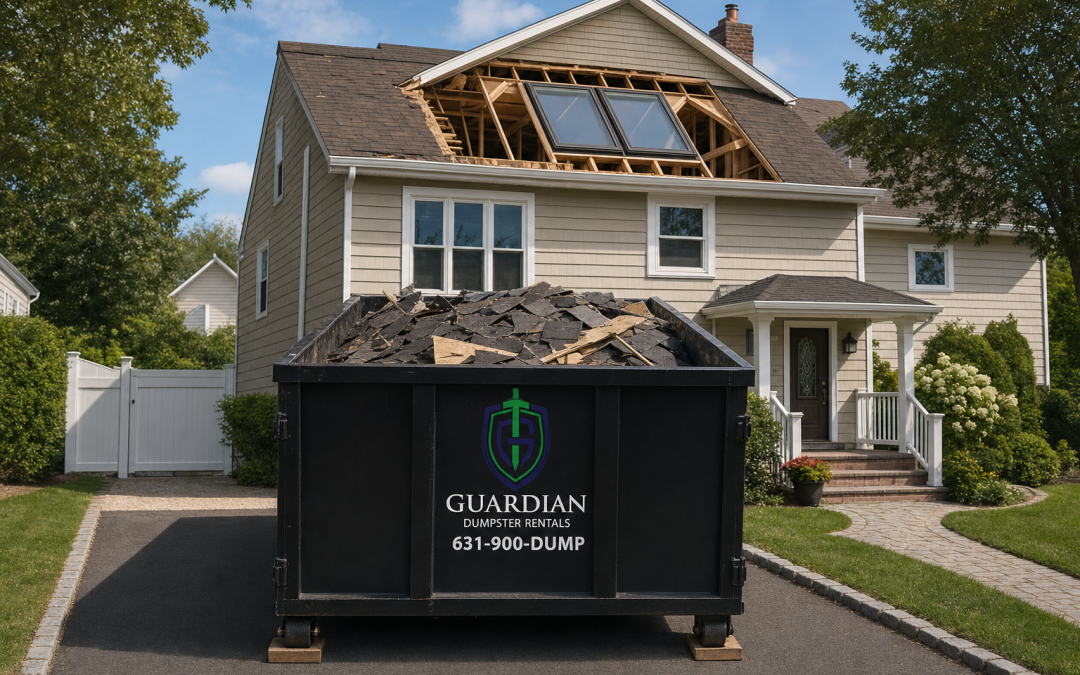
Why Does Dumpster Timing Matter for an Attic Conversion Dumpster Plan in NY?
An attic conversion dumpster matters because the roof cut-open briefly exposes your home to the sky, so the container must be on site before demolition starts and loaded and covered the same day. In New York, fall cold snaps, gusty winds, and fast-moving rain leave no room for debris sitting around or a dumpster arriving late.
Key takeaways
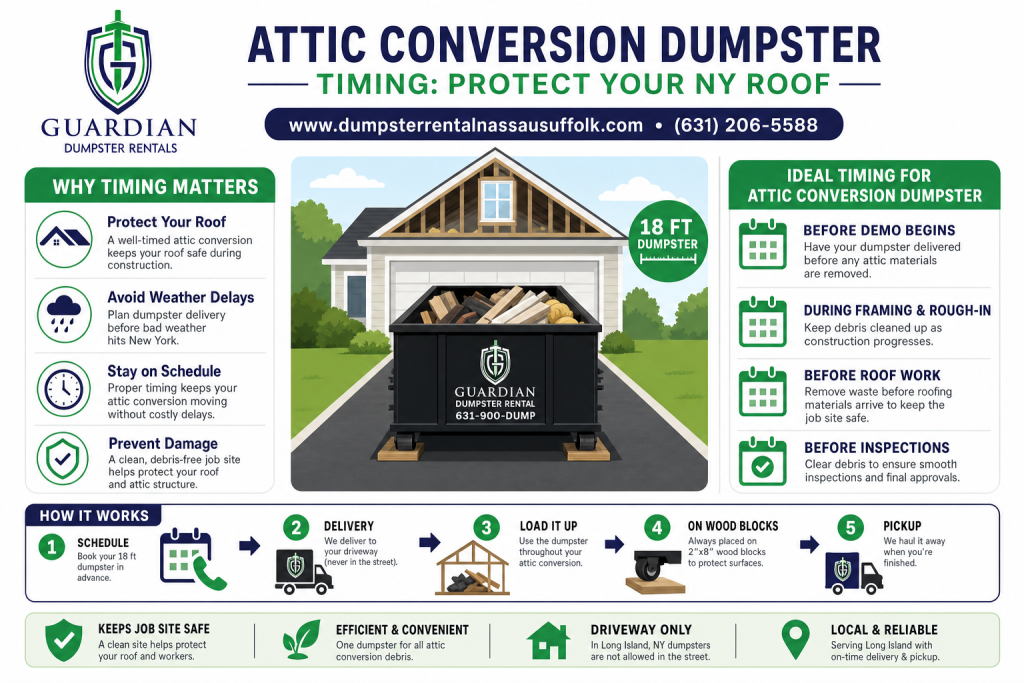
- Schedule your attic conversion dumpster delivery 1-2 days before the roof cut-open so debris goes straight from the roof into the container, never onto the lawn.
- Sequence skylight installs and old decking removal in the same work window so the roof is cut, cleared, and weatherproofed before dark.
- A 20 yard dumpster is the most common fit for attic conversions, handling old roof decking, shingles, drywall, and framing offcuts in one container.
- Never leave torn-off decking or shingles exposed overnight—tarp the roof opening and load debris into the dumpster the same day to avoid water damage and permit issues.
- Keep brick, concrete, dirt, and yard waste out of the dumpster; roofing and remodeling dumpsters are for construction debris like shingles, wood decking, and drywall only.
Most remodeling projects can absorb a day or two of scheduling slippage. An attic conversion can’t — at least not during the window when your roof is open. The moment the crew cuts into the decking for a dormer, skylight, or ridge modification, your home’s weather protection depends on how quickly debris gets off the roof and into the container so the opening can be dried in. If the dumpster isn’t sitting in the driveway at that moment, old shingles, decking, and framing scraps pile up on tarps, in the yard, or worse, stay on the roof while everyone waits.
What Goes Wrong When the Dumpster Arrives Late
- Debris blocks the dry-in: Crews can’t paper and tarp the opening efficiently while torn-off decking and shingles are still underfoot.
- Weather exposure: An afternoon shower can soak insulation, drywall below, and new framing before the opening is sealed.
- Wind scatter: Loose felt paper and shingle pieces blow into neighbors’ yards — a real liability on tight Long Island lots.
- Crew downtime: You’re paying skilled labor to stack debris twice instead of tossing it straight into the container once.
The Simple Timing Rule
Have the dumpster delivered at least one business day before the scheduled cut-open. That buffer protects you if the delivery window shifts or the crew starts early. Homeowners coordinating construction debris removal in East Northport NY for attic projects typically place the container as close to the tear-off zone as the driveway allows, so debris travels the shortest possible path from roof to bin.
Size matters for timing, too. A 10 yard container works for a small skylight-only job, a 20 yard handles most single-dormer conversions, and a 30 yard suits a full shed-dormer tear-off with old decking replacement. Choosing right the first time means no mid-project swap while your roof sits open. If you’re planning a project nearby, booking a dumpster rental in Deer Park New York a week or more ahead gives you the best shot at an exact delivery date rather than a vague window.
Finally, plan to load and cover the dumpster the same day the roof opens. A covered container keeps rain out of the debris (wet loads are heavier) and keeps lightweight material from blowing out overnight. The sections below break down sizing, scheduling around skylight installs, and how New York’s fall weather should shape every one of these decisions.
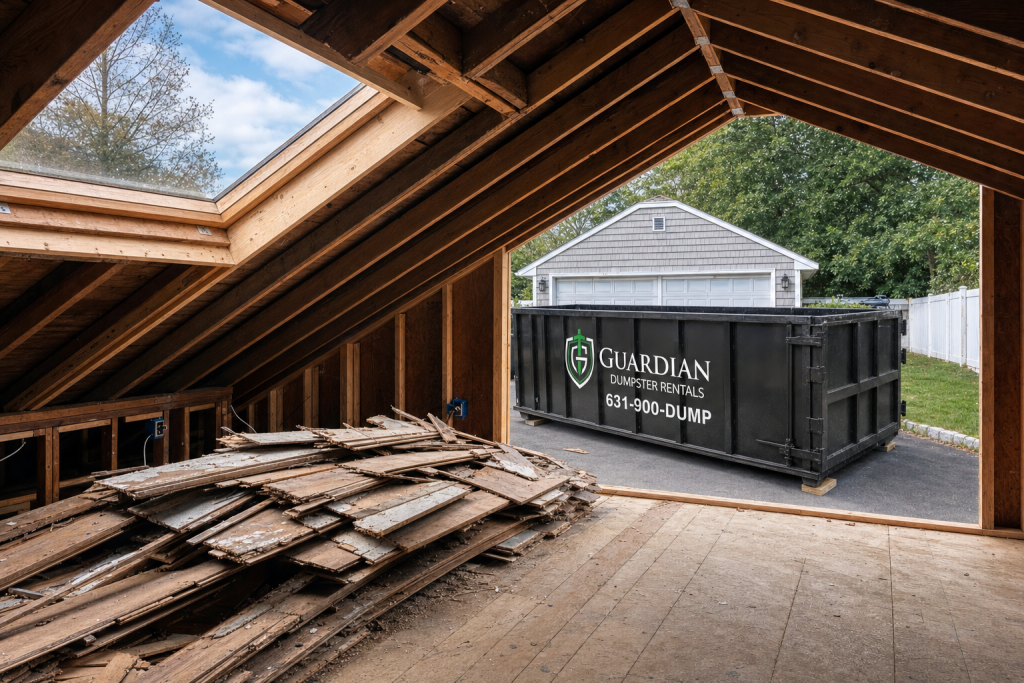
What Size Attic Conversion Dumpster Do I Need: 10, 20, or 30 Yard?
For most New York attic conversions, a 10 yard dumpster handles a small skylight install with limited decking tear-off, a 20 yard covers a full attic gut plus a roof section removal, and a 30 yard is right for a whole-roof re-deck with dormer framing debris. When in doubt between two sizes, go bigger.
Attic work is deceptive. Old insulation, plaster, lath, and roof decking are bulky and awkward, so debris piles grow faster than most homeowners expect. Choosing the right attic conversion dumpster the first time means you avoid a mid-project swap-out while your roof is open to the weather — exactly when you can least afford delays.
Container Sizes Table
| Size | Best For | Typical NY Attic Project Example |
|---|---|---|
| 10 Yard | Small skylight install and limited decking tear-off | Cutting in one or two skylights on a Cape-style home, removing a few sheets of old decking, plus the insulation and drywall from one attic room |
| 20 Yard | Full attic gut plus roof section removal | Gutting a complete attic — old insulation, plaster, flooring — and tearing off a roof section on a Long Island colonial for a new dormer opening |
| 30 Yard | Whole-roof re-deck with dormer framing debris | A full re-deck on a high-ranch, shed dormer framing scraps, old rafter cutoffs, roofing material from the entire tear-off, and the complete attic gut |
How to Judge Your Debris Load
Walk the attic and the roof plan with your contractor and tally these items before you book:
- Insulation volume: Old fiberglass batts and blown-in insulation fluff up enormously once pulled — it fills containers faster than almost anything else.
- Decking and sheathing: Count the approximate number of plywood or plank sheets coming off. More than a small patch usually pushes you past a 10 yard.
- Framing scraps: Dormer projects generate rafter cutoffs, stud offcuts, and temporary bracing that all need a home.
- Interior finishes: Plaster and lath from older New York homes is heavy and bulky — a full attic’s worth typically justifies a 20 yard on its own.
Weight matters as much as volume. Roofing tear-off material is dense, so a seemingly half-full container can approach its weight limit. If you’re planning a full tear-off alongside your conversion, our Construction Debris Removal in West Islip NY service can help you match the container to the actual tonnage your project will produce.
One more sizing tip: check your driveway length and overhead clearance before committing to a 30 yard. If space is tight, a 20 yard with a scheduled swap may work better. For help weighing placement against capacity, a local Dumpster Rental in Lindenhurst New York team can assess your property and recommend the right fit.
How Do I Schedule the Dumpster Around the Roof Cut-Open and Skylight Installs?
Book your attic conversion dumpster for delivery one to two days before the roofer opens the roof, so the container is sitting on-site the moment decking and shingles start coming down. Coordinate the drop with the skylight framing schedule, position it for ladder and chute access, and load debris the same day it’s torn off.
A Phase-by-Phase Delivery Timeline
The cut-open is the point of no return on an attic conversion — once the roof is opened, debris comes down fast and the structure is vulnerable until it’s buttoned back up. Your dumpster schedule should follow the roofer’s schedule, not the other way around:
- 1–2 days before cut-open: Have the dumpster delivered. This buffer protects you if the delivery truck runs late or the driveway placement needs adjusting. An empty container waiting a day costs you nothing compared to a crew standing around with nowhere to throw tear-off.
- Cut-open day: Old shingles, underlayment, and decking go straight from the roof into the container as they come off.
- Skylight framing days: Framing generates cut-off lumber, packaging, and trimmed sheathing. Confirm with your roofer which days the skylight openings get framed so the dumpster stays on-site through that phase rather than being hauled away between the tear-off and the installs.
- After flashing and final install: Schedule pickup once the last skylight is flashed and sealed, so stray materials and packaging have a place to go until the roof work is truly done.
Placement for Ladder and Chute Access
Walk the site with your roofer before delivery day. The container should sit close enough to the eave that a debris chute can run from the roofline directly into the dumpster, without blocking where ladders need to be set. Keep the rear swing door facing open space so ground crews can walk long decking boards in instead of lifting everything over the side. Crews doing construction debris removal in West Islip NY see this all the time: a container placed ten feet too far from the eave turns a one-day tear-off into a two-day shuttle job.
Why Same-Day Loading Beats a Lawn Pile
Letting shingles stack up on the grass feels faster in the moment, but it’s a false economy. Tear-off debris is full of roofing nails that end up in your lawn and tires, piles kill grass within days, and loose shingles blow around in any decent wind. Loading as you go also means the roofer can see exactly how full the container is and call for a swap before work stalls. If you’re still lining up a container, booking a dumpster rental in Bay Shore New York a few days ahead of your cut-open date keeps the whole sequence on track.
What’s the Best Way to Remove Old Roof Decking Without Leaving Debris Exposed Overnight?
The safest approach is to tear off only the sections your crew can dry-in before dark, load nail-studded decking straight into the dumpster as it comes down, and tarp the container every night. If the 20 yard dumpster fills mid-project, schedule a swap-out so debris never piles up on the ground or the roof.
Work in Sections You Can Close Up Before Dark
The biggest mistake on tear-off days is opening more roof than the crew can protect by evening. A disciplined approach keeps both your home and your debris plan under control:
- Divide the roof into zones. Tear off one zone, inspect the rafters, and dry-in that area with underlayment or heavy tarps before moving to the next.
- Start early. In fall, New York daylight runs short, so begin tear-off in the morning and stop opening new sections by early afternoon.
- Keep a weather eye. If the forecast shifts, close up what’s open rather than pushing to finish another zone.
Load Nail-Studded Decking Directly Into the Dumpster
Old decking comes off bristling with nails and screws, and letting it stack up on the lawn or driveway is an injury and tire hazard waiting to happen. The cleanest method is a straight path from roof to container: slide or carry boards down and place them directly into the dumpster, nails and all. Position the container as close to the drop zone as your driveway allows, and lay plywood runners if the crew needs a walking path. Homeowners handling construction debris removal in Islip NY for an attic conversion find this one habit eliminates most of the nail sweep at the end of the job.
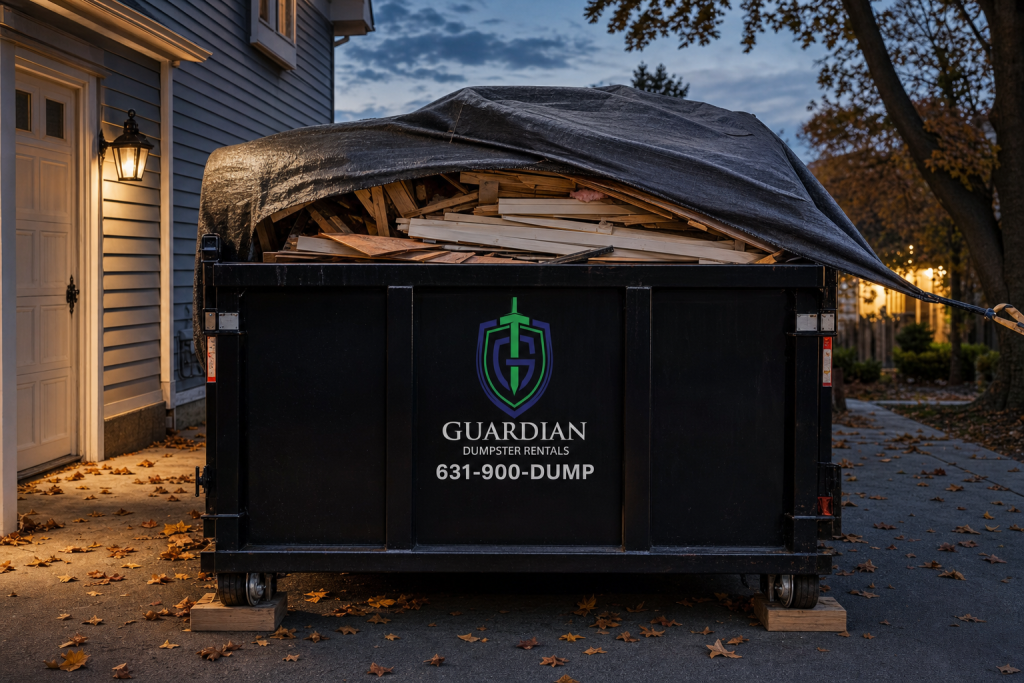
Tarp the Container Every Night
An uncovered dumpster invites two problems: rain soaking the load (making it heavier) and neighbors adding their own junk. Before the crew leaves each evening, pull a heavy-duty tarp over the open top and secure it with bungee cords or ratchet straps. This also keeps loose felt paper and small scraps from blowing into neighboring yards overnight.
Plan the Swap-Out Before the 20 Yard Fills
Decking takes up more room than most homeowners expect, and a 20 yard container can fill faster than planned once sheathing, old shingles, and framing offcuts start going in. Watch the fill line at the end of each day. When the container hits roughly three-quarters full, call for a swap so a fresh 20 or 30 yard arrives before the crew runs out of room mid-tear-off. If you’re renting from a local provider, such as a dumpster rental in Bay Shore New York, same-area trucks can often turn a swap around quickly — but only if you give notice a day ahead rather than the morning you need it. Never let debris stack on the ground “temporarily” while waiting; that’s exactly how exposed, nail-filled piles end up sitting through a rainy night.
What Can’t Go in an Attic Conversion Dumpster?
An attic conversion dumpster accepts shingles, roof decking, framing lumber, drywall, and insulation — but never brick, concrete, dirt, or yard waste. Those four materials are strictly prohibited. Mixing even a small amount of banned material into your container can delay pickup and trigger extra sorting or contamination fees.
Most homeowners are surprised by how firm these rules are, but there’s a practical reason behind them. Roofing and construction debris is processed at facilities set up for building materials. Heavy masonry, soil, and organic matter have to go to entirely different destinations, and a single mixed load can be rejected at the gate.
What IS Accepted During an Attic Conversion
The good news: nearly everything that actually comes out of an attic conversion is fair game. Standard accepted materials include:
- Asphalt shingles — including old layers torn off during the roof cut-open
- Roof decking — plywood and plank sheathing, even with nails still in it
- Framing lumber — old rafters, collar ties, and knee-wall studs
- Drywall and plaster — from ceilings and partition walls
- Insulation — fiberglass batts and blown-in material (bagged is cleaner and safer)
If your tear-out stays within this list — and most attic projects do — you can load freely without worrying about rejection. Crews handling construction debris removal in Bay Shore see these exact materials on nearly every attic job, and they haul away without a hitch when the load is clean.
What’s Strictly Prohibited
- No brick — even a few old chimney bricks pulled from the attic must be set aside
- No concrete — chunks from an old chimney crown or patched areas stay out
- No dirt — soil from grading around the delivery spot can’t be tossed in
- No yard waste — branches trimmed for dumpster access or crane clearance go separately
The chimney issue trips up more attic conversions than anything else. If your plans call for removing or shortening a masonry chimney that passes through the attic, that brick and concrete needs its own disposal plan — it cannot ride along with your shingles and lumber.
Why Mixing Banned Items Costs You
When prohibited material turns up in a roofing load, the hauler typically can’t tip it as scheduled. That means the container sits on your driveway longer, your pickup gets rescheduled, and you may face a contamination charge or be asked to hand-remove the offending items yourself. On a project where the roof is open and you’re racing weather, a stalled pickup is more than an inconvenience.
The simplest fix is to brief everyone on site before tear-off begins. A quick conversation with your contractor — or with a provider of construction debris removal in Commack NY before delivery — ensures the whole crew knows the four banned materials and keeps your 10, 20, or 30 yard container moving on schedule.
How Does Fall Weather in New York Change the Plan?
Fall in New York compresses your working day, raises the odds of rain and early cold snaps, and fills open containers with wind-blown leaves. Plan shorter tear-off windows, tarp the dumpster nightly, watch the extended forecast before committing to the roof cut-open, and book your attic conversion dumpster earlier than you would in summer.
Shorter Daylight Means Tighter Tear-Off Windows
By mid-October, usable daylight on Long Island shrinks noticeably, and crews lose the long summer evenings that make a same-day open-and-close possible. That matters most on cut-open day: the roof needs to be opened, framed, and weathered-in before dark. Build the schedule so demolition starts first thing in the morning, and have the dumpster delivered the afternoon before rather than the morning of. If you’re coordinating construction debris removal in Dix Hills or a nearby town, confirm the drop-off window in writing so the container isn’t the thing holding up your crew at 7 a.m.
Keep Leaves and Wind-Blown Debris Out of the Container
An open 20 yard or 30 yard container parked under mature trees in October will collect leaves fast — and since yard waste isn’t allowed in a roofing dumpster, that’s contamination you’ll have to fish out before pickup. A few habits solve it:
- Position the dumpster away from overhanging branches where the driveway allows.
- Tarp the container every night and on any day the crew isn’t actively loading.
- Weigh tarp edges down — fall nor’easter gusts will strip a loose tarp and scatter lightweight debris like felt paper and insulation across the neighborhood.
- Do a quick walk-around each morning and pull out any leaves or branches that blew in overnight.
Watch the Forecast Before Committing to the Cut-Open
Early cold snaps and multi-day rain systems are common from late September onward. Check the National Weather Service extended forecast for a stretch of at least two or three dry days before scheduling the roof opening, and have a contingency tarp plan ready even if the forecast looks clean. For crews working at height in colder, wetter conditions, OSHA’s roofing safety guidance is worth reviewing — frost on decking and skylight curbs is a genuine slip hazard on fall mornings.
Book Earlier — Fall Lead Times Run Longer
Fall is peak season for roofers racing to finish before winter, which means dumpsters are in heavier rotation and lead times stretch. Where a summer delivery might be arranged in a day or two, fall bookings often need a week or more of notice, especially for 30 yard containers. Reserve your dumpster rental in West Babylon New York as soon as your contractor commits to a cut-open date, and ask whether the rental period can flex if rain pushes the schedule — a day or two of weather buffer built into the rental saves a scramble later.
1-2 days before roof cut-open
Ideal dumpster delivery window
20 yard dumpster
Most common size for attic conversions
7-10 days, often extendable
Typical rental period
Brick, concrete, dirt, and yard waste
Not accepted in the dumpster
Attic Conversion Dumpster Sizes: 10, 20, and 30 Yard Options Compared
| Dumpster Size | Best For | Typical Attic Conversion Use | Footprint Consideration |
|---|---|---|---|
| 10 Yard | Small tear-offs and single skylight installs | Old decking from a partial roof cut-open, shingle debris, insulation removal | Fits in most NY driveways; good for tight city lots |
| 20 Yard | Full attic conversion debris | Complete roof cut-open decking, multiple skylight framing waste, drywall and lumber offcuts | Standard driveway placement; most popular size for this project type |
| 30 Yard | Large conversions with dormer additions | Full roof section removal, old framing, decking, and interior demo debris in one haul | Needs a longer clear driveway or street permit in many NY municipalities |
Illustrative Example: A Westchester Attic Conversion Done in Sequence (Hypothetical)
Illustrative example
In this composite scenario, a homeowner converting an attic into a bedroom scheduled a 20 yard dumpster to arrive the day before the roofing crew's cut-open. The crew removed the old decking and shingles in the morning, loading debris directly into the dumpster rather than staging it on the lawn, then framed and set two skylights by mid-afternoon. Before sunset, the roof opening was sheathed and tarped, and all loose material was in the container—nothing was left exposed overnight. When interior demo produced extra drywall and lumber waste, there was still room in the 20 yard container, avoiding a second haul. This hypothetical timeline shows how matching dumpster delivery to the cut-open date keeps a NY roof protected and the jobsite clean.
Frequently asked questions
What size attic conversion dumpster do I need for a roof cut-open project?
Most attic conversions fit a 20 yard dumpster, which handles old roof decking, shingles from the cut-open area, framing offcuts, and interior demo debris. If you're only removing a small section of roof for a dormer or skylights, a 10 yard may be enough. Full attic gut-outs with large roof openings, new dormers, and drywall tear-out often justify a 30 yard so you're not scrambling for a swap mid-project.
How many days before the roof cut-open should the dumpster arrive?
Schedule delivery one to two days before the cut-open, not the morning of. If the driver is delayed and your crew has already opened the roof, debris piles up on the lawn and your exposed deck sits longer than planned. Having the container staged early lets the crew toss old decking directly into the dumpster as it comes off, which is the fastest way to get the opening tarped and weathertight the same day.
Can old roof decking and shingles go in the same dumpster as interior demo debris?
Yes, in most cases plywood decking, asphalt shingles, framing lumber, drywall, and insulation can go in one container, which is why a single 20 or 30 yard dumpster usually works for the whole conversion. What you cannot put in are brick, concrete, dirt, or yard waste — those are prohibited. Confirm your hauler's accepted materials list before loading, since mixing in banned items can trigger extra fees or a refused pickup.
What happens if roofing debris gets left exposed in the dumpster overnight and it rains?
Wet debris gets heavier, and dumpsters are billed partly by weight, so a soaked load of decking and shingles can push you over your weight allowance and cost extra. Rain-soaked drywall and insulation also smell and can attract complaints. The fix is simple: tarp the dumpster at the end of each workday, especially during the cut-open phase, and never leave torn-off decking stacked on the ground where runoff carries nails into the yard.
How long should I rent a dumpster for an attic conversion in NY?
Plan for the rental to cover demolition through the point the roof is fully dried-in — typically the busiest debris window. For a straightforward skylight-and-decking job, one to two weeks often covers it. Larger conversions with dormers may need the container longer or a swap-out. Ask your hauler about extension fees upfront, because NY weather delays on roof work are common and you don't want pressure to return the dumpster before the opening is sealed.
Should I get one big dumpster or two smaller ones for an attic remodel?
One container is usually cheaper and simpler. A 30 yard typically costs less than two 10 yard rentals and avoids a second delivery fee and scheduling gap. Two smaller dumpsters only make sense if your driveway can't fit a 30 yard, or if demo phases are weeks apart and you don't want a container sitting idle. If space is tight, a 20 yard with a scheduled swap-out is a good middle option.
Where should the dumpster be placed for skylight installation and roof tear-off?
Place it as close to the roof opening as safely possible — ideally on the driveway below the work zone — so the crew can drop decking and shingles directly in rather than carrying debris across the yard. Leave room for ladders and material deliveries, and protect the driveway with plywood under the container's contact points. If it must go on the street, check whether your NY municipality requires a permit before delivery day.
What are the biggest mistakes people make scheduling a dumpster for a roof cut-open?
The most common errors: ordering the dumpster after demolition starts, so debris sits exposed; undersizing with a 10 yard when the job needs a 20; cutting the roof open on a Friday with pickup scheduled before the weekend, leaving no container for weekend work; and tossing in prohibited materials like brick, concrete, or dirt, which can void the pickup. Also, forgetting to tarp both the roof opening and the dumpster before overnight rain.
Do I need a permit to put a dumpster in my driveway in New York?
Generally no permit is needed if the dumpster sits entirely on your own driveway or property. Permits typically come into play only when the container occupies a public street or sidewalk, and rules vary by municipality across New York. Call your town or city clerk before delivery to confirm. If a street permit is required, build the approval time into your schedule so the dumpster arrives before the roof cut-open, not after.
Can the roofing crew throw old decking straight off the roof into the dumpster?
Yes, and it's the most efficient method when the container is positioned directly below the tear-off zone — it keeps nails and splintered plywood off the lawn and speeds up getting the opening tarped. The crew should load heavy decking evenly and keep debris below the dumpster's rim so the hauler can legally transport it. A 20 or 30 yard container gives enough open top area for safe tossing from roof height.
Construction Debris Removal help near you
Related local pages
- Dumpster Rental Elwood New York
- Dumpster Rental Centerport New York
- Dumpster Rental Northport New York
Converting your attic this fall? Reserve your 10, 20, or 30 yard roofing dumpster today and keep your project dry, legal, and on schedule. Get in touch.
Last updated: November 19, 2026
Recent Comments