
Garage Cleanout Dumpster: Your Suffolk Weekend Plan
Why a 10 Yard Garage Cleanout Dumpster Is the Perfect Weekend Fix
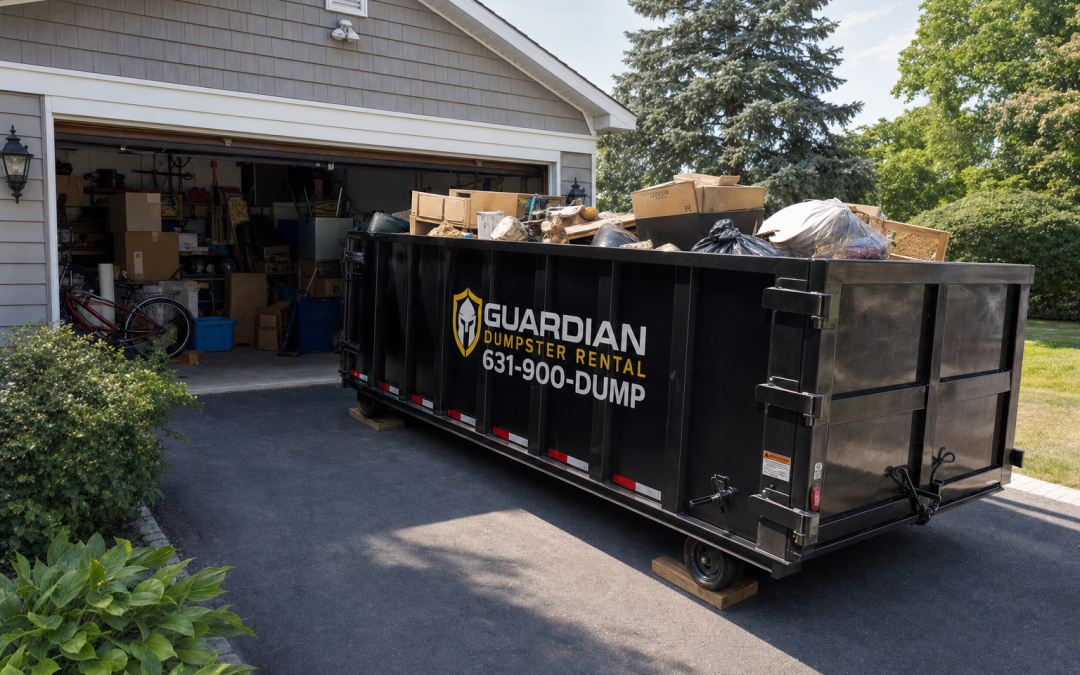
A garage cleanout dumpster in the 10 yard size gives most Suffolk County homeowners exactly enough capacity to empty a one- or two-car garage in a single weekend. It fits in a standard driveway, holds roughly three to four pickup truck loads of clutter, and turns a dragged-out chore into a two-day project with a clear finish line.
Key takeaways
- A 10 yard dumpster holds roughly 3-4 pickup truck loads, which is typically enough for a full single-car garage cleanout.
- Sort items into keep, donate, sell, and toss piles before the dumpster arrives so you only pay to haul true junk.
- Suffolk County homeowners should confirm driveway placement rules and check with their town about permits before delivery.
- Hazardous items like paint, propane tanks, and motor oil cannot go in a garage cleanout dumpster and need separate disposal.
- Booking your dumpster for a Friday-to-Monday window gives you a full weekend to work without rushing the load.
The reason this pairing works so well comes down to momentum. When you have a dumpster sitting in the driveway, every decision becomes simple: keep it, donate it, or toss it in the container. There are no piles waiting for a future dump run, no bags stacking up at the curb over multiple trash days, and no half-finished garage haunting you for the rest of the summer. You load as you sort, and when the weekend ends, the mess leaves with the dumpster.
What Makes the 10 Yard Size the Sweet Spot
Bigger isn’t always better for a garage project. A 10 yard roll-off hits the balance between capacity and convenience for a few practical reasons:
- Driveway-friendly footprint: A 10 yard container is compact enough to sit on a typical Suffolk County residential driveway without blocking the garage door you’re working out of.
- Low sidewalls: Shorter walls mean you can lift boxes, old furniture, and broken tools over the side without a struggle — a real advantage when you’re loading solo or with one helper.
- Right-sized capacity: Most garages accumulate a mix of cardboard, old paint-free furniture, sports gear, broken shelving, and general clutter. That mix typically fits comfortably in 10 cubic yards.
- Lower cost than oversizing: Renting a container larger than you need means paying for air. A 10 yard keeps the budget tight for a single-room-scale cleanout.
How the Weekend Plan Works at a Glance
The basic structure is simple, and the rest of this guide breaks each step down in detail:
- Before the weekend: Schedule delivery for Friday so the dumpster is waiting when you start Saturday morning.
- Saturday: Pull everything out of the garage, sort into keep, donate, and toss piles, and load the toss pile as you go.
- Sunday: Clean the empty space, reorganize what you’re keeping, and finish loading. Pickup happens early the following week.
If you’re on the South Shore, a 10 yard dumpster rental in Babylon is built for exactly this kind of project — tight driveways, garage-scale volume, and quick turnaround. The sections below cover whether 10 yards is truly enough for your garage, how to prep before delivery day, and the step-by-step plan that gets you from cluttered to cleared in one weekend.
Is a 10 Yard Garage Cleanout Dumpster Big Enough?
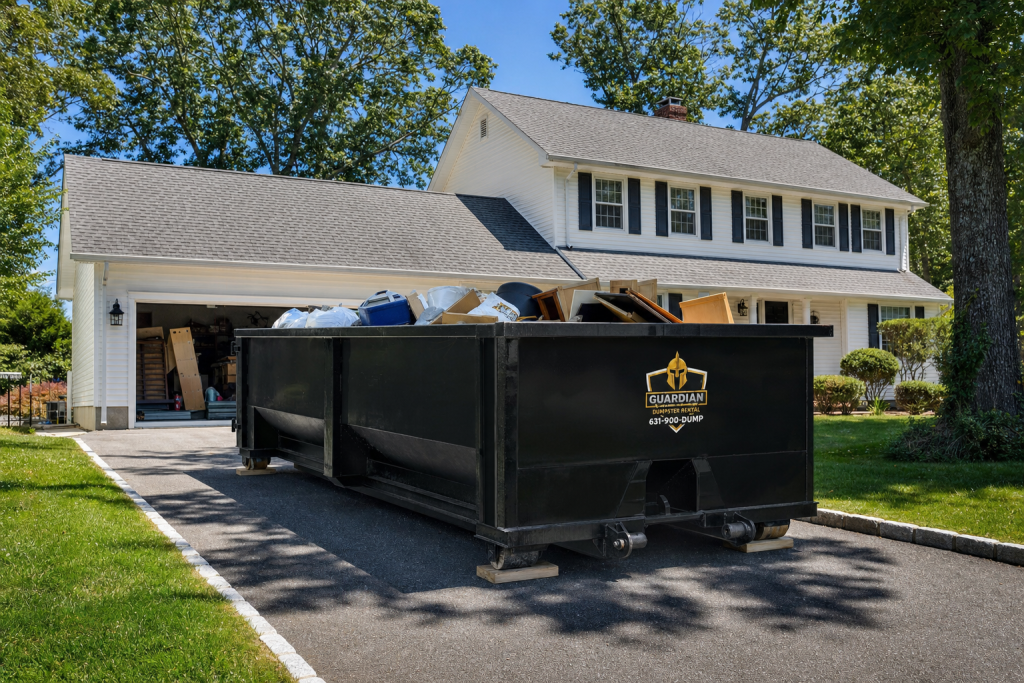
Yes — for most single or two-car garages, a 10 yard garage cleanout dumpster is plenty. It holds roughly three full pickup truck loads of junk, which covers the boxes, old furniture, shelving, and general clutter that accumulate in a typical Suffolk County garage. Only whole-home cleanouts usually need a bigger container.
What 10 Yards Actually Looks Like
A 10 yard roll-off is typically about 12 feet long, 8 feet wide, and 3.5 feet tall — compact enough to fit in most Suffolk driveways without blocking the second car. The “10 yards” refers to 10 cubic yards of volume. In practical terms, that means:
- Roughly 3 full-size pickup truck loads of debris
- About 50–70 standard 33-gallon trash bags
- Enough room for bulky items plus loose boxes packed around them
Typical Garage Junk That Fits Easily
Most of what hides in a garage is bulky but not particularly heavy, which is exactly what this size handles well:
- Old furniture — couches, recliners, dressers, mattresses
- Cardboard boxes and bins of forgotten storage
- Sports gear, bikes, and broken exercise equipment
- Old shelving units, workbenches, and cabinets
- Most household appliances (check the prohibited items section for exceptions)
- Rolled-up carpet, garden tools, and yard clutter that migrated indoors
The low 3.5-foot walls are a real advantage for a garage cleanout, too. You can toss items over the side or walk them up the rear door without wrestling anything over your head — a big deal when you’re on hour four of a Saturday cleanout.
When You Should Size Up
A 10 yard container gets tight when the project grows beyond the garage itself. Consider a larger dumpster if any of these apply:
- The garage plus the basement or attic: Once you’re clearing two or three storage areas in one weekend, a 20 yard is the safer bet. A packed two-car garage plus decades of basement storage will overflow a 10 quickly.
- Whole-home or estate cleanouts: Clearing an entire house — furniture from every room, closets, and outbuildings — usually calls for a 20 or 30 yard roll-off.
- Demolition mixed in: If you’re also tearing out old garage drywall, a rotted shed, or built-in structures, the debris adds up faster than loose junk does.
If you’re on the fence, take a look at the 20 yard dumpster rental option, which is sized for whole-garage cleanouts combined with bigger household projects. That said, sizing up “just in case” isn’t always smart — a 10 yard costs less and fits tighter driveways. A good rule of thumb: mentally stack your junk into pickup-truck loads. Three loads or fewer, the 10 yard wins. Five or more, go bigger.
How Should I Prepare Before the Dumpster Arrives?
Before your garage cleanout dumpster arrives, pick a flat driveway spot with clear overhead access, lay down plywood to protect the concrete or asphalt, and move vehicles out of the way. Gather gloves, sorting bins, and plenty of water, and check the Suffolk weather forecast so delivery doesn’t collide with a summer thunderstorm.
A little prep the night before delivery saves you an hour or more of scrambling on Saturday morning. Most delivery drivers can place the container quickly if the spot is ready — and a well-placed dumpster makes every trip from the garage shorter and easier on your back.
Choose the Right Driveway Placement Spot
Walk your driveway and pick the spot that gets the container as close to the garage door as possible without blocking your ability to open it fully. A few things to check:
- Level ground: A flat, paved surface keeps the container stable and makes the door easier to swing open.
- Overhead clearance: Look up for tree branches, power lines, basketball hoops, and low-hanging eaves. Delivery trucks need vertical room to tilt and roll the container off.
- Vehicle access: Move cars out of the driveway the night before, and make sure the truck can back straight in without tight turns.
- Walking path: Leave enough space to carry bulky items past the container without squeezing sideways.
Protect Your Driveway with Plywood
Lay sheets of plywood where the container’s rails and rear wheels will sit. This spreads the weight and prevents scratches, gouges, or pressure marks — especially on asphalt, which softens in summer heat. Two or three sheets of 3/4-inch plywood placed in the truck’s path and under the container footprint is usually enough. If you’re unsure exactly where the container will land, ask the rental company when you book; most drivers are happy to place it on boards you’ve set out.
Gather Your Supplies the Night Before
Nothing kills momentum like stopping mid-cleanout to hunt for gloves. Stage these items in the garage before delivery day:
- Heavy-duty work gloves for everyone helping
- Contractor bags for loose debris and small junk
- Three or four bins or boxes labeled for keep, donate, and sell
- A broom, dustpan, and shop vac for the final sweep
- A cooler with water and snacks — garage work gets hot fast
- Closed-toe shoes and sunscreen if you’ll be working in the driveway
Watch the Suffolk Weather Forecast
Summer afternoons on Long Island are prime time for pop-up thunderstorms. Check the forecast a few days out and aim for a morning delivery so you can load during the cooler, typically drier hours. If storms are likely, plan to keep a tarp handy — covering the container prevents rainwater from adding weight to your load and soaking cardboard and upholstered items. Building a little weather flexibility into your weekend plan means a passing storm becomes a break, not a derailment.
What’s the Best Step-by-Step Weekend Plan for a Garage Cleanout?
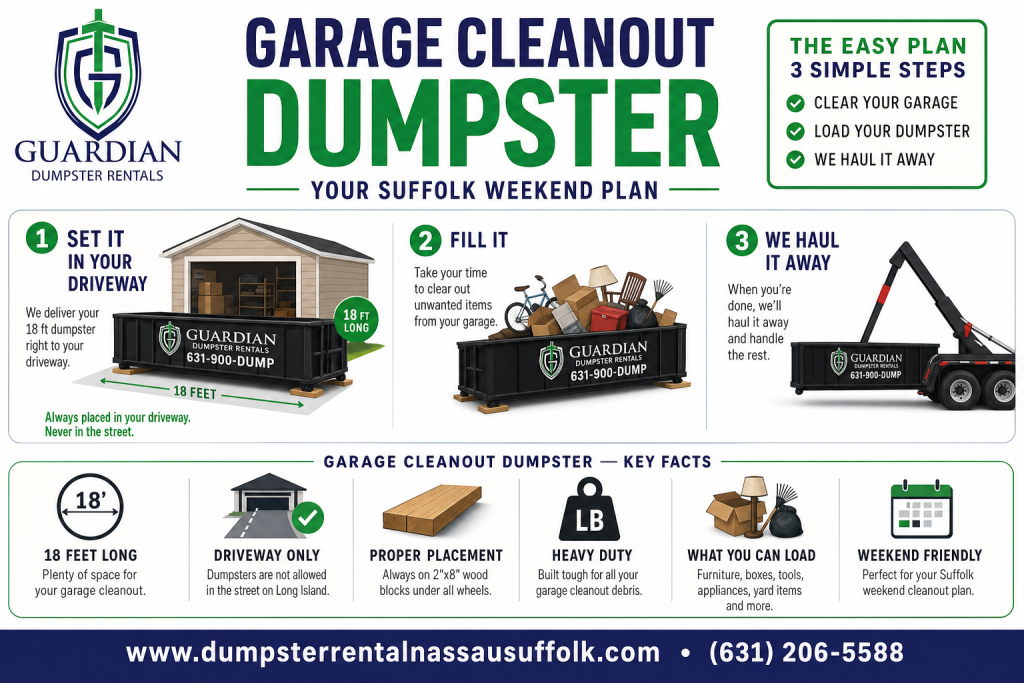
The best weekend plan is simple: start early Saturday morning, empty the garage completely, sort everything into keep, donate, and toss piles, then load your garage cleanout dumpster with flat and heavy items first. Reserve Sunday for hauling donations, sweeping the empty space, and putting the keepers back in an organized way.
Breaking the job into two clear days keeps the momentum going and prevents the classic mistake of running out of steam with half the garage still sitting in the driveway. Here’s how to pace it.
Saturday Morning: Empty Everything Out
Start as early as you reasonably can. Suffolk summers get humid fast, and a garage with the door open turns into an oven by early afternoon. Aim to have everything pulled out onto the driveway or lawn before the sun is high. Emptying the garage completely — rather than sorting shelf by shelf — forces honest decisions and lets you see exactly what you own.
Saturday Midday: The Three-Pile Sort
Work through everything using three piles, and commit to one of the three for every single item:
- Keep: Things you’ve used in the past year and have a real home for. Be strict — this pile grows fastest.
- Donate or give away: Working tools, sporting goods, and furniture someone else could use. Stage these near your vehicle so they’re easy to load Sunday.
- Toss: Broken, rusted, water-damaged, or simply unwanted items headed straight for the dumpster.
If you’re stuck on an item for more than thirty seconds, set it aside in a small “decide later” spot — but cap that pile. Endless deliberation is what turns a weekend project into a month-long one.
Saturday Afternoon: Load the Dumpster Strategically
Loading order matters more than most people expect. A well-packed garage cleanout dumpster holds noticeably more than one filled at random:
- Place flat items — old plywood, shelving, doors, broken-down boxes — on the bottom as a base layer.
- Add heavy, dense items next, distributing weight evenly across the container rather than piling it at one end.
- Break down anything bulky before it goes in, and fill gaps with small loose items as you go.
- Keep everything level with or below the top rail so the container can be hauled legally and safely.
Sunday: Donate, Sweep, and Reset
Sunday is the payoff day. Run your donation load out in the morning, then come back to a nearly empty garage. Sweep the floor corner to corner, knock down cobwebs, and wipe shelving before anything goes back in. Return keepers by zone — tools together, seasonal gear together, sports equipment together — and keep the floor as clear as possible. Store frequently used items at waist height and rarely used items up high. By Sunday evening, you’ll have a clean, functional garage and a loaded dumpster ready for pickup.
What Can’t Go in a Garage Cleanout Dumpster?
Hazardous and flammable items can’t go in a garage cleanout dumpster. That includes paint, motor oil, gasoline, antifreeze, propane tanks, car batteries, tires, pesticides, and solvents. These materials pose fire, leak, and contamination risks, so haulers prohibit them — but Suffolk County towns offer household hazardous waste drop-off programs that accept most of them for free.
Garages tend to collect exactly the kinds of items dumpster companies won’t take, so it pays to sort these out before your rental arrives. Tossing prohibited items in the container can lead to extra fees, a refused pickup, or in the worst case, a safety hazard for the driver and the disposal facility.
Common Garage Items You’ll Need to Handle Separately
- Paint and stains: Liquid paint is a no-go. Latex paint can often be dried out completely (with kitty litter or a paint hardener) and then discarded with regular trash in many areas — check your town’s rules. Oil-based paints and stains should go to a hazardous waste drop-off.
- Motor oil and antifreeze: Never put these in a dumpster. Many auto parts stores and service stations accept used motor oil for recycling, and town drop-off events take antifreeze.
- Gasoline and other fuels: Old gas from mowers, snowblowers, or gas cans is highly flammable and strictly prohibited. Bring it to a household hazardous waste collection.
- Propane tanks: Even “empty” tanks can contain residual gas under pressure. Exchange them at a retailer or bring them to a designated drop-off site.
- Car batteries and rechargeable batteries: Lead-acid car batteries are recyclable — most auto parts retailers take them back, often with a small refund of your core charge. Rechargeable and lithium batteries also need special handling.
- Tires: Whole tires are banned from most dumpsters and landfills. Tire shops will usually recycle them for a small fee, and some town facilities accept a limited number from residents.
- Household chemicals: Pesticides, herbicides, pool chemicals, solvents, adhesives, and drain cleaners all belong at a hazardous waste collection, not in your dumpster.
Where to Take Hazardous Waste in Suffolk County
Suffolk County towns operate household hazardous waste collection programs — often called S.T.O.P. (Stop Throwing Out Pollutants) programs — with scheduled drop-off days or permanent facilities for residents. Check your town’s recycling or sanitation department website (Babylon, Brookhaven, Huntington, Islip, Smithtown, and the East End towns each run their own) for dates, locations, and accepted items. Most require proof of residency, so bring your ID.
A smart move: as you sort the garage, stage a “hazardous corner” away from the dumpster pile. That way nothing risky ends up in the container by accident, and you can make one trip to the drop-off site once the weekend cleanout is done.
How Much Does a 10 Yard Dumpster Cost in Suffolk County?
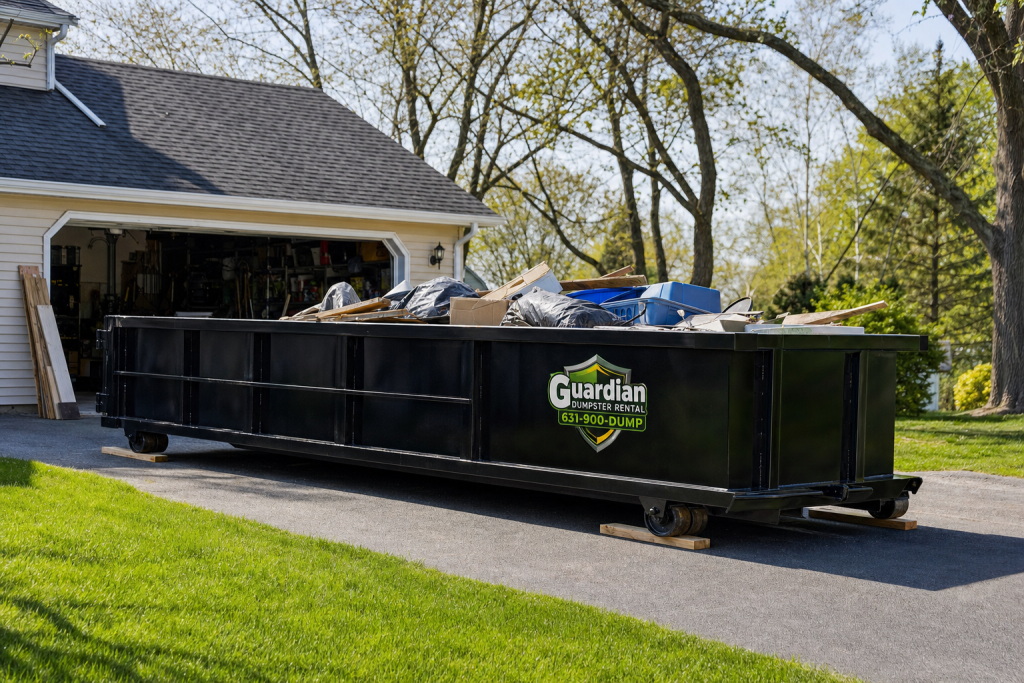
In Suffolk County, a 10 yard garage cleanout dumpster is typically priced as a flat-rate rental that bundles delivery, pickup, a set rental period, and a weight allowance into one price. Your final cost depends on your location, how long you keep the container, and whether your load stays within the included weight limit.
Because pricing varies by hauler and by town, the smartest move is to get a written quote that spells out exactly what’s included. A quote that looks cheap up front can end up costing more if the weight allowance is small or the rental window is short.
What Drives the Price of a 10 Yard Rental
- Rental period: Most flat rates include several days to a week — perfect for a weekend project. Extra days usually add a modest daily fee, so confirm the included window before you book.
- Weight allowance: A 10 yard container typically includes one to two tons of debris. Garage junk — boxes, old furniture, sports gear — is usually light, but concrete, dirt, or shingles can push you over quickly.
- Delivery area: Haulers price partly on distance to the nearest transfer station or landfill. Addresses farther from disposal facilities in Suffolk County may see slightly higher rates.
- Disposal fees: Landfill and transfer station tipping fees are baked into your flat rate, which is why prices differ from region to region.
How Flat-Rate Pricing Works
With a flat-rate rental, you pay one agreed price covering drop-off, the rental period, hauling, and disposal up to the weight cap. If your debris exceeds that cap, you’ll pay an overage fee — usually charged per ton, prorated based on the scale ticket from the disposal facility. Ask your hauler to show you the ticket if you’re ever billed for extra weight.
Tips for Getting the Best Value
- Keep the load level with the rim. Haulers can’t legally transport an overfilled container, and anything above the fill line may need to be removed before pickup — or trigger an extra charge.
- Don’t pay to toss what you can donate or recycle. Working tools, bikes, and furniture can go to local charities, and metal items often have scrap value. The EPA’s recycling resources are a good starting point for what can stay out of the landfill.
- Break down bulky items. Flattening boxes and disassembling shelving lets you fit more into the space you’re already paying for.
- Schedule pickup promptly. Returning the dumpster within the included rental window avoids per-day extension charges.
- Get everything in writing. Confirm the rental period, weight allowance, overage rate, and any prohibited-item fees before the truck arrives so there are no surprises on the invoice.
About 3-4 pickup truck loads
10 Yard Dumpster Capacity
3-7 days for most weekend projects
Typical Rental Window
Roughly 12-14 ft long — fits most driveways
Common Footprint
Load level with the top rim, never above it
Fill Rule
Garage Cleanout Dumpster Weekend Plan at a Glance
| Phase | Timing | Main Tasks |
|---|---|---|
| Prep | Weekdays before delivery | Book the dumpster, clear driveway space, gather gloves and bins |
| Sort | Friday evening / Saturday AM | Create keep, donate, sell, and toss zones inside the garage |
| Load | Saturday PM / Sunday AM | Load heavy items first, break down bulky pieces, keep the load level |
| Wrap-Up | Sunday PM / Monday | Sweep the garage, drop off donations, schedule dumpster pickup |
Illustrative Example: A Two-Day Garage Turnaround
Illustrative example
Consider a hypothetical Suffolk County couple whose two-car garage had become a storage unit — old furniture, broken tools, and boxes untouched since their move. They scheduled a 10 yard dumpster for Friday delivery and spent that evening sorting everything into keep, donate, and toss zones. On Saturday they loaded heavy items like an old workbench first, then filled gaps with bagged debris, finishing well within the container's rim. By Sunday afternoon the garage was swept clean with room for both cars, and the dumpster was picked up Monday morning. This composite scenario reflects a typical weekend cleanout, not a specific client's project.
Frequently asked questions
Is a 10 yard dumpster big enough for a garage cleanout?
For most single or two-car garages, yes. A 10 yard dumpster holds roughly three to four pickup truck loads, which covers typical garage clutter like boxes, old furniture, broken tools, sports gear, and shelving. If your garage is packed floor to ceiling or you're also clearing an attic or shed, consider sizing up, since a second haul usually costs more than renting one larger container upfront.
How much does a garage cleanout dumpster cost in Suffolk County?
Pricing varies by company, rental length, and weight allowance, so get quotes from two or three local haulers before booking. Ask whether the price is flat-rate or if there are overage fees for exceeding the weight limit, and confirm what's included, such as delivery, pickup, and disposal. Rental periods and included tonnage differ, so comparing the full terms matters more than comparing the headline price alone.
What can't I put in a dumpster during a garage cleanout?
Most haulers prohibit paint, motor oil, gasoline, propane tanks, car batteries, pesticides, and other hazardous chemicals, which are exactly the items garages tend to collect. Tires, refrigerators, and electronics often have restrictions or extra fees too. Set these aside as you sort and take them to a household hazardous waste collection event or drop-off site instead. Always confirm your rental company's specific banned-items list before loading.
Can a garage cleanout really be done in one weekend?
Yes, if you plan ahead. Schedule dumpster delivery for Friday, spend Saturday pulling everything out and sorting into keep, donate, sell, and toss piles, then load the dumpster and reorganize what stays on Sunday. The biggest time sink is deliberating over individual items, so set quick decision rules in advance. A helper or two cuts the work dramatically, especially for heavy lifting.
Do I need a permit to put a dumpster in my driveway in Suffolk County?
If the dumpster sits entirely on your private driveway, you typically don't need a permit. If it must go on the street, most towns and villages require a permit, and rules vary by municipality within Suffolk County. Call your town or village hall before delivery to confirm. Placing it on your own property is usually the simplest and cheapest route.
Will a dumpster damage my driveway?
It can, especially on asphalt in warm weather or older concrete. Ask your rental company to place plywood boards or planks under the dumpster's contact points to spread the weight, or lay them down yourself before delivery. Also avoid overloading one end of the container. Most reputable haulers are careful during drop-off and pickup, but the protective boards are cheap insurance either way.
What are the biggest mistakes people make when renting a dumpster for a garage cleanout?
Common mistakes include ordering too small a container, loading heavy items like concrete or dirt without checking weight limits, filling above the rim so the hauler can't legally transport it, and tossing prohibited items that trigger fees. Another is skipping the sorting step and throwing away things worth donating or selling. Load flat and dense, break down bulky items, and fill gaps to maximize space.
Should I rent a dumpster or hire a junk removal service for a garage cleanout?
Rent a dumpster if you want to work at your own pace over the weekend and don't mind the physical labor — it's usually the cheaper option for a full garage. Choose junk removal if you can't lift heavy items, want everything gone in a couple of hours, or have only a small amount of stuff. Junk removal charges by volume and includes labor; a dumpster does not.
How long can I keep a rental dumpster before extra fees kick in?
Most companies include a set rental period, commonly around a week, though some offer shorter weekend rates. Daily fees apply after the included window. For a weekend garage cleanout, a standard rental gives you plenty of buffer if the project runs long. Confirm the exact rental period, the per-day extension fee, and how much notice the company needs to schedule pickup before you sign.
What should I do with usable stuff I find during the cleanout instead of throwing it away?
Sort usable items into donate and sell piles as you go. Furniture, tools, and sporting goods in decent shape can go to local thrift stores, charities, or free curb alerts on neighborhood apps. Sell higher-value items through Facebook Marketplace or a quick garage sale. Donating keeps items out of the landfill and frees dumpster space for genuine junk, but set a deadline — anything not gone within a week goes in.
Related local pages
- Dumpster Rental Babylon New York: Sizing, Placement, And Same-Week Delivery For South Shore Projects
- Dumpster Rental Bay Shore New York — 10, 20, And 30 Yard Roll-Offs Sized For South Shore Homes And Job Sites
Ready to reclaim your garage this weekend? Call us today to reserve your 10 yard dumpster and get same-week delivery anywhere in Suffolk County. Get in touch.
Last updated: August 13, 2026
Recent Comments