
Restaurant Renovation Dumpster: Gut & Reopen Fast in NY
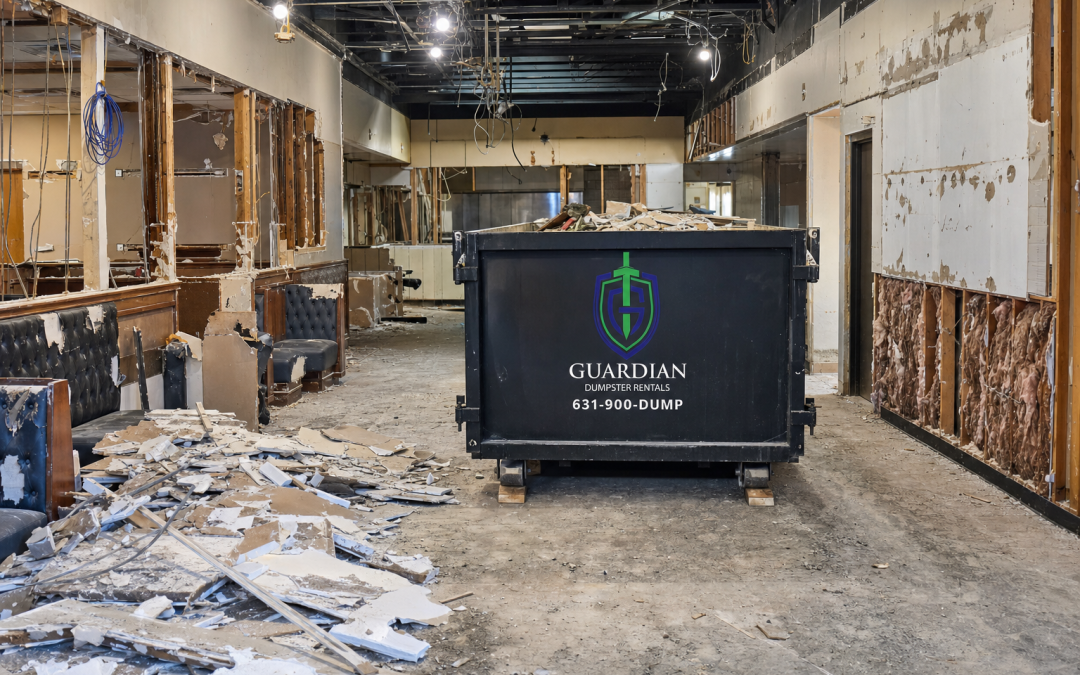
Why Every Day Between Lease Signing and Opening Day Costs You Money — and How a Restaurant Renovation Dumpster Helps
A restaurant renovation dumpster on site from day one is the single biggest schedule-saver when you’re gutting a space in New York, because your rent clock starts the moment you sign the lease. A 30 yard container lets crews demo and load simultaneously, so debris never piles up and stalls your reopening timeline.
Key takeaways
- A 30 yard dumpster is the go-to size for gutting a full restaurant dining room, handling booths, drywall, fixtures, and flooring in fewer hauls.
- Scheduling your restaurant renovation dumpster delivery for the same week the lease is signed keeps demo crews working instead of waiting.
- Prohibited materials like brick, concrete, dirt, and yard waste must stay out of the dumpster, so plan demo around furniture, drywall, and fixture debris.
- Smaller 10 yard and 20 yard dumpsters work well for phased work like bar tear-outs or kitchen refresh debris when a full gut isn't needed.
- In NY, confirming street placement permits before delivery prevents the most common cause of renovation timeline slips.
Most NY commercial leases don’t wait for your grand opening. Rent, insurance, utilities, and often common-area charges begin accruing immediately — whether your dining room is serving guests or sitting full of torn-out booths and old drywall. Every week your space is a construction zone instead of a revenue-generating restaurant, you’re paying out with nothing coming in. That’s why experienced operators treat demolition speed as a financial decision, not just a construction one.
The Real Cost of a Slow Gut-Out
When debris removal lags behind demolition, everything downstream slips: inspections get pushed, trades can’t start, and your target opening date drifts. The pain is worst for owners racing to open before the fall and holiday dining season — miss that window and you may wait months for the next strong revenue period. A dedicated commercial dumpster rental in Bay Shore NY or any other Long Island restaurant corridor keeps the tear-out moving at full speed instead of waiting on hauling trips.
- Rent with no revenue: every extra demo day is a day of lease payments your kitchen can’t offset.
- Stacked trades: plumbers, electricians, and HVAC crews can’t work around mountains of old fixtures and flooring.
- Delayed inspections: health and building inspectors need a clear, safe space — debris on the floor pushes appointments back.
- Missed seasonal demand: opening after the holiday rush instead of before it can mean a much slower first quarter.
Why a 30 Yard Dumpster From Day One Is the Fix
Gutting a dining room produces a surprising volume of bulky, awkward material — banquettes, bar tops, drop ceilings, paneling, old millwork. A 30 yard dumpster swallows that volume without constant swap-outs, which means your crew demos continuously instead of stopping to wait for an empty container. For smaller refresh projects, a 10 or 20 yard container may be the better fit, but for a full gut-out, going bigger almost always saves time and money overall.
The smartest move is to have the container delivered before demolition starts, not after debris is already blocking the floor. If your project is elsewhere in Suffolk County, the same logic applies — scheduling a commercial dumpster rental in Commack NY ahead of your demo crew’s first swing keeps the whole project on the fast track. The sections below break down exactly how much debris to expect, which size to choose, and how to sequence everything around a hard opening date.
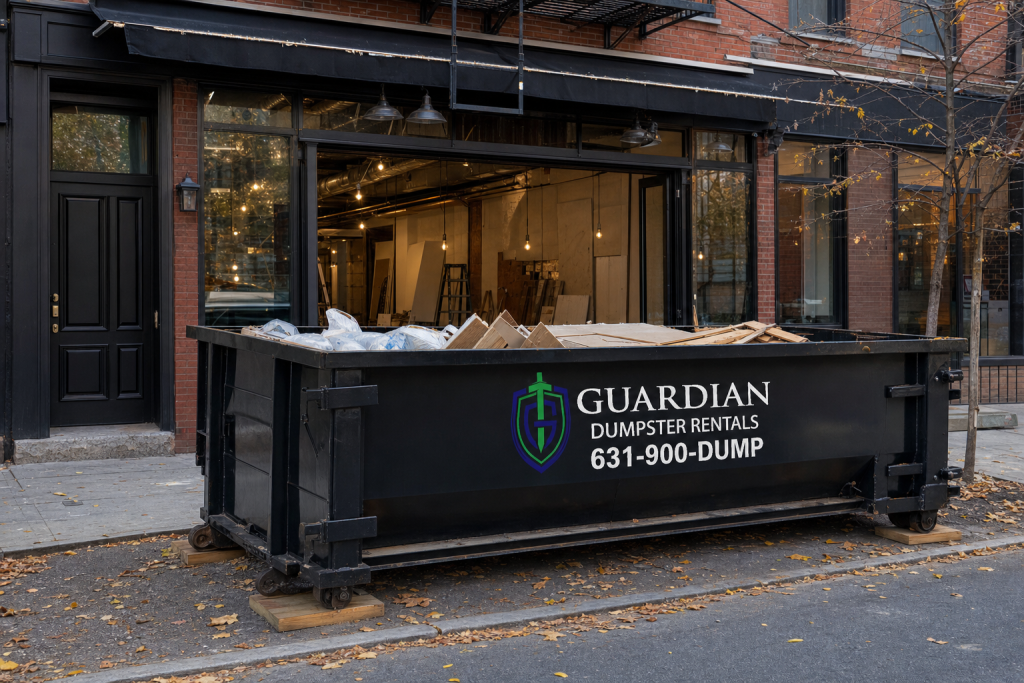
How Much Debris Does Gutting a Restaurant Dining Room Create? (Restaurant Renovation Dumpster Math)
A full dining room gut typically produces far more debris than owners expect — often 20 to 40 cubic yards for a mid-sized NY restaurant. Built-in booths, bar tops, drywall, drop ceilings, old flooring, and light fixtures add up fast, which is why most dining room demos fill at least one 20 or 30 yard restaurant renovation dumpster.
The reason so many owners underestimate is simple: a dining room looks like open space. But almost everything in that room was built in place, and once you start pulling it apart, it doesn’t come out flat. Demolition debris is bulky, awkward, and full of air gaps — a single booth bench can take up two to three times its assembled volume once it’s broken into panels, framing, and upholstered sections.
Where the Hidden Volume Comes From
Walk the room before demo day and tally these items. Each one is deceptively large once it hits the dumpster:
- Built-in booths and banquettes: Plywood boxes, framing lumber, foam, and vinyl — one long banquette wall can consume several cubic yards on its own.
- Bar tops and back bars: Laminate counters, cabinet carcasses, shelving, and the framed knee wall beneath them.
- Drywall: A room-wide refresh often means stripping walls to the studs, and sheetrock stacks heavy and fast.
- Drop ceilings: Grid rails, hundreds of tiles, and the old insulation sitting above them — flimsy individually, voluminous together.
- Old flooring: Layers of vinyl, laminate, or wood flooring, plus underlayment, often two or three generations deep in older NY buildings.
- Light fixtures and HVAC grilles: Troffers, pendants, and diffusers that can’t be compacted.
- Kitchen pass-through framing: Studs, headers, drywall, and trim from reconfigured openings between the kitchen and dining area.
Translating Square Footage into Cubic Yards
A useful rule of thumb for a full interior gut: every 500 square feet of dining room generates roughly 10 to 15 cubic yards of mixed debris, depending on how built-out the space is. A 1,000 square foot dining room with booths, a bar, and a drop ceiling can easily produce 20 to 30 cubic yards — meaning a 10 yard container will need multiple swaps, while a single 30 yard box might handle it in one pull. Teams handling Commercial Dumpster Rental in Commack NY see this pattern constantly on restaurant jobs.
If your space is heavily built out — wall-to-wall banquettes, a long bar, multiple framed partitions — budget toward the high end of that range. It’s far cheaper to size up once than to stall your demo crew waiting on a swap. Providers of Commercial Dumpster Rental in Dix Hills NY can walk through your square footage and build-out level before you commit to a container size.
Which Restaurant Renovation Dumpster Size Do You Need: 10, 20, or 30 Yard?
Most full restaurant gut-outs need a 30 yard dumpster, which handles an entire dining room demo in one container. A 20 yard works for partial remodels of a single dining area, while a 10 yard suits a light refresh like pulling old fixtures, booths, or a small bar section.
Choosing the right restaurant renovation dumpster size comes down to matching the container to the scope of your demo. Going too small means swap-out delays that push your opening date; going too big only costs you a little extra, which is why experienced contractors round up when the timeline is tight.
Container Sizes Table
| Size | Best For | Typical Weight Limit | Footprint |
|---|---|---|---|
| 10 Yard | Small refresh or single-area demo: booths, fixtures, a bar tear-out, or flooring from one room | Roughly 1–2 tons | About 12 ft long x 8 ft wide x 3.5 ft tall |
| 20 Yard | Partial dining room remodel: drywall, ceiling tiles, seating, counters, and old finishes from a defined zone | Roughly 2–3 tons | About 22 ft long x 8 ft wide x 4.5 ft tall |
| 30 Yard | Full gut between lease signing and opening: walls, ceilings, flooring, millwork, and front-of-house buildout debris | Roughly 3–4 tons | About 22 ft long x 8 ft wide x 6 ft tall |
Why Most Full Gut-Outs Justify the 30 Yard
Restaurant interiors are deceptively dense. A previous tenant’s buildout usually includes layered flooring, soffits, bulky banquettes, host stands, and partition walls — and all of it is awkward, bulky material that eats container space fast. Owners who order a 20 yard for a full gut almost always end up paying for a second haul. If you’re coordinating a commercial dumpster rental in Dix Hills NY for a complete tear-out, the 30 yard is almost always the smarter call.
- Fewer swap-outs: One 30 yard often replaces two 20 yard hauls, keeping your crew working instead of waiting.
- Taller walls: The 6-foot sides swallow bulky booths and millwork that would crowd out a shorter container.
- Buffer for surprises: Gut jobs always uncover extra material behind walls and above drop ceilings.
When a 10 or 20 Yard Makes Sense
If you’re keeping the existing layout and only replacing finishes, seating, or a single section of the front of house, a 10 or 20 yard keeps costs down and fits tighter parking areas. For a mid-size partial remodel, booking a roll off dumpster rental in Greenlawn at the 20 yard size usually covers the job without wasted capacity. Just confirm the weight limit with your hauler before loading dense materials like tile, since overage fees apply by the ton.
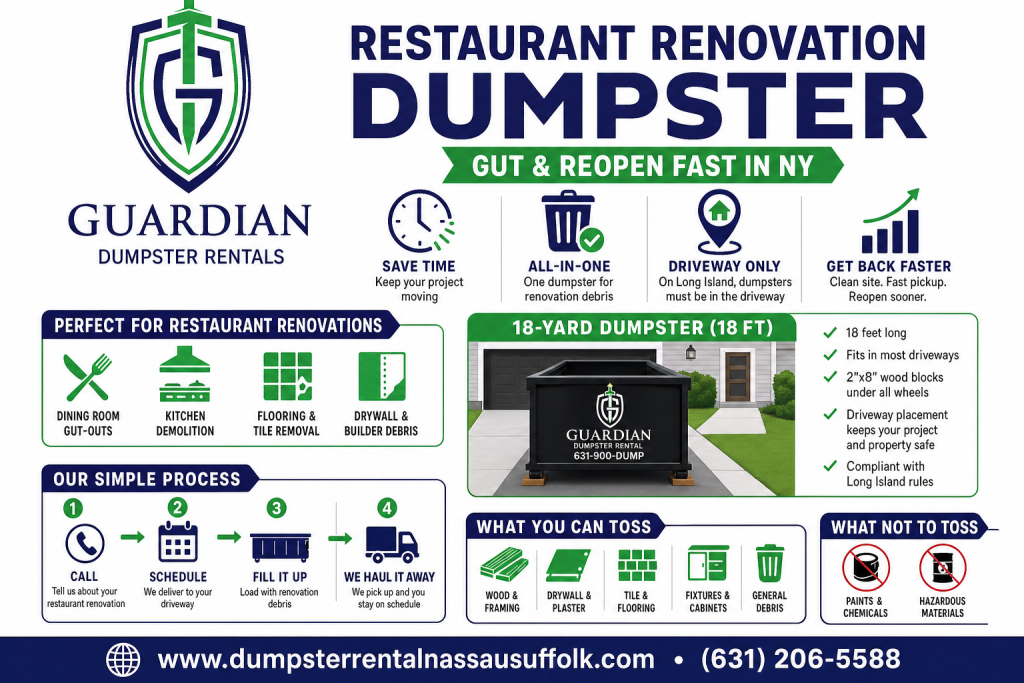
What Can’t Go in a Commercial Dumpster During a Restaurant Demo?
Brick, concrete, dirt, and yard waste are not allowed in a restaurant renovation dumpster, and neither are refrigerant-containing appliances, grease-saturated materials, or hazardous liquids. Loading any of these can trigger surcharges or a failed pickup that stalls your demo, so plan separate disposal paths for them before the crew swings the first hammer.
A failed pickup is the real killer here. If the driver arrives and spots prohibited material on top of the load, the container may be left on site until you dig it out — and every day it sits full is a day your build-out crew has nowhere to throw debris. Knowing the rules up front keeps the container cycling and your opening date intact.
The Four Hard No’s: Brick, Concrete, Dirt, and Yard Waste
These four materials are prohibited in the dumpster, full stop. Dense masonry and soil overload a roll-off fast and can exceed road weight limits, while yard waste typically has to be processed separately. If your demo involves removing a masonry half-wall, a concrete step, or landscaping out front, arrange a dedicated hauling solution for that material rather than mixing it into your general debris load. Companies that handle construction debris removal in Lindenhurst NY can usually advise on where masonry and soil should go instead.
Grease-Saturated Materials Need Special Handling
Restaurants are unique in how much grease soaks into the building itself. Before you toss anything, assess:
- Hood systems and ductwork: Often coated in flammable grease residue — many haulers require them to be cleaned or handled as a separate waste stream.
- Grease trap contents: Never pour trap waste into a dumpster. It must be pumped out by a licensed grease hauler.
- Soaked flooring and subfloor near the fry line: Heavily saturated sections may be refused; ask your hauler how they classify it before loading.
Refrigerant Appliances and Other Red-Flag Items
Walk-in coolers, reach-in refrigerators, ice machines, and freezers contain refrigerant that must be recovered by a certified technician before the unit can be scrapped. Until the refrigerant is properly evacuated and documented, the appliance cannot go in the container. Other items that need their own disposal path include:
- Fluorescent tubes and ballasts
- Propane tanks and compressed gas cylinders
- Paints, solvents, cleaning chemicals, and fryer oil
- Batteries and e-waste from POS systems
- Tires from any delivery equipment left behind
The simplest move is to confirm the prohibited list in writing when you book. A reputable provider of roll off dumpster rental in Islip will walk you through exactly what your 10, 20, or 30 yard container can accept so there are no surprises on pickup day. Five minutes of questions up front beats a rejected load mid-renovation.
How Do You Schedule Demolition Around a Hard Opening Date?
Work backward from your opening date: reserve your restaurant renovation dumpster the week you sign the lease, demo in weeks one and two, schedule swap-outs mid-demo so loading never stops, and hand the space over broom-clean by week three. Booking in early fall avoids the pre-holiday contractor crunch and weather delays.
A hard opening date — one tied to a lease clause, a liquor license hearing, or a holiday season you can’t afford to miss — leaves no room for a demo phase that drifts. The good news is that the demolition and debris-removal portion of a restaurant project is one of the most predictable parts of the whole build, as long as you sequence it deliberately.
A Week-by-Week Demo Timeline
- Week 1 (lease signing): Walk the space with your contractor, confirm what’s being gutted, and order the dumpster. A 20 or 30 yard container should be reserved now, not the day demo starts — delivery slots fill up fast.
- Week 2 (demo begins): Dumpster is dropped before crews arrive. Soft demo first — fixtures, booths, drop ceilings — then walls and flooring. Loading the container as you go keeps the floor clear and the crew moving.
- Week 3 (swap-outs and final pulls): When the first container fills, a swap-out replaces it with an empty one, usually within a day. Call for the swap when the dumpster is about three-quarters full so there’s no idle morning waiting on a haul.
- Week 4 (broom-clean handoff): Final debris goes out, the last container is pulled, and the space is handed to trades for build-out. Electricians and plumbers can’t rough-in around piles of demo debris, so this handoff date is the one that protects your opening.
How Swap-Outs Keep Demo Moving
A swap-out is simple: the hauler picks up your full dumpster and drops an empty one in the same spot on the same trip. For a full dining-room gut, plan on at least one swap rather than trying to cram everything into a single pull. Owners handling construction debris removal in Lindenhurst NY on tight commercial timelines typically lock swap dates into the demo schedule up front instead of calling day-of.
Why Fall Scheduling Matters in NY
Fall is the squeeze point. Contractors are racing to close out projects before the holidays, which means crews, inspectors, and delivery trucks are all booked solid from October through December. Add in the first cold snaps — which slow exterior work and complicate anything weather-dependent — and a one-week slip in demo can snowball into a month-long delay in opening. If your target is a winter or early-spring launch, booking a dumpster rental in Deer Park New York in September or early October gives you first pick of delivery dates before the crunch hits.
The bottom line: the dumpster is the first thing you order and the last thing that leaves. Treat its delivery, swap, and final pickup as fixed milestones on your calendar, and the rest of the build-out has a clean runway.
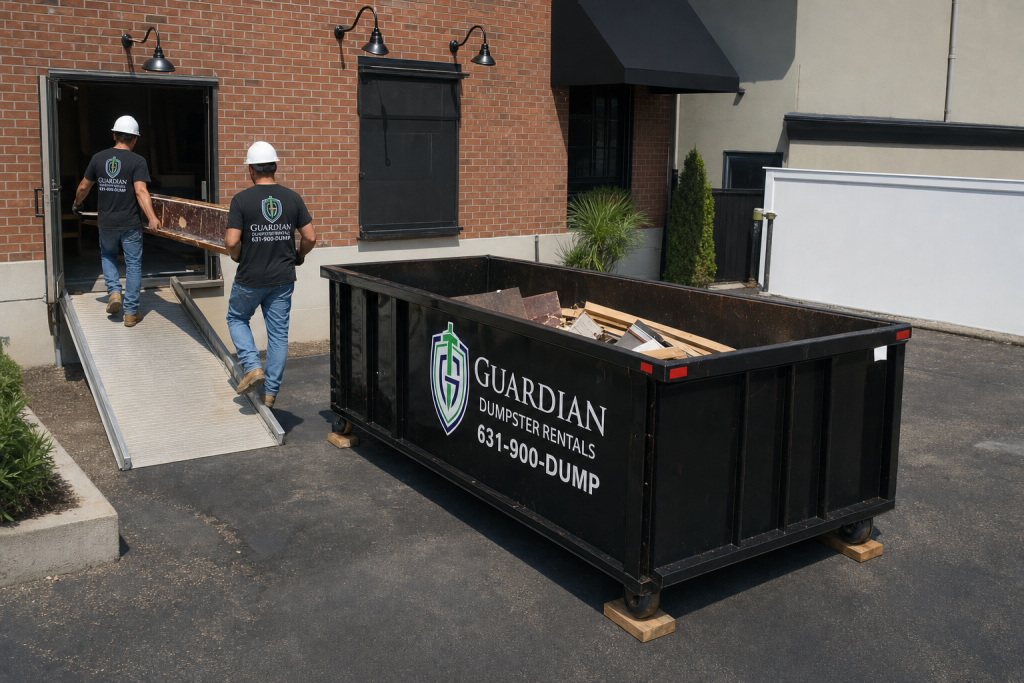
Where Can You Put a Dumpster at a NY Restaurant — and Do You Need a Permit?
In New York, a dumpster placed entirely on private property — your parking lot, rear alley, or loading area — usually needs no permit. If the container must sit on a public street or sidewalk, most villages and towns require a street-occupancy permit from the local highway or building department before delivery day.
Private Property First: Lots, Alleys, and Loading Zones
Tight commercial corridors on Long Island rarely leave room out front, so the best placement is almost always behind the building. A rear parking lot or service alley keeps the restaurant renovation dumpster off the public right-of-way, shortens the carry distance for demo crews, and avoids the permit process entirely. Before the truck arrives, confirm:
- Overhead clearance: roll-off trucks need vertical room to tilt the bed — watch for awnings, signage, and power lines.
- Approach space: the driver needs a straight run to drop and later hook the container, so keep roughly 60 feet of clear approach.
- Landlord sign-off: in shared shopping centers, get written approval on the exact placement spot and how many parking stalls it occupies.
Street Placement and Municipal Permits
When the street is the only option, call your village or town hall before scheduling delivery — permit requirements, fees, and lead times vary by municipality across Nassau and Suffolk. Work on or near state routes may also fall under New York State DOT permitting, so flag your address when you apply locally. Local haulers who handle commercial dumpster rental in Bay Shore NY and similar downtown strips know which blocks typically require permits and reflective markings, which saves a round of phone calls.
Protecting Pavement and Keeping the Site Clean
A loaded 20 or 30 yard container is heavy, and so is the truck that retrieves it. Lay plywood sheets or wooden blocking under the container rails to spread the load and prevent gouging asphalt — especially on sun-softened summer pavement or older lots. In the fall, sweep wind-blown leaves away from the base regularly; leaves and other yard waste can’t go in the dumpster anyway, and a debris pile around the container invites complaints, illegal dumping, and blocked drainage. A tarp over the open top between work sessions keeps rain weight down and stops loose material from blowing into neighboring storefronts.
Coordinating Delivery in a Busy Corridor
Schedule drop-off for early morning before shoppers fill adjacent parking, and have someone on site to direct the driver to the exact spot — moving a container after placement means an extra trip fee. Companies serving commercial strips, like those offering dumpster rental in Lindenhurst New York, can usually time delivery around your demo crew’s start so the container is never sitting empty and eating a parking space. Following basic OSHA demolition safety guidance around the loading zone — cones, clear walkways, and controlled access — keeps pedestrians and staff out of the swing path while crews load.
30 yard dumpster
Most popular full-gut size
7–14 days, with swap-outs available
Typical rental period
Booths, drywall, flooring, fixtures, millwork
Common demo debris
Brick, concrete, dirt, yard waste
Not allowed in dumpster
Restaurant Renovation Dumpster Sizes Compared
| Dumpster Size | Best For | Typical Restaurant Use Case |
|---|---|---|
| 10 Yard | Small, focused tear-outs | Removing a bar area, old booths, or a single dining section |
| 20 Yard | Mid-size remodel debris | Flooring removal, drywall, ceiling tiles, and light fixture swaps |
| 30 Yard | Full dining room gut | Complete interior demo between lease signing and build-out |
Illustrative Example: A 6-Week Gut-to-Open Timeline
Illustrative example
Consider a hypothetical composite scenario: a new restaurant operator signs a lease on a former diner space in New York with six weeks until a planned soft opening. They schedule a 30 yard dumpster for delivery the day after keys are handed over, allowing the demo crew to strip booths, drywall, old flooring, and dated light fixtures without pausing for debris hauls. Midway through, a swap-out delivers a fresh 30 yard container so the second demolition phase continues without downtime. By keeping prohibited materials like brick and concrete out of the plan entirely, the project avoids load rejections and stays on schedule. The dining room is cleared within the first week, leaving the remaining five weeks for build-out, inspections, and opening prep.
Frequently asked questions
How much does a restaurant renovation dumpster cost in NY?
Pricing varies by city, rental period, and weight allowance, so get quotes from local haulers before you sign a lease on labor and equipment. A 30 yard commercial dumpster typically costs more upfront than a 10 or 20 yard, but it often saves money overall by avoiding extra haul fees and swap-outs during a full dining room gut. Always ask what tonnage is included and what overage charges apply per ton.
How long does it take to gut a restaurant dining room?
A straightforward dining room demo — booths, tables, drywall, flooring, drop ceilings, and old fixtures — often takes a few days to a week with a small crew, assuming permits are in place. The schedule stretches if you discover hidden damage, need asbestos testing in an older building, or wait on dumpster swaps. Ordering a 30 yard dumpster before demo day keeps the crew moving instead of stockpiling debris.
Is a 30 yard dumpster big enough for a full restaurant remodel?
For most single dining room gut-outs, yes. A 30 yard container handles bulky, lightweight debris like booths, drywall, ceiling tiles, cabinetry, and flooring in one or two loads. If your remodel includes the kitchen, bar, and restrooms too, plan on at least one swap-out. If space is tight at your location, a 20 yard with scheduled swaps can work, but it means more pickups and more chances for schedule delays.
What can't I throw in a restaurant renovation dumpster?
Brick, concrete, dirt, and yard waste are not allowed in these dumpsters, along with standard prohibited items like refrigerants, paint, chemicals, and anything hazardous. Old walk-in coolers and refrigeration units need refrigerant removed and certified before disposal. Grease, cooking oil, and fryer contents must go through a licensed recycler. Confirm the full prohibited list with your hauler before demo day so you're not stuck re-sorting a loaded container.
Do I need a permit to put a dumpster on the street in New York?
If the dumpster sits on private property like your parking lot, usually no. If it goes on a public street or sidewalk — common for storefront restaurants in NY cities — you'll typically need a street occupancy permit from the municipality. Rules, fees, and lead times vary by city, so apply early. Some haulers handle permits for you; ask when booking so a missing permit doesn't stall your demo.
What's the biggest mistake restaurant owners make when renting a dumpster for a remodel?
Sizing down to save money. Renting a 10 yard dumpster for a full dining room gut means multiple swap-outs, and every swap is a day your crew might stand around waiting. Other common mistakes: not confirming included tonnage, loading prohibited materials like brick or concrete, placing the container where delivery trucks can't reach it, and scheduling delivery after demo starts instead of before.
Should I rent a dumpster or hire a junk removal service for a restaurant gut?
For a full gut on a deadline, a dumpster rental usually wins. Your crew loads debris continuously as they work, on their schedule, which keeps demo moving. Junk removal services charge per load and work on their timetable — fine for clearing leftover furniture or a small punch-list, but expensive and slow for days of continuous demolition debris. Many owners use a 30 yard dumpster for demo, then junk removal for final cleanup.
How do I choose between a 10, 20, and 30 yard dumpster for my restaurant project?
Match the container to the scope. A 10 yard suits small refreshes — pulling flooring or clearing out old furniture. A 20 yard handles a partial remodel like a bar area or restrooms. A 30 yard is the standard choice for gutting an entire dining room, since demolition debris is bulky and fills space fast. When in doubt between two sizes on a deadline project, go bigger — swap-out delays cost more than the size difference.
Can I keep the dumpster for my whole renovation timeline?
Usually yes, but standard rentals include a set number of days, and extra days add daily fees. For a multi-week remodel, ask about extended rental rates upfront rather than paying day-by-day overages. Some owners schedule it in phases: a 30 yard for the demo week, return it during the quiet build-out phase, then a 10 yard at the end for packaging, scraps, and punch-list debris before opening day.
What happens if my dumpster is overloaded or too heavy?
Drivers can refuse pickup if debris sits above the fill line, since it's unsafe to transport — meaning a delay while you offload. Exceeding your included weight allowance triggers per-ton overage fees. Keep loads legal by distributing debris evenly, breaking down bulky items like booths and cabinetry, and never loading heavy materials like brick, concrete, or dirt, which aren't allowed in these containers anyway. Level loads get picked up on schedule.
Commercial Dumpster Rental help near you
- Commercial Dumpster Rental Dix Hills NY
- Commercial Dumpster Rental Commack NY
- Commercial Dumpster Rental Bay Shore NY
Related local pages
- Dumpster Rental Greenlawn New York
- Dumpster Rental Lindenhurst New York
- Dumpster Rental West Babylon New York
Racing a lease deadline? Reserve your 30 yard commercial dumpster today and keep your NY restaurant remodel on schedule from demo day to opening night. Get in touch.
Last updated: October 8, 2026
Recent Comments