
Commercial Dumpster Size Guide for NY Office Remodels
Quick Answer: Matching Your NY Remodel to the Right Commercial Dumpster Size
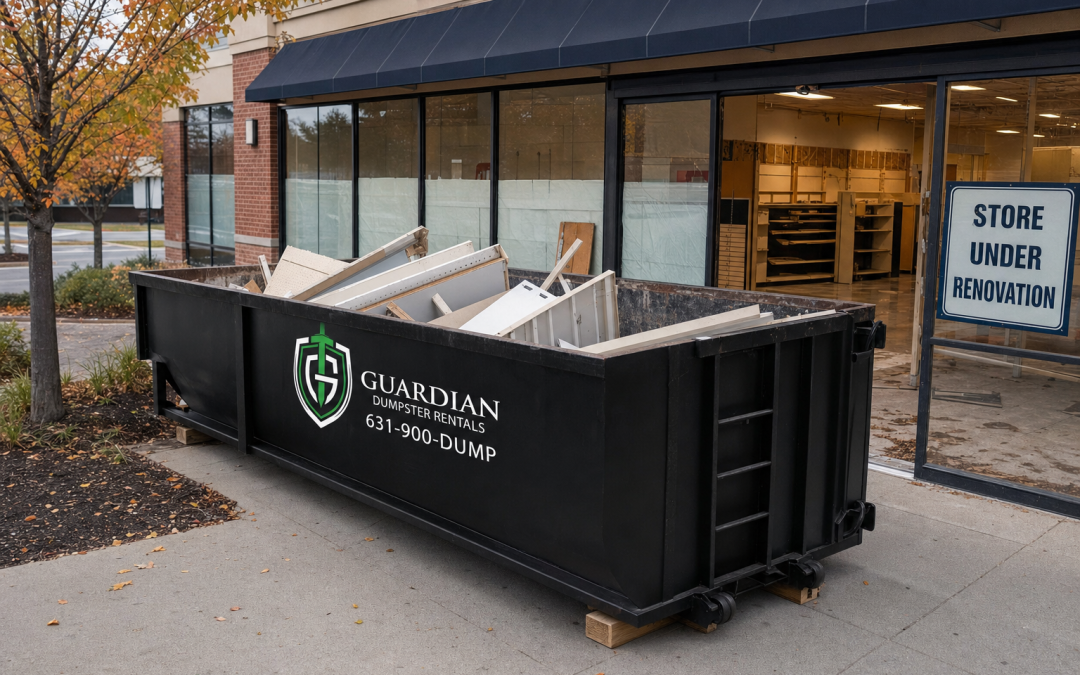
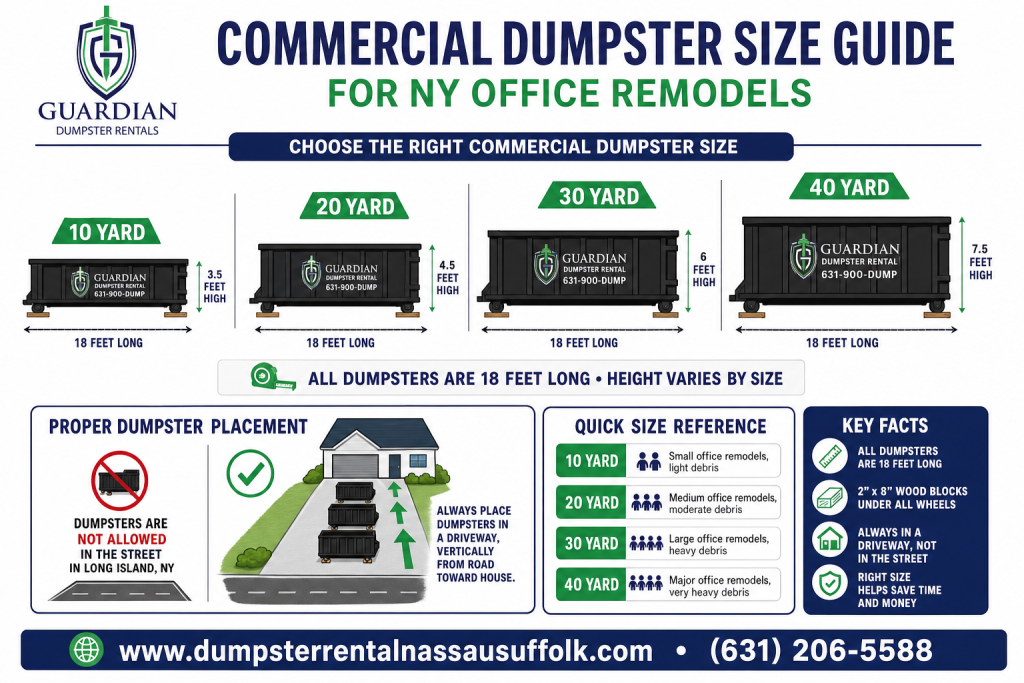
The right commercial dumpster size for a NY office remodel is usually a 10 yard for light cosmetic work, a 20 yard for single-suite renovations with flooring and drywall, and a 30 yard for full gut-outs or multi-room retail build-outs. When in doubt between two sizes, go one size up.
Key takeaways
- A 10 yard dumpster suits small office refreshes like flooring or single-room demo, while 20 and 30 yard containers handle multi-room and full-floor renovations.
- Estimate debris volume before booking: one 10 yard dumpster holds roughly 3-4 pickup truck loads of material.
- Heavy materials like concrete, tile, and brick often require a smaller dumpster due to weight limits, not volume limits.
- In NY, confirm whether the dumpster sits on private property or the street — street placement typically requires a municipal permit.
- Ordering one size up usually costs less than paying overage fees or booking a second haul mid-project.
Getting the container right on day one matters more than most property owners realize. An undersized dumpster means paying for a second haul-away and delivery, while crews stand around waiting for an empty box. An oversized one wastes budget and can eat up parking spaces or loading zones you need for contractors. On tight Long Island commercial lots, that footprint decision affects the whole job site.
Fast Size Reference for Office and Retail Remodels
- 10 yard (roughly 3 pickup truck loads): Cosmetic refreshes — pulling old carpet from a few offices, removing built-in shelving, minor drywall patching, ceiling tile replacement in a small suite. A compact option like a 10 yard dumpster rental in Bay Shore fits in a single parking stall, which is a real advantage at busy strip centers.
- 20 yard (roughly 6 pickup truck loads): The workhorse for most single-suite office renovations — demoing partition walls, ripping out flooring throughout the space, removing old cabinetry, a small kitchenette or restroom refit. Many contractors default to a 20 yard dumpster rental near West Babylon because it handles mixed debris without dominating the lot.
- 30 yard (roughly 9 pickup truck loads): Full gut renovations, multi-suite projects, retail spaces getting new layouts, or any job where you’re removing ceilings, walls, flooring, and fixtures all at once. The taller walls also make it easier to load bulky items like reception desks and display units.
Why Size Accuracy Saves Money and Time
Renovation debris is deceptive. Drywall, flooring, and old office furniture expand dramatically once demolished — a space that looks manageable when intact can generate far more volume than expected once it’s in pieces. Two common mistakes drive up costs:
- Overfilling a small container: Debris loaded above the rim can’t legally be hauled, so you pay for extra pickups or offloading time.
- Booking too big for the site: A 30 yard box on a small commercial lot can block deliveries, customer parking, or fire lanes — a genuine problem for retail tenants trying to stay open during construction.
The sections below walk through each scenario in detail — how to size for office versus retail work, how to estimate your debris volume before booking, what NY rules keep out of the container, and why the fall scheduling crunch makes early planning essential.
What Commercial Dumpster Size Do I Need for an Office Renovation?
Most office renovations fit one of three commercial dumpster sizes: a 10 yard container handles a small refresh of one or two rooms, a 20 yard suits a full-floor renovation with cubicles and carpet coming out, and a 30 yard is the right call for multi-suite gut-outs where walls, ceilings, and casework are all being removed.
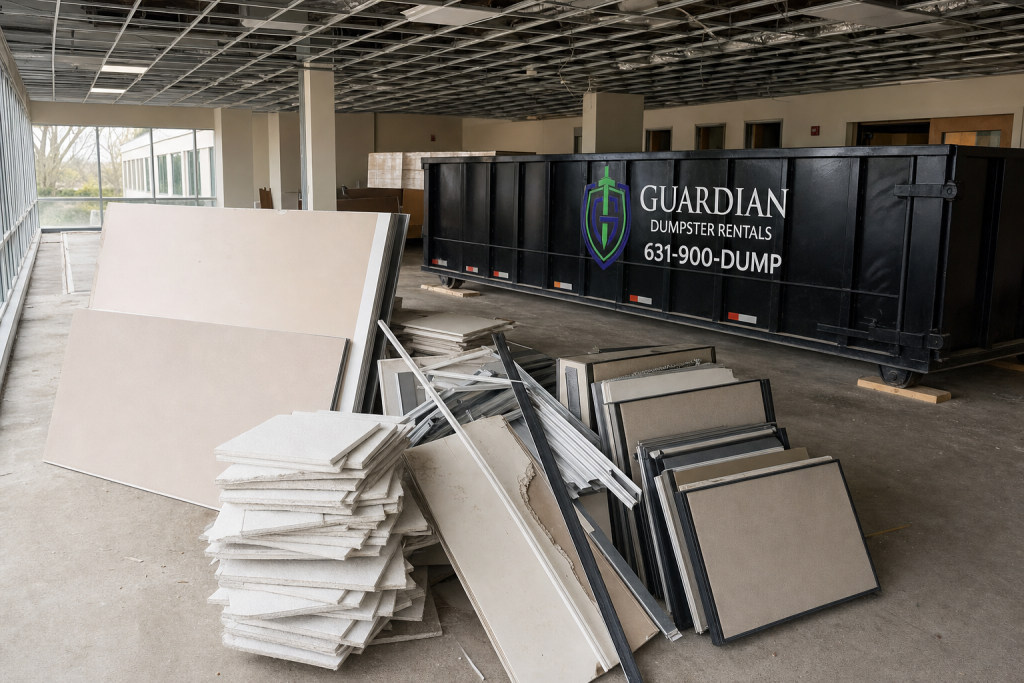
Office debris is deceptive. Drywall, ceiling tiles, old cubicle panels, rolled carpet, and built-in casework don’t weigh much individually, but they’re bulky and awkward — they eat container space fast. That’s why office remodels tend to fill dumpsters by volume long before they hit weight limits, and why sizing up one container size is often cheaper than paying for a second haul.
10 Yard: Small Refresh Projects
A 10 yard dumpster (roughly three pickup truck loads) works when you’re updating a reception area, a couple of private offices, or a break room. Typical contents:
- Carpet and padding from 1,000–1,500 square feet
- A modest amount of drywall from patch-and-repair work
- Old shelving, a few desks, or a small run of cabinetry
If your project sounds like this, a compact option such as a 10 yard dumpster rental in Bay Shore keeps the footprint small — useful when the container has to sit in a shared parking lot or tight loading zone.
20 Yard: Full-Floor Renovations
Tearing out an entire floor — cubicle farms, drop ceilings, carpet throughout, and some partition walls — is squarely 20 yard territory. Cubicle systems in particular take up far more room than people expect once the panels, work surfaces, and frames are disassembled. Ceiling tiles are light but stack awkwardly, and a full floor’s worth adds up quickly.
30 Yard: Multi-Suite Gut-Outs
When you’re gutting multiple suites down to the studs — demolishing interior walls, pulling all casework, removing flooring and ceilings across several thousand square feet — a 30 yard container is the practical choice. The tall walls swallow long, bulky items like countertops and full drywall sheets, and you’ll avoid the mid-project standstill that happens when a smaller box fills up before demo is done.
When in Doubt, Talk Through the Scope
Access matters as much as volume. Confirm where the truck can stage and drop before you book — office parks and commercial strips vary widely in clearance and lot space. A roll off dumpster rental in Commack or a similar local provider can tell you whether your loading area suits a 20 or 30 yard delivery, and whether a swap-out schedule makes more sense than one oversized container for phased demolition.
When Should a Retail Remodel Use a 20 or 30 Yard Dumpster?
A 20 yard dumpster handles most single-storefront retail remodels — shelving teardowns, fixture swaps, and flooring replacement in spaces under a few thousand square feet. Step up to a 30 yard when you’re gutting a full storefront: demolishing walls, removing built-in display units, replacing ceilings, and hauling out old signage all at once.
Retail debris is different from standard office waste. It tends to be bulky and awkward rather than dense — gondola shelving, slatwall panels, glass display cases, mannequin platforms, and oversized illuminated signs eat up volume fast even though they don’t weigh much. That’s why choosing the right commercial dumpster size for a retail job is usually about cubic footage, not tonnage.
When a 20 Yard Dumpster Is Enough
A 20 yard container works well for cosmetic and mid-scope retail refreshes. Typical scenarios include:
- Removing and replacing shelving units, racks, and slatwall in a boutique or small shop
- Tearing out old flooring — tile, laminate, or glued-down carpet — across a single sales floor
- Swapping out checkout counters, display tables, and a modest amount of drywall from partition changes
- Taking down one exterior sign and a handful of interior signage elements
If your remodel keeps the walls, ceiling, and storefront glass in place, a 20 yard is almost always sufficient. Shop owners near the South Shore often coordinate this size through a Dumpster Rental in Babylon for tight village-street placements where a larger container simply won’t fit.
When the Job Justifies a 30 Yard
A full storefront build-out is a different animal. If you’re converting the space for a new tenant or rebranding from the studs out, expect to remove:
- All interior partition walls, drop ceilings, and old HVAC diffusers
- Every fixture, display unit, and built-in cabinet at once — often in a single demo weekend
- Multiple layers of old flooring, sometimes with a mortar bed underneath
- Large exterior signage, awning frames, and storefront trim
Because build-out demolition happens fast and generates debris in one concentrated push, the 30 yard’s extra capacity prevents mid-project swap delays that stall your contractor. If the sidewalk or parking situation is tight, ask about placement logistics ahead of time — providers handling roll off dumpster rental in West Babylon deal with commercial strip and plaza deliveries regularly and can advise on positioning.
A Quick Rule of Thumb
Count your demolition phases. One phase — fixtures and flooring only — points to a 20 yard. Two or more phases happening together — walls, ceilings, fixtures, and signage — points to a 30 yard. When you’re genuinely on the fence, the larger size usually costs less than a second haul of the smaller one, especially with bulky retail debris that fills space quickly.
How Do I Estimate Renovation Debris Volume Before I Book?
Estimate debris volume by multiplying the square footage you’re demoing by the depth of material coming out, then dividing by 27 to convert cubic feet to cubic yards. Add 20–30% for bulky, awkward items like cubicle panels and doors, and round up to the next commercial dumpster size.
That formula sounds abstract until you walk your space with it. Say you’re gutting a 1,500-square-foot office suite and the debris — drywall, ceiling tiles, carpet, trim — will pile roughly one foot deep if spread across the floor. That’s 1,500 cubic feet, or about 55 cubic yards loose. Renovation debris compacts somewhat when loaded properly, but this quick math shows why partial office gut-outs routinely fill 20- and 30-yard containers faster than owners expect.
A Simple Walkthrough Before You Call
- List every material coming out: flooring, drywall, ceiling grid, doors, cabinetry, fixtures, furniture.
- Measure the affected square footage, not the whole suite — only the areas actually being demoed.
- Assign a rough depth: carpet and tile alone is a few inches of debris; full wall and ceiling demo is closer to a foot or more.
- Convert to cubic yards: square footage × depth in feet ÷ 27.
- Add a buffer of at least 20% for the odd-shaped items that refuse to stack neatly.
Why Bulky-but-Light Items Wreck Good Estimates
Cubicle panels are the classic culprit. They weigh little, but they’re rigid, oversized, and full of air gaps when tossed in a container — a dozen panels can eat several cubic yards of space while barely registering on the scale. The same goes for hollow-core doors, plastic chairs, and disassembled shelving. Weight-based thinking leads people to undersize; volume is almost always the constraint on office remodels. If your project skews heavy toward furniture and partitions rather than dense material, planning a comprehensive haul-off like construction debris removal in Babylon from the start keeps the estimate honest.
When in Doubt, Size Up Once
If your math lands anywhere near the top of a container’s capacity, take the next size up. A second haul means a second delivery fee, a second rental period, and days of downtime while your crew waits for the swap — in a busy commercial corridor, that delay often costs more than the price difference between sizes. Stepping up to something like a 30 yard dumpster rental in Bay Shore typically adds a modest amount to the quote while eliminating the risk entirely.
One last tip: share your material list with the rental company when you book. They size these jobs every week and can flag whether your estimate is realistic before the container ever hits your lot — a two-minute conversation that saves a very expensive surprise mid-demo.
What Can’t Go in a Commercial Renovation Dumpster in NY?
Standard commercial renovation dumpsters in New York cannot accept brick, concrete, dirt, or yard waste, and they never take hazardous materials such as fluorescent tubes, refrigerants, wet paint, solvents, or batteries. These items require separate heavy-debris containers or certified hazardous-waste disposal, so identifying them before demolition day keeps your project compliant and avoids surcharges.
It’s a common surprise for property owners: the container that handles your drywall, ceiling tiles, flooring, and old cubicle partitions is not the same container that can take masonry or contaminated materials. Choosing the right commercial dumpster size only solves half the puzzle — knowing what stays out of it solves the rest.
Heavy Materials: Brick, Concrete, Dirt, and Yard Waste
The issue with masonry and soil isn’t contamination — it’s weight. A container loaded with concrete can quickly exceed road-legal hauling limits, which is why haulers exclude these materials from standard renovation dumpsters or require a dedicated heavy-debris box loaded only partway. If your office remodel involves breaking up a slab, removing a brick facade, or regrading around an entrance, plan a separate clean-fill container. Local providers who handle construction debris removal in Babylon can typically set up both containers on the same delivery schedule so your crew isn’t sorting material mid-demo.
Hazardous Items Hiding in Older Offices
Commercial spaces — especially older NY office buildings — are full of items that legally cannot go in a roll-off:
- Fluorescent tubes and ballasts: Tubes contain mercury, and older ballasts may contain PCBs. Both need a licensed recycler.
- Refrigerants: Window units, water coolers, and break-room refrigerators must have refrigerant recovered by a certified technician before disposal.
- Wet paint, solvents, and adhesives: Liquid coatings are prohibited. Fully dried latex paint cans are generally acceptable, but confirm with your hauler.
- Batteries and e-waste: New York restricts electronics from landfill disposal, so old monitors, servers, and UPS battery backups need an e-waste recycler.
- Tires, propane tanks, and aerosols: Pressurized or combustible items are always excluded.
How to Plan Separate Disposal Without Slowing the Job
Walk the space before demolition and tag anything on the prohibited list. Schedule an e-waste pickup and refrigerant recovery early — these vendors often book out. Stage hazardous items in a marked corner so laborers don’t toss them into the container by habit; a single fluorescent tube found at the transfer station can trigger a contamination fee for the whole load. Teams coordinating construction debris removal near Bay Shore often run this pre-demo walkthrough with the hauler directly, which is worth requesting when you book.
A few minutes of sorting up front protects your budget, your timeline, and your compliance record — three things no remodel can afford to lose.
Why Fall Is Crunch Time for NY Commercial Remodels — and Your Commercial Dumpster Size Plan
Fall is the busiest window for New York office and retail remodels because owners race to finish before winter weather and the holiday shopping season. That crunch tightens dumpster availability, so booking your commercial dumpster size and delivery date early — and planning for wind, rain, and early cold snaps — protects both your schedule and your budget.
Once October and November arrive, three pressures converge: contractors trying to close out projects before year-end, retail tenants who need spaces open before holiday traffic, and shorter daylight hours that compress work days. Haulers feel that same squeeze. Delivery and swap-out windows that were flexible in July can book out days in advance by late fall, which is why experienced project managers lock in their container and pickup schedule as soon as the demo date is confirmed. If your project sits in western Suffolk, arranging a roll off dumpster rental in Dix Hills a couple of weeks ahead rather than a couple of days ahead makes a real difference during this stretch.
Weather-Proofing Your Loads Before Winter Hits
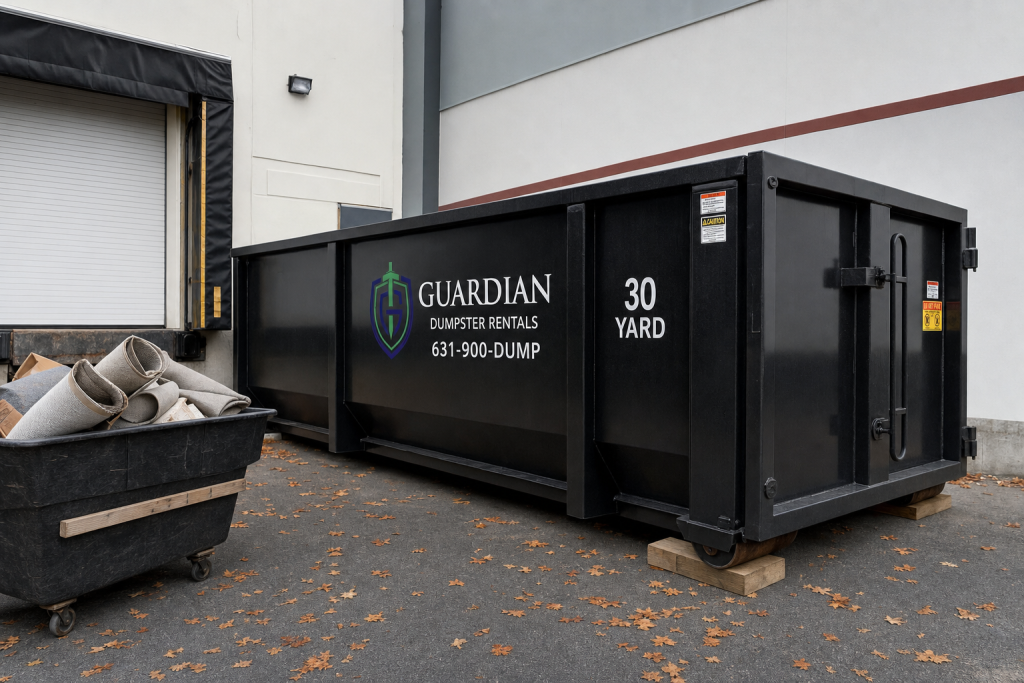
Fall weather on Long Island brings gusty nor’easter winds and sudden temperature drops, and both affect an open-top container. Lightweight debris — insulation scraps, packaging, drop-ceiling tiles — can blow out of an uncovered dumpster and scatter across a parking lot or neighboring property. A few habits keep you covered:
- Tarp the container overnight and any time high winds are forecast; check the National Weather Service before demo days so crews know when to secure loads early.
- Load heavy material on top of light material so drywall and lumber pin down insulation and cardboard.
- Watch for standing water. Rain-soaked debris weighs dramatically more, and overweight loads can trigger extra fees at pickup.
- Plan around early freezes. Wet debris that freezes into a solid mass is harder to dump and can delay your swap-out.
Beating the Year-End Booking Squeeze
Retail remodels face a hard deadline: most landlords and tenants want construction wrapped — and the container off the property — before holiday foot traffic peaks. Empty dumpsters sitting in customer parking during December are a problem nobody wants. Build your hauling timeline backward from your reopening date, and schedule the final pickup with buffer room. For teams coordinating construction debris removal in Bay Shore, that means confirming the last haul-away date at booking, not at the end of the job.
Fall is also a smart time to double-check that your waste plan sorts recyclable materials — clean wood, metal, cardboard — since the EPA’s guidance on construction and demolition materials notes much of this debris can be diverted from landfills. Getting the size, schedule, and sorting right in October means you’re not scrambling in December.
20 yard dumpster
Most common commercial remodel size
7-14 days, with swap-outs available
Typical rental period
Often 2-6 tons depending on container size and hauler
Weight limits
Usually requires a local permit; driveways and lots typically do not
Street placement in NY
Commercial Dumpster Size Comparison for NY Office and Retail Remodels
| Dumpster Size | Approximate Capacity | Best For | Typical Project Scope |
|---|---|---|---|
| 10 Yard | About 3-4 pickup truck loads | Small office refresh, flooring removal, heavy debris like tile or concrete | Single room or under ~1,000 sq ft |
| 20 Yard | About 6-8 pickup truck loads | Multi-room office remodels, retail buildouts, drywall and fixture removal | Roughly 1,000-2,500 sq ft |
| 30 Yard | About 9-12 pickup truck loads | Full-floor gut renovations, large retail conversions, bulky mixed debris | 2,500+ sq ft or full tenant demo |
Illustrative Example: Midtown Office Buildout (Hypothetical)
Illustrative example
Consider a hypothetical property manager renovating a 2,000 sq ft office suite in a New York commercial building, removing old cubicles, carpet, drywall, and a small kitchenette. Initially leaning toward a 10 yard dumpster to save money, the team estimated debris volume with their contractor and realized the mixed demo would exceed it quickly. They booked a single 20 yard container placed in the building's loading area, avoiding a street permit entirely. The project wrapped with one haul instead of two, keeping the timeline on track and eliminating mid-project swap delays. This composite scenario reflects a common pattern: right-sizing upfront is cheaper and faster than reacting to an overflowing container.
Frequently asked questions
How do I choose the right commercial dumpster size for an office remodel?
Base your choice on the scope of demolition, not just square footage. Light cosmetic work like flooring, ceiling tiles, or a few walls in a small office usually fits a 10 yard. Gutting a mid-size suite with drywall, framing, and fixtures typically calls for a 20 yard. Full-floor gut renovations or retail buildouts with heavy debris generally need a 30 yard. When in doubt, size up—overage fees and second hauls usually cost more than the next size.
How much does it cost to rent a commercial dumpster in New York?
Pricing varies by borough or county, container size, rental length, and debris type, so get quotes from local haulers rather than relying on national averages. Expect the rate to cover delivery, pickup, a set rental period, and a weight allowance. Heavy materials like concrete or tile can trigger overweight fees, and NYC locations often cost more due to permits, access challenges, and disposal fees. Always ask what's included before signing.
Do I need a permit to put a dumpster on the street in NYC?
Yes, if the dumpster sits on a public street or sidewalk, you'll need a permit from the NYC Department of Transportation, and rules vary by borough. Dumpsters placed entirely on private property, like a parking lot or loading dock, typically don't require a street permit, though your building may have its own rules. Many haulers handle permitting for you—ask when you book, and build permit lead time into your schedule.
How long can I keep a rental dumpster during a renovation?
Most rentals include a standard period, commonly around 7 to 14 days, with daily fees after that. For phased office remodels, ask about extended rentals or swap-out service, where the hauler empties and returns the container so you keep working without piling debris on site. Confirm the included days, extension rates, and how much notice the company needs for pickup before you commit.
What can't I throw in a commercial dumpster from an office demo?
Hazardous and regulated items are prohibited: fluorescent tubes and ballasts, batteries, paints, solvents, refrigerants, aerosols, and anything containing asbestos, which requires licensed abatement in New York. Electronics like monitors and computers are banned from regular disposal under New York's e-waste law and need separate recycling. Tires and appliances with refrigerant are also typically excluded. Violating these rules can mean rejected loads and extra fees, so sort restricted items out before demo day.
What happens if my dumpster is too small for the job?
You'll either pay for a second haul and delivery or face an overfilled container the driver can legally refuse to pick up—loads can't be piled above the rim for transport safety. Both outcomes stall your project and add cost. If you're between sizes, choose the larger one; the price difference between a 20 and 30 yard is usually far less than an extra pull. Ask your hauler about swap-out pricing as a backup plan.
Where does the dumpster go if my office building has no parking lot?
Common options in dense NY locations include a street placement with a DOT permit, a loading dock or alley if the building allows it, or scheduled live-load pickups where a truck waits while crews fill it. Coordinate with building management early—many commercial buildings restrict delivery hours, freight elevator use, and dock time. If space is truly impossible, some haulers offer smaller containers or bagster-style alternatives for lighter debris.
Can I put concrete and tile in the same dumpster as drywall and other debris?
Usually yes, but it's often a costly mistake. Heavy materials like concrete, brick, and tile hit weight limits fast, and mixed loads can't go to cheaper inert-debris facilities. Many haulers offer dedicated heavy-debris containers—often smaller sizes filled only partway—at flat rates that beat overage fees on a mixed load. If your retail or office demo includes slab, masonry, or lots of tile, ask about a separate concrete dumpster before ordering.
How many dumpster loads does a full office gut renovation take?
It depends on square footage, ceiling height, and how much is being removed, but full guts almost always take multiple pulls. A useful approach: estimate debris in cubic yards with your contractor, then divide by container size, remembering weight limits may fill before volume does. Scheduling swap-outs in advance keeps demo crews moving. Your hauler can help estimate loads if you describe the space and materials being torn out.
What's the biggest mistake people make when renting a dumpster for a commercial remodel?
Ordering by size alone and ignoring weight. A 30 yard container filled with tile, plaster, or concrete can exceed truck weight limits long before it's full, triggering overage fees or a refused pickup. Other common errors: skipping the street permit, not confirming building access rules, and tossing prohibited items like fluorescent lights or electronics. Walk the hauler through your exact debris list and site conditions before booking—it prevents most surprises.
Related local pages
- Dumpster Rental West Islip New York
- Dumpster Rental Islip New York
- Dumpster Rental West Babylon New York
Planning a commercial remodel in NY? Call us today for straight answers on 10, 20, and 30 yard dumpsters and same-week delivery to your job site. Get in touch.
Last updated: September 3, 2026
Recent Comments