
Dumpster Swap-Out: Do Two 10 Yard Dumpsters Save Money?
The Quick Answer: When Two 10 Yard Dumpsters Beat One Big Rental
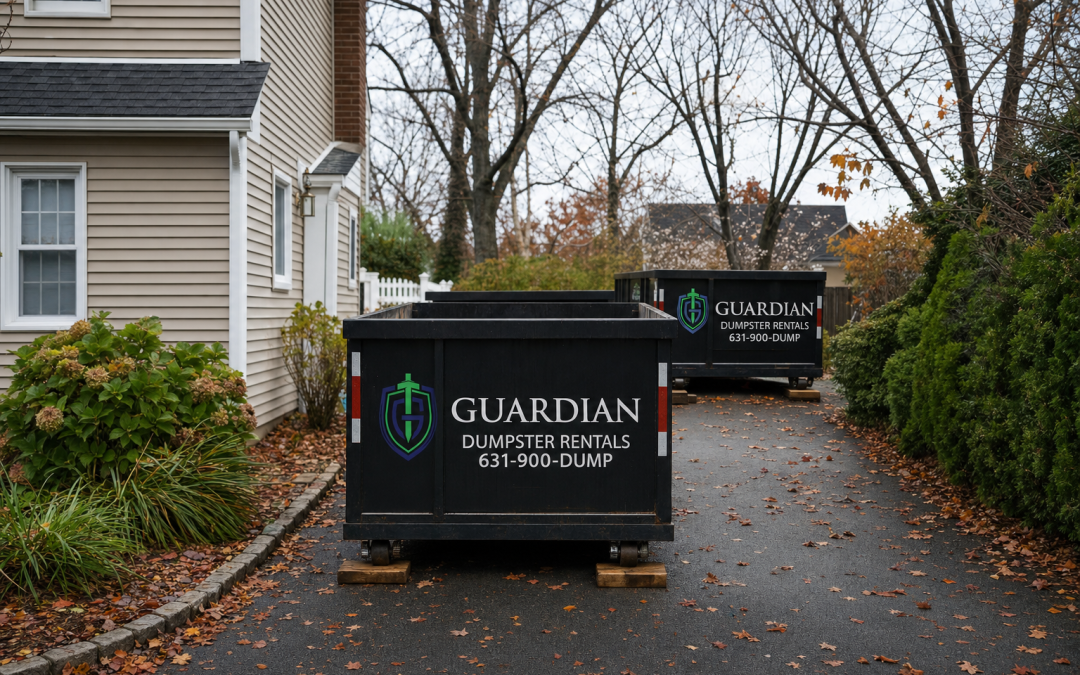
A dumpster swap-out — renting two 10 yard dumpsters back-to-back instead of one larger container — saves money when your remodel happens in phases, your driveway can’t fit a bigger box, or your debris is dense and heavy. But if your project runs on one continuous timeline, a single 20 yard dumpster is usually cheaper.
Key takeaways
- A dumpster swap-out means renting two 10 yard dumpsters back-to-back instead of one larger container, which works best for phased remodels with limited driveway space.
- Two 10 yard dumpsters typically cost more per cubic yard than a single 20 yard dumpster, so the swap-out strategy usually only saves money when your project timeline is spread out.
- Swap-out fees, second delivery charges, and overage penalties can quickly erase any savings, so always compare the all-in cost of two 10 yard rentals against one 20 yard rental.
- The swap-out approach shines for tight NY driveways, weight-heavy debris from small demo phases, and projects where the second load may not be needed at all.
- Keep prohibited materials out of every load — most NY haulers restrict what can go in 10, 20, and 30 yard dumpsters, and violations add fees that undermine any swap-out savings.
That’s the honest answer, and it’s worth unpacking, because the swap-out strategy is one of the most misunderstood tactics in residential dumpster rental. Homeowners often assume two small containers automatically cost less than one big one. Sometimes they do. Sometimes you end up paying two delivery fees, two disposal charges, and two rental periods for the same amount of debris a 20 yard dumpster would have handled in one trip.
Where a Dumpster Swap-Out Genuinely Wins
The swap-out shines in three specific situations:
- Phased remodels: If you’re demoing a kitchen this month and a bathroom next month, one container sitting in your driveway for weeks racks up extension fees. Two shorter rentals timed to each phase can cost less overall.
- Tight New York driveways: Many Long Island properties simply don’t have room for a 20 or 30 yard container. A compact 10 yard dumpster rental in Islip fits where larger boxes can’t, and swapping it out lets you move the same total volume without blocking your garage.
- Heavy, dense debris: Materials like plaster, tile, and old flooring hit weight limits fast. Two 10 yard loads spread that tonnage across two hauls, which can help you avoid steep overage charges on a single overloaded container.
Where It Falls Apart
If your crew is demoing everything in one continuous push, the math flips. A single 20 yard dumpster typically carries one delivery fee and one pickup fee. Two 10 yard rentals mean the truck rolls out four times — two drop-offs and two pickups — and you pay for that mileage and labor. You also risk downtime: if the first container fills up and the swap is delayed, your project stalls with debris piling up on the lawn.
The rest of this article walks through exactly how swap-outs work, when the numbers favor two 10 yarders, when a 20 or 30 yard container is the smarter call, and how to plan the timing so you’re not paying for an empty box. If you’re weighing options for a project on the South Shore, a local provider offering roll off dumpster rental in Lindenhurst can look at your driveway, your debris type, and your schedule and tell you which route actually pencils out — before you commit to either strategy.
How Does a Dumpster Swap-Out Work for a Remodeling Project?
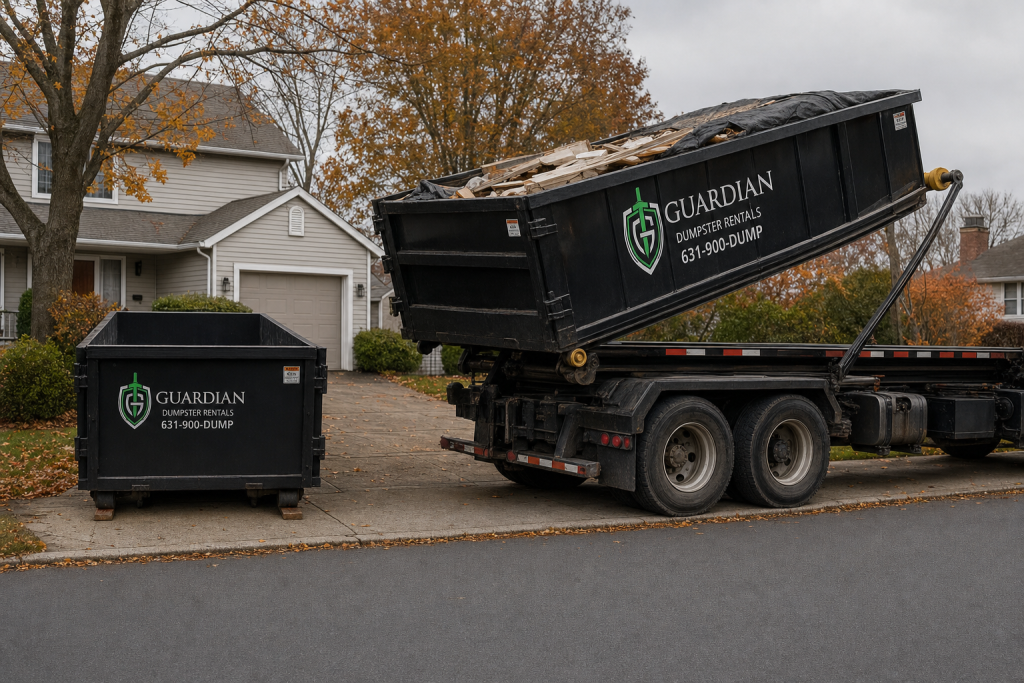
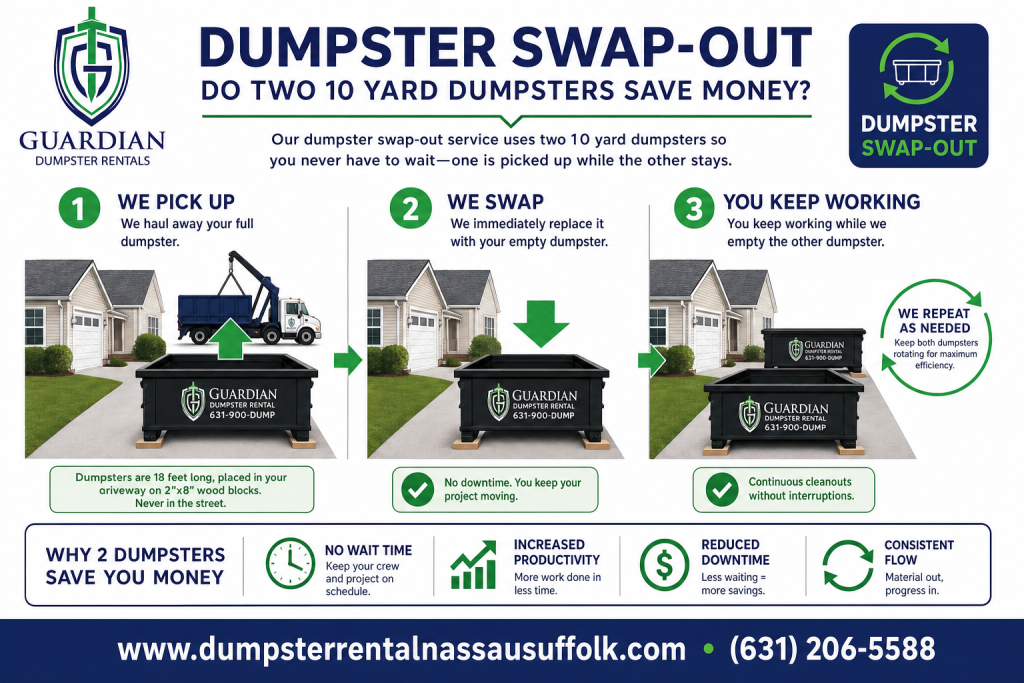
A dumpster swap-out means the hauler picks up your full 10 yard container and drops an empty one in the same spot, usually during the same trip. You call or schedule online when the first dumpster is nearly full, the driver hauls it away, and a fresh container lands on your driveway without interrupting your remodel.
The mechanics are straightforward, but the details determine whether the process feels seamless or stalls your project for days. Here is what actually happens behind the scenes.
The Swap-Out Sequence, Step by Step
- You request the swap once the first container is loaded — ideally a day or two before it hits the fill line, not after.
- The driver arrives with an empty 10 yard dumpster, picks up the full one, and sets the replacement down in the same footprint.
- The full container heads to the disposal facility, and your rental clock typically continues on the new container under the same agreement.
Because both containers use the same placement spot, driveway prep only happens once. A 10 yard container has a compact footprint, which is exactly why many homeowners choose a 10 yard dumpster rental in Commack or similar tight-driveway areas — the swap-out lets them keep that small footprint while still handling a larger total volume of debris.
Scheduling Lead Times Matter More Than You Think
Most haulers need at least one business day of notice for a swap, and busy weeks can stretch that to two or three. The smart move is to watch your fill rate: if the first container is three-quarters full on a Wednesday and you’re still tearing out a kitchen, call that day rather than waiting until Friday afternoon. A full dumpster sitting idle while you wait for a pickup slot is a full stop for demolition work.
Driveway Placement and Fall Weather Windows
The swap-out only works cleanly if the truck can reach the same spot twice. Keep the placement area clear of vehicles, low branches, and stacked materials on swap day, and lay plywood under the container if you’re protecting a paved driveway. Homeowners coordinating a roll off dumpster rental in West Islip often plan swaps around street parking patterns so the roll-off truck has a straight approach both times.
Timing gets tighter in the fall. Shorter daylight hours compress delivery routes, wet leaves and early frost can make sloped driveways tricky for a loaded truck, and the pre-winter rush of remodeling and cleanout projects fills hauler schedules fast. If your project runs through October and November, build an extra buffer day into your swap request so a rainy stretch or a booked-up route doesn’t leave your crew standing around a full container.
When Does Renting Two 10 Yard Dumpsters Back-to-Back Save Money?
A dumpster swap-out saves money when your project produces debris in two distinct phases, when your driveway or HOA rules can’t accommodate a larger container, when heavy materials like tile or plaster would blow past a bigger dumpster’s weight limit, or when a stalled timeline would rack up extra rental days on a single long-term rental.
Demo-Now, Finish-Later Remodels
Many remodels don’t generate debris all at once. A kitchen or bathroom renovation often starts with a heavy demolition week, followed by several quiet weeks of plumbing, electrical, and inspections before the finish work creates a second wave of waste. Renting one large dumpster for that entire stretch means paying for a container that sits half-empty most of the time. Two 10 yard rentals timed to your demo phase and your finish phase mean you only pay for a dumpster when you’re actually filling one.
Tight Driveways and HOA Restrictions
A 10 yard container has a much smaller footprint than a 20 or 30 yard box, which matters on narrow city driveways, shared drives, and streets where parking a large roll-off isn’t practical. Some HOAs also limit how long a container can stay visible or how much space it can occupy. Homeowners who choose a 10 yard dumpster rental in Dix Hills and similar residential neighborhoods often do so precisely because the smaller box fits where a larger one simply can’t, making two swapped containers the only workable option anyway.
Heavy Debris That Hits Weight Caps Fast
Weight is where the swap-out strategy quietly wins. Materials like ceramic tile, plaster, and old drywall are dense, and a single large dumpster loaded with them can exceed its included weight allowance long before it’s physically full. When that happens, overage fees per ton can erase any savings from renting one big box. Splitting the load across two smaller containers, each with its own weight allowance, keeps every haul under the cap. That’s a common reason contractors book a 10 yard dumpster rental near Commack twice rather than gambling on one heavy pull.
Avoiding Extra Rental Days on a Stalled Project
Projects stall. Permits get delayed, contractors get pulled to other jobs, and materials arrive late. If you’re holding a large dumpster through a delay, daily or weekly extension fees add up while nothing goes in the box. With a swap-out approach, you can return the first container when demo wraps and simply schedule the second delivery once work resumes — whether that’s next week or next month. You’re paying for two short, productive rental windows instead of one long, partially wasted one.
In short, the strategy wins when your debris arrives in waves, your space is tight, your materials are heavy, or your schedule is uncertain — often two or more of those at once.
When Does the Dumpster Swap-Out Strategy Backfire?
A dumpster swap-out backfires when the second delivery fee erases your savings, when the second container is delayed during the busy fall season, or when you underestimate your debris and need a third haul. Weather delays and mid-project volume surprises can turn a money-saving plan into a more expensive, slower one.
The swap-out approach works beautifully on paper, but real projects are messier than spreadsheets. Here are the situations where two 10 yard containers end up costing you more than one larger rental would have.
Double Delivery and Pickup Fees
Every dumpster that arrives at your driveway involves a truck trip, and every trip has a cost baked into the price. With a swap-out, you’re paying for two deliveries and two pickups instead of one of each. If your hauler prices those trips separately, or if fuel surcharges apply per haul, the gap between two small rentals and one larger one shrinks fast. Before committing, ask whether the quote for a 10 yard dumpster rental in Dix Hills includes all haul fees or whether each swap adds line items.
Downtime During Busy Booking Seasons
Fall is peak season for cleanouts, remodels, and roof work, and dumpster fleets get stretched thin. If your first container is full but the swap can’t happen for several days, your project stalls. Debris piles up on tarps in the yard, crews stand around or leave for another job, and you may end up paying laborers to wait. One larger container sitting on-site the whole time has no scheduling gap at all.
Underestimating Debris Mid-Project
Remodeling debris almost always exceeds the initial estimate. Demolition uncovers old layers of flooring, hidden framing damage, or a previous owner’s abandoned materials. If you planned on two 10 yard loads and the project actually generates closer to 25 yards of debris, you’re now booking a third haul at full price. In that scenario, a single 20 yard dumpster rental in West Babylon plus one small follow-up container would likely have been cheaper and simpler than three separate 10 yard swaps.
Weather Can Wreck Your Swap Timing
Swap-outs depend on trucks moving on your schedule, and weather doesn’t cooperate:
- High winds: Roll-off trucks avoid lifting containers in strong gusts, which can push your swap back a day or more.
- Early cold snaps: An icy driveway or frozen ground can make placement unsafe, delaying both pickup of the full container and delivery of the empty one.
- Storm backlogs: After a big weather event, haulers prioritize storm debris jobs, and routine swaps get pushed down the queue.
None of these risks mean the swap-out strategy is bad — they mean it’s fragile. If your project timeline has no slack, or you’re working in late fall when both bookings and weather get unpredictable, the flexibility of a single larger container is often worth more than the potential savings.
Should You Just Get a 20 or 30 Yard Dumpster Instead?
Often, yes. A single 20 yard dumpster typically holds the same volume as two 10 yard containers but costs less than two separate rentals, since you pay one delivery fee instead of two. A dumpster swap-out only wins when your project produces debris in stages or your driveway can’t fit a larger container.
Container Sizes Table: 10, 20, and 30 Yard Compared
| Size | Approximate Capacity | Best-Fit Projects | Compared to Two 10 Yard Rentals |
|---|---|---|---|
| 10 Yard | Roughly 3–4 pickup truck loads | Small bathroom remodels, garage cleanouts, single-room flooring removal | One 10 yard container is the starting point; a second becomes the swap-out scenario |
| 20 Yard | Roughly 6–8 pickup truck loads | Kitchen remodels, whole-home decluttering, medium renovation debris | Same total volume as two 10 yard containers, usually at a lower combined price |
| 30 Yard | Roughly 9–12 pickup truck loads | Large remodels, additions, estate cleanouts, multi-room demolition | More capacity than two 10 yard containers, ideal for high-volume projects |
Where the Break-Even Point Sits
The math usually tips in favor of one larger container. Two rentals mean two delivery trips, two disposal runs, and often two base fees. In most markets, a 20 yard dumpster rental in West Babylon or a comparable area costs meaningfully less than booking two separate 10 yard containers back-to-back. The swap-out only breaks even, or wins, when at least one of these is true:
- Space is tight. A 20 or 30 yard container simply won’t fit in your driveway or on your street.
- Debris comes in phases. Demolition happens weeks before the build-out, and you’d otherwise pay extended rental fees on a large container sitting half-empty.
- Weight limits matter. Splitting a heavy load across two hauls can keep each trip under the weight allowance and avoid overage charges.
Match the Size to the Project, Not the Price Tag Alone
If you’re confident your debris will fill a 20 yard container within a single rental window, the larger box is almost always simpler and cheaper. But if you’re doing a phased renovation from a compact property, starting with a 10 yard dumpster rental in Dix Hills and swapping it out when the second phase begins can genuinely make sense.
One important reminder regardless of size: brick, concrete, dirt, and yard waste are not allowed in any of these containers. Plan for household debris, renovation materials, and general junk only, and confirm your material list with your rental provider before delivery so your load estimate stays accurate.
How Do You Plan a Dumpster Swap-Out That Actually Saves Money?
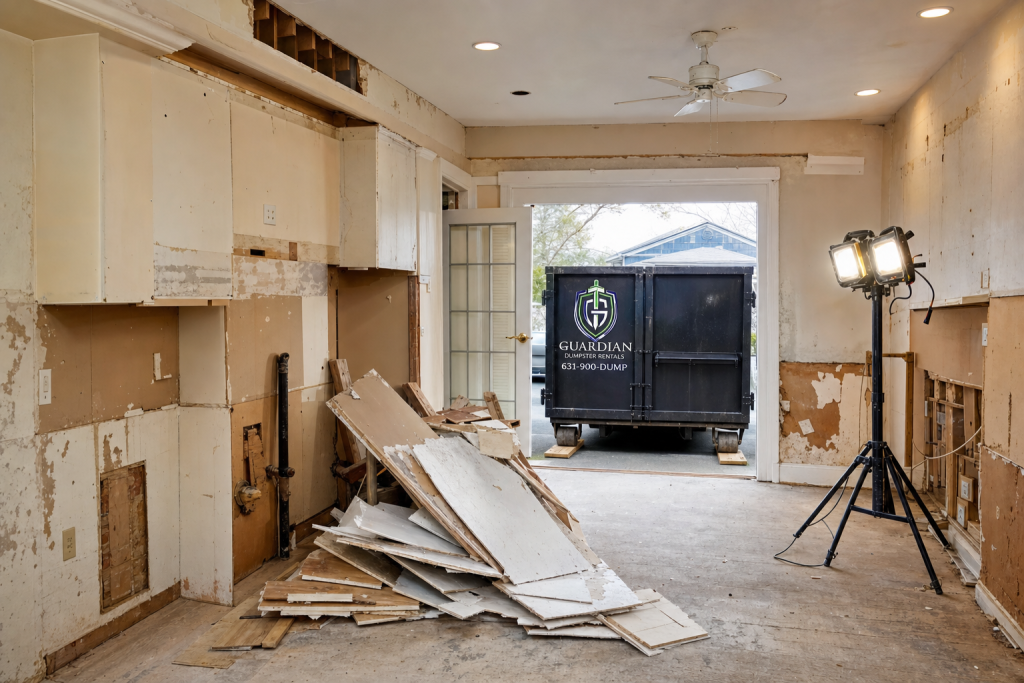
Plan a dumpster swap-out by estimating debris for each project phase, confirming the swap-out fee in writing before you book, scheduling the second delivery around your contractor’s demo dates, and loading the first 10 yard container flat and tight. Done in that order, you avoid the surprise charges that erase the savings.
Step 1: Estimate Debris by Phase, Not by Project
Break your remodel into stages and assign a rough volume to each. Cabinet and countertop tear-outs, drywall, flooring, and framing scraps all fill space differently, so walk the job with your contractor and sketch what each phase will produce. The EPA’s guidance on construction and demolition materials is a useful reference for understanding what typically comes out of a remodel and what can be diverted before it ever hits the container. If both phases genuinely fit within 10 yards apiece, the swap-out math works; if either phase is a maybe, revisit a single larger container.
Step 2: Confirm the Swap-Out Fee Upfront
Before you sign anything, ask three questions: What is the flat swap-out charge? Does the second container restart the rental period? Are there separate trip or fuel fees per haul? Get the answers in writing or by email. Providers who handle frequent swap-outs, like those offering 10 yard dumpster rental in Islip, can usually quote the full two-container cost in one call, which makes the comparison against a 20 or 30 yard rental straightforward.
Step 3: Time the Second Delivery Around Your Contractor
The most expensive mistake is a gap where crews have debris and nowhere to put it. Coordinate the swap so the first container is hauled the day one phase wraps and the second arrives before the next demo day begins. A few timing tips:
- Schedule the swap-out call two to three business days ahead, not the morning you need it.
- Ask your contractor for a firm date when phase one debris will be fully loaded.
- Avoid booking swaps around holidays or the fall cleanup rush, when routes fill up fast.
- Keep the driveway or placement spot clear so the driver can drop and go without a return trip fee.
Step 4: Load the First 10 Yarder Efficiently
A well-loaded 10 yard dumpster holds noticeably more than a hastily filled one. Break down cabinets, flatten boxes, lay long pieces along the bottom, and fill gaps with smaller debris as you go. Keep everything level with the top rail — overfilled containers can’t be legally hauled, and safe loading practices outlined by OSHA apply to homeowners just as much as crews. Local companies handling residential dumpster rental in Amityville and surrounding towns see the difference constantly: careful loading is often what keeps a two-container plan from spilling into an unplanned third.
Follow these four steps and the dumpster swap-out becomes a controlled, predictable strategy rather than a gamble on timing and fees.
Roughly 3 pickup truck loads of debris
10 Yard Capacity
Same total volume, but typically two delivery fees
Two 10s vs. One 20
7–14 days per container with most haulers
Typical Rental Window
A 10 yard dumpster fits most single-car NY driveways
Space Advantage
Dumpster Swap-Out vs. Single Rental: Comparing 10, 20, and 30 Yard Options
| Strategy | Best For | Space Needed | Cost Consideration |
|---|---|---|---|
| Two 10 yard dumpsters (swap-out) | Phased remodels, tight driveways, uncertain debris volume | Smallest footprint at any one time | Two delivery/pickup cycles; may cost more overall unless the second unit is skipped |
| One 20 yard dumpster | Full kitchen or bath remodels done in one push | Standard driveway space | Usually cheaper per cubic yard than two 10 yard rentals |
| One 30 yard dumpster | Whole-home remodels or large multi-room projects | Largest footprint required | Best value per cubic yard for high-volume, lighter debris |
Hypothetical Example: A Phased Kitchen and Bath Remodel
Illustrative example
Consider a composite scenario based on common NY remodeling situations: a homeowner with a narrow driveway plans a kitchen demo in month one and a bathroom remodel in month two. Rather than paying to keep a 20 yard dumpster on-site for weeks between phases, they schedule a 10 yard dumpster for each phase with a swap-out in between. Because the phases were genuinely separated and the driveway couldn't fit a larger container, the two smaller rentals proved practical despite the second delivery fee. Had the work happened in a single continuous push, a single 20 yard dumpster would likely have been the more economical choice. This illustrates the core rule: swap-outs reward staggered timelines, not compressed ones.
Frequently asked questions
What is a dumpster swap-out and how does it work?
A dumpster swap-out is when the rental company hauls away your full container and drops off an empty one in the same trip, usually on the same day. You keep working without waiting for a new delivery window. For remodels, this often means renting two 10 yard dumpsters back-to-back instead of one larger 20 yard container, spreading your debris removal across two phases of the project.
Is it cheaper to rent two 10 yard dumpsters or one 20 yard dumpster?
Usually one 20 yard dumpster costs less, because two 10 yard rentals mean paying two delivery and pickup fees plus two base rates. The swap-out strategy only saves money when your driveway or street can't fit a 20 yard container, when your project runs in phases weeks apart, or when weight limits matter—two 10 yard containers give you two separate tonnage allowances, which helps with dense remodeling debris.
How long does a dumpster swap-out take once I request it?
Most companies complete a swap-out within one to two business days of your call, and many can do same-day or next-day swaps if you request it before their morning cutoff. Timing varies by season and route density, so ask your hauler for their typical swap turnaround before you commit to the two-dumpster plan. Scheduling the swap in advance, when you can predict the fill date, gets you the fastest service.
What happens if I overfill my first 10 yard dumpster before the swap?
The driver can legally refuse to haul an overfilled container, since debris above the rim violates transport safety rules. You'd have to remove the excess yourself before pickup, which delays your swap and stalls the project. Fill only to the rim, load flat items like drywall on the bottom, and if you're close to full mid-project, schedule the swap early rather than cramming.
Do I pay delivery fees twice with the swap-out strategy?
It depends on the company. Some charge a full second delivery fee, while others offer a reduced swap-out rate since the truck handles both containers in one trip. Always ask specifically for the swap-out price, not just the standard rental rate, and get it in writing. If the hauler charges two full delivery fees, the math often tips in favor of a single 20 yard dumpster instead.
When does renting two 10 yard dumpsters back-to-back actually backfire?
It backfires when the second rental's fees erase your savings, when a swap delay leaves debris piling up on your property, or when you underestimate volume and end up needing a third container. It also fails if your project generates everything at once—demolition debris doesn't wait for a swap. If all your waste comes in one burst, a single 20 yard or 30 yard dumpster is almost always the smarter call.
How do I know if my remodeling project fits in a 10 yard dumpster?
A 10 yard dumpster suits a single-room remodel: one bathroom gut, a small kitchen tear-out, or flooring removal from a couple of rooms. If you're remodeling multiple rooms or doing whole-floor demolition, you'll likely fill it fast and need either the swap-out plan or a 20 yard container. When in doubt, describe your project to the rental company—they size projects daily and can flag when you're borderline.
Can I put concrete or dirt in my 10 yard dumpster during a remodel?
No. Brick, concrete, dirt, and yard waste aren't allowed in the dumpsters, so plan your remodel debris around that. Stick to permitted materials like drywall, wood framing, cabinets, flooring, and fixtures. If your project involves demo of masonry or excavation, arrange separate disposal for those materials before you start, or the driver may refuse pickup and you'll face delays and extra charges.
Should I schedule both dumpsters upfront or wait until the first one is full?
Tell the company upfront that you plan a swap-out, even if you don't lock in the exact date. This gets you accurate swap pricing, keeps you on their radar for quick turnaround, and sometimes qualifies you for a package rate. Then call to confirm the swap a day or two before the first container is full, so the empty one arrives without a gap in your project.
What's the biggest mistake people make with back-to-back dumpster rentals?
Underestimating how fast demolition fills a container. Homeowners plan the swap around their work schedule, but demo debris is bulky and a 10 yard dumpster can fill in a single weekend. The result is debris stacked on the lawn while waiting for the swap. Avoid it by demoing in phases matched to each container, or admitting upfront that one 20 yard dumpster fits how your project actually unfolds.
10 yard dumpster rental help near you
- 10 Yard Dumpster Rental Amittyville Amityville
- 10 Yard Dumpster Projects
- 10 Yard Dumpster Rental Dix Hills
Related local pages
- Dumpster Rental Deer Park New York
- Dumpster Rental Lindenhurst New York
- Dumpster Rental Dix Hills New York
Planning a fall remodel in NY? Call us today for straight answers on swap-out pricing, 10, 20, and 30 yard dumpster options, and same-week delivery before winter weather hits. Get in touch.
Last updated: September 29, 2026
Recent Comments