
30 yard dumpster: One 30 Yard Dumpster or Two Smaller? NY Cost Math
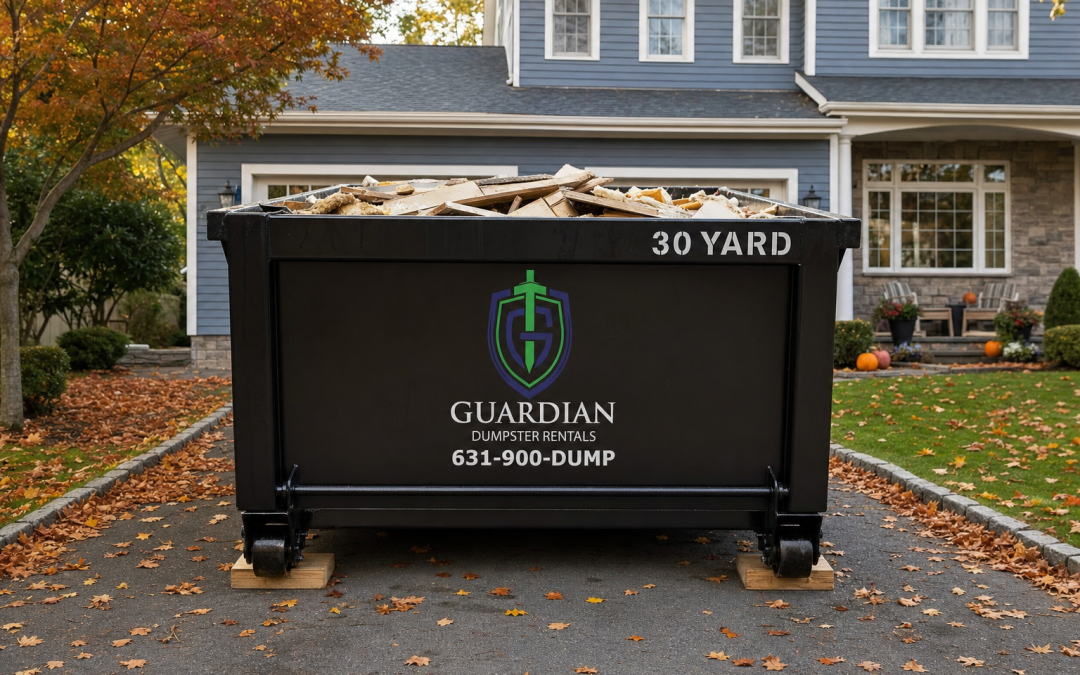
One 30 Yard Dumpster or Two Smaller Containers? The Quick Answer
A single 30 yard dumpster is almost always the cheaper choice for a whole-house remodel in New York, because two smaller rentals mean paying two delivery fees, two base rates, and juggling two schedules. Two containers only win when driveway space is tight, debris comes in separate phases, or weight limits are a concern.
Key takeaways
- A single 30 yard dumpster is almost always cheaper than two smaller containers because you pay delivery, pickup, and rental fees only once.
- Two separate rentals of 10 or 20 yard dumpsters only make sense when driveway space is tight or your remodel debris comes in two distinct phases.
- One 30 yard dumpster typically holds the equivalent of about nine pickup truck loads, which covers most whole-house remodel debris in NY.
- Weight limits matter as much as volume — compare included tonnage on a 30 yard dumpster against the combined tonnage of two smaller containers before booking.
- Keep brick, concrete, dirt, and yard waste out of any rental dumpster — these materials are not allowed and can trigger extra charges or refused pickups.
Here’s the logic in plain terms: every dumpster rental carries fixed costs that don’t shrink just because the container does. Delivery, pickup, and the base rental rate get charged per container, not per cubic yard. So when you rent a 10 yard and a 20 yard dumpster to get the same 30 yards of capacity, you’re paying those fixed costs twice. For most Long Island homeowners clearing out a full remodel, that math rarely works in favor of splitting the load.
When One 30 Yard Container Wins
- Whole-house remodels and large cleanouts: Drywall, cabinetry, flooring, and bulky demolition debris fill space fast, and a 30 yard container handles it in one go.
- One delivery, one pickup: You pay the haul fees once instead of twice.
- No mid-project downtime: You won’t stall your crew waiting for a swap-out between containers.
If you’re pricing out a big project, comparing quotes for 30 yard dumpster rental in Greenlawn NY against two smaller containers will usually show the single-container savings right away.
When Two Smaller Dumpsters Make Sense
- Tight driveways or shared access: Some properties simply can’t fit a 30 yard container, making a 10 or 20 yard dumpster the practical option.
- Projects in phases: If demolition happens months before the finish work, two separate rentals can beat paying extended rental days on one big container.
- Heavy materials: Dense debris can hit weight limits before a large container is full, so a smaller dumpster loaded carefully may avoid overage charges.
Keep in mind that no matter which size you choose, materials like brick, concrete, dirt, and yard waste aren’t allowed in the dumpster, so plan separate disposal for those before you book.
Why Fall Timing Matters
Fall is the last reliable window to finish exterior-adjacent demo before snow, frozen ground, and holiday scheduling slow everything down. Contractors book up, and a dumpster sitting through a snowstorm is harder to load and harder to pick up. Locking in a container now, whether through dumpster rental in Lindenhurst New York or elsewhere on Long Island, keeps your remodel moving before winter forces a pause.
The sections below break down the actual cost math, sizing guidance, and the exceptions in detail so you can make the call with confidence.
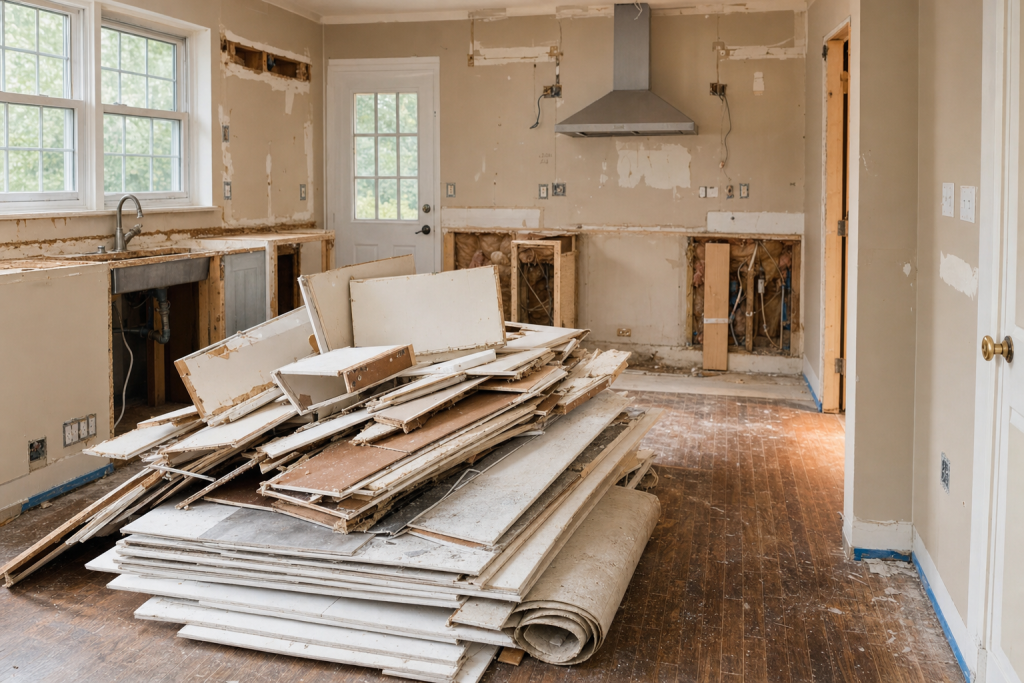
How Much Does a 30 Yard Dumpster Cost in New York?
In New York, a 30 yard dumpster rental typically runs several hundred dollars all-in, with most Long Island quotes landing somewhere in the mid-$500s to mid-$800s depending on your town, the included weight allowance, and current disposal rates. That price usually bundles delivery, pickup, a set rental period, and a tonnage limit.
The sticker price is only part of the story, though. To compare a single 30 yard dumpster against two smaller containers fairly, you need to understand what the quoted rate actually includes — and where the extra charges hide.
What’s Built Into the Base Rate
- Flat rental fee: Covers drop-off, pickup, and disposal up to a weight cap.
- Rental period: Most NY haulers include 7 to 14 days. Longer projects may add a modest daily or weekly extension fee.
- Weight allowance: A 30 yard container commonly includes a few tons of debris. Household remodel waste — drywall, cabinetry, flooring, fixtures — usually stays within it, but heavy mixed loads can push past.
- Overage fees: Anything above the included tonnage is billed per ton at the landfill or transfer station rate, so ask for that number in writing before you book.
Delivery Logistics That Affect Price
A 30 yard dumpster is roughly 22 feet long, so the driver needs a clear, level spot — typically a driveway — plus room overhead for the truck to tilt the container off. If the dumpster has to sit in the street, some Long Island villages require a permit, which adds a small fee and a little lead time. Local providers that handle 30 yard dumpster rental in Lindenhurst, NY can usually tell you whether your street requires one before the truck ever rolls out.
Sample All-In Cost for a Whole-House Gut Job
Here’s how the math typically shakes out for a full interior gut of a modest Long Island home:
- Base 30 yard rental: one flat fee covering delivery, pickup, and the included tonnage
- Street permit (if needed): a small municipal fee, often under $100 in villages that require one
- Possible overage: one to two extra tons if you’re tearing out plaster walls or old tile, billed per ton
For most whole-house projects, that means one delivery fee, one pickup fee, and one weight allowance — which is exactly where the single-container approach starts beating two smaller rentals, as the next section breaks down. If you’re pricing a project on the South Shore, quotes for 30 yard dumpster rental in West Islip, NY will reflect these same components, so you can compare apples to apples.
Bottom line: when you get a quote, confirm three numbers — the flat rate, the included tonnage, and the per-ton overage fee. Those three figures are everything you need for the cost comparison ahead.
What Do Two Smaller Dumpster Rentals Really Add Up To?
Two smaller dumpster rentals almost always cost more than one 30 yard dumpster because you pay delivery, pickup, and base rental fees twice. Add swap-out charges and the downtime spent waiting for the second container, and the “save money with a smaller bin” plan usually backfires for larger New York projects.
On paper, renting a 10 yard or 20 yard container looks cheaper — and for a small, contained project, it is. The problem starts when your debris volume exceeds what one small container holds and you need a second rental to finish the job. At that point, you’re not comparing one small price against one big price. You’re comparing one 30 yard dumpster against two complete rental cycles.
The Fees That Double When You Rent Twice
- Two delivery fees: Every drop-off involves a truck, a driver, and fuel. Rent twice and you pay for that trip twice.
- Two pickup fees: Same logic on the back end — two hauls to the transfer station instead of one.
- Swap-out charges: If the hauler removes a full container and sets a fresh one in its place, many companies bill this as a separate line item on top of the base rentals.
- Two base rental rates: The rental fee itself applies to each container, and two 20 yard rentals give you 40 yards of capacity you may not even need for a 30-yard-sized job.
The Cost Nobody Puts on the Invoice: Downtime
When your first container fills up, work doesn’t stop politely. Debris piles up in the driveway or garage while you wait for the swap, your crew (or your weekend) sits idle, and your project timeline stretches. If you’ve hired contractors by the day, that waiting period is real money. Homeowners who start with a 10 yard dumpster rental in Bay Shore for what turns out to be a whole-house cleanout often discover this the hard way.
Side-by-Side: One 30 Yard vs. Two Smaller Rentals
- One 30 yard dumpster: one delivery, one pickup, one rental period, continuous workflow, and roughly 30 cubic yards of capacity on site the entire time.
- Two 10 yard rentals: only 20 total yards of capacity, yet double the delivery and pickup fees — the worst value if your project genuinely needs 30 yards.
- Two 20 yard rentals: 40 total yards, which can make sense for phased work, but you’re paying for two full rental cycles. A single 20 yard dumpster rental in Dix Hills NY is a smart fit for mid-sized jobs, but doubling it to cover a big project rarely pencils out.
The bottom line: if there’s a realistic chance your project produces more debris than one small container holds, the math favors going bigger once rather than renting smaller twice.
Which Dumpster Size Fits a Whole-House Remodel?
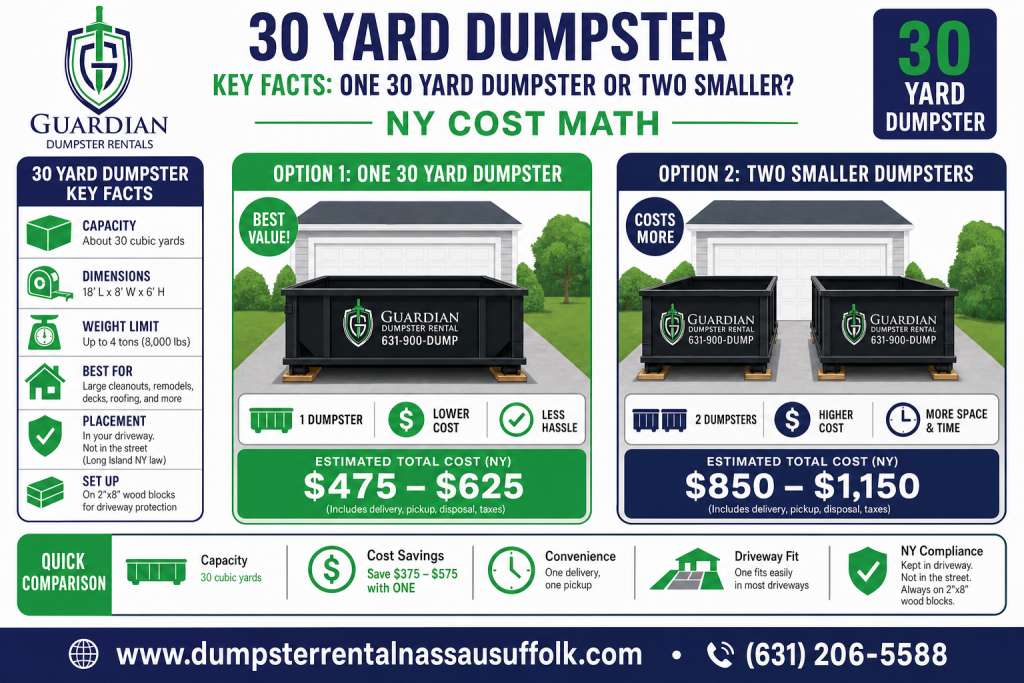
A 30 yard dumpster is the right fit for most whole-house remodels, holding roughly nine pickup-truck loads of debris in a single container. A 20 yard works for multi-room projects, while a 10 yard suits single-room refreshes. Matching the container to your project’s actual debris volume prevents both overflow fees and wasted rental money.
Before you commit, it helps to see the three standard residential sizes side by side. The dimensions matter as much as the capacity — a longer container needs more driveway space, and the wall height affects how easily you can toss heavy items over the side.
Container Sizes Table: 10, 20, and 30 Yard Dumpsters
| Size | Typical Dimensions | Pickup-Truck Loads | Typical Weight Limit | Best For |
|---|---|---|---|---|
| 10 Yard | About 12 ft long x 8 ft wide x 3.5 ft high | Roughly 3 loads | Often 1 to 2 tons | Single-room refresh, small bathroom gut, garage cleanout |
| 20 Yard | About 22 ft long x 8 ft wide x 4.5 ft high | Roughly 6 loads | Often 2 to 3 tons | Kitchen remodel, flooring removal across several rooms, large cleanout |
| 30 Yard | About 22 ft long x 8 ft wide x 6 ft high | Roughly 9 loads | Often 3 to 4 tons | Whole-house remodel, full-home renovation, major estate cleanout |
Exact dimensions and weight allowances vary by hauler, so confirm the specifics when you book.
Why the 30 Yard Usually Wins for Full Renovations
A whole-house remodel generates debris from everywhere at once — old cabinetry, drywall, flooring, trim, fixtures, and furniture. The tall sidewalls of a 30 yard container swallow bulky items like couches and cabinet runs that eat up space fast in smaller boxes. Homeowners comparing options for a 30 yard dumpster rental in West Babylon NY typically find it handles an entire three- or four-bedroom renovation without a mid-project swap.
When a 20 Yard Is Enough
If your remodel is limited to two or three rooms — say a kitchen plus an adjacent dining room — the 20 yard’s lower sidewalls make loading easier and its footprint fits tighter driveways. A 20 yard dumpster rental in Dix Hills NY is a common middle-ground choice for projects that outgrow a 10 yard but don’t involve gutting the whole house.
Quick Sizing Checklist
- One room: 10 yard container
- Two to three rooms: 20 yard container
- Four or more rooms, or full-home renovation: 30 yard container
- Lots of bulky furniture or cabinetry: size up — volume fills faster than weight
When in doubt between two sizes, most homeowners come out ahead choosing the larger one, since the price gap between sizes is usually smaller than the cost of a second haul.
When Do Two Smaller Containers Actually Make Sense?
Two smaller dumpsters beat one 30 yard dumpster in four situations: phased remodels that stretch over months, tight New York driveways or short urban curb space that can’t fit a full-size container, heavy dense debris that hits weight limits before volume, and HOA or street-permit rules that restrict how long or how large a container can sit out.
Most whole-house cleanouts and remodels are cheaper with a single large container. But “most” isn’t “all,” and the exceptions below are worth an honest look before you book.
Phased Remodels Spread Over Months
If you’re gutting the kitchen in October and the bathrooms in February, a 30 yard dumpster sitting half-empty between phases racks up rental extension fees — or gets hauled away half-full, which wastes money either way. Two smaller containers timed to each phase mean you pay for capacity exactly when you’re generating debris. A 10 yard dumpster rental in Commack for a single-room demo phase keeps each stage lean instead of paying for empty air.
Tight Driveways and Short Curb Space
A 30 yard container typically runs around 22 feet long, and the roll-off truck needs additional clearance to drop it. Plenty of Long Island and New York properties simply don’t have the room — narrow shared driveways, low-hanging wires, short curb frontage on busy streets. In those cases, a 10 or 20 yard container that actually fits on your property beats a 30 yard dumpster that would have to block the sidewalk or sit illegally in the street.
Heavy, Dense Debris That Maxes Out Weight First
Weight limits matter as much as volume. Dense materials like plaster, tile, and roofing shingles can push a container to its tonnage cap long before it’s visually full. Loading that debris into one 30 yard container often means paying overage fees per ton. Splitting the job across two smaller containers — say, a 20 yard dumpster rental in Dix Hills NY for the heavy load and a second container for lighter bulky items — can keep each haul under its limit and avoid surcharges.
HOA Rules and Street-Permit Constraints
Some homeowners associations cap how many days a container can sit in view, and some municipalities require street permits with size or duration limits for curbside placement. When your HOA allows a container for one week at a time, two short rentals of a smaller size may be the only compliant path — and compliance is cheaper than fines.
Quick Gut Check
- Is your debris coming in waves months apart? Two rentals, timed to each phase.
- Can a 22-foot container physically fit? If not, size down — no math required.
- Is your load mostly dense material? Weight caps, not volume, decide the size.
- Do local rules limit container size or duration? Check before you book, not after.
If none of these apply to your project, the single-container math from earlier in this article almost always wins.
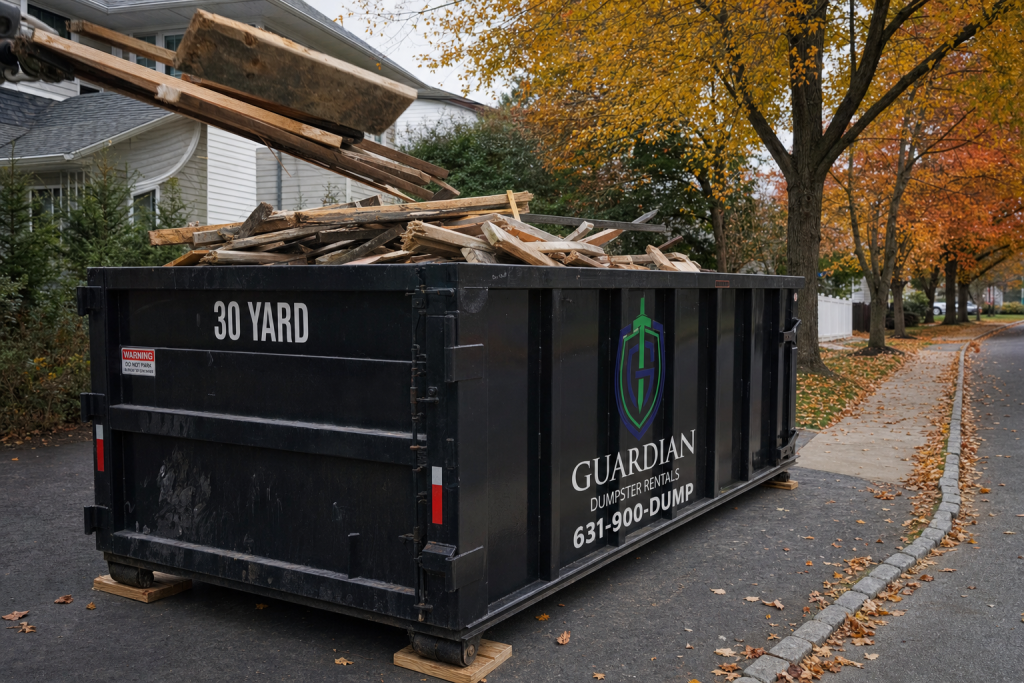
What Can’t Go in the Dumpster — and How Does Fall Weather Change Your Plan?
No brick, no concrete, no dirt, and no yard waste — including bagged fall leaves — can go in your dumpster. Hazardous materials like paint, chemicals, and batteries are also prohibited. In autumn, cover your load against wind and rain, schedule delivery before early cold snaps, and aim to finish demolition before winter weather sets in.
Knowing the prohibited list before your container arrives saves you from overage disputes, refused pickups, and the hassle of unloading material by hand. Whether you book one 30 yard dumpster or stage two smaller containers, the same rules apply to every load.
Materials That Stay Out of the Container
- Brick — even broken pieces from a chimney or walkway tear-out
- Concrete — slabs, footings, pavers, and rubble of any kind
- Dirt — fill, topsoil, and excavated soil are all excluded
- Yard waste — leaves, branches, grass clippings, stumps, and brush, including the fall leaf piles that tempt every homeowner in October
- Hazardous items — paint, solvents, propane tanks, tires, batteries, and anything the EPA classifies as household hazardous waste
Yard waste in particular trips people up during autumn cleanups. New York handles organics and masonry through separate disposal streams, and the New York State Department of Environmental Conservation outlines how those materials should be managed. Check your town’s leaf collection schedule instead of tossing bags into the container — mixed loads can be rejected at the facility.
Fall Weather Tips That Protect Your Rental
Autumn on Long Island brings gusty nor’easters, soaking rain, and the occasional early freeze — all of which can complicate a renovation if you don’t plan around them.
- Cover the load. A tarp keeps windblown debris contained and stops rain from soaking drywall and lumber, which adds real weight to your final tonnage.
- Book delivery early. Frozen or saturated ground makes placement harder, so schedule drop-off before the first hard cold snap when driveways and lawns are still forgiving.
- Finish demo before winter. Interior tear-outs are easiest when you can still keep windows open and haul debris out in daylight. Projects that run into December often stall until spring.
- Clear leaves from the placement spot. A wet leaf layer under the container can stain or soften asphalt — sweep the area before delivery day.
If your fall project sits in Suffolk County, local providers understand these seasonal realities. Homeowners arranging dumpster rental in Babylon, New York often time delivery for early fall specifically to beat the weather window.
And if the math from earlier sections pointed you toward a single large container, a 30 yard dumpster rental in Greenlawn, NY gives you the capacity to wrap the whole job before the first snowfall — one delivery, one pickup, no winter loose ends.
Roughly 9 pickup truck loads of debris
30 yard dumpster capacity
About 22 ft long x 8 ft wide x 6 ft high
Typical 30 yard footprint
7–14 days included with most rentals
Common NY rental window
Brick, concrete, dirt, and yard waste
Not allowed in dumpsters
One 30 Yard Dumpster vs. Two Smaller Containers: NY Cost Factors
| Factor | One 30 Yard Dumpster | Two Smaller Containers (10 or 20 Yard) |
|---|---|---|
| Delivery & pickup fees | Paid once | Paid twice — two deliveries, two pickups |
| Total capacity | 30 cubic yards in one placement | 20–40 cubic yards combined, depending on sizes |
| Driveway footprint | Largest single footprint (~22 ft long) | Smaller footprint per container; fits tighter NY driveways |
| Project timing fit | Best for one continuous remodel phase | Better for staged work weeks or months apart |
| Typical cost outcome | Usually the lower total cost per cubic yard | Usually higher total cost due to duplicated fees |
Hypothetical Example: A Whole-House Remodel in Westchester
Illustrative example
Consider a hypothetical NY homeowner planning a full interior remodel — gutting a kitchen, two bathrooms, and replacing flooring throughout. They initially priced a 20 yard dumpster for the demo phase and a 10 yard dumpster for finish-work debris a month later, but that approach meant paying two delivery fees, two pickup fees, and two base rental charges. After running the math, a single 30 yard dumpster kept on site through both phases came out meaningfully cheaper per cubic yard, with one set of fees and no scheduling gap. The lesson in this composite scenario: unless space or timing forces a split, one 30 yard dumpster usually wins the cost math for whole-house projects.
Frequently asked questions
Is one 30 yard dumpster cheaper than renting two smaller dumpsters?
Usually, yes. A single 30 yard dumpster costs less than two separate rentals because you pay one delivery fee, one pickup fee, and one base rate instead of two of each. Two 20 yard containers give you more total volume, but the doubled haul fees typically erase any savings. Two smaller dumpsters only win if your project is spread over months and you'd pay extended rental fees keeping one container on site the whole time.
How much debris actually fits in a 30 yard dumpster?
A 30 yard dumpster holds about 30 cubic yards of material, roughly equal to nine to twelve pickup truck loads. For most whole-house remodels, that covers demolished cabinetry, drywall, flooring, trim, fixtures, and furniture from several rooms. Keep in mind debris must stay level with the top rim, so bulky items like cabinets eat volume fast. If you break down large pieces before loading, you'll fit noticeably more.
How long can I keep a dumpster during a whole-house remodel?
Most rental companies include a standard rental period, often around a week to two weeks, with the option to extend for a daily fee. For a whole-house remodel that runs several weeks, ask about long-term rates up front rather than paying day-by-day extensions. If your project has distinct demolition phases separated by weeks of quiet, that's when scheduling two smaller containers at different times can actually make sense.
What happens if I order a 20 yard dumpster and it fills up before the project is done?
You'll need to pay for a swap-out: the company hauls the full container away, dumps it, and brings back an empty one. That means a second haul fee and often a second disposal charge, which is exactly the cost trap that makes undersizing expensive. It also stalls your crew while they wait for the swap. If you're genuinely unsure between a 20 yard and a 30 yard dumpster, sizing up is almost always the safer bet.
Will a 30 yard dumpster fit in a typical New York driveway?
A 30 yard dumpster is roughly 22 feet long, so it fits most standard residential driveways, but it's tight on short urban driveways common in parts of New York. Measure your available space and confirm the delivery truck has room to maneuver and overhead clearance from wires and branches. If your driveway can't handle it, you may need a street permit from your municipality, which adds cost and lead time, or you may be forced into smaller containers.
What can't I put in a rental dumpster for a remodel?
Hazardous materials are off-limits everywhere: paint, solvents, chemicals, batteries, tires, and appliances containing refrigerant. Also note that brick, concrete, dirt, and yard waste are not allowed in these dumpsters, so plan separate disposal if your remodel involves masonry demolition or landscaping. Review your rental agreement's prohibited items list before demo day, because contaminated loads can trigger extra fees or a refused pickup.
Should I get two 10 yard dumpsters instead of one big container for a phased remodel?
Only if the phases are far apart. Two 10 yard dumpsters total 20 cubic yards but carry two sets of delivery and haul fees, so you pay more per cubic yard of capacity. The scenario where it works: demolition in spring, a second phase months later, and no desire to pay extended rental fees in between. For continuous whole-house work, one 30 yard dumpster is almost always the better math.
What's the biggest mistake homeowners make when sizing a dumpster for a remodel?
Underestimating debris volume. Demolition waste is bulky and irregular—cabinets, doors, and drywall don't pack tightly—so projects routinely generate more cubic yards than homeowners expect. The second mistake is comparing only base prices and ignoring swap-out fees, overage charges, and extension costs. A 30 yard dumpster that looks more expensive up front often ends up cheaper than a 20 yard that needs a swap. Walk your contractor through the full scope before ordering.
Do I pay by weight or by size when renting a dumpster?
Most residential rentals bundle a weight allowance into the flat rate for each container size, with per-ton overage fees if you exceed it. A 30 yard dumpster typically comes with a higher included weight limit than a 10 or 20 yard. Standard remodel debris like drywall, cabinetry, and flooring rarely blows past limits, but dense materials add up quickly—another reason heavy materials like concrete and brick aren't permitted in these containers.
How far in advance should I book a dumpster before demolition starts?
Book at least several days to a week ahead, and longer during spring and summer when remodeling season fills delivery schedules in New York. If you need a street placement permit from your town or city, start that process even earlier since approval can take additional time. Schedule delivery for a day or two before demo begins so the container is waiting when your crew starts, not the other way around.
10 yard dumpster rental help near you
Related local pages
- Dumpster Rental Elwood New York
- Dumpster Rental Centerport New York
- Dumpster Rental East Northport New York
Get a fast, flat-rate quote on a 10, 20, or 30 yard dumpster for your New York remodel today — one call and we'll help you size it right the first time. Get in touch.
Last updated: November 10, 2026
Recent Comments